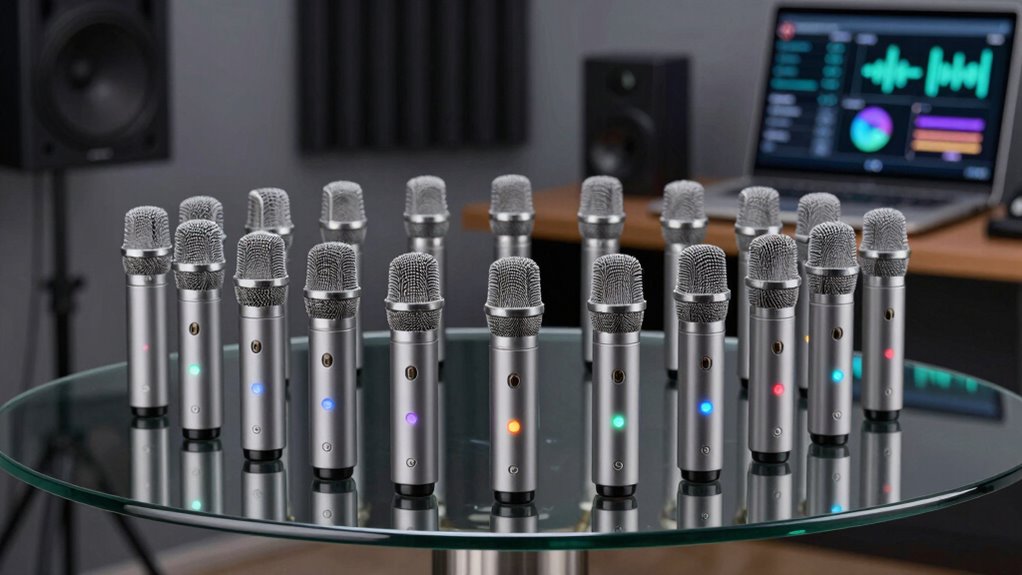
For anyone serious about room EQ, choosing the right USB measurement microphone is essential. The best models deliver accurate, calibrated sound capture to help fine-tune your listening space, but they vary in features, build quality, and price. The miniDSP UMIK-1 stands out as the overall top pick thanks to its reliable calibration and user-friendly design, while the Dayton Audio UMM-6 offers excellent value for budget-conscious users. Tradeoffs often include balancing accuracy against ease of use or cost. Keep reading for a detailed comparison of these options and more, so you can find the perfect microphone for your room calibration needs.

Get audio and creator gear delivered free with Prime
- Fast, free delivery on millions of items
- Prime Video, Amazon Music and more included
- Member-only deals all year
Complete the kit

Key Takeaways
- Calibration accuracy and frequency response are the most critical factors for precise room EQ adjustments.
- Build quality and ease of setup significantly influence long-term satisfaction and reliability.
- Higher-priced options tend to offer better calibration files and more consistent measurements, but budget models can still perform well for casual use.
- Compatibility with various devices and software varies; some mics work seamlessly with smartphones, others are optimized for desktop use.
- Tradeoffs often involve balancing cost, calibration quality, and features like direct headphone monitoring or multiple connection options.
| miniDSP UMIK-1 Calibrated Measurement Microphone |  | Best Overall for Versatile Room EQ and Measurement | Connectivity Technology: USB | Polar Pattern: Omnidirectional | Frequency Response: 20 KHz | VIEW ON AMAZON | See Our Full Breakdown |
| Dayton Audio UMM-6 USB Measurement Microphone |  | Best Value for Basic Room EQ and Measurement | Connectivity Technology: USB | Polar Pattern: Omnidirectional | Frequency Response: 20,000 Hz | VIEW ON AMAZON | See Our Full Breakdown |
| EVERSOLO EM-01 Measurement Microphone, Omnidirectional, Calibrated for Measurement |  | Best for Versatile Streaming, Recording, and Room Calibration | Microphone Type: Electret condenser | Connectivity: USB-C | Frequency Response: 20Hz–20kHz | VIEW ON AMAZON | See Our Full Breakdown |
| USB-C Measurement Microphone with Calibration File |  | Best for Professional-Grade Room Calibration and Speaker Design | Frequency Response: 20Hz-20kHz | Connectivity: USB-C | Calibration: Individual calibration file | VIEW ON AMAZON | See Our Full Breakdown |
| Dayton Audio iMM-6 Calibrated Measurement Microphone for iPhone, iPad, Tablet, and Android |  | Best for Mobile and On-the-Go Room EQ and Measurement | Connectivity Technology: 3.5mm TRRS | Type: Microphone | Polar Pattern: Omnidirectional | VIEW ON AMAZON | See Our Full Breakdown |
| Dayton Audio EMM-6 Precision Omnidirectional Electret Condenser Microphone |  | Best for Accurate Room Analysis and Professional Measurements | Connectivity Technology: XLR | Polar Pattern: Omnidirectional | Frequency Response: 20 KHz | VIEW ON AMAZON | See Our Full Breakdown |
| Dayton Audio UMM-6 USB Measurement Microphone |  | Best for Ease of Use and Versatile Measurement with USB Connectivity | Connectivity Technology: USB | Polar Pattern: Omnidirectional | Frequency Response: 20,000 Hz | VIEW ON AMAZON | See Our Full Breakdown |
| Superlux ECM999U USB-C Measurement Microphone, 24-Bit/48kHz, 10Hz–20kHz |  | Best for High-Resolution Measurements and Professional Tuning | Connectivity Technology: USB Type-C | Polar Pattern: Omnidirectional | Frequency Response: 10Hz–20kHz | VIEW ON AMAZON | See Our Full Breakdown |
| usb measurement microphones for room eq | Frequency Response | Connectivity Technology | Polar Pattern | Signal-to-Noise Ratio |
|---|---|---|---|---|
| miniDSP UMIK-1 Calibrated Meas | 20 KHz | USB | Omnidirectional | 78 dB |
| Dayton Audio UMM-6 USB Measure | 20,000 Hz | USB | Omnidirectional | 70 dB |
| EVERSOLO EM-01 Measurement Mic | 20Hz–20kHz | — | — | — |
| USB-C Measurement Microphone w | 20Hz-20kHz | — | — | — |
| Dayton Audio iMM-6 Calibrated | 18 KHz | 3.5mm TRRS | Omnidirectional | — |
| Dayton Audio EMM-6 Precision O | 20 KHz | XLR | Omnidirectional | 70 dB |
| Dayton Audio UMM-6 USB Measure | 20,000 Hz | USB | Omnidirectional | 78 dB |
| Superlux ECM999U USB-C Measure | 10Hz–20kHz | USB Type-C | Omnidirectional | — |
More Details on Our Top Picks
miniDSP UMIK-1 Calibrated Measurement Microphone
The miniDSP UMIK-1 stands out for its comprehensive calibration files, which ensure highly accurate room measurements. Compared with the Dayton UMM-6, the UMIK-1 offers better cross-platform compatibility and includes a tripod, windscreen, and calibration file, making it a reliable choice for serious audio tuning. Its plug-and-play setup simplifies calibration, but it relies on external measurement software, adding a step for less tech-savvy users. The size is slightly bulky, which might be less ideal for portable needs. This pick excels for those seeking precise, repeatable measurements across various systems.
Pros:- Accurate calibration files for reliable measurements
- Universal compatibility with Windows, Mac, Linux, and iPads
- Includes tripod, USB cable, and windscreen for versatile setup
Cons:- Requires external measurement software, adding complexity
- No wireless or Bluetooth options for mobility
- Size may be less convenient for portable use
Best for: Audio engineers, home theater enthusiasts, and room tuning professionals needing reliable, calibrated measurements.
Not ideal for: Casual users or those seeking wireless or portable solutions, as it requires external software and is somewhat bulkier.
- Connectivity Technology:USB
- Polar Pattern:Omnidirectional
- Frequency Response:20 KHz
- Signal-to-Noise Ratio:78 dB
- Item Weight:120 g
- Dimensions:11.81 x 5.12 x 3.35 inches
Our verdict“This microphone is ideal for users who prioritize measurement precision and cross-platform compatibility over portability or wireless features.”
Dayton Audio UMM-6 USB Measurement Microphone
The Dayton UMM-6 offers a solid entry point for precise sound measurements, with a flat frequency response and sturdy carrying case. Compared with the miniDSP UMIK-1, it provides excellent value but lacks the extensive calibration options and cross-platform ease, making it suitable for users with basic measurement needs. Its omnidirectional pattern captures sound evenly, but its build quality isn’t as thoroughly detailed, raising questions about durability over time. For those who want a straightforward, affordable measurement microphone without bells and whistles, this is a compelling choice.
Pros:- High-precision measurement with flat frequency response
- USB plug-and-play compatibility with PC and Mac
- Includes a sturdy carrying case for portability
Cons:- Limited build quality details; durability could vary
- No calibration software included, less ideal for professional calibration
- No wireless or additional connectivity options
Best for: Home audio hobbyists or DIYers looking for accurate measurements at an affordable price.
Not ideal for: Professional audio engineers or those requiring extensive calibration and software integration, as it offers fewer customization options.
- Connectivity Technology:USB
- Polar Pattern:Omnidirectional
- Frequency Response:20,000 Hz
- Signal-to-Noise Ratio:70 dB
- Color:Black
- Enclosure Material:foam
Our verdict“This microphone is well-suited for budget-conscious users needing solid, straightforward room measurement capabilities.”
EVERSOLO EM-01 Measurement Microphone, Omnidirectional, Calibrated for Measurement
The EVERSOLO EM-01 combines high sensitivity and a wide frequency range, making it suitable for both professional room calibration and streaming. Compared to the Dayton UMM-6, it offers a more durable aluminum body and USB-C connectivity, which is increasingly common. However, it lacks detailed calibration software information, and its signal-to-noise ratio is lower, which might impact precision in critical measurements. Its lightweight design makes it portable, but the absence of accessories limits immediate setup options. This model works best for users who value durability and USB-C compatibility for multi-device use.
Pros:- High sensitivity and broad frequency response
- Durable aluminum alloy construction
- USB-C connectivity for modern device compatibility
Cons:- Limited info on included calibration tools or software
- Lower SNR compared to some professional-grade mics
- No bundled accessories for immediate use
Best for: Streaming professionals, content creators, and room calibration hobbyists needing a durable, high-quality microphone.
Not ideal for: Users seeking plug-and-play simplicity without needing to manage calibration or software separately, as some setup details are unclear.
- Microphone Type:Electret condenser
- Connectivity:USB-C
- Frequency Response:20Hz–20kHz
- Max SPL:130dBSPL
- Weight:47g
- Sampling Rate:24bit/48kHz
Our verdict“This microphone is ideal for users who need a durable, versatile measurement device with modern connectivity options.”
USB-C Measurement Microphone with Calibration File
The USB-C Measurement Microphone offers exceptional accuracy with an individual calibration file, making it suitable for speaker design and acoustic measurements. It outperforms simpler options like the Dayton UMM-6 by providing calibration tailored to each unit, which is critical for high-precision tasks. The included accessories, such as a windscreen, tripod, and carrying case, make setup straightforward. However, this level of precision often requires dedicated software like REW, which might be more complex for casual users. Its high build quality and comprehensive kit make it overkill for casual use, but ideal for professional environments.
Pros:- Individual calibration file ensures high accuracy
- Complete accessory kit for easy setup
- Durable die-cast metal construction
Cons:- Requires dedicated measurement software like REW
- Overly complex for casual or one-off measurements
- Higher cost compared to basic microphones
Best for: Acoustic engineers, speaker designers, and serious room tuning professionals who need ultimate measurement accuracy.
Not ideal for: Casual hobbyists or users seeking a simple plug-and-play solution without calibration software or extensive setup.
- Frequency Response:20Hz-20kHz
- Connectivity:USB-C
- Calibration:Individual calibration file
- Included Accessories:USB-C cable, windscreen, tripod, case
- Build Material:Die-cast metal
- Max SPL:High sound pressure levels
Our verdict“This microphone is best suited for professionals demanding precise, calibrated measurements for room tuning or speaker design.”
Dayton Audio iMM-6 Calibrated Measurement Microphone for iPhone, iPad, Tablet, and Android
The Dayton iMM-6 provides a portable, calibrated measurement solution for users needing quick room or speaker assessments via smartphones and tablets. Compared with the more traditional USB mics like the UMIK-1, the iMM-6’s 3.5mm TRRS connection makes it ideal for mobile setups, especially for those who prioritize convenience. However, it is limited to wired connections and requires a compatible device with a TRRS jack, which may be absent on newer models. Its omnidirectional pattern and included stand make it easy to position, but it offers less precision than higher-end USB mics.
Pros:- Calibrated for high-precision measurement with smartphones
- Includes a stand for stable positioning
- Compatible with iOS, Android, and Windows devices
Cons:- Requires a TRRS jack, limiting compatibility with newer devices
- Limited to wired connection, no wireless option
- Less suited for detailed professional measurements
Best for: Mobile audiophiles, content creators, and field technicians needing quick measurements with a smartphone or tablet.
Not ideal for: Dedicated studio or professional room tuning users, as it lacks the calibration depth and stability of higher-end USB measurement microphones.
- Connectivity Technology:3.5mm TRRS
- Type:Microphone
- Polar Pattern:Omnidirectional
- Frequency Response:18 KHz
- Enclosure Material:Metal alloy
- Item Dimensions:4.33 x 3.15 x 1.18 inches
Our verdict“This microphone is perfect for mobile measurement tasks where portability and convenience outweigh ultimate precision.”
Dayton Audio EMM-6 Precision Omnidirectional Electret Condenser Microphone
The Dayton Audio EMM-6 stands out for its high precision, thanks to its flat frequency response and low noise floor, making it ideal for detailed room acoustic analysis. Compared to the UMIK-6, it offers more accessories like a stand mount and calibration graph, which can enhance measurement accuracy. Its XLR connection, however, introduces a tradeoff: it’s less portable and requires external phantom power, limiting flexibility for casual or mobile use. This microphone excels in static measurement setups where accuracy outweighs convenience, but it’s not suited for quick, on-the-go testing or casual recording. Pros include high accuracy with a flat response, included accessories for precise calibration, and rugged durability. Cons are its reliance on external power and less portability. Choose the EMM-6 if your focus is detailed acoustic measurement in a stable setup, but skip it if you need a truly portable solution.
Pros:- High accuracy with a flat frequency response for precise measurements
- Includes useful accessories like stand mount and calibration graph
- Low noise FET input reduces distortion for cleaner results
Cons:- Requires external phantom power via XLR, limiting portability
- Primarily designed for measurement, not for casual recording
Best for: Professionals and enthusiasts conducting detailed room acoustic analysis in fixed setups
Not ideal for: Mobile users or those seeking a simple, all-in-one measurement microphone for quick testing
- Connectivity Technology:XLR
- Polar Pattern:Omnidirectional
- Frequency Response:20 KHz
- Signal-to-Noise Ratio:70 dB
- Microphone Form Factor:Microphone Only
- Weight:16 ounces
Our verdict“This pick makes the most sense for dedicated room acoustics professionals who need precision in a stable environment.”
Dayton Audio UMM-6 USB Measurement Microphone
The Dayton Audio UMM-6 offers a straightforward, plug-and-play experience, making it ideal for users who want reliable measurements without complex setup. Its USB connection simplifies integration with both PC and Mac, outperforming the Superlux ECM999U in terms of ease of use, especially for those who prefer a single cable solution. While it provides a flat frequency response and high signal-to-noise ratio, it requires external power through USB, which might limit use in battery-powered setups. This makes it a solid choice for home audio tuning, but less suitable if you need a portable, battery-operated microphone for field use. Pros include easy setup via USB, durable build, and high accuracy. Cons involve the dependency on external power and limited application scope. Buy the UMM-6 if you want a dependable, portable measurement mic for home or studio use, but avoid it if you need wireless or battery-powered options.
Pros:- High-quality, accurate measurement with flat frequency response
- USB connectivity for easy, quick setup
- Rugged construction with portable carrying case
Cons:- Requires USB power, limiting use with portable batteries
- Limited to measurement and recording, not for general use
Best for: Home audio enthusiasts or studio users seeking simple, accurate measurements with minimal fuss
Not ideal for: Field engineers or mobile users needing wireless or battery-powered measurement options
- Connectivity Technology:USB
- Polar Pattern:Omnidirectional
- Frequency Response:20,000 Hz
- Signal-to-Noise Ratio:78 dB
- Microphone Form Factor:Microphone Only
- Weight:Not specified
Our verdict“This model is better suited to users who value simplicity and convenience over wireless flexibility or battery independence.”
Superlux ECM999U USB-C Measurement Microphone, 24-Bit/48kHz, 10Hz–20kHz
The Superlux ECM999U stands out for its high-resolution 24-bit/48kHz digital signal, delivering detailed audio data critical for precise room and speaker analysis. Its wide frequency response from 10Hz to 20kHz surpasses many competitors, making it ideal for professional tuning tasks. The USB-C connection simplifies setup on modern systems, and included accessories like a mic clip and windscreen add convenience. Compared with the UMIK-6, the ECM999U offers higher audio resolution, but it’s strictly a measurement device—no general recording or wireless options. It’s best suited for users who need maximum detail in system tuning but are comfortable with fixed, wired connections. Pros include high-resolution audio, easy USB-C plug-and-play, and comprehensive accessories. Cons are its focus solely on measurement, no battery options, and compatibility requirements. This device fits professionals or serious hobbyists dedicated to detailed acoustic and speaker analysis, but it’s too specialized for casual or portable use.
Pros:- High-resolution 24-bit/48kHz digital output for detailed measurements
- Plug-and-play USB-C connection for fast setup
- Includes useful accessories like stand, windscreen, and cable
Cons:- Limited strictly to measurement; not suited for general recording
- No built-in battery or wireless options for portability
Best for: Audio engineers or system tuners requiring high-resolution, detailed measurements for speaker and room tuning
Not ideal for: Casual users or mobile testers needing wireless or battery-powered measurement tools
- Connectivity Technology:USB Type-C
- Polar Pattern:Omnidirectional
- Frequency Response:10Hz–20kHz
- Bit Depth / Sample Rate:24-bit/48kHz
- Max SPL:133dB
- Microphone Form Factor:Desktop
Our verdict“This microphone suits those who prioritize high-resolution, detailed measurements for professional acoustic work over portability or general use.”

How We Picked
These measurement microphones were selected based on their ability to deliver accurate, calibrated audio capture specifically for room EQ applications. We prioritized products with verified calibration, broad compatibility, and build quality. Ease of use and setup simplicity also played a role, especially for newcomers. The ranking reflects a balance between performance, value, and user feedback, aiming to guide both beginners and experienced audiophiles towards the best options for room correction in 2026.Factors to Consider When Choosing Usb Measurement Microphones For Room Eq
Choosing the right USB measurement microphone involves understanding several key factors that influence accuracy, usability, and value. Beyond price, consider calibration quality and frequency response, as these directly impact the precision of your room EQ adjustments. Compatibility with your devices and software can streamline setup, while build quality ensures durability over time. Recognizing common pitfalls, such as neglecting calibration file updates or ignoring environmental factors, can save you frustration and money. Making an informed choice means balancing these elements based on your specific needs and budget.Calibration and Accuracy
The core purpose of a measurement microphone is to provide accurate sound data. Look for models with factory calibration files, ideally verified by independent testing. Calibration discrepancies can lead to misleading room corrections, so prioritize microphones with well-documented calibration procedures. Inaccurate measurements often stem from poor calibration or inconsistent frequency responses, which can cause more harm than good when tuning your space.
Compatibility and Connectivity
Most USB measurement microphones connect to PCs and Macs, but some also support smartphones and tablets via USB-C or dedicated adapters. Be sure your chosen mic supports your device and measurement software. Compatibility issues can introduce additional complexity or require extra adapters, which may affect signal quality. Also, check if the microphone has features like direct headphone monitoring if you want real-time feedback during setup.
Build Quality and Ease of Use
A sturdy, well-made microphone reduces the risk of damage and ensures consistent measurements over time. Consider models with straightforward setup instructions and minimal configuration requirements. Some microphones come with pre-installed calibration files, while others require manual updates—something to weigh if you prefer plug-and-play solutions. Ease of use can be especially important for hobbyists or those new to room EQ.
Frequency Response Range
The microphone’s frequency response affects its ability to accurately capture the full sound spectrum of your room. Look for models with a wide and flat response, ideally extending below 20Hz and above 20kHz, to ensure no part of your audio is missed. Narrower ranges may suffice for basic tuning but could miss critical low or high-frequency details, leading to less precise corrections.
Value and Long-Term Investment
While budget models can serve well for casual users, investing in a higher-quality microphone often results in more reliable measurements and better calibration files. Consider long-term use—if you plan to do frequent room tuning, a slightly higher upfront investment can pay off in accuracy and durability. Be wary of very low-cost options that lack proper calibration or build quality, as they might require replacement sooner and provide less meaningful results.
Frequently Asked Questions
Do I need a calibration file to use a measurement microphone?
Yes, a calibration file is essential for accurate room measurement. It corrects the microphone’s inherent frequency response deviations, ensuring the data you collect reflects true sound levels. Many microphones come with pre-installed calibration files, but it’s important to verify their accuracy and whether updates are available. Without proper calibration, your room EQ adjustments may be based on misleading measurements, reducing their effectiveness.
Can I use a consumer-grade microphone for precise room EQ?
While some consumer-grade microphones can produce usable measurements, they often lack the flat frequency response or calibration necessary for precise room EQ. For best results, choose a measurement microphone designed for audio analysis with verified calibration files. Investing in a dedicated measurement mic minimizes errors and enhances the accuracy of your room tuning process, especially if you aim for high-fidelity sound or professional-grade calibration.
Are USB measurement microphones compatible with all measurement software?
Most USB measurement microphones are compatible with popular software like REW, ARTA, or Room EQ Wizard, but compatibility can vary. Check the mic manufacturer’s specifications and user feedback to confirm support. Some models may require specific drivers or settings adjustments. Compatibility issues can complicate setup or limit functionality, so verifying software support beforehand can save time and frustration.
How important is the microphone’s frequency response range?
The frequency response range determines how accurately the microphone can capture sound across the audible spectrum. A wider, flatter response ensures no frequencies are exaggerated or suppressed, leading to more precise room measurements. Narrower ranges or colored responses can distort your data, making calibration less effective. For room EQ, aim for a microphone with a response that covers at least 20Hz to 20kHz with minimal deviation.
Should I prioritize higher-priced measurement microphones?
Higher-priced microphones generally offer better calibration, more consistent measurements, and durable construction. They tend to be more reliable over time and often include comprehensive calibration files, improving measurement accuracy. However, if you are a casual user or on a tight budget, lower-cost options can still provide decent results. Weigh your needs for precision against your budget, and consider long-term value when making your choice.
Conclusion
For most users seeking overall reliability and ease of use, the miniDSP UMIK-1 remains the best choice that balances accuracy and affordability. Budget-conscious hobbyists may find the Dayton Audio UMM-6 sufficient for basic room tuning, while professionals or audiophiles aiming for the highest precision should consider premium options like the Superlux ECM999U. Beginners should prioritize models with straightforward setup and calibration support, whereas advanced users might opt for microphones with broader frequency response and more detailed calibration files. Your ideal pick depends on your specific room size, measurement needs, and budget constraints.
Halloween Picks
halloween
As an affiliate, we earn on qualifying purchases.