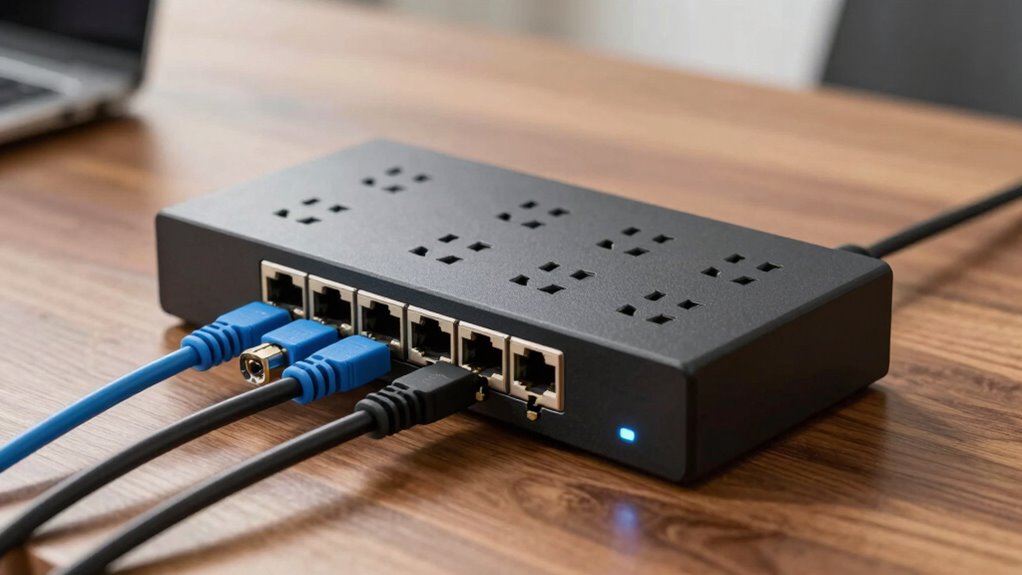

When a coaxial cable or wired network connection runs into your equipment, protecting only its AC power cord leaves another path for a surge. I compared five power strips that add some form of coax and data-line protection, but they differ sharply in outlet count, Ethernet capability, and how much room they need. My leading choice is the Eaton Tripp Lite TLP810NET for balanced protection across AC, coax, phone, and Ethernet; the TLP118DBNET suits setups needing 11 outlets and flexible mounting; and the Belkin 12-outlet pack is the fit for buyers who want three strips with long cords, though its listed surge rating has a discrepancy. The main tradeoff is straightforward: some high-outlet models protect coax and phone but not Ethernet, while Ethernet-equipped options can have speed limits or fewer sockets.

Get audio and creator gear delivered free with Prime
- Fast, free delivery on millions of items
- Prime Video, Amazon Music and more included
- Member-only deals all year
I’ve ranked these by how well their documented connections match the title’s coax-and-Ethernet focus, then by practical outlet capacity, placement options, and clarity of the specifications. Check the line-protection details before choosing: RJ45 Ethernet is not the same as RJ11 phone protection, and coax protection alone does not mean a model protects a wired network connection.
Complete the kit


Key Takeaways
- The TLP810NET is the most balanced single-unit pick here because its listed protection covers AC, coax, RJ45 Ethernet, and RJ11 phone lines.
- The TLP118DBNET adds 11 outlets and convenient mounting, but its Ethernet pass-through is specified only up to 100 Mbps.
- The TLP1208TELTV offers 12 outlets and coax protection, but its listed line protection is coax and RJ11 phone—not Ethernet.
- The Belkin listing is for a pack of three, with 12 outlets per strip and coax/phone protection; the supplied specs do not list RJ45 Ethernet.
- The TLP606RNET is the compact option with rotating outlets, but it has only six sockets and Ethernet is listed as 100BaseT.
| Eaton Tripp Lite TLP810NET 8-Outlet Home Theater Surge Protector |  | Best Overall for Full-Line Coverage | AC outlets: 8, including 3 spaced for bulky plugs | Surge protection: 3,240 joules | Line protection: 2.2 GHz coaxial, RJ11 phone, RJ45 Ethernet | VIEW ON AMAZON | See Our Full Breakdown |
| Eaton Tripp Lite TLP118DBNET 11-Outlet Surge Protector |  | Best for Many Devices and Flexible Mounting | AC outlets: 11, including 6 spaced for bulky adapters | Surge protection: 4,200 joules | Line protection: RJ45 Ethernet up to 100 Mbps, RJ11 phone, coaxial | VIEW ON AMAZON | See Our Full Breakdown |
| Eaton Tripp Lite TLP606RNET 6-Outlet Surge Protector |  | Best Compact Pick with Rotating Outlets | AC outlets: 6: 2 fixed and 4 rotating | Surge protection: 1,440 joules | Line protection: Coaxial and telephone/modem/Ethernet; Ethernet listed as 100BaseT | VIEW ON AMAZON | See Our Full Breakdown |
| Eaton Tripp Lite TLP1208TELTV 12-Outlet Surge Protector with Flat Plug |  | Best for High Outlet Count with Coax Protection | AC outlets: 12, including 4 spaced for bulky transformers | Line protection: Coaxial and RJ11 phone; RJ45 Ethernet not listed | Cord and plug: 8-foot extension cord; flat plug | VIEW ON AMAZON | See Our Full Breakdown |
| Belkin 12-Outlet Surge Protector Power Strip with 10-Foot Cord, Gray, Pack of 3 |  | Best Multi-Strip Pack for Coax and Phone Setups | Pack size: 3 strips | AC outlets: 12 per strip, including 6 widely spaced | Line protection: RJ11 phone and coax; RJ45 Ethernet not listed | VIEW ON AMAZON | See Our Full Breakdown |
| surge protectors with coax and ethernet protection | AC outlets | Line protection | Voltage | Surge protection |
|---|---|---|---|---|
| Eaton Tripp Lite TLP810NET 😯 | 8, including 3 spaced for bulky plugs | 2.2 GHz coaxial, RJ11 phone, RJ45 Ethernet | 120 V | 3,240 joules |
| Eaton Tripp Lite TLP118DBNET 1 | 11, including 6 spaced for bulky adapters | RJ45 Ethernet up to 100 Mbps, RJ11 phone, coaxial | 120 V | 4,200 joules |
| Eaton Tripp Lite TLP606RNET 6- | 6: 2 fixed and 4 rotating | Coaxial and telephone/modem/Ethernet; Ethernet listed as 100BaseT | 120 V | 1,440 joules |
| Eaton Tripp Lite TLP1208TELTV | 12, including 4 spaced for bulky transformers | Coaxial and RJ11 phone; RJ45 Ethernet not listed | 120 V | — |
| Belkin 12-Outlet Surge Protect | 12 per strip, including 6 widely spaced | RJ11 phone and coax; RJ45 Ethernet not listed | — | — |
More Details on Our Top Picks
Eaton Tripp Lite TLP810NET 8-Outlet Home Theater Surge Protector
The TLP810NET is my best overall match because its listed protection spans AC power, coax, RJ11 phone, and RJ45 Ethernet. That combination makes it a more direct fit for a cable-connected home theater or network corner than the 12-outlet TLP1208TELTV, whose listed protection covers coax and phone but does not name Ethernet. It also avoids the specific 100 Mbps pass-through caveat attached to the TLP118DBNET, though the supplied details do not state a maximum Ethernet speed for this model.
Eight outlets are fewer than the 11 on the TLP118DBNET or 12 on the TLP1208TELTV, but three spaced sockets help when bulky adapters would crowd a typical row. Its 10-foot cord also gives more placement flexibility than the six-foot cord on the TLP606RNET and the eight-foot cords on two other Eaton choices. EMI/RFI filtering is a useful extra for reducing line noise, while the lifetime product warranty and connected-device insurance add reassurance on paper. The insurance is limited to the USA and Canada, and no buyer should treat a policy as a replacement for checking the terms. Choose this model for its unusually well-matched connection coverage, not for maximum outlet count.
Pros:- Lists AC, coaxial, RJ11 phone, and RJ45 Ethernet protection.
- Eight outlets include three spaced for bulky transformer plugs.
- Ten-foot cord supports more flexible placement than several alternatives here.
- EMI/RFI filtering, lifetime product warranty, and stated connected-device insurance.
Cons:- Fewer outlets than the 11-outlet TLP118DBNET and 12-outlet TLP1208TELTV.
- Connected-device insurance is limited to the USA and Canada.
- The supplied specifications do not state a maximum Ethernet pass-through speed.
Best for: Buyers connecting a TV or other coax-fed equipment alongside wired Ethernet and several AC devices who want one unit with clearly listed coverage for each line type.
Not ideal for: Anyone who needs more than eight outlets, wants an explicit high-speed Ethernet specification, or is outside the USA and Canada and expects connected-device insurance to apply.
- AC outlets:8, including 3 spaced for bulky plugs
- Surge protection:3,240 joules
- Line protection:2.2 GHz coaxial, RJ11 phone, RJ45 Ethernet
- Maximum current:15 A
- Voltage:120 V
- Cord:10 feet
- Filtering:EMI/RFI line-noise filtering
- Warranty and insurance:Lifetime product warranty; $250,000 connected-device insurance, limited to USA and Canada
Our verdict“I’d choose the TLP810NET when clear coax and RJ45 coverage matters more than squeezing in the highest number of outlets.”
Eaton Tripp Lite TLP118DBNET 11-Outlet Surge Protector
If outlet capacity and installation options matter as much as line protection, the TLP118DBNET is the most accommodating choice in this group. It has 11 outlets, six spaced for bulky adapters, plus keyhole slots for wall or under-desk mounting. Its flat plug and eight-foot braided cord can help keep a desk or entertainment setup less awkward to position than a conventional projecting plug. Like the TLP810NET, it explicitly lists coax, RJ11, and RJ45 protection, making it a stronger match for mixed cable and wired-network equipment than the coax-and-phone-only details supplied for the TLP1208TELTV and Belkin.
The tradeoff is specific and important: its Ethernet pass-through supports speeds up to 100 Mbps. That can suit a slower wired connection or devices where the network link is not expected to exceed that rate, but it may limit faster broadband or local-network equipment. It lists 4,200 joules, more than the TLP810NET’s stated 3,240 joules, yet the higher figure does not cancel the speed cap. Diagnostic LEDs and a resettable 15A breaker help make status and overload response more visible. I’d rank it just below the TLP810NET for broad appeal because its plentiful outlets and mounting flexibility come with a clearer network constraint.
Pros:- Eleven outlets, including six spaced for bulky adapters.
- Lists coaxial, RJ11 phone, and RJ45 Ethernet protection.
- Keyhole mounting slots, flat plug, and braided eight-foot cord expand placement choices.
- 4,200-joule rating, EMI/RFI filtering, diagnostic LEDs, and a resettable 15A breaker.
Cons:- Ethernet pass-through is specified for speeds up to 100 Mbps.
- Eight-foot cord is shorter than the TLP810NET and Belkin ten-foot cords.
- The outlet count is high, but buyers must still check plug spacing for their exact adapters.
Best for: Buyers who need 11 outlets, wall or under-desk mounting, and coax plus RJ45 protection for a wired connection operating at no more than 100 Mbps.
Not ideal for: People using faster Ethernet connections, or anyone who wants the longest cord in this lineup; the TLP810NET provides a 10-foot lead and no stated 100 Mbps cap.
- AC outlets:11, including 6 spaced for bulky adapters
- Surge protection:4,200 joules
- Line protection:RJ45 Ethernet up to 100 Mbps, RJ11 phone, coaxial
- Maximum current:15 A
- Voltage:120 V
- Cord and plug:8-foot braided cord; flat plug
- Mounting and indicators:Keyhole slots; diagnostic LEDs
- Warranty:Lifetime limited manufacturer’s warranty
Our verdict“I’d pick the TLP118DBNET for a crowded, mountable setup when its 100 Mbps Ethernet limit fits the network.”
Eaton Tripp Lite TLP606RNET 6-Outlet Surge Protector
The TLP606RNET takes a different route from the larger Eaton models: it keeps the footprint focused, then uses four rotating outlets to make six sockets more useful around bulky plugs. For a small modem, router, television, or network accessory cluster, rotating outlets can help avoid wasting space where fixed plugs collide. It also lists coaxial and telephone/modem/Ethernet line protection, plus EMI/RFI filtering and diagnostic LEDs. That gives it a clearer Ethernet claim than the TLP1208TELTV, even though the latter offers twice as many AC outlets.
The limit is its 100BaseT Ethernet specification, which makes this a poor match for buyers who need faster wired networking. Its 1,440-joule surge rating is also below the stated ratings for the TLP810NET and TLP118DBNET. Six outlets and a six-foot cord make it easier to fit into a small setup, but less suitable for a full entertainment center; the TLP810NET is the more balanced choice when outlet capacity and cord reach matter. I’d choose this model for a modest device cluster where rotating sockets solve a real spacing problem and the listed Ethernet speed is acceptable. Skip it if you are planning for a fast network or expect to add several devices.
Pros:- Four rotating outlets help accommodate bulky plugs in a compact six-outlet design.
- Lists coaxial and telephone/modem/Ethernet line protection.
- EMI/RFI filtering and diagnostic LEDs show protection and grounding status.
- Six-foot cord fits nearby equipment without the longer reach of larger strips.
Cons:- Only six AC outlets are available.
- Ethernet protection is listed for 100BaseT.
- Its 1,440-joule rating is lower than the TLP810NET and TLP118DBNET ratings.
Best for: Buyers with a small modem or media setup who value rotating outlets and need listed coax and Ethernet line protection at 100BaseT.
Not ideal for: Anyone with more than a handful of devices, a faster Ethernet connection, or a need for the higher stated surge capacity of the larger Eaton models.
- AC outlets:6: 2 fixed and 4 rotating
- Surge protection:1,440 joules
- Line protection:Coaxial and telephone/modem/Ethernet; Ethernet listed as 100BaseT
- Voltage:120 V
- Cord:6 feet
- Filtering:EMI/RFI noise filtering
- Indicators:Diagnostic LEDs for protection and grounding status
- Warranty:Lifetime
Our verdict“I’d select the TLP606RNET when rotating outlets and a compact footprint matter more than speed, capacity, or surge-rating headroom.”
Eaton Tripp Lite TLP1208TELTV 12-Outlet Surge Protector with Flat Plug
With 12 outlets and four spaces for bulky transformers, the TLP1208TELTV is the outlet-capacity pick for a home theater or desk setup that has many AC-powered devices. An eight-foot cord, flat plug, diagnostic LEDs, and wall or desk mounting slots make it more flexible to place than a basic fixed strip. It also includes coaxial and RJ11 phone-line protection, so it can suit equipment connected to cable TV or a phone line.
There is a key distinction between this model and the two strongest Ethernet-oriented picks: the supplied line-protection details list coax and RJ11 phone, not RJ45 Ethernet. I would not select it when explicit wired-network protection is a requirement. It also lists a 15A circuit breaker but a maximum current of 12A, so buyers should treat the lower current figure as the relevant stated limit unless they confirm the specification with the manufacturer. The TLP118DBNET has one fewer outlet but explicitly lists RJ45 protection; the TLP1208TELTV is the better fit when the extra socket and coax/phone coverage take priority. Its connected-equipment insurance is stated at $150,000, but policy terms are separate from the product’s connection fit.
Pros:- Twelve outlets, including four spaced for bulky transformers.
- Coaxial and RJ11 phone-line protection for compatible connections.
- Flat plug, eight-foot cord, and wall or desk mounting slots aid placement.
- Diagnostic LEDs, 15A circuit breaker, and stated connected-equipment insurance.
Cons:- The supplied specifications do not list RJ45 Ethernet protection.
- Maximum current is listed as 12A despite the 15A circuit breaker.
- Coax and phone protection may be unnecessary for setups that use neither connection.
Best for: Buyers who need 12 AC outlets, coax protection, and phone-line protection for a media setup that does not require listed RJ45 surge protection.
Not ideal for: People who specifically need Ethernet line protection or who cannot work within the listed 12A maximum-current specification.
- AC outlets:12, including 4 spaced for bulky transformers
- Line protection:Coaxial and RJ11 phone; RJ45 Ethernet not listed
- Cord and plug:8-foot extension cord; flat plug
- Circuit breaker:15 A
- Listed maximum current:12 A
- Voltage:120 V
- Mounting and indicators:Wall or desk mounting slots; diagnostic LEDs
- Connected equipment insurance:$150,000 stated coverage
Our verdict“I’d choose the TLP1208TELTV for its 12 outlets and coax coverage only when the lack of listed RJ45 protection is acceptable.”
Belkin 12-Outlet Surge Protector Power Strip with 10-Foot Cord, Gray, Pack of 3
The Belkin is unusual in this lineup because the listing is for a pack of three, not one strip. Each strip has 12 AC outlets, including six spaced for larger plugs, and a ten-foot cord with cable management. That can make it attractive when several rooms or work areas need a high outlet count and coax plus phone protection. Its stated 4,156-joule figure is close to the TLP118DBNET’s 4,200 joules, although the supplied product information also lists 4,120 joules. I would treat that mismatch as a reason to verify the exact specification rather than assume one number is definitive.
For the title’s Ethernet requirement, the limitation is more decisive: the listed line protection specifies RJ11 phone and coax, but not RJ45 Ethernet. The TLP810NET is a better single-unit match for a wired-network setup, while the Belkin may make more sense for buyers prioritizing multiple strips and many sockets across separate locations. The listing also gives two different weights, 2.13 and 2.4 pounds, and a two-year warranty rather than the lifetime terms stated for the Eaton models. Its safety features, UL safety certification, cable management, and stated connected-equipment warranty are useful details, but they do not fill the Ethernet-protection gap.
Pros:- Pack includes three strips, each with 12 AC outlets.
- Six widely spaced outlets per strip help accommodate larger plugs.
- Ten-foot cords, built-in cable management, and coax/RJ11 protection.
- UL safety certification and stated connected-equipment warranty.
Cons:- RJ45 Ethernet protection is not listed.
- Supplied surge ratings conflict: 4,156 joules and 4,120 joules are both given.
- Supplied product information gives conflicting weights, and warranty duration is two years.
Best for: Buyers who want three high-capacity strips for separate locations and need AC, coax, and phone protection without requiring listed RJ45 Ethernet coverage.
Not ideal for: Anyone shopping specifically for coax and Ethernet protection in one device, or anyone who wants a single power strip rather than a three-pack.
- Pack size:3 strips
- AC outlets:12 per strip, including 6 widely spaced
- Line protection:RJ11 phone and coax; RJ45 Ethernet not listed
- Cord:10 feet per strip
- Maximum current:15 A
- Safety and cable management:UL safety certified; cable management; 13-point safety system stated
- Warranty:2 years; connected-equipment warranty stated at $300,000
Our verdict“I’d buy the Belkin pack for multiple coax-and-phone locations, not as a substitute for a strip with explicitly listed Ethernet protection.”

How We Picked
I ranked these models around the specific promise in this guide: surge protection for equipment connected by coax and Ethernet. That means I gave more weight to products whose supplied details explicitly name both coaxial protection and RJ45 Ethernet protection, rather than treating a phone jack as a substitute for a network port. On that basis, the TLP810NET and TLP118DBNET are the clearest matches, while the TLP606RNET lists Ethernet protection with a 100BaseT limitation. The TLP1208TELTV and Belkin are still relevant for coax-connected equipment, but the listed line-protection details name phone and coax without specifying Ethernet, so I call out that gap instead of implying broader coverage.
I also compared the features that change day-to-day fit: number and spacing of outlets, cord length, plug shape, mounting options, diagnostics, and stated surge capacity where provided. A large joule figure is only one part of the decision; it does not resolve whether the unit has the right connections or supports a buyer’s network speed. I noted unclear or conflicting supplied specifications, including the Belkin surge-rating and weight discrepancies and the TLP1208TELTV current listing. I did not infer certifications, connection performance, or protection guarantees beyond the details provided. The ranking favors usefulness for mixed coax-and-network setups, then distinguishes each product by its strongest practical role and its most relevant limitation.
Factors to Consider When Choosing Surge Protectors With Coax And Ethernet Protection
I’d start with the cables that actually connect to the equipment, then check outlet capacity and placement. The most important distinction in this lineup is that coax and Ethernet are different signal paths and use different connectors. A strip naming coax and RJ11 phone protection does not automatically provide RJ45 Ethernet protection.Confirm the line connectors, not just the outlet count
Match the protector’s ports to the cables running to your equipment. Coaxial protection is for compatible coax cables, often used with cable television or related equipment. RJ45 Ethernet protection is for a wired network connection, while RJ11 is associated with phone lines. In this group, the TLP810NET and TLP118DBNET explicitly list RJ45, coax, and RJ11. The TLP606RNET lists Ethernet protection as 100BaseT. The TLP1208TELTV and Belkin descriptions list coax and phone but do not name RJ45, so I would not treat them as Ethernet-protection picks without further confirmation.
Match Ethernet limits to the network
Network protection can be present while still carrying a stated speed limitation. The TLP118DBNET specifies pass-through up to 100 Mbps, and the TLP606RNET lists 100BaseT. If your internet service, router, or local network uses a faster connection, check the product documentation and network design before routing Ethernet through either one. The TLP810NET is the clearest alternative here because its supplied specifications list RJ45 protection without a stated maximum speed, but the absence of a listed cap is not a guarantee of a particular data rate. Confirm details with the manufacturer if network speed is a deciding factor.
Choose outlet count and spacing for real plugs
Count the devices you need to power, then account for transformer blocks that can cover neighboring sockets. The TLP810NET offers eight outlets with three spaced for bulky plugs; the TLP118DBNET has 11 outlets and six spaced; the TLP1208TELTV and each Belkin strip offer 12 outlets. The TLP606RNET has just six, but its four rotating outlets can help awkward plugs fit. More outlets are not automatically better if the unit lacks the right line connections, and outlet count does not remove the need to stay within electrical limits.
Plan cord reach, plug shape, and mounting
Measure the distance from the wall outlet to the equipment before settling on a strip. The TLP810NET and Belkin list ten-foot cords, while the TLP118DBNET and TLP1208TELTV have eight-foot cords, and the TLP606RNET has six feet. Flat plugs on the TLP118DBNET and TLP1208TELTV can be useful behind furniture. If the strip will sit under a desk or on a wall, the TLP118DBNET and TLP1208TELTV list mounting slots. These practical details can matter more than an extra socket when a short cord or awkward plug would prevent safe, tidy placement.
Read surge and warranty details carefully
Joule ratings offer a comparison point, but they do not tell you whether a strip has the correct coax and Ethernet ports. The supplied figures range from 1,440 joules on the TLP606RNET to 4,200 on the TLP118DBNET; the Belkin listing conflicts between 4,156 and 4,120 joules. Warranties and connected-equipment coverage also differ, and coverage has terms that are not fully represented by a headline amount. Check the stated electrical rating, warranty terms, and line-protection specifications together, particularly where the supplied product details conflict or omit an Ethernet speed.
Frequently Asked Questions
Do all five products protect both coax and Ethernet?
No. The TLP810NET and TLP118DBNET explicitly list coaxial and RJ45 Ethernet protection. The TLP606RNET lists coax and telephone/modem/Ethernet protection, with Ethernet specified as 100BaseT. The TLP1208TELTV and Belkin details list coax and RJ11 phone protection but do not name RJ45 Ethernet, so I would not assume they protect an Ethernet cable.
What is the difference between RJ11 and RJ45 protection?
RJ11 is a phone-line connector, while RJ45 is commonly used for Ethernet network cables. They serve different connections, so a listing that mentions RJ11 phone protection does not establish that Ethernet protection is included. I’d check the exact line-protection ports and confirm they match the cable connected to the modem, router, television, or other device.
Which pick has the most outlets?
The TLP1208TELTV and each Belkin strip have 12 outlets. The difference is that the Belkin listing is for a pack of three and names coax and phone protection, while the TLP1208TELTV is one strip with coax and RJ11 protection. Neither supplied description names RJ45 Ethernet protection, so buyers who need that feature should look first at the TLP810NET or TLP118DBNET.
Can I use the TLP118DBNET with a network faster than 100 Mbps?
The supplied specifications say its Ethernet pass-through supports speeds up to 100 Mbps. That makes it a questionable fit for a faster wired connection if preserving that speed is required. I’d compare the speed of the network connection with the manufacturer’s current documentation before buying, or consider the TLP810NET, whose supplied specifications list RJ45 protection without giving a maximum pass-through speed.
Should I prioritize joules or connection coverage?
Both matter, but the right ports are a basic fit requirement for this category. A higher joule figure does not mean a product protects an Ethernet line when RJ45 protection is not listed. First match the coax and network connections, then compare surge ratings, outlet layout, cord length, and electrical limits. Also check conflicting supplied details, such as the Belkin’s two listed joule ratings.
Conclusion
For the clearest all-around match to coax and Ethernet protection, I’d choose the Eaton Tripp Lite TLP810NET: it lists AC, coax, RJ11, and RJ45 coverage and adds a ten-foot cord. Buyers who need more sockets and mounting flexibility should look at the TLP118DBNET, provided its 100 Mbps Ethernet limit fits their network. For a small setup with rotating plugs, the TLP606RNET is the compact option, but its 100BaseT listing and six outlets call for a modest use case.
If outlet count matters most and Ethernet protection is not required, the TLP1208TELTV brings 12 outlets with coax and phone-line protection. The Belkin pack suits buyers outfitting several locations with coax and phone-connected equipment, but its supplied details do not list RJ45 Ethernet and its surge-rating figures conflict. My final rule is simple: choose by the connection type first, then confirm speed, capacity, and placement before ordering.