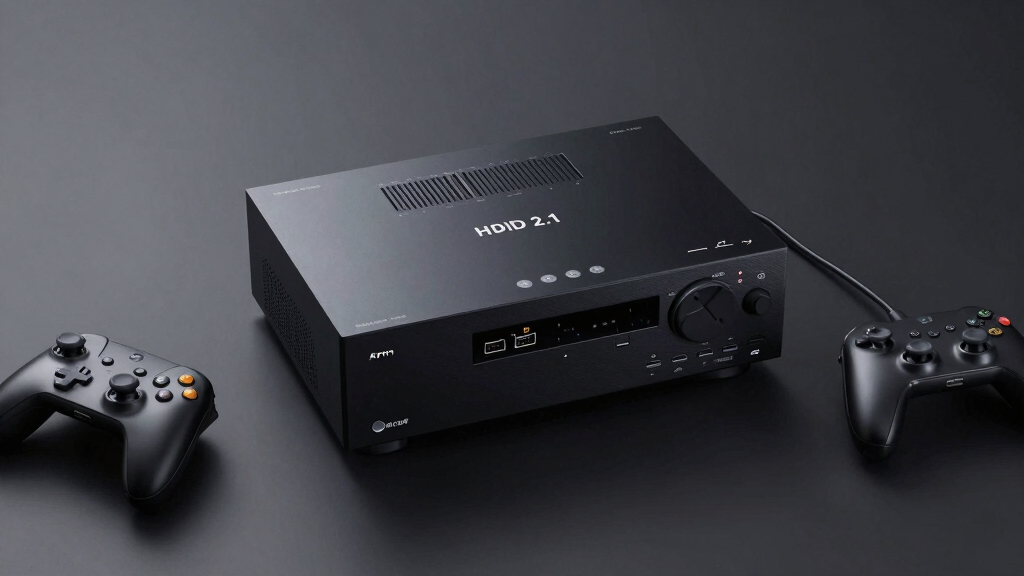
If you’re looking for the best AV receiver with HDMI 2.1 for multiple consoles, the choices can feel overwhelming. The Onkyo TX-NR6100 stands out for its robust processing power and certified THX quality, ideal for serious gamers and home theater fans. Meanwhile, the Yamaha RX500A offers comprehensive HDMI 2.1 features with Dolby Atmos, perfect for immersive setups. However, balancing features, price, and future-proofing remains a challenge, especially as not all models deliver the same level of compatibility or ease of setup. Continue reading for a detailed breakdown of the best options tailored to different needs and budgets.

Get audio and creator gear delivered free with Prime
- Fast, free delivery on millions of items
- Prime Video, Amazon Music and more included
- Member-only deals all year
Complete the kit


Key Takeaways
- The top picks balance HDMI 2.1 bandwidth with multi-console support, ensuring smooth gaming and streaming.
- Models with higher wattage and advanced processing generally offer better future-proofing but come at a higher cost.
- Many receivers support Dolby Atmos and eARC, but not all handle multiple consoles equally well due to port or bandwidth limitations.
- Ease of setup and user interface vary significantly, with some premium models offering more intuitive controls.
- Value often depends on the combination of features like Bluetooth, streaming, and additional inputs, not just HDMI specifications.


| AV receiver with HDMI 2.1 for multiple console | Channels | Supports | Power | HDMI Inputs |
|---|---|---|---|---|
| Pyle 9.1 Channel AV Receiver w | 9.1 | — | N/A | — |
| Onkyo TX-NR6100 7.2 Channel TH | 7.2 | — | 210 W/Ch | — |
| Denon AVR-X1700H 7.2 Channel A | 7.2 | 8K/60Hz, Dolby Atmos, DTS:X | — | 6 |
| Denon AVR-S570BT 5.2 Channel A | 5.2 | HDR, Dolby Vision, VRR | 70W x 5 | 4 |
| Pyle 7.1-Channel Hi-Fi Bluetoo | 7.1 | 4K UHD, 3D | — | — |
| Yamaha RX500A 7.2-Channel Home | 7.2 | — | 70W per channel | 4 |
| Yamaha RX300A 5.2-Channel Home | 5.2 | — | 70W per channel | — |
| Pyle 7.1-Channel Hi-Fi Bluetoo | 7.1 | 4K UHD, 3D, Blu-Ray | 2000 Watts peak | — |
| Denon AVR-S570BT 5.2 Channel A | 5.2 | — | — | 4 |
| Sony STR-DH790 7.2-channel Sur | 7.2 | Dolby Atmos, DTS:X, 4K HDR | — | 4 |
More Details on Our Top Picks
Pyle 9.1 Channel AV Receiver with HDMI 2.1, Bluetooth, and Subwoofer Output
This Pyle 9.1 channel receiver stands out for delivering expansive surround sound, making it ideal for those seeking a fully immersive experience. Its support for 8K HDMI 2.1 ensures high-quality video pass-through compatible with multiple consoles, similar to the Denon AVR-X1700H but with more channels for a more enveloping soundscape. However, the setup can be daunting for newcomers, and its bulkier size demands ample space. While lacking voice control features, it compensates with multiple connection options, including Bluetooth for wireless streaming. For users prioritizing maximum surround sound and multiple device support, this model offers a compelling mix of power and features, though it requires a larger dedicated space.
Pros:- Immersive 9.1 surround sound with deep bass
- Supports 8K HDMI 2.1 for high-quality video
- Wireless Bluetooth streaming for convenience
- Multiple connectivity options for various devices
Cons:- Complex setup for users unfamiliar with AV receivers
- Bulkier design may require significant space
Best for: Home theater enthusiasts who want immersive 9.1 surround sound and versatile connectivity options
Not ideal for: Beginners or those with limited space, due to its complex setup and larger dimensions
- Channels:9.1
- HDMI:2.1
- Video Support:8K/4K pass-through
- Connectivity:Bluetooth, optical, coaxial, USB, analog
- Built-in DSP:Yes
- Power:N/A
Our verdict“This receiver is best suited for dedicated home theater setups where immersive sound and multiple device support are priorities, despite its size and setup complexity.”
Onkyo TX-NR6100 7.2 Channel THX Certified Network AV Receiver – Black
The Onkyo TX-NR6100 offers a compelling balance of power and advanced features, supporting Dolby Atmos, DTS:X, and 8K HDMI 2.1, which makes it comparable to the Denon AVR-X1700H but with a THX certification that guarantees sound quality. Its 7.2 channels deliver rich surround sound, ideal for medium-sized rooms, though it doesn’t match the 9.1 channels of the Pyle, which provides a more enveloping experience. Setup can be intricate, especially for those new to AV receivers, and the absence of detailed feature descriptions leaves some questions about its full capabilities. If you prioritize high-quality sound and future-ready video, this model offers a solid option, but it may fall short for those needing more channels or simpler operation.
Pros:- Supports Dolby Atmos and DTS:X for immersive audio
- 8K HDMI 2.1 with 40Gbps bandwidth for future-proofing
- THX Certified for consistent high-quality sound
Cons:- Setup complexity may challenge beginners
- Limited details on additional features
Best for: Audiophiles and home theater aficionados seeking top-tier sound quality with room for future upgrades
Not ideal for: Casual users or small spaces, due to its complexity and larger size
- Power:210 W/Ch
- Channels:7.2
- Certification:THX Certified
- HDMI:8K with HDMI 2.1 40Gbps
- Audio Formats:Dolby Atmos, DTS:X
- Zones:Discrete Zone 2
Our verdict“This receiver is ideal for those who want high-fidelity sound with robust video support, accepting a more complex setup process.”
Denon AVR-X1700H 7.2 Channel AV Receiver – 80W/Channel, Built-in HEOS
The Denon AVR-X1700H shines with its support for 8K video and versatile smart features, including built-in HEOS for multi-room streaming, making it a strong choice for those integrating home automation. Its 7.2 channels provide ample surround sound, comparable to the Onkyo but with more advanced smart capabilities. Its high price may deter budget-conscious buyers, and setup can be complex, especially for those unfamiliar with smart home systems. The receiver’s robust HDMI support for modern formats makes it ideal for gaming and cinematic experiences, though it doesn’t match the 9.1 channel count of the Pyle for more expansive soundscapes. If multi-room streaming and smart integrations matter most, this Denon is a logical pick.
Pros:- Supports 8K video and Dolby Atmos/DTS:X
- Built-in HEOS for seamless multi-room streaming
- Voice control compatibility with Alexa, Google, Siri
Cons:- Complex setup for beginners
- Relatively high price point
Best for: Tech-savvy home theater lovers wanting multi-room streaming with high-quality video support
Not ideal for: Users seeking the simplest setup or requiring higher channel counts for immersive sound
- Power Output:80W per channel
- Channels:7.2
- HDMI Inputs:6
- Supports:8K/60Hz, Dolby Atmos, DTS:X
- Built-in:HEOS
- Voice Control:Alexa, Google Assistant, Siri
Our verdict“This model is best for users who prioritize smart home integration and multi-room audio alongside high-quality video support.”
Denon AVR-S570BT 5.2 Channel AV Receiver – 8K Ultra HD Audio & Video
The Denon AVR-S570BT offers a straightforward 5.2 channel setup with 8K HDMI support, making it appealing for users who want modern video features without the complexity of higher channel counts. It supports Dolby TrueHD, HDR, and VRR, ensuring compatibility with the latest consoles and devices, though it doesn’t deliver the surround depth of higher-end models like the Pyle or Onkyo. Its simple Bluetooth streaming and easy setup suit beginners or those with smaller rooms, but it lacks Wi-Fi for streaming from internet services directly. If your priority is high-quality video at a reasonable price, this receiver offers a practical balance, but it might fall short for users needing expansive surround sound or multi-room features.
Pros:- Supports 8K HDMI inputs for future-proof video
- Dolby TrueHD and HDR support for high-quality audio/video
- Easy setup with on-screen GUI
Cons:- Limited to 5.2 channels, less surround sound depth
- No built-in Wi-Fi, only Bluetooth streaming
Best for: Entry-level users seeking 8K video support and straightforward operation
Not ideal for: Advanced users or those wanting more than 5.2 channels for immersive audio
- Channels:5.2
- Power:70W x 5
- HDMI Inputs:4
- Supports:HDR, Dolby Vision, VRR
- Standby Power:0.1 W
- Supports:8K/60Hz, pass-through
Our verdict“This receiver is well-suited for newcomers prioritizing simple setup and 8K video support, but it offers less expansion for larger audio systems.”
Pyle 7.1-Channel Hi-Fi Bluetooth Stereo Amplifier – 2000 Watt AV Home Theater Receiver
This Pyle 7.1-channel amplifier offers an impressive 2000 watts peak power, making it suitable for users who prioritize loud, impactful sound over sophisticated features. Its support for 4K pass-through and multiple inputs provides flexibility, but it lacks HDMI 2.1 support, which limits compatibility with the latest consoles, especially for high-quality video. Compared to the other models with HDMI 2.1, this unit focuses more on raw audio power than modern video capabilities. Its large size and absence of built-in Wi-Fi or smart features make it less versatile for integrated home systems. This pick makes sense for users who want a budget-friendly, high-power amplifier for basic surround sound, but it’s not ideal for high-end gaming or cinematic setups requiring HDMI 2.1.
Pros:- Massive 2000W peak power for loud, impactful sound
- Supports 4K pass-through and 3D video
- Multiple input options including HDMI, RCA, and USB
Cons:- Lacks HDMI 2.1 support, limiting compatibility with new consoles
- No built-in Wi-Fi or network streaming features
Best for: Power-oriented users wanting loud sound and basic multi-channel audio without complex features
Not ideal for: Gamers or home theater enthusiasts needing HDMI 2.1 for modern consoles or smart features
- Power Output:2000 Watt MAX
- Channels:7.1
- Bluetooth Version:5.0
- Inputs:HDMI, RCA, Optical, Coaxial
- Supports:4K UHD, 3D
- Dimensions:16.9 x 13.8 x 5.5 inches
Our verdict“This amplifier is best for users prioritizing raw power and basic surround sound, but it falls short for modern gaming and streaming needs.”
Yamaha RX500A 7.2-Channel Home Theater AV Receiver with Dolby Atmos, 4K120/8K HDMI, Wi-Fi and Streaming
The Yamaha RX500A stands out for its support of Dolby Atmos and DTS:X, combined with high-resolution HDMI 2.1 ports that handle 4K/120Hz and 8K content with ease. Unlike the Sony STR-DH790, which is limited to 7.2 channels and lacks Wi-Fi, Yamaha offers more advanced audio formats and streaming flexibility, making it ideal for dedicated home theater setups. The automatic room correction and multiple sound modes ensure a tailored experience, though its setup complexity might challenge less tech-savvy users. With four HDMI inputs and one output, it supports multiple consoles and devices without feeling overly limited. However, the absence of a built-in voice assistant and the slightly steep learning curve are tradeoffs for its premium features.
Pros:- Supports Dolby Atmos and DTS:X for immersive surround sound
- High-resolution HDMI 2.1 ports for 4K/120Hz and 8K/60Hz content
- Multiple wireless streaming options including Spotify, Google Cast, and AirPlay 2
- Automatic room correction for optimized sound
Cons:- Setup can be complex and may require technical knowledge
- Limited number of HDMI inputs for extensive device connections
- No built-in voice assistant
Best for: Audiophiles and home theater enthusiasts who want immersive sound and high-end video support without compromise
Not ideal for: Casual users seeking a simple, plug-and-play setup or those with limited space, as the unit’s complexity and size may be daunting
- Channels:7.2
- Power:70W per channel
- HDMI Inputs:4
- HDMI Outputs:1
- Video Support:4K/120Hz, 8K/60Hz, Dolby Vision, HDR10+
- Wireless Streaming:Spotify Connect, Google Cast, AirPlay 2, TIDAL Connect, Qobuz
Our verdict“This receiver is perfect for those seeking top-tier audio and future-proof video features, willing to manage a more involved setup.”
Yamaha RX300A 5.2-Channel Home Theater AV Receiver with Dolby Atmos, 4K120/8K HDMI, Bluetooth Multipoint
The Yamaha RX300A offers a balanced mix of features for users who prioritize simplicity without sacrificing quality. Compared with the Yamaha RX500A, it provides fewer channels (5.2 instead of 7.2), which limits surround sound configurations, but it excels in ease of use and setup with on-screen menus and built-in room correction. Its HDMI ports support 4K/120Hz and 8K/60Hz, making it suitable for consoles and streaming devices, yet it lacks the multi-channel power needed for larger rooms. The Bluetooth Multipoint support allows easy wireless streaming, but the overall power and channel count may not satisfy those with demanding audio setups. It’s a good pick for smaller rooms or less complex systems.
Pros:- Supports Dolby Atmos and DTS Virtual:X for immersive audio
- Easy setup with on-screen menu and room correction
- Supports 4K/120Hz and 8K/60Hz HDMI features
- Bluetooth Multipoint for wireless streaming
Cons:- Limited to 5.2 channels, not ideal for larger setups
- Power output might be insufficient for large rooms
- Fewer HDMI inputs for multiple devices
Best for: Home users looking for straightforward installation and reliable Dolby Atmos and HDMI 2.1 support without complex features
Not ideal for: Audiophiles or large-room setups needing extensive channels and higher power output, as this model’s 5.2 configuration is limiting
- Channels:5.2
- Power:70W per channel
- HDMI Support:4K120/8K60, HDMI eARC/ARC
- HDR Support:Dolby Vision, HDR10+
- Bluetooth:Multipoint
- Room Correction:Yes
Our verdict“This AV receiver suits smaller or simpler setups where ease of use and HDMI 2.1 support are priorities over extensive channels.”
Pyle 7.1-Channel Hi-Fi Bluetooth Stereo Amplifier – 2000 Watt AV Home Theater Receiver with Radio, USB, RCA, HDMI, Microphone Inputs, Supports 4K UHD TV, 3D, Blu-Ray
The Pyle 7.1-Channel model delivers exceptional power at 2000 watts peak, making it suitable for large spaces or users who prioritize loud, dynamic sound. It supports HDMI pass-through for 4K UHD, 3D, and Blu-Ray, comparable to other models like the Denon AVR-S570BT, but its bulk and complex setup might overwhelm those seeking simplicity. Its multiple inputs—including USB, RCA, and microphone—add flexibility, yet detailed specifications are sparse, and its audio quality may not match dedicated high-end AV receivers. The built-in radio and remote make it versatile, but its size and weight mean it’s less suitable for smaller setups or users who prefer sleek designs.
Pros:- High peak power for loud, impactful sound
- Supports 4K UHD, 3D, and Blu-Ray formats
- Multiple input options including Bluetooth, USB, and RCA
- Built-in radio and remote for convenience
Cons:- Heavy and bulky, challenging for smaller spaces
- Setup can be complex and intimidating
- Limited detailed technical specs may hinder troubleshooting
Best for: Large rooms or users who need high power and a wide array of input options for diverse devices
Not ideal for: Casual users or those with limited space, due to its heavy, bulky design and complex setup requirements
- Power:2000 Watts peak
- Channels:7.1
- Supports:4K UHD, 3D, Blu-Ray
- Inputs:USB, RCA, HDMI, Optical, Coaxial, Mic
- Display:VFD
Our verdict“This receiver is designed for large, demanding environments where raw power and input flexibility are more important than sleek design or ease of setup.”
Denon AVR-S570BT 5.2 Channel AV Receiver (2022 Model)
The Denon AVR-S570BT offers a compelling mix of 8K support and affordability, making it attractive for budget-conscious buyers who still want HDMI 2.1 features. Compared to the Yamaha RX300A, which is slightly more focused on ease of use, the Denon emphasizes high-quality video support with four HDMI inputs and eARC. Its Bluetooth streaming adds convenience, but it lacks detailed features and is a refurbished model, which could introduce variability in performance. For users prioritizing budget and basic future-proofing, it provides a solid foundation, though it may fall short for those seeking extensive multi-channel or high-power setups.
Pros:- Supports 8K Ultra HD video with four HDMI inputs
- eARC support for high-quality audio pass-through
- Affordable price point, especially as a refurbished model
- Bluetooth streaming included
Cons:- Limited detailed feature set compared to higher-end models
- Refurbished condition may impact reliability
- Lacks advanced surround sound formats like Dolby Atmos or DTS:X
Best for: Budget-conscious buyers wanting 8K video support and basic HDMI 2.1 features for moderate home theater use
Not ideal for: Power users or those seeking advanced audio formats and high channel configurations, as it is limited to 5.2 channels and basic features
- Channels:5.2
- Model Year:2022
- HDMI Inputs:4
- Supports eARC:Yes
- Video Resolution:8K Ultra HD
- Wireless Streaming:Bluetooth
Our verdict“This AV receiver provides a cost-effective way to upgrade to 8K video, suitable for those with modest audio needs and budget constraints.”
Sony STR-DH790 7.2-channel Surround Sound Home Theater AV Receiver
The Sony STR-DH790 offers a well-rounded package with support for Dolby Atmos and DTS:X, along with 4K HDR pass-through, making it a flexible choice for varied home entertainment setups. It provides four HDMI inputs and one output, comparable to the Yamaha RX500A but with a more compact form factor, ideal for smaller cabinets. While it lacks Wi-Fi, its Bluetooth connectivity and auto calibration make setup straightforward. Compared to the Pyle 7.1, which emphasizes power over finesse, the Sony strikes a balance, though it doesn’t support HDMI 2.1 features like 4K/120Hz. Its 7.2 channels enable more immersive sound, but the absence of integrated Wi-Fi limits streaming options.
Pros:- Supports Dolby Atmos and DTS:X for immersive surround sound
- 4K HDR pass-through with multiple HDMI inputs
- Auto calibration for easy setup
- Compact design fits smaller spaces
Cons:- No built-in Wi-Fi for streaming
- Limited to 7.2 channels, not 7.2.2 or higher
- No support for HDMI 2.1 features like 4K/120Hz
Best for: Users needing Dolby Atmos and DTS:X support in a space-efficient package with decent future-proofing
Not ideal for: High-demand audiophiles or large-room users who require more channels or Wi-Fi streaming built-in
- Channels:7.2
- Supports:Dolby Atmos, DTS:X, 4K HDR
- HDMI Inputs:4
- Supports:4K HDR, Dolby Vision
- Connectivity:Bluetooth
- Dimensions:5 1/4 inches tall
Our verdict“This receiver offers versatile surround sound in a compact form, ideal for smaller rooms but with limited future-proof features.”

How We Picked
These AV receivers were selected based on their HDMI 2.1 support, compatibility with multiple gaming consoles, and overall performance in home theater setups. Priority was given to models that offer reliable bandwidth, multiple HDMI inputs, and future-proof features like 8K support. We also evaluated build quality, user interface, and additional features such as streaming, audio processing, and ease of installation. The ranking reflects a balance between high-end capabilities and value, ensuring options for different budgets and user needs without compromising essential HDMI 2.1 performance.Factors to Consider When Choosing Best AV Receiver With HDMI 2.1 For Multiple Consoles
Choosing the best AV receiver with HDMI 2.1 for multiple consoles involves understanding several key factors. Not all HDMI 2.1 ports are created equal; some may support 4K at 120Hz while others are limited to 8K. Compatibility with your existing setup, including gaming consoles and streaming devices, is also vital. Additionally, consider the number of HDMI inputs and outputs, audio processing capabilities, and future-proofing features like 8K support and eARC. Balancing these factors will help you select a receiver that meets your current needs without becoming obsolete too quickly.HDMI 2.1 Bandwidth and Compatibility
Ensure the receiver explicitly supports HDMI 2.1 with full bandwidth, capable of handling 4K at 120Hz and 8K signals. Many models claim HDMI 2.1 support but fall short on bandwidth or features like VRR and ALLM, which are crucial for gaming. Compatibility with multiple consoles means checking that the receiver has enough HDMI inputs and that they support the desired resolutions and refresh rates. A receiver with incomplete HDMI 2.1 implementation can limit your gaming experience, making this a critical factor.
Number of HDMI Inputs and Outputs
More HDMI ports provide flexibility for connecting multiple consoles, streaming devices, and media players without constant unplugging. However, quantity isn’t everything; look for ports that support the latest standards to avoid bottlenecks. Some receivers may offer many ports but only a few support HDMI 2.1, so verify the specifications carefully. Additionally, consider the placement and ease of access, especially if your setup involves multiple components.
Audio Processing and Future-Proofing
High-quality audio processing, including Dolby Atmos and DTS:X support, enhances gaming and movie experiences. For multi-console setups, it’s vital that the receiver can handle immersive sound formats seamlessly. Future-proofing features like 8K support, eARC, and VRR ensure your system remains compatible with upcoming devices and standards. Skimping on these features might save money initially but will likely lead to upgrading sooner than expected.
Usability and Setup
A user-friendly interface and straightforward setup process save time and frustration, especially for users new to AV receivers. Look for models with clear on-screen guides, straightforward connections, and good remote controls. Some higher-end models include calibration tools like Audyssey or YPAO, which automatically optimize audio settings for your room. Remember, a complex setup can diminish the benefits of advanced features if you struggle to configure them properly.
Price and Value
While premium models offer the latest HDMI 2.1 features, they also come with higher price tags. Balance your budget against the features you need most—such as multiple HDMI 2.1 ports, immersive sound support, and ease of use. Sometimes, a mid-range receiver provides most of what gamers need without paying for extras they won’t use. Be cautious of models that cut corners on core HDMI 2.1 capabilities to lower costs, as this can impact gaming performance and future compatibility.
Frequently Asked Questions
Will an AV receiver with HDMI 2.1 improve my gaming experience on multiple consoles?
Yes, an AV receiver with HDMI 2.1 can significantly enhance your gaming experience by supporting higher resolutions and refresh rates like 4K at 120Hz and 8K, which are essential for the latest consoles. It also offers features such as VRR and ALLM that reduce lag and screen tearing, providing smoother gameplay. When connected to multiple consoles, a receiver with enough HDMI 2.1 ports ensures each device can benefit from these advanced features without compromising quality or convenience.
How many HDMI 2.1 ports should I look for in a receiver for multiple consoles?
Ideally, you should look for at least two HDMI 2.1 ports to connect multiple consoles simultaneously while leaving room for other devices like streaming boxes or Blu-ray players. This setup provides flexibility and reduces the need for frequent unplugging. Keep in mind that the ports should support full HDMI 2.1 bandwidth and features such as 4K120Hz, 8K, and VRR, to ensure you get the most out of your gaming and media playback.
Are all HDMI 2.1 ports on AV receivers equally capable?
No, not all HDMI 2.1 ports are identical in capability. Some ports may support certain features like 4K120Hz or VRR but not others like 8K or eARC. It’s essential to check the detailed specifications to confirm full HDMI 2.1 support, especially if you plan to use high-bandwidth features or connect multiple high-resolution devices. The most reliable options support the full range of HDMI 2.1 features across all ports, ensuring compatibility with your consoles and future devices.
Should I prioritize a higher wattage receiver when using multiple consoles?
Higher wattage can be beneficial if you have a large or acoustically demanding room, as it provides more headroom for loud, immersive sound. However, for multi-console gaming, the most critical factor is the receiver’s ability to handle multiple HDMI 2.1 inputs with high bandwidth and low latency. Wattage alone doesn’t determine performance with multiple consoles; instead, focus on features, compatibility, and processing quality to ensure an optimal gaming and home theater experience.
Is it worth paying extra for a receiver with built-in streaming and smart features?
Adding streaming and smart features can greatly enhance convenience, allowing you to access services like Spotify, Netflix, or Alexa voice controls directly through the receiver. While these extras add to the cost, they can simplify your setup and reduce the need for additional devices. However, if your primary goal is gaming and home theater, prioritize HDMI 2.1 support and audio processing first, and consider smart features as a bonus rather than a necessity.