The beyerdynamic DT 770 Pro 80-Ohm is my best overall pick for its studio-focused design and broad appeal, while the Audio-Technica ATH-M40x stands out as a versatile alternative and the Sennheiser HD 280 Pro suits listeners who prioritize isolation. Choosing closed-back studio headphones means balancing sound for monitoring, comfort over long sessions, leakage control, and how easily a pair works with your audio setup. Higher-impedance models can call for more capable headphone outputs, while budget options may trade refinement or long-session comfort for basic utility. The lineup also includes near-duplicate DT 770 Pro and ATH-M20x listings, so model names and versions matter. Read on for the full breakdown and a guide to matching a pair to your work.

Get audio and creator gear delivered free with Prime
- Fast, free delivery on millions of items
- Prime Video, Amazon Music and more included
- Member-only deals all year
Complete the kit


Key Takeaways
- The DT 770 Pro 80-Ohm ranks first as the most balanced studio choice in this lineup; the 250-Ohm version makes more sense when your headphone output can drive it confidently.
- The ATH-M40x is the versatile alternative for buyers who want a practical monitoring pair without stepping up to the ATH-M50x’s more premium positioning.
- Isolation and portability are separate priorities: the HD 280 Pro favors a secure, isolating fit, while the foldable ATH-M40x is easier to pack away.
- Impedance should match the source. The DT 770 Pro X’s 48-Ohm rating is a more approachable spec for mixed setups than the 250-Ohm DT 770 Pro, but the output still matters.
- Several listings overlap by model or variant. Check impedance, included cable, color, and exact model before choosing between the two DT 770 Pro 80-Ohm listings or the ATH-M20x versions.
| beyerdynamic DT 770 Pro 80-Ohm Closed-Back Studio Headphones, Black |  | Best for Long-Term Studio Use | Type: Closed-back dynamic headphones | Impedance: 80 ohms | Fit: Over-ear | VIEW LATEST PRICE | See Our Full Breakdown |
| Audio-Technica ATH-M40x Professional Studio Monitor Headphones |  | Best for Flexible Studio Monitoring | Model: ATH-M40x | Design: Over-ear, circumaural | Driver size: 40 mm | VIEW LATEST PRICE | See Our Full Breakdown |
| FIFINE HD8 Wired Studio Monitor Headphones |  | Best Value Pick for Detachable Cables | Design: Over-ear, closed-back | Driver size: 50 mm | Frequency response: 20 Hz–20 kHz | VIEW LATEST PRICE | See Our Full Breakdown |
| beyerdynamic DT 770 PRO Closed-Back Studio Headphones, 80 Ohm, Black |  | Best for Repairable Studio Construction | Design: Closed-back, over-ear, circumaural | Impedance: 80 ohms | Connectivity: Wired | VIEW LATEST PRICE | See Our Full Breakdown |
| OneOdio Pro-10 Wired Over-Ear DJ Headphones, Black |  | Best for One-Ear DJ Monitoring | Wearing style: Over-ear | Driver size: 50 mm | Impedance: 32 ohms | VIEW LATEST PRICE | See Our Full Breakdown |
| beyerdynamic DT 770 PRO 250 Ohm Closed-Back Studio Headphones, Black |  | Best for Amp-Driven Studio Setups | Type: Closed-back dynamic headphones | Impedance: 250 ohms | Sensitivity: 96 dB | VIEW LATEST PRICE | See Our Full Breakdown |
| Sennheiser HD 280 Pro Closed-Back Studio Monitoring Headphones |  | Best for Strong Noise Attenuation | Design: Dynamic, closed, around-the-ear | Frequency response: 8–25,000 Hz | Nominal impedance: 64 ohms | VIEW LATEST PRICE | See Our Full Breakdown |
| Audio-Technica ATH-M20x Professional Studio Monitor Headphones, White |  | Best for Straightforward Tracking | Driver: 40 mm dynamic | Frequency response: 15–20 kHz | Impedance: 47 ohms | VIEW LATEST PRICE | See Our Full Breakdown |
| M-AUDIO HDH40 Closed-Back Over-Ear Headphones |  | Best for Multi-Device Entry-Level Use | Design: Closed-back, over-ear | Driver: 40 mm dynamic neodymium | Impedance: 32 ohms | VIEW LATEST PRICE | See Our Full Breakdown |
| beyerdynamic DT 770 Pro X Closed-Back Studio Headphones, 48 Ohm |  | Best Overall for Flexible Studio and Everyday Use | Design: Closed-back, over-ear | Driver: 45 mm dynamic STELLAR.45 | Frequency range: 5 Hz–35,000 Hz | VIEW LATEST PRICE | See Our Full Breakdown |
| Sony MDR-7506 Professional Stereo Headphones | 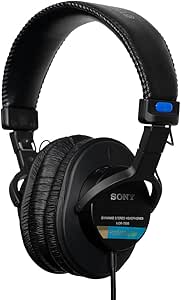 | Best for Studio and Field Monitoring | Driver size: 40 mm | Frequency response: 10 Hz–20 kHz | Design: Closed-ear, foldable | VIEW LATEST PRICE | See Our Full Breakdown |
| Audio-Technica ATH-M50x Professional Studio Monitor Headphones, Black | 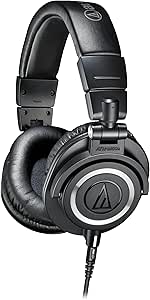 | Best for Flexible Studio Monitoring | Driver size: 45 mm | Driver type: Dynamic | Frequency response: Up to 28,000 Hz | VIEW LATEST PRICE | See Our Full Breakdown |
| Audio-Technica ATH-M20x Professional Studio Monitor Headphones |  | Best for Straightforward Tracking | Driver size: 40 mm | Driver type: Dynamic | Frequency response: 15–20,000 Hz | VIEW LATEST PRICE | See Our Full Breakdown |
| TASCAM TH-02 Wired Over-Ear Studio Monitor Headphones |  | Best Foldable Option for Basic Monitoring | Driver size: 50 mm | Frequency response: 18 Hz–22 kHz | Impedance: 32 ohms | VIEW LATEST PRICE | See Our Full Breakdown |
| closed-back studio headphone | Impedance | Cable | Weight | Frequency response |
|---|---|---|---|---|
| beyerdynamic DT 770 Pro 80-Ohm | 80 ohms | Fixed 3 m straight cable | 9.5 oz | — |
| Audio-Technica ATH-M40x Profes | 35 ohms | Detachable; 1.2–3.0 m coiled and 3.0 m straight cables included | — | 15 Hz (listed lower-end figure) |
| FIFINE HD8 Wired Studio Monito | — | — | 265 g | 20 Hz–20 kHz |
| beyerdynamic DT 770 PRO Closed | 80 ohms | 3 m single-sided straight cable | 9.5 oz | — |
| OneOdio Pro-10 Wired Over-Ear | 32 ohms | — | 415 g | 40 kHz (listed figure) |
| beyerdynamic DT 770 PRO 250 Oh | 250 ohms | Fixed, 3-meter coiled cable | — | — |
| Sennheiser HD 280 Pro Closed-B | — | Single-sided coiled cable, 1–3 m | 220 g (7.8 oz) | 8–25,000 Hz |
| Audio-Technica ATH-M20x Profes | 47 ohms | Single-side exit; listed as detachable | 261 g | 15–20 kHz |
| M-AUDIO HDH40 Closed-Back Over | 32 ohms | Fixed, 2.7 m | — | — |
| beyerdynamic DT 770 Pro X Clos | 48 ohms | Detachable 3 m mini-XLR | 292 g | — |
| Sony MDR-7506 Professional Ste | — | — | 8 oz | 10 Hz–20 kHz |
| Audio-Technica ATH-M50x Profes | 38 ohms | Detachable | — | Up to 28,000 Hz |
| Audio-Technica ATH-M20x Profes | 47 ohms | — | — | 15–20,000 Hz |
| TASCAM TH-02 Wired Over-Ear St | 32 ohms | Retractable | 0.3 kg | 18 Hz–22 kHz |
More Details on Our Top Picks
beyerdynamic DT 770 Pro 80-Ohm Closed-Back Studio Headphones, Black
The DT 770 Pro 80-ohm is my pick for recording setups where comfort and serviceability matter as much as isolation. Its replaceable velour pads and spring-steel headband suit regular studio sessions, while the closed-back design helps limit sound leakage near microphones. Compared with the Audio-Technica ATH-M40x, it trades folding earcups and detachable cables for a more repairable, studio-oriented build. The 3 m fixed cable gives room to move around a desk, but can get in the way in tight spaces and cannot be swapped if damaged. Its 80-ohm impedance can work with many laptops and phones, though an interface or headphone amp is recommended for better results. This is a strong fit for a stationary recording station, less so for buyers who need compact storage or cable flexibility.
Pros:- Closed-back design provides passive isolation for recording and monitoring.
- Replaceable velour ear pads and spring-steel headband support regular studio use.
- Includes a 3 m straight cable and 1/4-inch adapter for common studio connections.
- 80-ohm impedance is usable with many everyday devices, with an interface or amp recommended.
Cons:- The fixed cable cannot be detached or replaced independently.
- The 3 m cable can be cumbersome in a compact setup.
- An interface or headphone amp is recommended for best performance.
Best for: Home-studio musicians and podcasters who want comfortable, serviceable headphones for recurring recording and monitoring sessions.
Not ideal for: Mobile creators and compact-desk users who need folding headphones or a detachable, easily replaceable cable.
- Type:Closed-back dynamic headphones
- Impedance:80 ohms
- Fit:Over-ear
- Connectivity:Wired
- Cable:Fixed 3 m straight cable
- Connector:3.5 mm with 6.35 mm adapter
- Ear Pads:Replaceable grey velour
- Weight:9.5 oz
Our verdict“Choose the DT 770 Pro 80-ohm for a comfortable, serviceable studio pair if a fixed long cable suits your setup.”
Audio-Technica ATH-M40x Professional Studio Monitor Headphones
The ATH-M40x earns its place for buyers who need one closed-back pair to move between tracking, editing, and travel. Its detachable straight and coiled cables let you match the lead to the session, and the folding design is easier to pack than the fixed-cable beyerdynamic DT 770 Pro. The 90-degree swiveling cups also make one-ear monitoring practical for recording or cueing. Its 35-ohm impedance is a straightforward match for many interfaces and portable devices, while the circumaural fit helps reduce outside sound. The tradeoff is that its portability features do not make it an in-ear or pocket-sized option, and the provided frequency-response data gives only a lower-end figure. I’d choose it over the DT 770 when cable choice and packability matter more than a fixed, serviceable studio build.
Pros:- Includes detachable coiled and straight cables for different studio tasks.
- 90-degree swiveling earcups support one-ear monitoring.
- Collapsible design and included protective case help with transport.
- 35-ohm impedance suits many interfaces and portable audio devices.
Cons:- Still an over-ear wired headphone rather than a compact mobile option.
- The supplied frequency-response specification lists only the lower-end figure.
- Its folding and cable flexibility may matter less to buyers who keep headphones at a fixed workstation.
Best for: Musicians, editors, and DJs who need closed-back monitoring with swappable cables, folding storage, and one-ear listening.
Not ideal for: Listeners seeking compact in-ear headphones or buyers who prioritize a serviceable, replaceable-component design like the DT 770 Pro.
- Model:ATH-M40x
- Design:Over-ear, circumaural
- Driver size:40 mm
- Impedance:35 ohms
- Frequency response:15 Hz (listed lower-end figure)
- Cable:Detachable; 1.2–3.0 m coiled and 3.0 m straight cables included
- Features:90° swiveling earcups and collapsible design
- Included accessories:Protective case and screw-on adapter
Our verdict“Pick the ATH-M40x if detachable cables, folding storage, and one-ear monitoring are more useful to you than the DT 770 Pro’s fixed studio setup.”
FIFINE HD8 Wired Studio Monitor Headphones
The FIFINE HD8 is a practical entry point for buyers who want closed-back monitoring without committing to a headphone with a fixed lead. It includes two detachable coiled cables with 3.5 mm and 6.35 mm plugs, giving it a useful connection advantage over the fixed-cable beyerdynamic DT 770 Pro. Its 265 g weight, padded ear cushions, and adjustable headband are appealing for longer recording or editing sessions, while the 50 mm drivers are described as balanced with dynamic bass and accurate treble. The tradeoffs are a one-year warranty and passive isolation that is only described as decent, particularly against low-frequency room noise. The long coiled leads may also feel cumbersome away from a desk. I’d favor it for a budget-conscious home setup, not for buyers who need stronger stated isolation or a longer warranty.
Pros:- Two detachable coiled cables provide 3.5 mm and 6.35 mm connections.
- At 265 g, it is lightweight for extended recording or editing sessions.
- Padded ear cushions and an adjustable headband support a customizable fit.
- 50 mm drivers are described as offering balanced sound with dynamic bass and accurate treble.
Cons:- Passive isolation is described as less effective against low-frequency ambient noise.
- The included coiled cables may be awkward for casual mobile use.
- The listed warranty is one year.
Best for: New home-studio users who want lightweight closed-back headphones and detachable cables for switching between computers, mixers, and interfaces.
Not ideal for: Recording professionals who need stronger isolation from low-frequency noise, a longer warranty, or a simple short lead for mobile listening.
- Design:Over-ear, closed-back
- Driver size:50 mm
- Frequency response:20 Hz–20 kHz
- Weight:265 g
- Cable type:Detachable coiled
- Cable length:9.8 ft
- Connections:3.5 mm and 6.35 mm plugs
- Warranty:1 year
Our verdict“Choose the HD8 for a lightweight home-studio starter pair with detachable cables, but look elsewhere if isolation or warranty length is a priority.”
beyerdynamic DT 770 PRO Closed-Back Studio Headphones, 80 Ohm, Black
This DT 770 PRO 80-ohm listing is a fit for buyers who want a closed-back monitoring headphone with serviceable components and breathable velour pads. Like the other 80-ohm DT 770 listing in this roundup, it has a 3 m fixed cable, so it is less adaptable than the Audio-Technica ATH-M40x, which folds and includes detachable leads. The listed package here specifies a drawstring storage bag and screw-on 6.35 mm adapter, making the contents clear for studio use. Replaceable parts can help keep the headphones in service, but the long cable still limits convenience at a compact desk and cannot be detached when packing. I’d choose this version when repairability and a familiar wired studio connection matter more than portability; buyers who need cable options should favor the ATH-M40x.
Pros:- Serviceable construction allows components such as pads, headband, and drivers to be replaced.
- Breathable velour ear pads are suited to extended listening sessions.
- Includes a 3 m cable and screw-on 6.35 mm adapter for studio connections.
- Closed-back design helps reduce sound leakage during recording.
Cons:- The single-sided cable is fixed and cannot be swapped for a shorter lead.
- The 3 m cable can be cumbersome in compact setups.
- Wired use restricts movement compared with wireless headphones.
Best for: Studio owners who want closed-back headphones with replaceable components and a long cable for a fixed recording or editing station.
Not ideal for: Traveling musicians and users with compact workspaces who need folding headphones or detachable cables.
- Design:Closed-back, over-ear, circumaural
- Impedance:80 ohms
- Connectivity:Wired
- Cable:3 m single-sided straight cable
- Connector:3.5 mm with screw-on 6.35 mm adapter
- Ear pad material:Velour
- Weight:9.5 oz
- Included accessories:Drawstring storage bag and 1/4-inch adapter
Our verdict“Pick this DT 770 PRO listing for a repairable, fixed-station studio pair, but choose the ATH-M40x if packability and cable swaps matter more.”
OneOdio Pro-10 Wired Over-Ear DJ Headphones, Black
The OneOdio Pro-10 is the most DJ-oriented pick here: its 90-degree swiveling earcups support cueing in one ear, and a shared audio port lets another pair connect for collaborative listening. That makes it more flexible for DJ monitoring than the FIFINE HD8, which focuses on detachable cables and a lighter fit rather than cup rotation or sharing. The 50 mm drivers are described as bass-forward and balanced, a useful direction for cueing, though buyers seeking a strictly neutral monitoring profile may prefer the ATH-M40x. Its 32-ohm impedance works with devices that have a 3.5 mm or 6.35 mm jack, but it has no wireless option, and the 415 g weight is notably heavier than the HD8. I’d pick it for DJ-style use, not for long sessions where low weight is a priority.
Pros:- 90-degree rotating earcups support single-ear monitoring.
- Shared audio port allows connection to another pair of headphones.
- Includes both 3.5 mm and 6.35 mm audio connections.
- 50 mm drivers are described as delivering bass-forward, balanced stereo sound.
Cons:- At 415 g, it is heavier than the FIFINE HD8 for extended wear.
- Wired-only connectivity requires a device with a compatible audio jack.
- The bass-forward tuning may not suit listeners seeking neutral mix decisions.
Best for: DJs and cueing-focused listeners who want swiveling cups, wired jack compatibility, and an audio-sharing port.
Not ideal for: Mixers seeking a lighter headphone for long sessions or listeners who need wireless connectivity or a strongly neutral monitoring profile.
- Wearing style:Over-ear
- Driver size:50 mm
- Impedance:32 ohms
- Sensitivity:110 dB
- Frequency response:40 kHz (listed figure)
- Audio connectors:3.5 mm and 6.35 mm
- Ear cup rotation:90°
- Weight:415 g
Our verdict“Choose the Pro-10 for DJ cueing and shared listening, but favor the lighter HD8 or ATH-M40x for extended studio editing.”
beyerdynamic DT 770 PRO 250 Ohm Closed-Back Studio Headphones, Black
The DT 770 PRO 250 Ohm suits a fixed studio rig where an audio interface or headphone amp is already part of the setup. Its passive isolation helps reduce headphone bleed on recordings, while replaceable velour pads and an adjustable spring-steel headband support long monitoring sessions. Compared with the DT 770 PRO X, this version has higher impedance and a fixed coiled cable, so it is less convenient with phones and laptops but a natural fit for dedicated studio equipment. The cable reaches across a workstation and includes a 1/4-inch adapter, though its fixed construction limits replacement options. Choose it for a stationary, amp-ready workspace; skip it if you need easy portable drive or a detachable cable.
Pros:- Closed-back construction provides passive isolation to help limit headphone bleed.
- Replaceable velour ear pads and an adjustable spring-steel headband suit extended sessions.
- Three-meter coiled cable and included 1/4-inch adapter work well at a studio desk.
Cons:- The 250-ohm impedance may need a headphone amp or audio interface for adequate volume.
- The fixed cable cannot be detached or replaced independently.
Best for: Studio musicians and engineers using an audio interface or headphone amp who want closed-back monitoring and replaceable velour pads.
Not ideal for: Laptop and phone users without an amp, or anyone who wants a detachable cable for easier replacement.
- Type:Closed-back dynamic headphones
- Impedance:250 ohms
- Sensitivity:96 dB
- Connectivity:Wired
- Cable:Fixed, 3-meter coiled cable
- Adapter:1/4-inch adapter included
- Earpads:Replaceable grey velour
- Headband:Adjustable spring steel
Our verdict“Pick this DT 770 PRO for an amp-equipped studio setup; choose the lower-impedance DT 770 PRO X for easier use across everyday devices.”
Sennheiser HD 280 Pro Closed-Back Studio Monitoring Headphones
The HD 280 Pro is a practical choice when blocking room sound matters as much as monitoring. Its stated attenuation of up to 32 dB can help listeners focus in noisy recording spaces, and the collapsible, swiveling earcups make it easier to pack than the more studio-bound beyerdynamic DT 770 PRO 250 Ohm. Its 64-ohm impedance is also less demanding than that beyerdynamic’s 250-ohm design. Replaceable cable, earpads, and headband padding give the Sennheiser a serviceability advantage, but its coiled wire still tethers the listener, and the closed presentation may feel less open than open-back headphones. I’d shortlist it for tracking, live monitoring, or portable studio work, not for listeners seeking a lightweight wireless setup.
Pros:- Attenuates ambient sound by up to 32 dB according to the product specifications.
- Collapsible, swiveling earcups make storage and transport easier.
- Cable, earpads, and headband padding are replaceable.
- Includes a locking 6.3 mm adapter for studio and home audio equipment.
Cons:- The coiled cable keeps the listener tethered and can get in the way during movement.
- Closed-back listening may feel less open than an open-back design.
Best for: Recording musicians, location audio workers, and studio users who need strong ambient-noise attenuation and a foldable wired design.
Not ideal for: Listeners who want wireless freedom, an open-back presentation, or a cable-free listening setup.
- Design:Dynamic, closed, around-the-ear
- Frequency response:8–25,000 Hz
- Nominal impedance:64 ohms
- Sound pressure level:102 dB (IEC 268-7)
- Noise attenuation:Up to 32 dB
- Cable:Single-sided coiled cable, 1–3 m
- Connectors:3.5 mm stereo plug; locking 6.3 mm adapter included
- Weight:220 g (7.8 oz)
Our verdict“Choose the HD 280 Pro when isolation and serviceable parts matter more than wireless convenience or an open sound.”
Audio-Technica ATH-M20x Professional Studio Monitor Headphones, White
The white ATH-M20x makes sense for basic recording and monitoring when a simple, closed-back wired headphone is the priority. Its circumaural cups help isolate sound in louder surroundings, while the 47-ohm impedance is less demanding than the 250-ohm beyerdynamic DT 770 PRO. Audio-Technica lists enhanced low-frequency performance, which can suit tracking and general listening, though buyers seeking a stated flat-reference tuning may prefer to compare the supplied sound information carefully. The single-side cable exit keeps the wire away from both earcups, but the cable is listed as detachable without further connection details, so check compatibility before assuming a quick swap. Its plastic enclosure is also a simpler proposition than the beyerdynamic’s spring-steel headband. This is a functional entry-level studio pick, not the most serviceable or feature-rich option here.
Pros:- Circumaural design helps isolate sound in louder environments.
- 47-ohm impedance is less demanding than the 250-ohm DT 770 PRO.
- Single-side cable exit keeps the wire routed from one earcup.
- 40 mm dynamic drivers are designed for monitoring, tracking, and mixing.
Cons:- Plastic enclosure offers a less substantial construction than the DT 770 PRO’s spring-steel headband.
- Wired operation limits movement, and the headphones are not water resistant.
Best for: Home-recording beginners who need closed-back wired headphones for tracking and monitoring with a standard audio source.
Not ideal for: Studio buyers prioritizing a metal headband, extensive serviceability, or detailed isolation specifications.
- Driver:40 mm dynamic
- Frequency response:15–20 kHz
- Impedance:47 ohms
- Sensitivity:96 dB
- Design:Over-ear, circumaural
- Connectivity:Wired, 3.5 mm audio jack
- Cable:Single-side exit; listed as detachable
- Weight:261 g
Our verdict“Choose the ATH-M20x for straightforward tracking on a modest wired setup, but look to the DT 770 PRO for a more serviceable studio build.”
M-AUDIO HDH40 Closed-Back Over-Ear Headphones
The M-AUDIO HDH40 is the flexible, easy-to-connect pick for a buyer moving between a phone, tablet, digital piano, and studio interface. Its 32-ohm impedance is more suitable for everyday devices than the 250-ohm DT 770 PRO, and the included 1/4-inch adapter keeps pro-audio connections within reach. A 2.7-meter cable gives room to work at a desk, while the rotatable frame and cushioned pads add fit flexibility. Compared with the Sennheiser HD 280 Pro, the HDH40 offers a similarly practical wired approach but does not list the Sennheiser’s quantified noise attenuation or replaceable cable. Its own cable is fixed, which is a real limitation for a headphone intended to serve multiple setups. Consider it for casual recording and general listening rather than a heavily used, repair-oriented studio fleet.
Pros:- 32-ohm impedance supports use with smartphones, tablets, and pro audio equipment.
- Includes a 1/4-inch adapter for mixers, interfaces, and other studio connections.
- Flexible headband, cushioned pads, and adjustable arms support fit adjustment.
- 180-degree rotatable frame adds positioning flexibility.
Cons:- The 2.7-meter cable is fixed and cannot be detached for replacement.
- The product data does not specify a noise-attenuation level, unlike the HD 280 Pro.
Best for: Home creators and keyboard players who want one closed-back wired headphone for mobile devices and studio equipment.
Not ideal for: Frequent studio users who need a replaceable cable or a stated, high level of noise attenuation.
- Design:Closed-back, over-ear
- Driver:40 mm dynamic neodymium
- Impedance:32 ohms
- Sensitivity:95 dB
- Cable:Fixed, 2.7 m
- Frame:180-degree rotatable
- Adapter:1/4-inch adapter included
- Warranty:1 year manufacturer
Our verdict“Pick the HDH40 for versatile connections across everyday and studio devices, but favor the HD 280 Pro if quantified isolation and replaceable parts matter more.”
beyerdynamic DT 770 Pro X Closed-Back Studio Headphones, 48 Ohm
The DT 770 PRO X earns the broadest recommendation here by pairing studio-focused closed-back construction with a 48-ohm impedance suited to laptops, phones, interfaces, and consoles without a separate amp. That makes it easier to use across more setups than the 250-ohm DT 770 PRO, while the detachable mini-XLR cable solves one of that model’s clearest ownership drawbacks. Its replaceable velour pads and passive isolation also suit tracking, where reducing microphone bleed matters. The included 3-meter cable and carrying bag support studio use, though this remains a wired headphone rather than a convenient choice for untethered listening. At 292 g, it is not the lightest option in the group, and buyers who do not need the added versatility may find the simpler HD 280 Pro more practical. I’d choose it for one headphone spanning studio and everyday wired sources.
Pros:- 48-ohm impedance supports use with common devices without a separate headphone amplifier.
- Detachable 3-meter mini-XLR cable is easier to replace than the fixed cable on the DT 770 PRO 250 Ohm.
- Replaceable velour pads and passive isolation suit recording and long monitoring sessions.
- Includes a carrying bag for storage and transport.
Cons:- Wired operation limits freedom of movement compared with wireless headphones.
- At 292 g, it is heavier than the listed Sennheiser HD 280 Pro.
Best for: Creators who want one closed-back studio headphone for interfaces and everyday devices, with a detachable cable and replaceable pads.
Not ideal for: Listeners who need wireless operation, minimal weight, or a headphone specifically for use with a dedicated amp at a fixed workstation.
- Design:Closed-back, over-ear
- Driver:45 mm dynamic STELLAR.45
- Frequency range:5 Hz–35,000 Hz
- Impedance:48 ohms
- Sensitivity:97 dB
- Cable:Detachable 3 m mini-XLR
- Ear pads:Replaceable velour
- Weight:292 g
Our verdict“Choose the DT 770 PRO X for a versatile wired studio headphone that works across more devices than the 250-ohm DT 770 PRO.”
Sony MDR-7506 Professional Stereo Headphones
The MDR-7506 is a practical pick for buyers who need closed-ear monitoring that can move between recording, radio, and film work. Its foldable construction and included soft case make it easier to pack than the TASCAM TH-02, while the 9.8-foot cord gives room to work near studio equipment. A supplied 1/4-inch adapter also helps it connect to common audio gear without a separate accessory.
The tradeoff is the non-detachable cable: damage to the cord is less convenient to address than with the detachable cable on the Audio-Technica ATH-M50x. Its closed-ear design supports monitoring around ambient noise, but buyers who want an open, spacious presentation should look elsewhere. I’d choose this Sony for a straightforward wired workhorse, not for cable flexibility.
Pros:- Closed-ear design helps reduce external noise during monitoring.
- Foldable construction and included soft case support storage and transport.
- Long 9.8-foot cable provides room to move around studio equipment.
- Includes a 1/4-inch adapter for compatible audio connections.
Cons:- Non-detachable cable is less convenient to replace than the ATH-M50x cable.
- Closed-ear fit may not suit listeners seeking an open-back sound.
Best for: Studio, radio, and film workers who want foldable closed-back headphones with a long cable and included storage case.
Not ideal for: Listeners who need a replaceable cable or prefer the more open presentation of open-back headphones.
- Driver size:40 mm
- Frequency response:10 Hz–20 kHz
- Design:Closed-ear, foldable
- Cord length:9.8 ft
- Cord:Non-detachable oxygen-free copper
- Connector:Gold-plated plug
- Included adapter:1/4-inch
- Weight:8 oz
Our verdict“Choose the MDR-7506 for portable, wired monitoring with a long reach, provided a fixed cable is acceptable.”
Audio-Technica ATH-M50x Professional Studio Monitor Headphones, Black
The ATH-M50x earns its place for listeners who need closed-back headphones to serve both studio tasks and everyday listening. Its detachable cable is easier to replace or swap than the fixed cord on the Sony MDR-7506, and the 90-degree swiveling earcups make one-ear monitoring more convenient. The sound-isolating fit and 45 mm dynamic drivers give it a more versatile brief than the tracking-focused ATH-M20x.
That versatility comes with tradeoffs: the listed frequency response reaches 28,000 Hz, but that figure alone does not establish a neutral sound, and the product description notes deep bass, which may not suit buyers seeking a strictly restrained monitoring presentation. It is also not water resistant. I’d favor it when cable flexibility and swiveling cups matter more than a simpler, tracking-oriented setup.
Pros:- Detachable cable is easier to replace or change than the fixed cable on the MDR-7506.
- 90-degree swiveling earcups support one-ear monitoring.
- Sound-isolating earcups suit work in noisier environments.
- 45 mm dynamic drivers are described as delivering clear sound with deep bass.
Cons:- Not water resistant, limiting use around moisture.
- Described deep bass may be less appealing to buyers seeking a restrained monitoring balance.
- Over-ear fit may not suit listeners who prefer compact in-ear headphones.
Best for: Home-studio creators and listeners who want sound-isolating headphones with a replaceable cable and one-ear monitoring option.
Not ideal for: Buyers seeking water resistance or a simpler tracking-focused model with fewer everyday-listening features.
- Driver size:45 mm
- Driver type:Dynamic
- Frequency response:Up to 28,000 Hz
- Impedance:38 ohms
- Sensitivity:99 dB
- Fit:Over-ear
- Cable:Detachable
- Earcup swivel:90 degrees
- Warranty:2 years on parts and labor
Our verdict“Pick the ATH-M50x if you want a versatile closed-back studio option with a detachable cable and swiveling cups.”
Audio-Technica ATH-M20x Professional Studio Monitor Headphones
The ATH-M20x is the more focused, no-frills choice in Audio-Technica’s lineup here: it is designed for studio tracking and mixing, with circumaural cups that help isolate the listener. Its single-sided 9.8-foot cable keeps the connection routed from one side, a useful detail when moving around a recording setup. Compared with the ATH-M50x, it gives up detachable-cable convenience and 90-degree swivel cups, so it makes more sense for basic tracking than frequent one-ear monitoring or mixed studio-and-everyday use.
The 40 mm drivers are tuned for enhanced low-frequency performance, which may suit tracking but may not be the preferred emphasis for every mix decision. The long fixed cable can also be awkward at a desk or on the go, and the over-ear design is less compact than the folding Sony MDR-7506. I’d choose it for a dedicated, budget-conscious wired setup rather than portability.
Pros:- Circumaural earcups provide sound isolation for tracking.
- Single-sided cable exit keeps the connection routed from one earcup.
- 40 mm drivers are tuned for enhanced low-frequency performance.
- Includes a 6.3 mm adapter for compatible audio equipment.
Cons:- The 9.8-foot cable may be cumbersome for short-distance or portable listening.
- Cable is not listed as detachable, unlike the ATH-M50x.
- Over-ear design may feel bulky for travel.
Best for: New home-studio users who need closed-back headphones for tracking and want a long, single-sided cable.
Not ideal for: Mobile listeners or engineers who want a detachable cable, swiveling cups, or a compact foldable design.
- Driver size:40 mm
- Driver type:Dynamic
- Frequency response:15–20,000 Hz
- Sensitivity:96 dB
- Impedance:47 ohms
- Cable length:9.8 ft (2.99 m)
- Cable exit:Single-sided
- Included adapter:6.3 mm
- Warranty:2 years on parts and labor
Our verdict“Choose the ATH-M20x for straightforward closed-back tracking when a long fixed cable matters more than portability or cable swaps.”
TASCAM TH-02 Wired Over-Ear Studio Monitor Headphones
The TH-02 suits buyers who want a foldable closed-back design for recording, DJ use, and general music listening. Its 50 mm drivers, padded headband, and ear pads make it a different proposition from the more studio-oriented Audio-Technica ATH-M20x; the TASCAM’s appeal is convenience and broad everyday use rather than a detailed feature set for mixing. The included 1/4-inch adapter also makes it ready for compatible studio connections.
Its retractable cable and foldability support storage, although the listed data does not specify a detachable cable, so replacement options are less clear than with the ATH-M50x. The plastic enclosure and 0.3 kg weight make it less compelling for buyers prioritizing a lighter build, and it is not water resistant. I’d pick it for basic monitoring that needs to pack away, not for demanding cable flexibility or wet environments.
Pros:- Foldable design makes storage and transport more convenient.
- Padded headband and ear pads support over-ear wear.
- Includes a 1/8-inch-to-1/4-inch adapter for audio equipment.
- Closed-back design is suited to monitoring and recording use.
Cons:- Plastic enclosure may feel less substantial than the ATH-M50x’s aluminum enclosure.
- Not water resistant.
- Wired connection limits movement compared with wireless headphones.
Best for: Casual recording and DJ users who want foldable wired headphones with a supplied 1/4-inch adapter.
Not ideal for: Studio users who need a clearly detachable replacement cable, water resistance, or a more specialized mixing-oriented option.
- Driver size:50 mm
- Frequency response:18 Hz–22 kHz
- Impedance:32 ohms
- Sensitivity:98 dB
- Connectivity:3.5 mm audio jack
- Included adapter:1/8-inch (3.5 mm) to 1/4-inch (6.3 mm)
- Cable:Retractable
- Foldable:Yes
- Weight:0.3 kg
Our verdict“Choose the TH-02 for foldable, basic closed-back monitoring with an included studio adapter, not for advanced cable flexibility.”
How We Picked
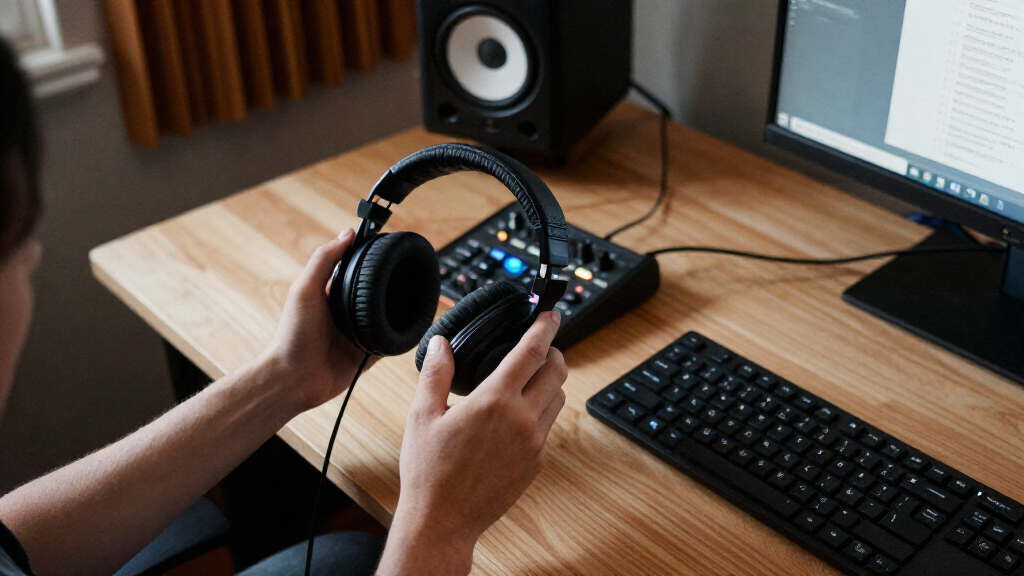
I ranked these headphones around the tasks that make closed-back studio models useful: monitoring while recording, keeping playback from spilling into microphones, and listening for mix details without an open-back design. I weighed stated construction and fit, isolation-oriented design, driver and impedance specifications, cable practicality, and how suitable each model appears for common sources such as interfaces, mixers, and computers. These factors matter more than headline specifications alone; a technically capable pair is less useful if its fit, output requirements, or cable setup does not suit the session.
The ranking favors all-around studio utility over a single standout feature. The DT 770 Pro 80-Ohm leads for its balanced role in the lineup, while the ATH-M40x and HD 280 Pro rank highly for distinct practical needs. More specialized or entry-level models sit lower because they make clearer compromises in versatility, refinement, or fit flexibility. Where products have duplicate or closely related listings, I treat the exact version as a buying detail rather than a meaningful performance advantage.
| closed-back studio headphone | Design |
|---|---|
| beyerdynamic DT 770 Pro 80-Ohm | — |
| Audio-Technica ATH-M40x Profes | Over-ear, circumaural |
| FIFINE HD8 Wired Studio Monito | Over-ear, closed-back |
| beyerdynamic DT 770 PRO Closed | Closed-back, over-ear, circumaural |
| OneOdio Pro-10 Wired Over-Ear | — |
| beyerdynamic DT 770 PRO 250 Oh | — |
| Sennheiser HD 280 Pro Closed-B | Dynamic, closed, around-the-ear |
| Audio-Technica ATH-M20x Profes | Over-ear, circumaural |
| M-AUDIO HDH40 Closed-Back Over | Closed-back, over-ear |
| beyerdynamic DT 770 Pro X Clos | Closed-back, over-ear |
| Sony MDR-7506 Professional Ste | Closed-ear, foldable |
| Audio-Technica ATH-M50x Profes | — |
| Audio-Technica ATH-M20x Profes | — |
| TASCAM TH-02 Wired Over-Ear St | — |
Factors to Consider When Choosing Closed-back Studio Headphones
Closed-back studio headphones can serve recording, editing, instrument practice, and general listening, but one pair rarely excels equally at all four. I would start by matching the headphones to the room, source, and session length—not by choosing the model with the most impressive-looking specification.
Match Isolation to the Recording Situation
Closed-back cups help limit sound escaping toward a microphone, but they do not create perfect isolation. The amount of leakage still depends on listening level, fit, seal, and the microphone’s placement and sensitivity. For vocals or acoustic instruments recorded near the headphones, prioritize a stable seal and keep monitoring volume as low as practical. A tighter seal can also make glasses, hair, and head shape more noticeable over a long session. Do not assume that a model described as studio headphones will prevent bleed in every recording setup; test the actual mic and headphone position before tracking a critical take.
Choose Impedance for Your Headphone Output
Impedance alone does not tell you how loud or clean a headphone will sound from a particular source; sensitivity and the output’s available voltage matter too. A high-impedance model such as the DT 770 Pro 250-Ohm may suit an interface or headphone amplifier with adequate output, but can leave a phone or modest laptop output short on level. Lower-impedance options are often easier to use across mixed devices, though compatibility still varies. Check your interface’s headphone specifications and your usual listening level before buying. A headphone amplifier is only useful when the current source cannot provide enough clean volume.
Prioritize Comfort for the Length of Your Sessions
Clamping force, ear-pad depth, headband pressure, heat, and weight can matter more than small differences in listed frequency range during several hours of editing. A firm seal can support isolation, but a fit that feels tiring may make you take off the headphones or change position frequently. If possible, compare the ear cups against your ear size and consider whether glasses affect the seal. Replacement pads also matter: pads wear down, and a change in pad shape or material can alter both comfort and the acoustic seal. For frequent studio work, check whether replacement parts are available before treating the original pads as a permanent feature.
Decide Whether You Need One Cable or More Flexibility
A fixed cable can be simple and sturdy, but it is harder to replace if it is damaged or becomes inconvenient at a desk. A detachable cable offers easier replacement and can make packing more practical, although the connector adds another part to keep track of. Cable length affects daily use: a long lead helps when the interface is across the room, while extra cable can snag around a chair or instrument. Check whether the supplied plug fits your device or whether an adapter is included. For mobile work, folding cups and a manageable cable can be more useful than features aimed at permanent studio placement.
Treat Frequency Response as a Clue, Not a Verdict
Published frequency ranges do not show how evenly a headphone reproduces those frequencies, and they do not guarantee that a mix will translate. Closed-back models can emphasize bass or alter the sense of space compared with speakers or open-back headphones. Use familiar reference tracks and, when possible, compare your work on speakers and another playback device before making mix decisions. Some listeners benefit from learning a particular headphone’s tonal tendencies rather than chasing a supposedly neutral label. If reliable tonal judgment is your main goal, plan for cross-checking rather than expecting any single pair to replace every monitoring reference.
Spend More for a Real Workflow Benefit
A higher-tier model is worth considering when it solves a recurring problem, such as an uncomfortable fit, a cable that cannot be replaced, or an impedance mismatch with your source. Paying more only for a longer specification sheet may not improve recording results if the headphones are used for occasional practice or basic playback. Budget pairs can be sensible for a spare studio station, but frequent users may value parts availability and durable construction over the lowest initial outlay. Also distinguish a true model upgrade from a listing variation in color or impedance. Compare the exact version and your intended use before treating a higher price tier as a meaningful step up.
Frequently Asked Questions
Can I use 250-Ohm closed-back headphones directly with a laptop?
Possibly, but the result depends on the laptop’s headphone output and the headphone’s sensitivity, not impedance by itself. If the sound reaches your preferred level without distortion, a separate amplifier may not be necessary. If you run out of volume or hear strain on peaks, an interface or headphone amp with a suitable output can help. Compare that setup need with a lower-impedance option such as the DT 770 Pro X before buying. Leave enough headroom for dynamic recordings rather than judging compatibility from a quiet track alone.
Are two listings for the DT 770 Pro 80-Ohm necessarily different headphones?
Not necessarily: the product names here describe two closely matching 80-Ohm DT 770 Pro listings. Listing details may differ by packaging, seller, color presentation, included accessories, or regional version, so verify the exact specifications before selecting one. Do not assume that a duplicate listing represents a sound or build upgrade. If your main choice is between the 80-Ohm and 250-Ohm versions, focus on your audio source’s output capability. Confirm the model label and included cable or adapter in the listing details.
Will closed-back headphones stop sound from leaking into a vocal microphone?
They reduce leakage compared with open-back headphones, but no closed-back pair can guarantee silence at the microphone. Higher playback levels, a loose seal, sensitive microphones, and close mic placement can all increase bleed. Start with moderate monitoring volume and position the ear cups so they seal consistently. A short test recording can reveal whether the mic captures playback before you record a full take. For very quiet or exposed vocal parts, use the lowest level that still lets the performer hear the track clearly.
Should I choose the ATH-M40x or ATH-M50x for a home studio?
The choice depends on whether you need the M50x’s more premium positioning or would rather keep the setup focused on practical monitoring. The M40x is a strong versatile alternative in this roundup, while the M50x is the step-up option for buyers who want a higher-tier Audio-Technica model. Neither name alone guarantees that its tonal balance will suit your mixing habits. If possible, compare both with familiar tracks and check how each fits during a longer session. Also weigh cable and portability needs, since daily handling can matter as much as a model tier.
Are budget headphones suitable for recording and mixing, or only casual listening?
Budget models can work for tracking, practice, and basic editing, especially when isolation is the main need. Mixing decisions are more demanding because tonal balance and comfort can affect what you hear and how consistently you work. If you choose an entry-level pair, compare mixes on speakers or another familiar playback system instead of relying on it as your only reference. Consider whether replacement pads or cables are available if the headphones will see frequent use. Spending more is most useful when it addresses a specific limitation you encounter, not simply because the headphones carry a studio label.
Conclusion
For the best overall choice, I recommend the beyerdynamic DT 770 Pro 80-Ohm for its broad studio role, while reminding buyers to confirm their source can drive it comfortably. For value and versatility, choose the Audio-Technica ATH-M40x; its practical feature set makes it a good fit for a shared home studio or regular portable use. For a premium Audio-Technica option, consider the ATH-M50x, and for a beginner seeking a simpler starting point, look at the ATH-M20x or TASCAM TH-02 with realistic expectations about their more basic role. For stronger isolation-oriented monitoring, the Sennheiser HD 280 Pro is the specific-use pick, while the DT 770 Pro X makes sense when a lower-impedance Beyerdynamic option better fits a mixed-device setup. Match the exact version, fit, and output requirements to your workflow before choosing.