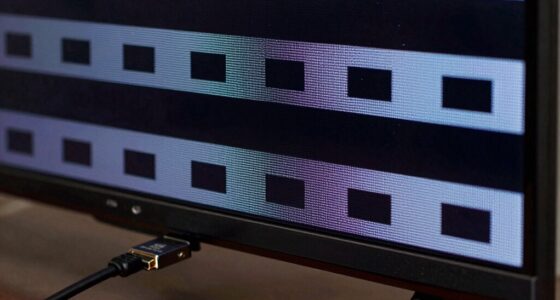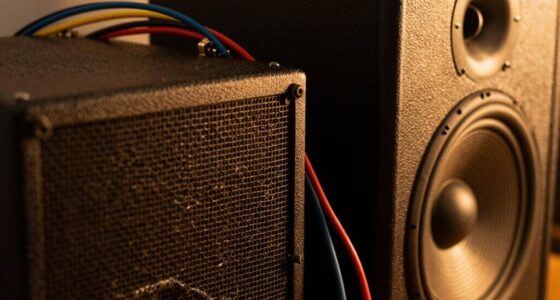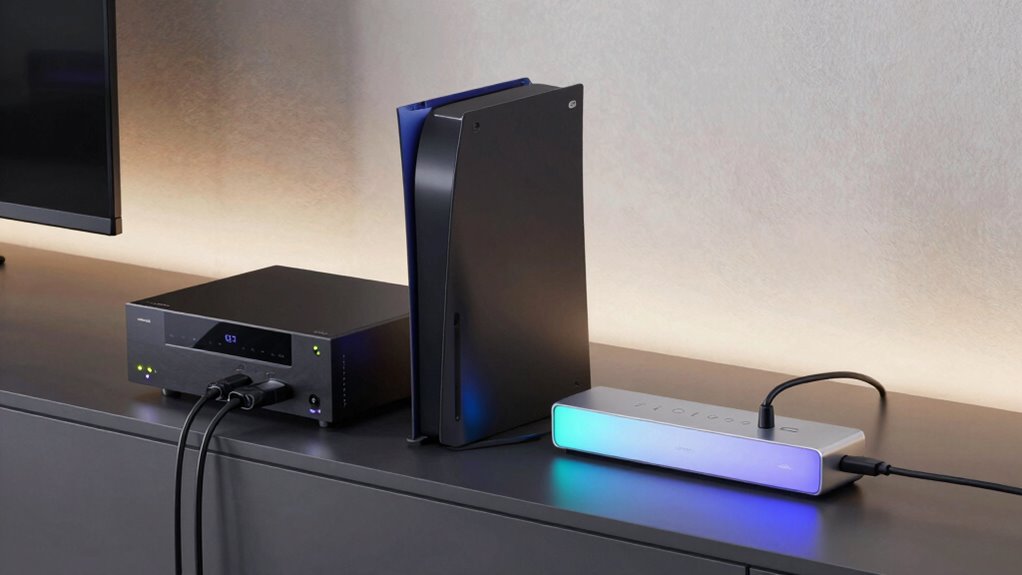

To prevent strange AV glitches, start by turning on your source devices like Blu-ray players or streaming boxes and let them fully boot. Then, power on your AV receiver or amplifier, which acts as the signal hub. Once the receiver is on, power up your TV or display. Organizing this order guarantees signals recognize correctly and avoids flickering or audio dropouts. Keep going to discover more tips for a seamless audiovisual experience.

Get audio and creator gear delivered free — and shop member deals
- Fast, free delivery on millions of items
- Access to Prime Big Deal Days deals on October 6–7
- Prime Video, Amazon Music and more included
Key Takeaways
- Turn on source devices first and allow them to fully boot before powering the AV receiver.
- Power on the AV receiver or amplifier after sources to ensure proper signal recognition.
- Organize and secure cables to prevent signal interference and maintain system stability.
- Use a proper sequence to prevent glitches caused by unsynchronized device initialization.
- Calibrate audio settings after powering on to ensure balanced sound and avoid glitches.

Have you ever wondered why the sequence in which you power on your devices matters? It’s more than just a matter of convenience; it can considerably impact your audiovisual experience. When you follow a proper power-on order, you help prevent strange AV glitches like flickering screens, audio dropouts, or system malfunctions. The key lies in understanding how different components interact and ensuring they initialize correctly. A essential part of this process involves proper cable management and audio calibration. If your cables are tangled or poorly organized, signals can get disrupted, leading to poor picture quality or audio issues. Before powering on, take a moment to organize your cables neatly, securing them with ties or clips so that signals travel smoothly without interference. This simple step guarantees that when your devices turn on, they communicate properly, reducing the chance of glitches.
Once cables are managed, you should turn on your equipment in a specific order. Start with your source devices, like your Blu-ray player, streaming box, or game console. Power these up first and allow them to fully boot. Next, turn on your AV receiver or amplifier. This device acts as the hub, routing signals to your speakers and display. Turning it on after the sources ensures that it recognizes the incoming signals without confusion. Additionally, understanding the importance of cable management can help minimize signal disruptions and improve overall system stability. Proper cable management not only helps with signal clarity but also prolongs the lifespan of your equipment by reducing wear and tear on connections. Moreover, system configuration plays a crucial role in ensuring that all components communicate effectively from the start. Also, paying attention to power supply quality can help prevent unexpected glitches caused by electrical inconsistencies. Taking these steps can also help prevent potential electrical interference that might cause glitches during operation.
Start with source devices, then the AV receiver, and finally the display for optimal connection and performance.
After powering everything up, it’s time for audio calibration. Once all devices are on, adjust your sound settings to match your room’s acoustics. Proper audio calibration is essential because it ensures your sound system delivers balanced, clear audio without distortion or echo. Many AV receivers have built-in calibration tools—use these to optimize speaker levels and delay settings. Doing this after the power-on sequence guarantees that your system operates harmoniously, avoiding strange glitches that happen when components aren’t synchronized. When you take the time to calibrate your audio, you enhance the overall sound quality, making your viewing experience more immersive.
As an affiliate, we earn on qualifying purchases.
Frequently Asked Questions
Do All AV Devices Require the Same Power-On Order?
No, not all AV devices require the same power-on order. Device compatibility and the specific setup influence the sequence you should follow. Properly managing the power-on order helps prevent power surges and ensures smooth operation. For example, turning on the receiver first, then the source devices, minimizes glitches. Always check manufacturer instructions to optimize device performance and safeguard against power surges, guaranteeing a seamless AV experience.
Can Incorrect Power-On Sequences Damage AV Equipment?
Yes, incorrect power-on sequences can damage your AV equipment. When devices aren’t powered on in the proper order, it can cause improper device initialization, leading to potential hardware stress. Additionally, this improper sequence increases power surge risks, which can fry sensitive components. Always follow recommended power-on procedures to protect your gear, ensuring smooth operation and preventing costly repairs. Proper sequencing safeguards your equipment’s longevity and performance.
How Long Should I Wait Between Turning on Devices?
Ever wondered how long to wait between turning on devices? You should wait at least 30 seconds to a minute, ensuring proper signal synchronization and energy conservation. This pause helps prevent AV glitches and protects your equipment from power surges. Rushing can cause damage or miscommunication between devices. Taking this break guarantees each device powers up correctly, maintaining ideal performance and extending the lifespan of your AV system.
Does Ambient Temperature Affect AV Setup Sequences?
Ambient temperature and stability definitely impact your AV setup sequences. Temperature fluctuations can cause components to behave unpredictably, leading to audio or visual glitches. When the environment’s temperature is stable, devices power on smoothly and sync correctly. Conversely, rapid changes can stress electronics, causing delays or malfunctions. To guarantee a seamless setup, keep the ambient environment consistent, avoiding sudden temperature shifts that might disrupt your AV system’s operation.
Are There Universal Power-On Orders for Home Theaters?
Yes, there are universal power-on orders for home theaters. You should start by turning on your audio calibration devices first, guaranteeing sound is properly configured. Next, power on your AV receiver followed by the display and source devices. Use remote control protocols consistently to avoid confusion. This sequence helps prevent glitches, ensures smooth operation, and maintains ideal audio and video quality during setup.
cable management clips for AV systems
As an affiliate, we earn on qualifying purchases.
As an affiliate, we earn on qualifying purchases.
Conclusion
So, next time you power up your system, remember that a simple change in the order can save you from strange AV glitches. Ironically, it’s often the tiniest details—like which component turns on first—that hold the key to smooth performance. Instead of chasing elusive bugs, maybe all you needed was a little patience and a proper sequence. After all, in tech, as in life, sometimes the smallest steps make the biggest difference.
audio calibration microphone for home theater
As an affiliate, we earn on qualifying purchases.
As an affiliate, we earn on qualifying purchases.
As an affiliate, we earn on qualifying purchases.
Fall Picks
fall essentials
As an affiliate, we earn on qualifying purchases.