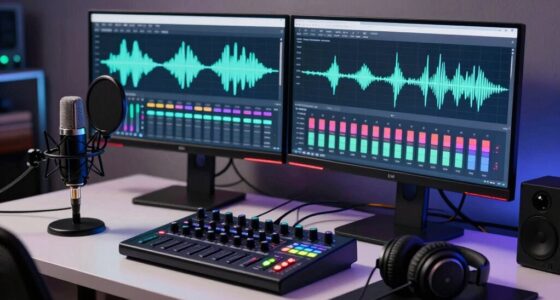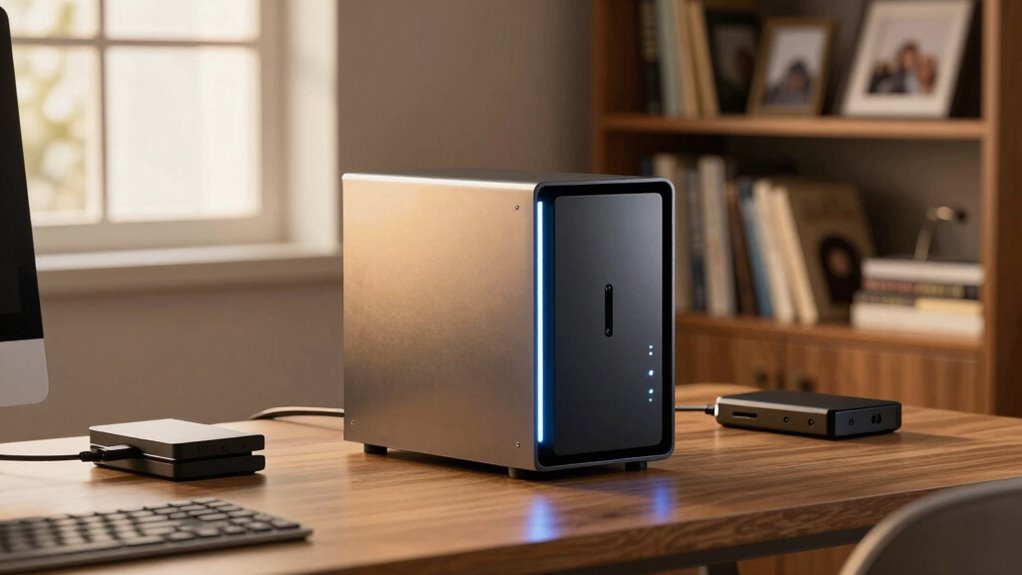

If you value control, privacy, and reliable access to your media files, local storage like NAS is a smart choice. It offers quick data access without relying on the internet, and with features like encryption and access controls, you stay in charge of your security. Redundancy guarantees your data stays safe even if hardware fails. Want to discover more about who truly benefits and how to maximize these solutions? Keep exploring to uncover the full picture.

Get audio and creator gear delivered free with Prime
- Fast, free delivery on millions of items
- Prime Video, Amazon Music and more included
- Member-only deals all year
Key Takeaways
- Users prioritizing data control, privacy, and security gain from local storage solutions like NAS.
- Media professionals needing quick, reliable access to large files benefit from NAS’s speed and redundancy.
- Organizations seeking to prevent data loss through hardware failure rely on NAS’s redundancy features.
- Those with limited or unreliable internet access prefer NAS over cloud-only storage for consistent access.
- Users interested in customizable security measures and data sovereignty find NAS offers tailored control.
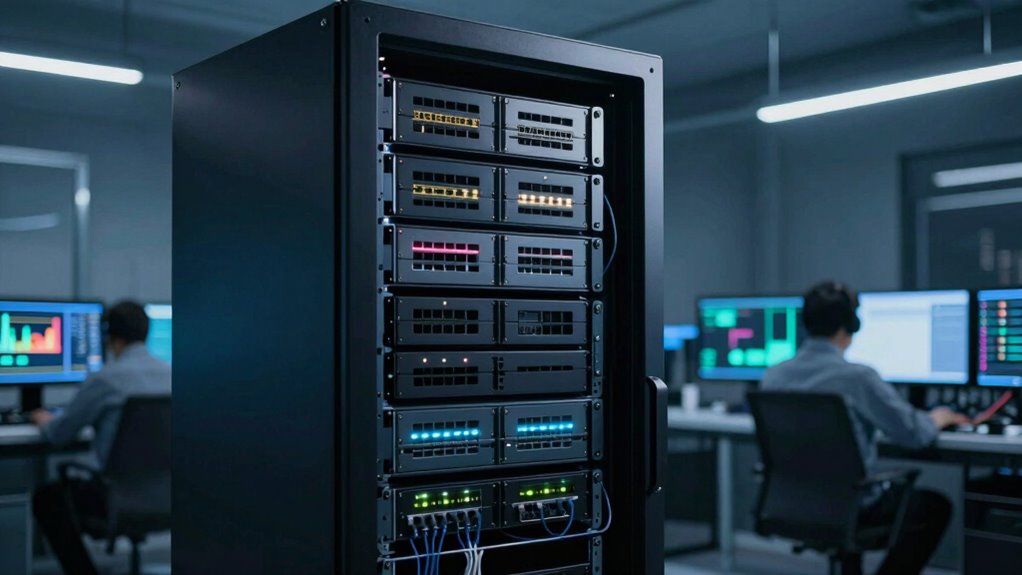
What exactly is the future of the NAS ecosystem, and why does it matter to you? As more people rely on digital media, the significance of local storage solutions like Network Attached Storage (NAS) grows. The future of this ecosystem hinges on how well it adapts to emerging needs around cloud security and data redundancy. You need to understand these trends because they directly impact how safely and reliably you store your valuable data. The debate about who benefits most from local media storage isn’t just technical — it’s personal. You might think that cloud storage can replace NAS entirely, but many still prefer the control and security that a local device offers.
The core advantage of NAS is that it keeps your data close, giving you quick access without relying solely on the internet. But with increased cyber threats, cloud security has become a top concern. Cloud providers invest heavily in security measures, but no system is invulnerable. When you use a NAS, you retain more control over your data’s security, especially if you implement strong access controls and encryption. As cyberattacks grow more sophisticated, this control becomes essential. Furthermore, data redundancy plays a key role in the future of NAS. It ensures your media and files are duplicated across multiple drives or locations, so even if one fails, your data remains intact. This redundancy is a safeguard against hardware failures, which can happen unexpectedly, and it keeps your media accessible at all times. Additionally, implementing effective data redundancy strategies can significantly enhance your data resilience.
Looking ahead, the ecosystem will likely evolve to combine the best of both worlds: local storage with cloud integration. Features like automatic backups to cloud services and hybrid solutions will become more common, giving you flexibility and peace of mind. You might find that the future of NAS isn’t about replacing the cloud but augmenting it. Increased emphasis on cloud security protocols and smarter data redundancy methods will make your storage system more resilient and safer. This means you’ll have fewer worries about losing data or falling victim to cyber threats, knowing that your media is protected across multiple layers. Understanding cybersecurity measures and their importance is key to making informed decisions about your storage needs. Additionally, staying informed about evolving cloud security protocols can help you better protect your data from emerging threats. As the digital media landscape continues to expand, integrating local and cloud solutions will become more vital for comprehensive data protection. Moreover, advancements in storage technology are constantly shaping the way we manage and safeguard digital media, emphasizing the importance of staying updated on these innovations.
Future NAS solutions will blend local storage with cloud backups for enhanced security and seamless data protection.
In the end, the people who benefit most from local media storage are those who value control, privacy, and reliability. As the NAS ecosystem advances, it offers you a way to safeguard your media with improved security measures and redundancy strategies. Whether you’re a casual user or a professional, understanding these trends helps you make smarter decisions about your data storage. The future of NAS is about empowering you with safer, more dependable options — ensuring your media remains accessible, protected, and under your control.
As an affiliate, we earn on qualifying purchases.
Frequently Asked Questions
How Secure Is Data Stored on NAS Devices Compared to Cloud Services?
Data stored on NAS devices can be quite secure if you implement proper measures, but generally, cloud services offer more robust security features. With NAS, you need to guarantee data encryption and control remote access carefully, as your data is vulnerable if your network isn’t well-protected. Cloud providers typically handle encryption and remote access security for you, making them a safer option for many users.
Can NAS Systems Integrate Seamlessly With Existing Home Automation Setups?
Yes, NAS systems can integrate seamlessly with your existing home automation setup. You simply connect your NAS to your network, and it works as a centralized device, allowing easy device integration. Most modern NAS devices support compatibility with popular smart home platforms, making it straightforward to automate routines, access media, and manage devices through a single interface. This integration enhances your home automation experience by providing reliable, local media storage and device control.
What Are the Long-Term Maintenance Costs of Owning a NAS?
Owning a NAS involves ongoing costs, mainly for maintenance and hardware replacement. You’ll need to invest in reliable backup strategies to prevent data loss and guarantee hardware durability over time. Expect expenses for replacing drives or upgrading components as technology advances or hardware wears out. Regularly updating firmware and monitoring system health also helps reduce long-term costs, keeping your media storage efficient and secure.
How Does NAS Performance Vary With Different Hardware Configurations?
Think of your NAS as a race car—its speed depends on how well you tune it. Different hardware configurations, like faster processors or SSDs, considerably boost performance. Hardware optimization and performance benchmarking reveal how each component impacts speed and data flow. Upgrading RAM or network interfaces can transform sluggish storage into a sleek, responsive system. So, selecting the right hardware setup guarantees your NAS runs at full throttle.
Are There Privacy Concerns With Using NAS for Sensitive Data?
Yes, there are privacy concerns with using NAS for sensitive data. You need to make certain data encryption is enabled to protect your information from unauthorized access. Additionally, managing user access carefully is vital; restrict permissions to only trusted individuals. Regularly update firmware and security protocols to guard against vulnerabilities. By doing so, you help keep your sensitive data safe and maintain privacy when using a NAS.
NAS hard drives for media storage
As an affiliate, we earn on qualifying purchases.
As an affiliate, we earn on qualifying purchases.
Conclusion
As you imagine your digital world, think of your NAS as a sturdy lighthouse, guiding your data safely through stormy seas. It’s not just about storage; it’s about peace of mind, knowing your memories and work are anchored securely. So, next time you access your files, feel the warmth of ownership and control, like a cozy lighthouse beam cutting through the fog. Ultimately, it’s you who’s truly benefiting from this dependable, personal harbor.
NAS encryption and security devices
As an affiliate, we earn on qualifying purchases.
As an affiliate, we earn on qualifying purchases.
As an affiliate, we earn on qualifying purchases.
Fall Picks
fall essentials
As an affiliate, we earn on qualifying purchases.