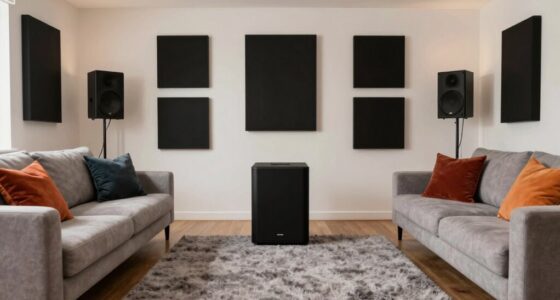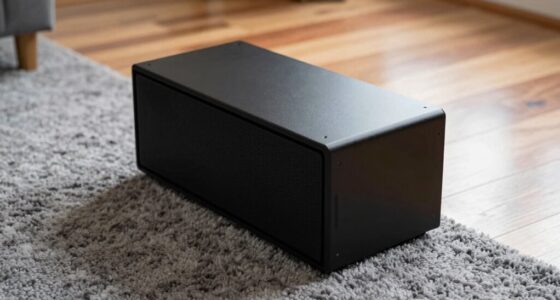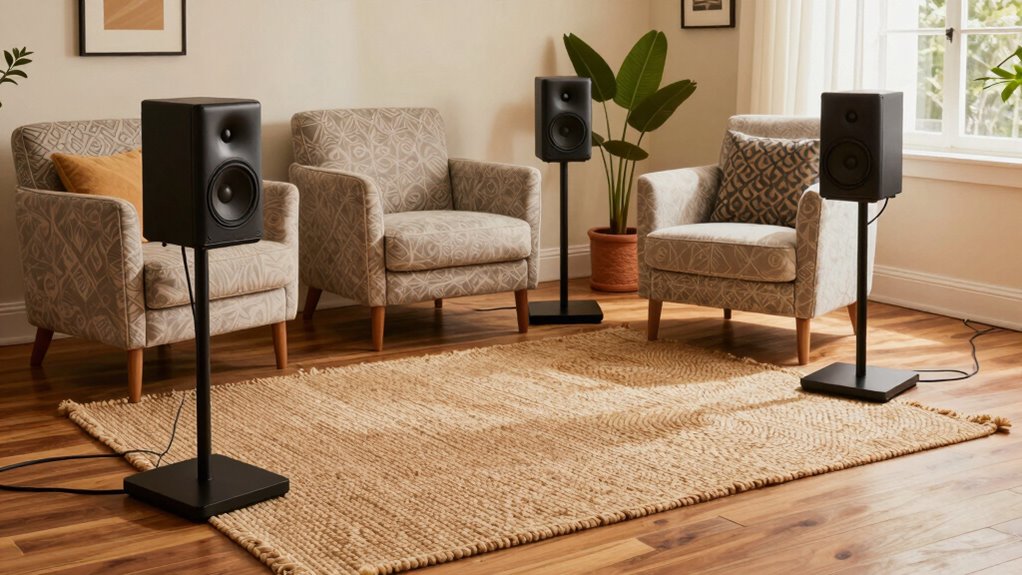
To place temporary speakers safely for guests, start by positioning them at ear level and facing main gathering areas, forming an even triangle for balanced sound. Use cable clips, covers, or ramps to keep cords secured along walls or furniture, avoiding walkways. Elevate speakers on stands and double-check that all cables are tight and out of foot traffic. Proper placement and organization help guarantee excellent sound without tripping hazards—continue to discover more tips for a safe setup.
Key Takeaways
- Position speakers at ear level and away from walkways to prevent tripping hazards.
- Run cables along walls or baseboards using cable clips or covers for a tidy, safe setup.
- Use cable ramps or floor covers for long cords to keep walkways flat and obstacle-free.
- Ensure all cables are secured and not stretched tightly to avoid disconnections or tripping.
- Regularly walk around the setup to check for safety issues and adjust speaker placement accordingly.
Wondering how to set up temporary speakers effectively? The key is to pay close attention to cable management and speaker positioning. You want your setup to sound good, look tidy, and most importantly, keep your guests safe from tripping hazards. To start, plan out where each speaker will go. Think about your space and where the sound will reach most evenly. Position your speakers at ear level for the best sound quality, ideally facing towards the main area where your guests will gather. Keep in mind that placing speakers too close to walls or corners can cause unwanted echoes or muddiness, so try to keep some distance for clearer sound.
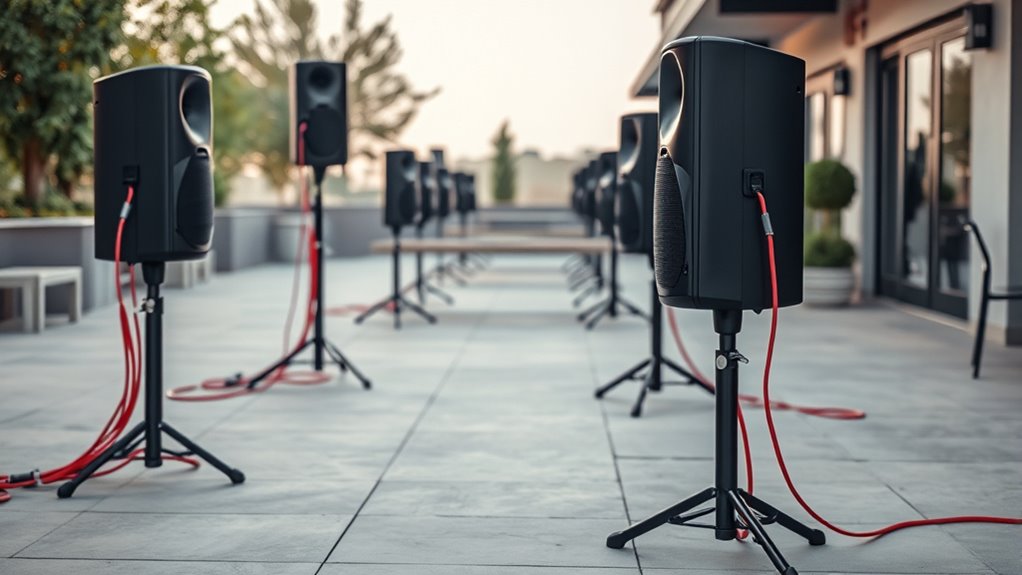
Once you’ve decided on the spots, focus on cable management. Use cable clips or adhesive cable organizers to run cords along walls or furniture legs. Avoid leaving loose wires across walkways, as they create a real tripping hazard. If you have longer cables, consider using cable covers or ramps to protect the cords and keep them flat against the floor. This not only makes the area safer but also gives your setup a more professional look. If possible, run cables behind furniture or along baseboards to keep them out of sight and out of the way. Remember, a tidy setup isn’t just about aesthetics; it’s about safety and functionality too. Proper cable management is essential for ensuring a clutter-free and safe environment during your event.
Use cable clips and covers to keep cords safe and tidy.
Speaker positioning is equally important. Place your speakers so they form an even triangle with the main listening area—this ensures balanced sound distribution. If you’re using multiple speakers, aim for symmetry to avoid sound imbalance. Avoid placing speakers directly on the floor or in corners, as this can distort the audio. Elevate them slightly on stands or sturdy surfaces if available. Be mindful of obstacles that can block sound or cause vibrations, which can lead to muffled audio or unwanted noise. Also, check the cable lengths—measure beforehand to ensure the cords reach without stretching or pulling, which can cause disconnections or damage.
Finally, double-check your setup by walking around the space. Make sure no cables are stretched tight or running across pathways, and confirm that speakers are positioned for ideal sound and safety. Adjust as needed. With proper cable management and strategic speaker positioning, your temporary sound setup will not only sound great but also keep your guests comfortable and safe. It takes a little extra effort upfront, but the result is a seamless, professional-looking setup that lets everyone enjoy the event without distraction or concern.
Frequently Asked Questions
What Are the Best Materials for Temporary Speaker Flooring?
You should consider using plywood or interlocking foam tiles for temporary speaker flooring. These options provide excellent surface durability and are easy to set up or remove. Plywood offers sturdy, flat flooring that supports heavy equipment, while foam tiles cushion the surface and reduce tripping hazards. Both choices are portable, cost-effective, and customizable to fit your space, ensuring a safe, stable surface for your speakers without compromising safety.
How Do I Secure Speakers Outdoors in Windy Conditions?
To secure your outdoor speakers in windy conditions, use sturdy mounting brackets designed for outdoor use to keep them stable. Guarantee proper weight distribution by placing the speakers on solid surfaces or weighted stands, preventing them from tipping over. You can also anchor the brackets into the ground or nearby structures with guy wires or stakes for added stability. This approach keeps your speakers secure and optimizes sound quality during windy weather.
Can I Use Adhesive Solutions to Prevent Slipping?
Sure, adhesive solutions like tapes may seem like a quick fix, but they often aren’t reliable outdoors. Instead, use anti-slip mats designed for stability, or secure your speakers with sturdy stands. Relying solely on adhesive tapes can lead to slipping or falls, especially in windy conditions. For a safe and secure setup, combining these practical solutions will keep your speakers steady and your guests safe.
How Do I Ensure Sound Quality With Temporary Setups?
To guarantee sound quality with temporary setups, you should prioritize proper speaker calibration and secure wireless connectivity. Start by placing your speakers at ear level and facing the audience for clear sound. Use calibration tools or apps to balance volume and tone. Make certain your wireless connection is stable to prevent disruptions. Regularly test the sound throughout the event, adjusting as needed to maintain ideal audio quality.
Are There Portable Options Suitable for Quick Setup?
Yes, there are portable options perfect for quick setups. You can use lightweight portable stands that are easy to transport and set up, reducing trip hazards. Wireless speakers are also a great choice, as they eliminate the need for messy cables. These options allow you to quickly position sound equipment, guarantee safety, and maintain good sound quality, making your event setup smooth and efficient.
Conclusion
Now, as you step back and glance around, it’s like a quiet street suddenly lit by string lights—everything feels just right. Your temporary speakers blend seamlessly into the space, safe from tripping hazards, yet ready to fill the room with sound. When you take a moment to check your setup, it’s almost as if you’ve crafted a cozy corner where guests can relax and enjoy the music without a worry. It’s the perfect finish to your thoughtful arrangement.