
To calm a boomy room without making it dead, you should use a mix of sound-absorbing elements and strategic furniture placement. Add acoustic panels at key points like walls and ceilings, and incorporate soft furnishings such as rugs, cushions, or plush furniture to absorb sound without deadening the space. Shifting hard furniture away from reflective surfaces helps minimize echoes. Combining these strategies creates a balanced, warm environment—continue to explore these tips to fully transform your space.

Get audio and creator gear delivered free — and shop member deals
- Fast, free delivery on millions of items
- Access to Prime Big Deal Days deals on October 6–7
- Prime Video, Amazon Music and more included
Key Takeaways
- Use strategically placed acoustic panels at ear level on reflective surfaces to absorb excess sound without deadening the room.
- Arrange soft furniture and rugs to diffuse sound waves and break up echoes naturally.
- Incorporate fabric-covered or soft-surfaced furniture to reduce harsh reflections without over-absorbing.
- Hang ceiling treatments like fabric tiles or acoustic panels to control upward-traveling sound waves.
- Balance sound absorption with diffusion to maintain a warm, lively environment while minimizing boomy echoes.

A boomy room can make everything sound muddled and uncomfortable, but you don’t have to live with the echo. The key is to reduce excessive sound reflection without turning your space dead and dull. One of the most effective ways to do this is by using acoustic panels. These panels absorb sound waves, preventing them from bouncing around the room endlessly. You don’t need to cover every inch; strategic placement around the most reflective surfaces—like walls and ceilings—can considerably cut down on echoes. Positioning acoustic panels at ear level, especially where sound tends to bounce back toward you, maximizes their effectiveness.
Strategically placed acoustic panels at ear level can effectively reduce echoes and improve sound clarity in any room.
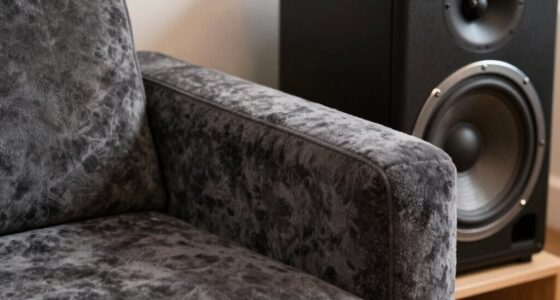
But acoustic panels aren’t the only solution. How you arrange your furniture plays a crucial role in controlling sound. Instead of scattering pieces randomly, think about furniture placement that breaks up sound paths. Large, soft items like couches, armchairs, and even plush rugs absorb sound energy, reducing reverberation. Placing these pieces in a way that creates “sound barriers” can help contain and diffuse sound waves, making the room feel more balanced. For example, positioning a sofa away from the wall and adding a cozy armchair nearby can disrupt sound reflections, preventing them from bouncing directly back and creating echo.
You should also consider the placement of your larger, hard-surfaced furniture. Items like glass tables, metal chairs, or sleek desks tend to reflect sound. Positioning them thoughtfully—perhaps shifting a table slightly away from the wall or adding fabric covers—can diminish their reflective properties. Combining soft furnishings with acoustic panels is a smart move: the panels catch sound before it bounces, and the furniture helps scatter and absorb remaining reflections. Incorporating sound-absorbing materials into your design can significantly enhance the room’s acoustics, especially when combined with thoughtful furniture arrangement. Additionally, understanding how room dimensions impact sound reflection can help you better tailor your acoustic treatment for optimal results.
Finally, don’t forget about the ceiling. Hanging acoustic panels or installing fabric-covered tiles can absorb sound waves that tend to travel upward. If your room has high ceilings, consider adding some suspended elements that catch sound before it escapes or creates echoes. Incorporating soundproofing techniques into your space can make a noticeable difference in reducing echo and improving overall sound quality. Overall, a mix of acoustic panels and carefully planned furniture placement can transform a boomy room into a space that sounds warm, clear, and inviting—without making it feel dead or lifeless. It’s all about balancing absorption and diffusion, so sound feels natural and comfortable in your space.
acoustic wall panels for living room
As an affiliate, we earn on qualifying purchases.
As an affiliate, we earn on qualifying purchases.
Frequently Asked Questions
Can Plants Help Reduce Room Echo?
Yes, plants can help reduce room echo. By strategically placing plants around your space, especially in areas with high foliage density, you absorb sound waves and lessen reflections. Use larger, leafy plants near walls or corners to maximize their sound-absorbing effects. The more foliage density, the more effective they are at calming the room’s acoustics without making the space feel dead.
Does Furniture Placement Affect Sound Absorption?
Yes, furniture placement affects sound absorption. Think of your room as a musical instrument—strategically arranged furniture acts like sound diffusers, scattering echo and reducing boominess. By balancing soft and hard surfaces and spreading furniture thoughtfully, you create a harmonious environment. Experiment with placement, moving pieces to break up sound waves, so your space resonates with clarity instead of chaos, making your room both lively and controlled.
Are There Temporary Solutions for Acoustics?
Yes, there are temporary solutions for acoustics. You can use sound masking devices to reduce echo and create a calmer environment. Additionally, placing portable acoustic panels around the room absorbs excess sound waves without making the space feel dead. These tools are easy to set up and remove, making them perfect for temporary adjustments. They help balance sound levels and improve room acoustics quickly and effectively.
How Do Curtains Influence Room Acoustics?
Curtains influence room acoustics markedly through their thickness and fabric density. Thicker curtains made from dense fabrics absorb more sound, reducing echoes and controlling reverberation. When you hang heavy, tightly-woven curtains, they dampen sound waves effectively, making the room less boomy. Opt for curtains with substantial fabric density to improve acoustics without deadening the space entirely. This simple addition helps balance sound and creates a more pleasant environment.
Can Digital Soundproofing Tools Make a Difference?
Digital soundproofing tools can make a noticeable difference, especially with noise cancellation and sound masking features. Noise cancellation actively reduces unwanted sounds, creating a calmer environment. Sound masking adds soothing background sounds that mask disruptive noises. While they don’t physically block sound like traditional treatments, these tools are effective in minimizing echo and controlling noise levels, making your space more comfortable without deadening the room completely.
soft furniture for sound absorption
As an affiliate, we earn on qualifying purchases.
As an affiliate, we earn on qualifying purchases.
Conclusion
By adding just a few strategic acoustic treatments, you can transform your boomy room into a balanced space that sounds great without losing its liveliness. Did you know that proper sound absorption can improve your listening experience by up to 50%? So, don’t let unwanted echoes drown out your music or conversations. With these simple steps, you’ll create a room that’s both lively and controlled, making every moment spent inside much more enjoyable.
As an affiliate, we earn on qualifying purchases.
As an affiliate, we earn on qualifying purchases.
Halloween Picks
halloween
As an affiliate, we earn on qualifying purchases.