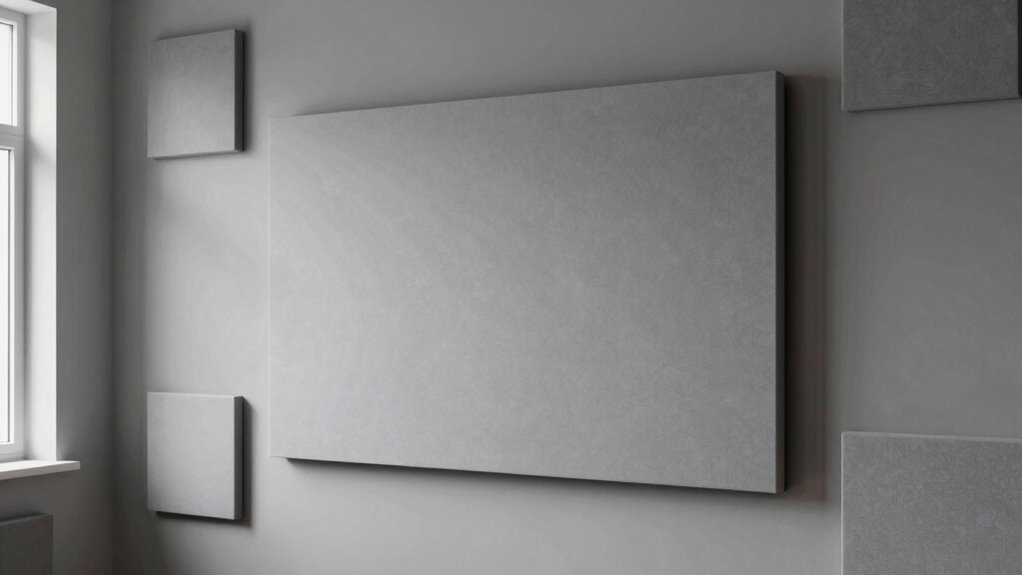

Strategic placement of a single acoustic panel can outperform five randomly placed ones because it targets vital reflection points, such as walls opposite your sound source or corners. By focusing on these key locations, you control sound diffusion and reduce echoes more effectively. Properly positioned, one panel creates a balanced and natural sound environment, preventing muddiness and harshness. To discover exactly where to place your panel for the best results, keep exploring these essential guidelines.
Key Takeaways
- Strategic placement targets reflection points, maximizing sound diffusion and preventing echoes better than random positioning.
- One well-placed panel at key reflection zones can outperform multiple panels placed arbitrarily.
- Properly positioned panels create a balanced, natural sound environment, reducing muddiness or harsh echoes.
- Focused placement controls sound wave scattering, enhancing clarity more effectively than multiple random panels.
- Thoughtful placement optimizes acoustic benefits, ensuring even sound distribution with fewer panels.
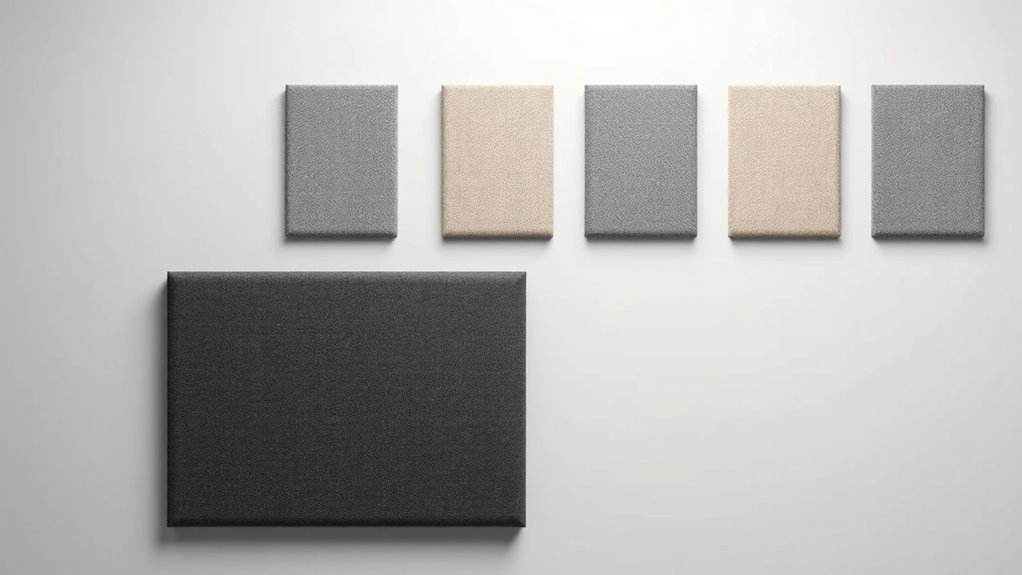
Effective acoustic panel placement is essential for optimizing sound quality in any space. When you’re trying to improve acoustics, it’s not just about throwing panels randomly on the walls; strategic placement makes all the difference. One crucial aspect to consider is how sound diffusion interacts with your room’s acoustics. Properly positioned panels can disperse sound waves evenly, preventing echo and dead spots, and creating a balanced listening environment. You want sound to flow smoothly, not bounce chaotically, which is why understanding room acoustics is vital. Instead of cluttering your space with multiple panels haphazardly, focus on placement that enhances sound diffusion. This approach ensures that sound waves scatter across the room in a controlled manner, boosting clarity and reducing unwanted reverberations.
Think about where sound reflections tend to bounce back and forth. Typically, these are the walls opposite your primary sound source, the corners, and sometimes the ceiling or floor. By placing acoustic panels in these strategic locations, you control how sound waves diffuse rather than allowing them to create muddiness or harsh echoes. The goal is to break up sound reflections before they reach your ears, which makes your room sound more natural and pleasant. When you align your panels thoughtfully, you’re not just absorbing sound—you’re actively shaping how sound diffuses throughout the space. This technique enhances room acoustics by smoothing out sharp echoes and ensuring sound waves spread evenly, giving you clearer vocals, richer music, and more intelligible speech.
Frequently Asked Questions
How Do Acoustic Panels Affect Room Aesthetics?
Acoustic panels can enhance your room aesthetics by offering decorative options that complement your style. You can choose panels in various colors, patterns, and textures to match or contrast with your decor, creating a visually appealing space. Thoughtful placement and color coordination make the panels look intentional rather than functional, turning sound treatment into a design feature that elevates your room’s overall look while improving acoustics.
Can Placement Improve Soundproofing or Just Sound Quality?
Placement can definitely improve soundproofing, contrary to some soundproofing myths. Proper panel placement strategies focus on blocking sound waves and reducing echo, which enhances sound quality and minimizes noise transfer. You should position panels at key reflection points and consider wall and ceiling areas for maximum effect. By doing so, you’ll create a more private, acoustically optimized space, outperforming random or poorly thought-out placement.
Are There Specific Materials Better for Certain Rooms?
Yes, certain materials suit specific rooms better. For example, foam panels offer excellent sound absorption in home theaters, while fabric-covered options provide durability and decorative options for offices or living rooms. Consider material durability to guarantee longevity, especially in high-traffic areas. Choosing the right material enhances both sound quality and aesthetics, making your space more functional and visually appealing. Always match your panel material to your room’s purpose and style.
How Often Should Acoustic Panels Be Maintained or Replaced?
Think of your acoustic panels as the silent guardians of sound; they need regular care. You should clean your panels every 6 to 12 months with gentle panel cleaning, depending on environment and usage. Replace them when they show signs of damage, persistent stains, or loss of sound absorption, typically every 3 to 5 years. A consistent replacement schedule guarantees they continue to protect your space’s acoustic integrity effectively.
Do Different Room Shapes Require Unique Panel Arrangements?
Yes, different room shapes do require unique panel arrangements. Your room’s shape influences how sound waves bounce and reflect, so you should customize your panels accordingly. For example, irregularly shaped rooms benefit from strategic panel placement to target problem areas, while rectangular rooms may need a more straightforward approach. By tailoring panel placement based on room shape, you optimize sound quality and reduce echo effectively.
Conclusion
When it comes to acoustic panel placement, remember that quality often beats quantity. Strategically positioning just one well-placed panel can outperform five random ones, saving you time and money. Don’t spread yourself too thin—focus on key areas where sound bounces the most. With the right placement, you’ll hit two birds with one stone: better sound quality and a more comfortable space. So, keep your eyes on the prize and make every panel count!