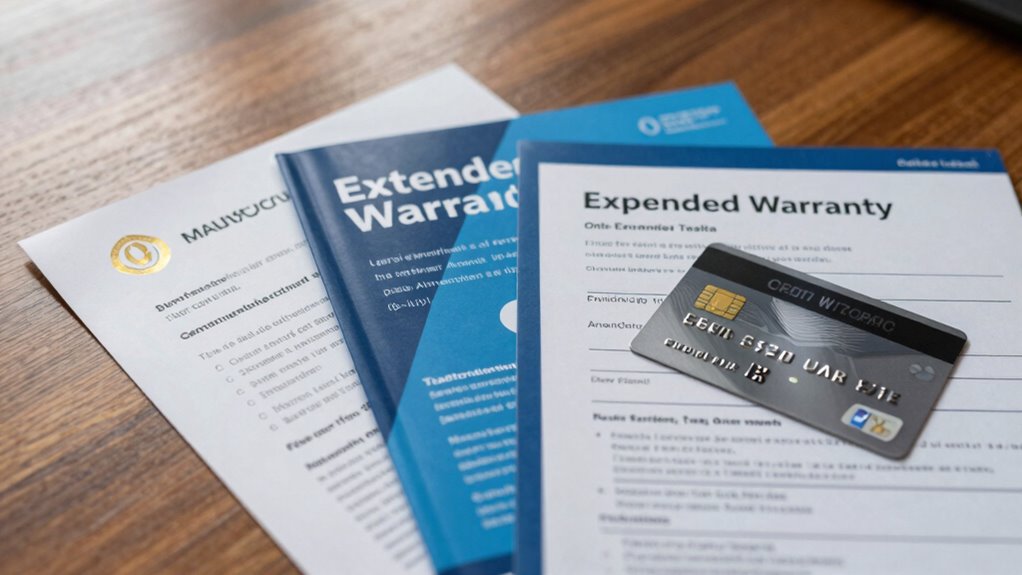

Warranties come in three main types: manufacturer, extended, and credit card coverage. Manufacturer warranties usually last one to several years and cover defects but have limits. Extended warranties give you more protection afterward, often up to five years, but may also include exclusions. Credit card coverage is an additional benefit that can protect your purchase for a limited time. Knowing how these options differ helps you choose the right protection—learn more to make smarter decisions.
Key Takeaways
- Manufacturer warranties typically cover repairs due to defects for 1-3 years, while extended warranties can add up to five years of coverage.
- Credit card warranties usually provide limited protection for recent purchases, often shorter in duration than manufacturer or extended warranties.
- Extended warranties often include additional services like on-site repairs but may come with exclusions and higher costs.
- The decision to buy depends on product reliability, repair costs, coverage length, and whether the warranty offers good value.
- Claim processes involve submitting receipts and documentation promptly, with understanding of specific coverage terms to avoid delays.
Understanding Manufacturer Warranties
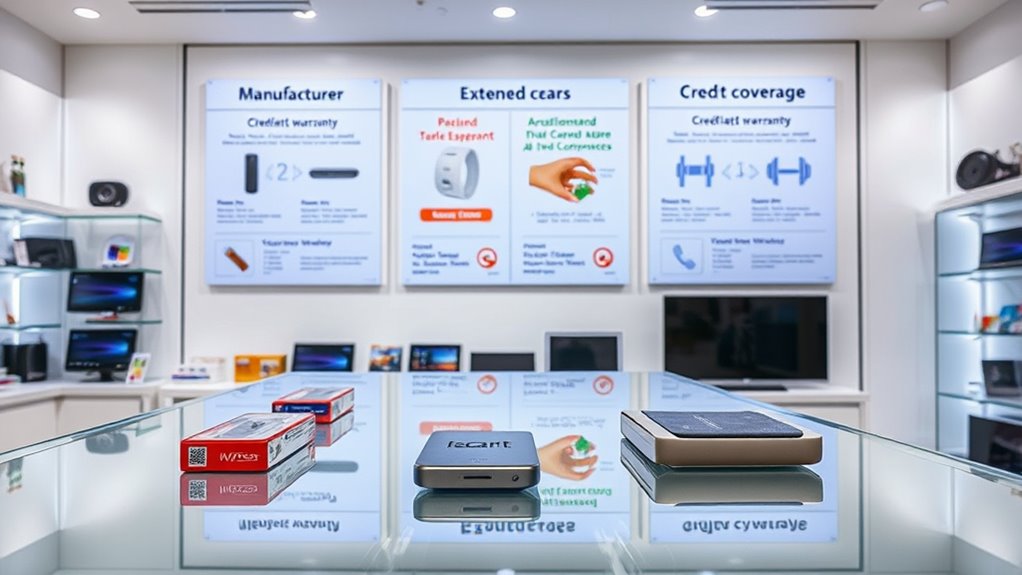
Manufacturer warranties are designed to protect you by covering repairs or replacements if a product malfunctions within a specific time frame. When you buy a new appliance, electronics, or vehicle, the manufacturer provides a warranty that guarantees the item will work as promised. If you experience issues caused by manufacturing defects, the warranty typically covers the cost of repairs or a replacement at no extra charge. These warranties usually specify what is covered and for how long, often ranging from one to several years. It’s essential to read the terms carefully so you know what repairs are included and any limitations. Remember, manufacturer warranties are meant to give you peace of mind during the initial period of product ownership. Additionally, understanding warranty coverage can help you make informed decisions when purchasing new products. Being aware of the coverage duration can also assist in planning for potential future repairs or replacements. Knowing the limitations and exclusions outlined in the warranty can prevent surprises if an issue arises outside the covered scope. Familiarizing yourself with product registration requirements can also ensure your warranty remains valid and active. Having knowledge of warranty claims process can streamline the repair or replacement experience if needed.
The Benefits and Limitations of Extended Warranties

Extended warranties can offer you extra peace of mind by covering repairs beyond the manufacturer’s term. However, it’s important to understand their limitations, such as costs that may outweigh benefits or coverage exclusions. Knowing both sides helps you decide if an extended warranty truly adds value for your situation. Additionally, evaluating coverage options can help determine whether an extended warranty aligns with your needs and budget. Being aware of affiliate disclosure policies can also help you make informed decisions about purchasing these plans. Understanding the cost-benefit analysis of extended warranties can further assist you in assessing their overall value. For example, reviewing product reliability data can provide insight into whether the investment is worthwhile, helping you make smarter purchasing decisions. Comparing the net worth of individuals like Kate from Breaking Amish can provide perspective on how financial priorities influence such decisions.
Extended Coverage Advantages
Extended coverage can give you peace of mind by protecting against costly repairs beyond the manufacturer’s warranty. It often covers parts and services that might not be included initially, saving you money in the long run. Plus, many plans offer convenient service options, like on-site repairs or quick claims processing. Extended warranties can also increase the resale value of your device or appliance, since future buyers see added protection as a bonus. However, it’s essential to compare plans carefully, as some may include coverage you don’t need or have exclusions. Additionally, understanding regulatory insights can help you make informed decisions about warranty options. Being aware of the types of piercings and their specific care requirements can help you avoid unexpected costs related to complications or infections. Overall, extended warranties can be a smart investment if you want extra security and peace of mind. Considering coverage limits and your specific needs can further ensure that the plan you choose provides the best value for your investment. For example, reviewing warranty terms can help you understand what is truly covered and prevent surprises later. Moreover, understanding manufacturer standards can help you evaluate whether the warranty coverage aligns with industry safety and quality benchmarks.
Potential Limitations to Know
While extended warranties can offer valuable protection, they also come with limitations that you should consider before purchasing. One key issue is the coverage exclusions, which can leave certain repairs or damages uncovered. Additionally, you might face high deductibles that reduce overall savings. Some plans have strict claim limits or require you to use designated service providers, limiting convenience. Finally, the cost of the warranty doesn’t always justify the potential benefits if repairs are rare or inexpensive. Transparency about affiliate relationships is also important when evaluating warranty options to ensure you’re fully informed. Moreover, understanding the performance and durability of electric bikes can help determine if the warranty coverage aligns with the expected lifespan of your investment. It’s also wise to compare the best rated vacuum cleaners and their warranties to see which offers the most comprehensive coverage for your needs, especially if you rely heavily on your vacuum for pet hair removal or multi-surface cleaning. Additionally, reviewing the precious metal investment options provided by reputable providers can help ensure your retirement assets are well-protected with appropriate coverage. To make informed decisions, researching the manufacturer reputation and customer service records for warranty providers can also be highly beneficial.
How Credit Card Coverage Works for Purchases

When you use your credit card for a purchase, certain criteria establish if you’re eligible for coverage. You’ll also want to be aware of any limits on how long the coverage lasts. Additionally, understanding the steps to file a claim ensures you get the support you need quickly. Being aware of the Mental Wellbeing Index can help you maintain a balanced perspective when managing claims and understanding coverage options. It’s also beneficial to understand how essential oils for health can support your overall well-being during stressful times related to claims. Knowing how vetted wave and wind information applies to coverage scenarios can provide additional clarity and reassurance during the process. Paying attention to nutritional content, such as antioxidants and fiber, can also support your health while navigating coverage issues. Moreover, the importance of sound quality and levels in recording can be paralleled to ensuring that your claim documentation is clear and well-organized for smoother processing.
Purchase Eligibility Criteria
Understanding your credit card’s purchase eligibility criteria is essential to knowing when you’re covered by warranties. Typically, your purchase must be made with the credit card to qualify. The item usually needs to be a new purchase, not secondhand or used. The purchase amount often has a minimum threshold, such as $50 or $100. Additionally, the item must be a qualifying product, like electronics, appliances, or certain retail goods. You should also verify the purchase was completed within the required timeframe, often within 90 days of buying. These criteria help determine if your purchase qualifies for warranty coverage through your credit card, so always review your card’s specific rules to avoid surprises. Understanding warranty coverage is crucial for making informed decisions about your purchases.
Coverage Duration Limits
Coverage duration limits determine how long your credit card warranty protects your purchase after the initial sale. Typically, these limits are set by your credit card issuer and vary depending on the card and specific purchase. You might find coverage lasting anywhere from a few months to a year or more. It’s important to note that once the limit expires, the warranty no longer covers repairs or replacements for that item. To maximize protection, keep track of the purchase date and the coverage period. If a defect or issue arises within this timeframe, you can often leverage your credit card’s warranty for assistance. Remember, these limits are strict, so timely action is essential to benefit from your coverage.
Claim Process Steps
Ever wonder how to actually file a claim with your credit card for a warranty issue? The process is straightforward but requires attention to detail. First, gather all relevant documents, like receipts and warranty info. Next, contact your credit card issuer promptly—usually within a specific time frame. You might need to fill out a claim form online or over the phone. The issuer could request supporting evidence, such as photos or a repair estimate. After submitting your claim, they review the details and determine eligibility. If approved, they’ll process the reimbursement or arrange for repairs. Keep track of your communication and follow up if needed. Being organized and prompt ensures a smoother process.
- Gather receipts and warranty info
- Contact your credit card issuer quickly
- Submit required documentation and forms
- Follow up until your claim is settled
Comparing Coverage Duration and Terms
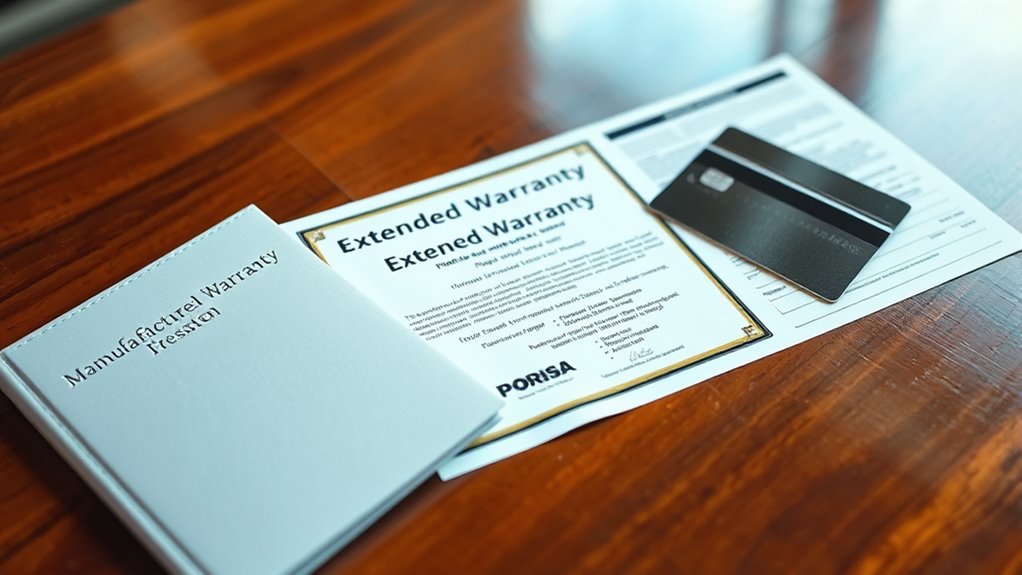
When comparing warranties, it’s important to look closely at how long each one lasts and what terms they include. Manufacturer warranties typically cover a set period, like one or two years, with clear conditions on repairs or replacements. Extended warranties can offer longer coverage, sometimes up to five years, but may have more specific exclusions or requirements. Credit card warranties often supplement manufacturer coverage, extending the duration by a year or more, but they might only apply to certain product categories or purchase amounts. Pay attention to details such as whether the warranty covers parts, labor, or both, and if there are any restrictions on repair locations or procedures. Understanding these terms helps you assess how well each warranty protects your investment over time.
Cost Considerations and Value Assessment

Evaluating the cost of a warranty is essential to determine if it’s worth the investment. You need to compare the upfront price against potential repair expenses and the likelihood of needing covered repairs. Consider how long the warranty lasts and if the coverage aligns with your needs. Sometimes, extended warranties or credit card protections offer more value if they cover common issues or expensive repairs. Keep in mind, not all warranties provide the same benefits for the cost. Carefully assess whether the warranty’s cost fits your budget and risk tolerance. To help decide, think about:
- The average repair costs for your product
- The warranty’s coverage limits
- Your likelihood of needing repairs
- The peace of mind provided by coverage
Tips for Choosing the Right Warranty Option
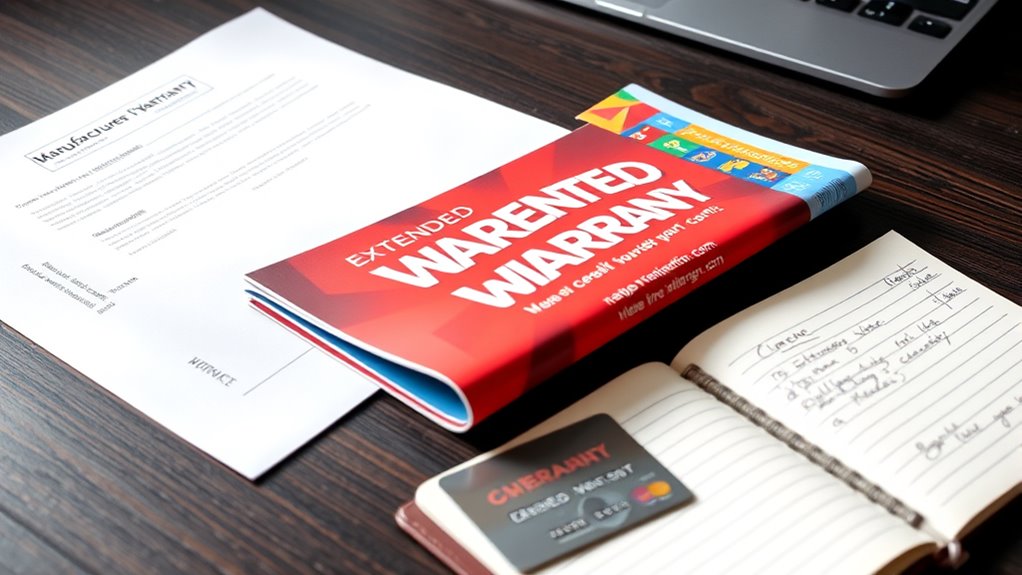
Choosing the right warranty option requires careful consideration of your specific needs and circumstances. First, evaluate how often you’ll use the product and its likelihood of needing repairs. If you’re purchasing an expensive item or one prone to issues, an extended or manufacturer warranty might be worth the investment. Next, compare coverage details, including what’s included and exclusions, to verify it matches your expectations. Consider costs, including premiums and deductibles, and whether the coverage fits your budget. Think about the reputation of the warranty provider—read reviews and ask questions. Finally, check the length of coverage and whether it aligns with how long you plan to keep the product. Making an informed choice helps you avoid unnecessary expenses and gain peace of mind.
Frequently Asked Questions
Are Warranties Transferable if I Sell the Product?
Yes, warranties are often transferable when you sell the product, but it depends on the specific warranty terms. You should check the warranty’s fine print or contact the manufacturer to confirm if the coverage can transfer to the new owner. If it’s transferable, you’ll typically need to provide proof of sale or registration. This can add value to your sale and give the new owner peace of mind.
Can I Combine Different Warranty Types for the Same Item?
Yes, you can often combine different warranty types for the same item, but it depends on the coverage terms. For example, you might have a manufacturer’s warranty plus an extended warranty and credit card protection. Keep in mind that these warranties typically cover different issues or time frames. Always read the fine print to understand overlapping coverage and guarantee you’re not paying twice for the same protection.
What Are Common Exclusions in Warranty Coverage?
You might think warranties cover everything, but common exclusions often include accidental damage, normal wear and tear, cosmetic issues, and damage caused by misuse. Many warranties also exclude issues due to unauthorized repairs or modifications. Don’t assume full coverage—always read the fine print. Knowing these exclusions helps you avoid surprises and decide if additional protection, like an extended warranty, is worth it for your needs.
How Do I File a Warranty Claim Effectively?
To file a warranty claim effectively, start by reviewing your warranty’s terms and gather all relevant documents, like receipts and proof of defect. Contact the manufacturer or service provider promptly, providing clear details and photos if needed. Follow their specific instructions carefully, keep records of all communications, and be persistent if necessary. Doing so guarantees your claim is processed smoothly and efficiently.
Do Warranties Cover Accidental Damage or Only Manufacturing Defects?
Warranties typically cover manufacturing defects and normal wear and tear, not accidental damage. If you want coverage for accidents like drops or spills, you’ll need an extended warranty or insurance policy that explicitly includes accidental damage. Always read the warranty terms carefully to understand what’s covered, and consider purchasing additional protection if accidental damage is a concern for your device or appliance.
Conclusion
Think of warranties as your trusty shield on a journey. Manufacturer warranties are like a sturdy armor, protecting you early on. Extended warranties are your durable cloak, offering added defense over time. Credit card coverage acts as a vigilant scout, ready to step in when needed. By choosing wisely, you craft a reliable armor that guides you safely through your purchase adventure, turning potential pitfalls into manageable hurdles on your path.