To avoid damage claims when shipping big gear back, make certain you use sturdy, appropriately sized boxes with foam padding, bubble wrap, or custom inserts to protect delicate parts. Secure all items tightly and fill empty spaces to prevent shifting. Choose a carrier experienced with oversized shipments and follow their packaging guidelines. Proper labeling, especially “Fragile” notices, helps ensure careful handling. Taking these steps and selecting the right carrier can save you from costly damage issues—expert tips await if you continue on.
Key Takeaways
- Use sturdy, appropriately sized boxes with foam padding or custom foam inserts to secure gear firmly.
- Wrap delicate parts thoroughly and fill empty spaces to prevent shifting during transit.
- Follow carrier packaging and labeling guidelines, including “Fragile” or “Handle with Care” notices.
- Opt for carriers experienced with large or heavy items, ensuring they offer proper handling and insurance.
- Schedule pickups in advance and double-check packaging to minimize last-minute errors and potential damage.
Returning large gear can seem intimidating, but with the right planning, it’s straightforward. The key is to guarantee your equipment arrives safely without damage claims. To do that, you need to pay close attention to packing materials and carrier selection. These two factors are vital in protecting your gear during transit and making the return process smooth.
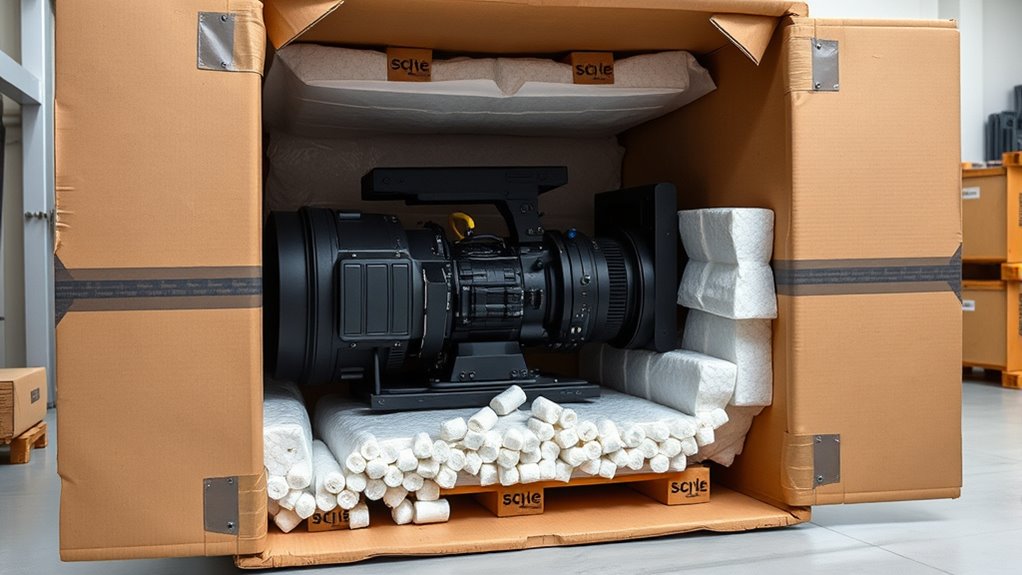
Start by gathering high-quality packing materials. Sturdy corrugated boxes, foam padding, bubble wrap, and custom foam inserts are essential to protect your gear from shocks and vibrations. Wrap delicate parts thoroughly, and fill empty spaces inside the box to prevent movement. Using double-layered boxes or reinforced cardboard can add extra protection. Remember, your goal is to minimize any jostling or impact that could cause damage. If your gear is especially fragile or bulky, consider using specialized crates or pallets, which can provide a more secure environment for transportation.
Choosing the right carrier is equally important. Not all carriers handle oversized or heavy gear equally well. Opt for carriers experienced in shipping large, bulky items. Look into their insurance policies, tracking capabilities, and reputation for safe handling. You might prefer a freight service or a courier with a proven track record for large-item shipping. Confirm their weight limits and packaging requirements beforehand. Some carriers offer custom solutions, like palletizing your gear for easier loading and unloading, which can reduce the risk of mishandling.
Before you finalize your carrier, check their guidelines for packaging and labeling. Properly label your package with clear, visible addresses and include “Fragile” or “Handle with Care” notices if necessary. This alerts handlers to exercise caution. Also, verify pickup and drop-off options—door-to-door service can minimize handling and reduce the chance of damage. Scheduling pick-up in advance ensures you have ample time to prepare your gear correctly and avoid last-minute rushes that could compromise your packing.
When packing, don’t cut corners. Use the appropriate packing materials and choose your carrier wisely based on the size, weight, and value of your gear. Secure your gear tightly within the packaging, and double-check that everything is protected from impact. The effort you put into proper packing materials and careful carrier selection directly translates into fewer damage claims and a smoother return process. Additionally, understanding the importance of reliable shipping options can help you select carriers that are better equipped for handling large and valuable items, reducing the risk of damage during transit. By taking these steps, you can confidently return your big gear, knowing it’s well-protected every step of the way.
Frequently Asked Questions
How Do I Track My Return Shipment for Big Gear?
You can track your return shipment for big gear by using the tracking number provided by your carrier. Enter this number on the carrier’s website to see real-time tracking updates and shipment notifications. Keep an eye on these updates to stay informed about your package’s location and delivery status. This way, you’ll know exactly when your return arrives, ensuring a smooth process without surprises.
What Insurance Options Are Available for Large Equipment Returns?
Think of insurance options like a safety net for your big gear. You can opt for all-encompassing insurance coverage through your shipping provider or specialized freight insurance, which protects against damages or loss. Be sure to review claim procedures carefully; they usually involve documenting damage promptly and providing proof of value. This way, you’re prepared to file a claim smoothly if anything goes wrong during return shipping.
Can I Schedule a Pickup for My Oversized Return?
Yes, you can schedule a pickup for your oversized return. Contact your shipping provider or use their online portal to arrange pickup scheduling. Make sure your oversized gear is properly repackaged with sturdy, oversized packaging to prevent damage during transit. Confirm the pickup details, including date and time, and verify your item is accessible for the carrier. Proper planning helps avoid delays and ensures your large equipment arrives safely.
What Are the Costs Associated With Return Shipping for Big Gear?
Return shipping costs for big gear vary based on size, weight, and distance, so you should get a quote from your carrier. To protect your equipment, consider purchasing insurance, as it covers potential damage or loss during transit. Always compare options and confirm if insurance is included or needs to be added separately, ensuring you’re financially protected if any mishaps occur during the return process.
How Long Does It Typically Take to Process a Return Claim?
You typically need about 7 to 14 days to process a return claim, depending on the company’s return policies and claim procedures. During this time, they review your request, inspect the returned gear, and approve or deny the claim. To guarantee a smooth process, follow the return policies closely, provide all required documentation, and carefully adhere to the claim procedures. This helps speed up your refund or replacement.
Conclusion
Returning big gear doesn’t have to be stressful if you pack it properly. Follow the tips to avoid damage claims and guarantee your gear arrives safely. Did you know that over 60% of damage during shipping is caused by improper packing? By taking the time to repack carefully, you can save money and hassle. So next time you return large equipment, remember these steps—your gear will thank you, and so will your wallet!