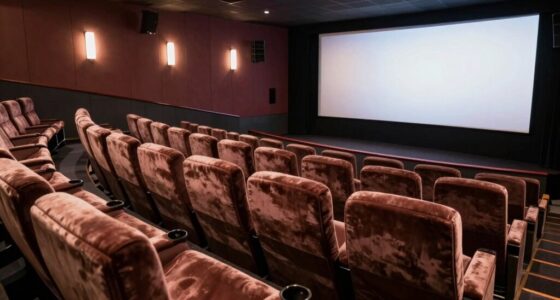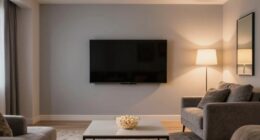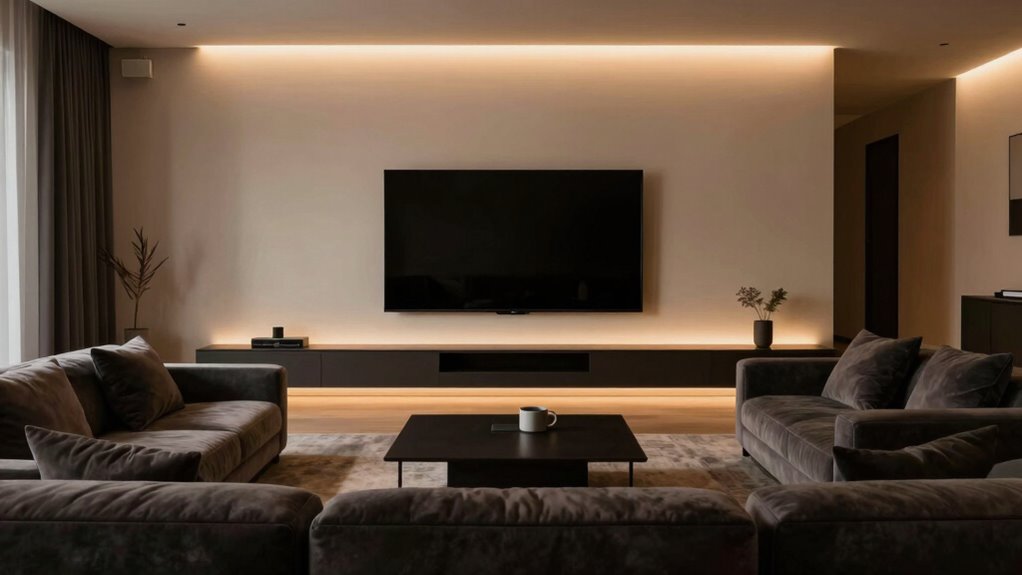

To make any room feel like a theater, focus on creating an ideal viewing triangle by positioning your screen at eye level, keeping a comfortable distance, and arranging seats in a gentle arc for clear sightlines. Proper lighting and minimizing glare are also key. Optimizing these elements will enhance your viewing experience. Keep exploring, and you’ll discover how small adjustments can dramatically transform your space into an immersive home theater.
Key Takeaways
- Position the seating, screen, and viewing area to form a balanced triangle for optimal sightlines and minimal glare.
- Ensure seats are at an appropriate distance and height, aligning eyes with the screen center within the triangle.
- Arrange furniture in a semi-circle or gentle arc facing the screen to maintain the viewing triangle.
- Adjust room lighting and screen placement to reduce reflections and enhance picture quality within the triangle.
- Use wall mounting and strategic furniture placement to create a clear, unobstructed viewing triangle for an immersive theater experience.

Mount-It! Outdoor TV Mount Weatherproof, Anti-Rust Anti-Corrosion Outside TV Bracket for Patio, Gazebo and Exterior, Fits 37-80", Heavy Duty Dual Full Motion Arms, VESA Up to 600x400mm, 110 Lbs Limit
Weatherproof TV Mount made for outdoor use. Outdoor durability achieved through electroplating, extended outdoor-ready powder coating and stainless...
As an affiliate, we earn on qualifying purchases.
Understanding the Basics of the Viewing Triangle

Have you ever wondered why your viewing experience feels so perfect from certain spots in a room? It’s all about the viewing triangle, a simple concept that maximizes your TV watching comfort. The triangle connects three key points: your seating area and the screen. When these points form an ideal shape, it creates the best viewing angles and distances. This setup reduces glare, eye strain, and distortion, making your experience more immersive. The goal is to position your seating so that your eyes are level with the center of the screen, and you’re neither too close nor too far away. Understanding this basic geometry helps you arrange your furniture for maximum comfort and picture quality, transforming your space into a true home theater. Additionally, considering projector placement and screen size ensures optimal image quality and viewing angles for an even more immersive experience. Being mindful of lighting conditions can further enhance your viewing comfort by minimizing reflections and glare, which aligns with the importance of ambient lighting in creating a comfortable viewing environment. Moreover, optimizing viewing angles through the triangle concept can significantly improve your overall picture clarity and reduce fatigue during extended viewing sessions. Incorporating ergonomic seating can also help maintain proper posture, adding to your overall comfort during long viewing periods.

ELIVED Outdoor Long Arm TV Wall Mount for Most 42-75 Inch TVs, 37.9 Inch Long Extension Corner TV Mount, Weatherproof Full Motion tv Bracket Anti-Rust for Patio, Holds 99 lbs. Max VESA 600x400mm
Design for Outdoors: With waterproof coating and stainless steel hardware, this TV mounting mount is salt spray tested...
As an affiliate, we earn on qualifying purchases.
Choosing the Ideal Screen Placement for Optimal Viewing

Choosing the right spot for your TV screen is key to achieving the perfect viewing experience. First, position your screen at eye level when seated, so you don’t strain your neck or eyes. Keep the TV about 2 to 3 feet away from your seating area for ideal clarity and comfort. Avoid placing the screen directly opposite windows or bright lights, as glare can diminish picture quality. Consider the room’s layout to ensure unobstructed sightlines and minimize reflections. If possible, mount the TV on a wall for a clean, stable setup. Take into account the viewing triangle to balance distance and angle, creating an immersive experience. Proper placement ensures you enjoy your favorite shows with minimal fatigue and maximum enjoyment. Additionally, organized space can help you maintain a clutter-free environment that enhances your viewing area and overall home calm.

HCMOUNTING Outdoor Full Motion Weatherproof TV Wall Mount for 26-65 inch Flat/Curved TVs up to 88 lbs, Heavy Duty Swivel TV Mount with Single Stud Design,Smooth Extension,Max VESA 400x400mm,HC3402
Sturdy & Durable Construction:Crafted from high-quality steel and premium 8.8-grade screws, this TV mount supports TVs weighing up...
As an affiliate, we earn on qualifying purchases.
Arranging Seating to Maximize Comfort and Sightlines

Ever wonder how to make your seating arrangement both comfortable and ideal for viewing? The key is to position your seats within the viewing triangle so everyone has a clear, unobstructed line of sight to the screen. Start by placing seats at comfortable distances—neither too close nor too far—so viewers can relax without straining their eyes or necks. Arrange seating in a gentle arc or semi-circle around the screen, ensuring each seat faces directly toward it. Avoid cluttering the space with uneven rows or sharp angles that block sightlines. Incorporate varied seating options—like a cozy sofa and armchairs—to cater to different preferences, while maintaining a unified view. This setup enhances comfort and guarantees everyone gets the best possible view.
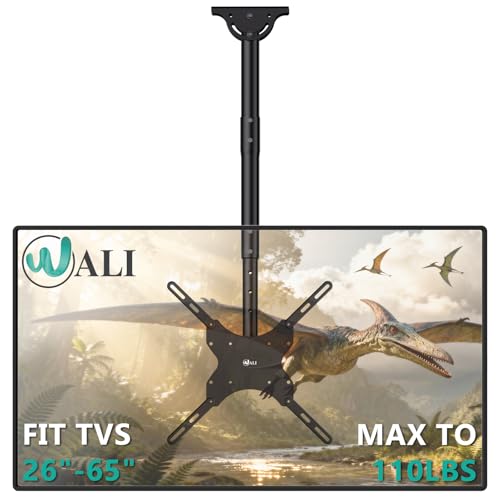
WALI Ceiling TV Mount for 26-65 Inch LCD LED OLED 4K TVs, Hanging Pole Ceiling Mount TV Bracket Up Down, TV Ceiling Mounts for Gym Patio Gazebo, up to 110 lbs, Max VESA 400x400mm (CM2665), Black
Universal Compatibility:WALI ceiling tv mount fits most displays up to 65 inches and 110 lbs. Supported mounting hole...
As an affiliate, we earn on qualifying purchases.
Fine-Tuning the Triangle for Different Room Sizes and Shapes
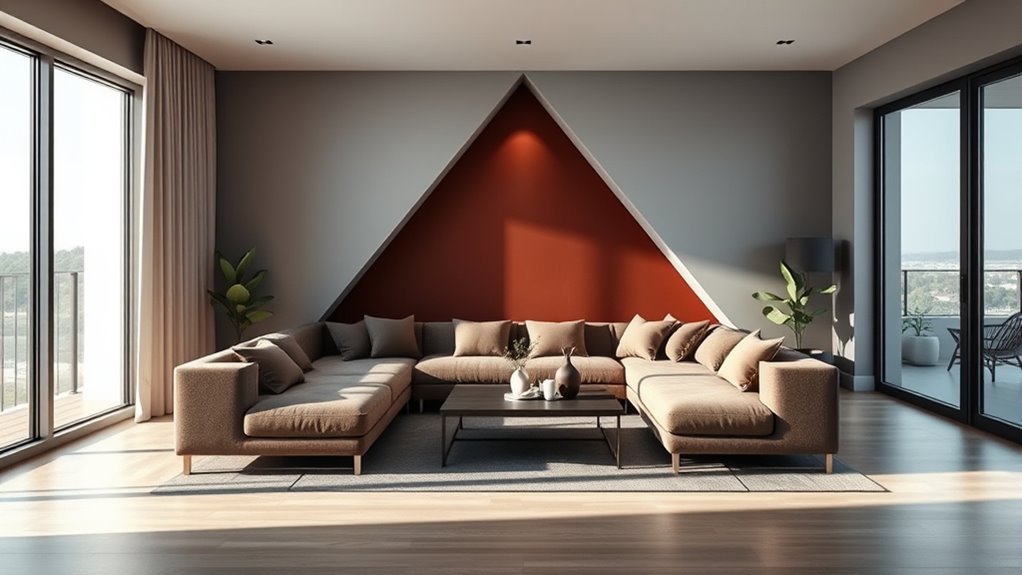
Adjusting the viewing triangle to fit different room sizes and shapes requires careful consideration of space and layout. First, measure your room to understand its dimensions and identify potential seating areas. For larger rooms, spread the seats farther apart, ensuring each viewer maintains a clear line of sight to the screen without straining. In smaller spaces, bring seating closer, but avoid crowding, which can hinder the triangle’s effectiveness. If your room has irregular shapes or obstacles, position seats to create the most direct sightlines possible, adjusting angles accordingly. Keep the central point of the triangle near the screen and ensure the seats form a comfortable, unobstructed triangle. Proper tool setup and positioning are essential for achieving optimal sightlines and a comfortable viewing experience. Fine-tuning these aspects ensures everyone enjoys an suitable viewing experience, regardless of room size or shape.
Tips for Enhancing Your Home Theater Experience

To truly elevate your home theater experience, focus on optimizing both visual and audio elements. Start with your seating position, ensuring it aligns with your viewing triangle for the best picture quality and minimal glare. Invest in high-quality speakers placed strategically around the room to create immersive sound. Use blackout curtains or dimmable lighting to reduce glare and set the right mood. Calibrate your display for accurate color and contrast, and consider adding acoustic treatments to improve sound clarity. Keep cables organized and avoid clutter that can distract or interfere with audio quality. Additionally, utilizing media organization techniques can help you keep your media files accessible and well-structured for quick access. Proper ventilation considerations can also prevent heat buildup and maintain optimal equipment performance. Ensuring proper room acoustics can significantly enhance sound quality and overall immersion. To further optimize the environment, consider implementing lighting control solutions that adapt to different viewing scenarios. Finally, update your content sources regularly and experiment with different settings to find what feels most cinematic. Implementing these tips will help your home theater deliver a truly immersive experience.
Frequently Asked Questions
Can the Viewing Triangle Technique Work With Multiple Screens?
Yes, the viewing triangle technique can work with multiple screens. You should position each screen so that they form a triangle with your seating area, ensuring you have ideal sightlines from your position. Keep the angles comfortable and avoid excessive head turning. Adjust the screens slightly inward or outward as needed to create a cohesive viewing experience. This setup helps you enjoy immersive visuals regardless of how many screens you use.
How Does Lighting Affect the Viewing Triangle’s Effectiveness?
Lighting is the backbone of the viewing triangle’s effectiveness, and it can make or break your experience. Think of it like a spotlight—dim, well-placed lighting enhances contrast and reduces glare, creating a cozy, immersive atmosphere. Too much light causes reflections and distractions, dulling the picture. To get the best view, keep lighting soft and indirect, ensuring your screen remains the star of the show without unwanted distractions.
Is This Method Suitable for Small or Oddly Shaped Rooms?
Yes, this method works well in small or oddly shaped rooms. You can adapt the placement of your seating and screen to fit the space effectively. Focus on positioning your viewing area at ideal angles, even if the room isn’t perfectly rectangular. Use flexible furniture and strategic lighting to enhance comfort and visibility, creating an immersive experience regardless of the room’s size or shape.
What Furniture Styles Best Complement the Viewing Triangle Setup?
Think of your furniture as the perfect cast, ready to spotlight your viewing triangle. Go for sleek, low-profile pieces that don’t block sightlines, like modern sofas or minimalist armchairs, which act as the stage’s supporting players. Wood or metal finishes add a touch of sophistication, while plush cushions invite relaxation. Keep the arrangement open and inviting, ensuring your setup remains the star of the show, no matter your room’s size.
How Can I Adapt the Triangle for Different Media Types Like Gaming or 3D Movies?
You can adapt the triangle for gaming or 3D movies by adjusting the seating angle for maximum immersion, usually between 30 to 45 degrees from the screen. Use adjustable chairs or loungers to fine-tune your position. Make certain the distance to the screen is appropriate for the media type—closer for gaming and slightly farther for 3D movies. Add soundproofing or surround sound to enhance the experience.
Conclusion
By mastering the viewing triangle, you turn your space into a personal theater, where every seat becomes the front row. Imagine the perfect harmony of sightlines and comfort, like a symphony of visuals that transports you beyond ordinary rooms. With these tips, your home theater dreams aren’t just a distant star—they’re within your reach. So, create your perfect viewing triangle and let your space come alive with cinematic magic.