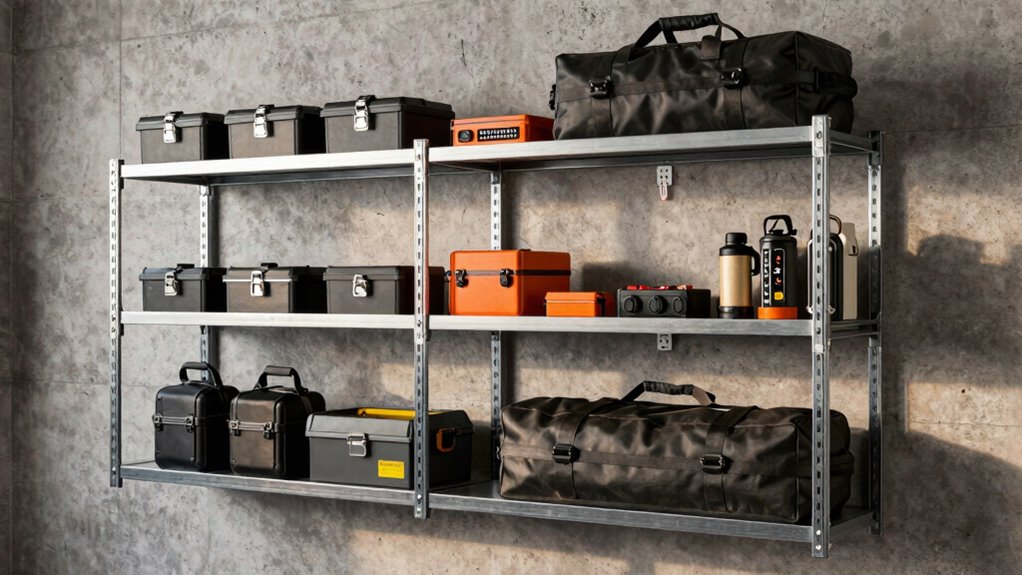
To plan rack shelves for mixed gear sizes and heat, choose durable, heat-resistant materials like steel or sturdy plastic, and incorporate perforated or open-grid shelves for better airflow. Arrange smaller items on lower or easily accessible shelves, while heavier gear goes on sturdier, higher shelves. Guarantee adjustable spacing between shelves for flexibility, and include ventilation features such as fans or vents. Paying attention to material, layout, and airflow helps protect your gear and extends shelf life; discover more tips and strategies ahead.
Key Takeaways
- Use adjustable, open-grid or perforated shelves to accommodate various gear sizes and improve ventilation.
- Allocate lower, accessible shelves for smaller items and sturdier, higher shelves for heavier gear.
- Maintain adequate spacing between shelves to facilitate airflow and prevent heat buildup.
- Install fans or vents and monitor temperature to manage environmental heat effectively.
- Choose durable, heat-resistant materials like steel to ensure safety and long-term durability.

Planning rack shelves for mixed gear sizes and heat involves more than just stacking items; it requires strategic design to guarantee safety, accessibility, and efficiency. The first step is choosing the right material for your shelves. You want durable, heat-resistant materials like steel or sturdy plastics that can withstand temperature fluctuations and heavy loads. Avoid flimsy or easily corroded options, as they can compromise safety over time. The material you select also influences airflow management, which is crucial when dealing with heat. Proper airflow prevents overheating of your gear and maintains a safe environment for storage. Incorporate perforated or open-grid shelves to promote better ventilation, allowing heat to dissipate and air to circulate freely around your stored items. Additionally, selecting appropriate materials is essential for ensuring long-term durability and safety.
As you plan your shelving layout, consider the variety of gear sizes you need to store. Smaller items should be placed on lower or more accessible shelves, while larger, heavier gear can go on sturdier, higher shelves. Use adjustable shelving units to accommodate future changes in your storage needs. This flexibility helps you optimize space and avoid overcrowding, which can impair airflow and increase heat buildup. When spacing shelves, leave enough room between layers to facilitate air movement and prevent items from becoming tightly packed, which can trap heat and cause damage. Incorporating ventilation features like vents or fans can further enhance airflow and temperature regulation within your storage area. Ensuring proper airflow management not only prevents heat accumulation but also extends the lifespan of sensitive equipment stored inside.
In addition to material selection and spacing, pay close attention to airflow management. Installing fans or vents within the storage area can help maintain a consistent temperature, especially when dealing with heat-sensitive equipment. You might also consider installing a temperature monitoring system to keep a close eye on environmental conditions. Proper airflow management isn’t just about preventing heat; it’s about creating a balanced environment where gear of different sizes stays safe and functional. Strategic placement of shelves and ventilation features ensures that heat doesn’t accumulate in pockets, which can happen if shelves are placed too close together or if airflow is obstructed. Regularly inspecting and maintaining your ventilation setup can further optimize airflow and prevent potential hazards.
Ultimately, planning your rack shelves for mixed gear sizes and heat involves a careful balance of material choice, layout, and airflow. By selecting heat-resistant, durable materials and designing your shelving with ventilation in mind, you create a storage solution that’s safe, accessible, and efficient. Keep in mind that flexibility and proper airflow management are key to adapting to changing needs and maintaining an optimal environment for your gear. When you pay attention to these details, you’ll maximize space, enhance safety, and prolong the lifespan of everything stored on your shelves.
adjustable open-grid metal shelving units
As an affiliate, we earn on qualifying purchases.
As an affiliate, we earn on qualifying purchases.
Frequently Asked Questions
How Do Temperature Fluctuations Affect Shelf Material Choices?
Temperature fluctuations greatly impact your shelf material choices because they affect material durability and temperature resistance. You should select materials that can withstand changing temperatures without warping, cracking, or degrading over time. For example, metals with high thermal stability or specially treated plastics are ideal. By choosing materials suited for temperature variations, you guarantee your shelves stay sturdy and reliable, even in environments with fluctuating heat levels.
What Safety Measures Are Needed for Heavy or Hot Gear?
You should implement safety protocols like proper labeling and secure storage for heavy or hot gear to prevent accidents. Use fire prevention measures such as fire-resistant shelving and keep flammable materials away from heat sources. Regularly inspect racks for stability and heat damage, and confirm personnel are trained in handling hot or heavy items safely. These steps minimize risks and maintain a safe environment for everyone working with the gear.
How to Incorporate Future Gear Size Changes Into the Plan?
You should design your gear storage with flexible shelf customization, allowing for future gear size changes. Include adjustable shelves or modular components that can be moved or expanded as needed. This proactive approach guarantees your rack adapts effortlessly to evolving gear dimensions, saving you time and effort. Planning for future modifications helps maintain efficient storage, keeps your space organized, and prevents the need for costly reconfigurations later.
Are There Specific Ventilation Requirements for Heat Management?
You need to meet specific ventilation standards to effectively manage heat. Proper airflow control prevents overheating and guarantees gear stability. While designing your rack shelves, incorporate vents or fans to facilitate passive or active ventilation, balancing airflow with gear protection. Ignoring ventilation requirements risks equipment damage and safety hazards. Prioritize airflow management to maintain ideal operating temperatures, ensuring your gear remains functional and secure over time.
How to Optimize Space for Both Small and Large Equipment?
You should organize your rack by grouping small and large equipment separately, optimizing space efficiently. Use clear gear labeling to easily identify items and prevent clutter. Adjust shelf heights based on gear sizes, placing larger equipment on lower shelves for stability. Incorporate adjustable shelving if possible, and maintain proper ventilation to prevent heat buildup. This approach keeps your rack organized, accessible, and safe for mixed gear sizes.
heat-resistant plastic storage shelves
As an affiliate, we earn on qualifying purchases.
As an affiliate, we earn on qualifying purchases.
Conclusion
Planning rack shelves for mixed gear sizes and heat may seem intimidating, but with careful consideration, you can create an efficient and safe storage system. By evaluating your gear’s dimensions, heat tolerance, and accessibility needs, you’ll guarantee everything fits perfectly and remains in good condition. Isn’t it worth investing a little time now to prevent problems later? With thoughtful planning, you’ll keep your gear organized, protected, and ready for action whenever you need it.
ventilated shelving for equipment
As an affiliate, we earn on qualifying purchases.
As an affiliate, we earn on qualifying purchases.
As an affiliate, we earn on qualifying purchases.