Start by evaluating your space—measure dimensions, note windows, doors, outlets, and identify the best spots for seating while avoiding obstructions. Prioritize your must-have features like big visuals or immersive sound and think about your favorite content to guide your choices. Set a realistic budget and sketch a floor plan with seating and equipment placement. Focus on lighting and acoustics for comfort. Keep your goals clear, and you’ll create an effective plan to start your project—more tips await if you keep going.
Key Takeaways
- Measure your room dimensions, layout features, and potential furniture placement to create an accurate scaled floor plan.
- Identify optimal seating arrangements, screen positioning, and speaker locations to maximize viewing and sound quality.
- Sketch the room layout, marking doors, windows, outlets, and zones for equipment and storage for visualization.
- Prioritize your content preferences to determine necessary features like screen size, sound quality, and lighting needs.
- Set a realistic budget and timeline, breaking down tasks into planning, design, and organization stages to stay on track.

Herdio 6.5 Inch 800W Outdoor Bluetooth Speakers Wired Waterproof with Multifunctional Amplifier, Wall Mount Speaker System for Patio Home Poolside Deck Backyard(2 Pairs,Black)
【Full-Range Speakers】The high powered full range indoor outdoor speakers wired waterproof has a maximum power output of 800...
As an affiliate, we earn on qualifying purchases.
Assess Your Space and Layout Options

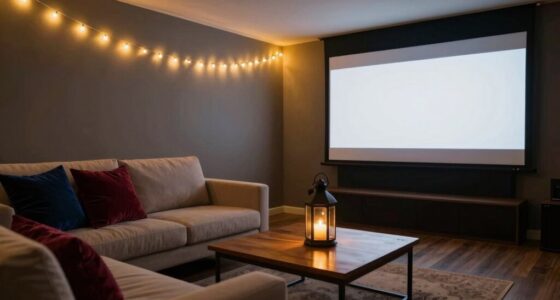
Before planning your home theater, you need to evaluate your space and available layout options. Measure the area carefully, noting the length, width, and ceiling height. Consider any existing features like windows, doors, or columns that could impact your setup. Think about how many people you want to accommodate comfortably and where you’ll position seating. Keep in mind that the viewing distance should be roughly 1.5 to 2.5 times the diagonal size of your screen. Determine if the space allows for ideal speaker placement and screen visibility from every seat. Flexibility is key—identify potential areas for equipment, storage, and wiring. Understanding the acoustics and how sound interacts with your space can significantly improve your home theater experience. Additionally, assessing the room acoustics can help you choose appropriate treatments to enhance sound quality and reduce echo. This assessment helps you understand what’s feasible and guides your decisions as you move forward with your home theater plan. Incorporating contrast ratio considerations into your planning can further optimize your viewing experience by ensuring your space is suitable for high-quality visuals.

STUDIOFINIX 6.5 Inch Outdoor Speakers Wall-Mounted 800W - Waterproof and High-Performance Audio Solution for Indoor/Outdoor,Home,Patio,Garden,Backyard(4 Passive Speakers Bundle/Black)
〖Powerful Performance〗: Boasting a peak power handling of 800 watts, it delivers a full range of dynamic sound...
As an affiliate, we earn on qualifying purchases.
Define Your Audio and Visual Priorities

Determining your audio and visual priorities is essential to creating a home theater that truly meets your needs. Think about what matters most: do you crave immersive sound, crisp picture quality, or a balance of both? If movies are your main focus, prioritize high-quality visuals with a large screen or projector, along with surround sound for full immersion. If gaming or music is more important, emphasize audio equipment and speakers that deliver clear, powerful sound. Consider your space limitations and budget constraints, and decide what features are non-negotiable versus those you can compromise on. Clarifying your priorities guides your decisions, ensuring you invest in the right components without feeling overwhelmed. This focus helps you craft a tailored setup that maximizes your enjoyment. Additionally, exploring European cloud innovation can inspire you to incorporate smart, energy-efficient technology into your home theater setup. Recognizing the importance of audio-visual integration can further enhance your overall experience by ensuring seamless compatibility among your chosen components. Being aware of global cloud disruptions reminds you to include contingency plans for digital services, ensuring your entertainment remains unaffected during outages. Incorporating cloud-based management tools can also simplify controlling and updating your system, making maintenance more manageable. Furthermore, considering the potential for data security in connected devices can help protect your privacy and ensure a safer, more reliable system.

Polk Audio Atrium 4 Weatherproof Outdoor Speakers with Powerful Bass (Pair, Black), All-Weather Durability, Broad Sound Coverage, Speed-Lock Mounting System
EASY INSTALLATION - One-click speed-lock mounting bracket offers anti-slip, one-handed installation. Mount these outdoor speakers wired vertically or...
As an affiliate, we earn on qualifying purchases.
Identify Your Favorite Content and Viewing Habits

Understanding what types of content you enjoy most helps shape your perfect home theater. Consider your favorite genres and shows, as well as where you prefer to watch—whether on a big screen or a smaller device. This clarity guides your choices in equipment and setup to match your viewing habits perfectly. Additionally, exploring best anime movies can inspire your content selection, ensuring a diverse and engaging viewing experience. Recognizing your mental wellbeing related preferences can also help create a comfortable and enjoyable environment for your viewing sessions, especially when incorporating free floating elements that promote relaxation and reduce stress. Incorporating vacuum technology insights can help you understand the importance of maintaining a clean viewing space for a more enjoyable experience. Being aware of how your fandom engagement influences your content choices can further personalize your home theater setup for maximum enjoyment.
Preferred Genres and Shows
Have you ever thought about which genres or shows you watch most often? Knowing your favorites helps shape your home theater setup. If you love action movies or sports, you’ll want a high-quality sound system to catch every roar and explosion. Prefer comedies or talk shows? A comfortable seating arrangement and good lighting become priorities. Streaming dramas or documentaries might lead you to focus on picture quality and screen size. Tracking your viewing habits reveals what features matter most—whether it’s immersive audio, sharp visuals, or easy access to your preferred content. By identifying your favorite genres and shows, you can tailor your space to enhance your viewing experience and ensure your setup supports your entertainment style perfectly.
Watching Environment Preferences
Knowing what you watch most often shapes how you set up your home theater. Do you prefer intense action, cozy comedies, or immersive documentaries? Your viewing habits reveal your ideal environment. Are you someone who loves a dark, quiet space for late-night movies, or do you enjoy a lively atmosphere with family and friends? Understanding your preferences helps create a space that feels just right. Incorporating the right lighting setup can further enhance your viewing experience and match your mood. Additionally, recognizing passive voice in your writing can make your instructions clearer and more direct. Tailoring your space to your content preferences ensures a more satisfying and personalized entertainment experience. Being aware of your visual comfort needs can also help you select the right screen size and resolution for optimal viewing. Considering the decorative elements in your room can contribute to a cohesive aesthetic that complements your entertainment area.
Device and Screen Choices
Choosing the right devices and screens begins with identifying the types of content you enjoy most. If you love streaming movies and TV shows, prioritize a large, high-resolution screen like a 4K TV or projector to enhance visuals. For gaming, look for a device with low input lag and a good refresh rate to ensure smooth gameplay. If music and podcasts are your focus, consider a quality speaker setup or soundbar to bring audio to life. Think about your daily habits: do you watch in short bursts or long marathons? This helps determine whether a smaller, more versatile device or a larger, immersive screen suits your routine. Matching your devices and screens to your content preferences guarantees your home theater setup feels personalized and enjoyable.

6.5 Inch Max 800W Outdoor Bluetooth Speakers Waterproof Wired with Multifunctional Amplifier Wall Mount Outdoor Speaker System for Patio Garden Poolside Home(4 Speakers,Black)
Powerful Acoustics: Unmatched Sound Output,Each speaker pumps out an impressive 200 watts, with a pair delivering a combined...
As an affiliate, we earn on qualifying purchases.
Set a Realistic Budget and Timeline

Setting a realistic budget and timeline is essential to keep your home theater project on track and within financial limits. Start by defining what you can afford without stretching your finances. Break down costs into categories like equipment, furniture, and accessories, even if you’re not purchasing yet. Be honest about how much time you can dedicate weekly to planning and setup, setting achievable milestones. Keep in mind that unexpected expenses can arise, so allocate a buffer in your budget. Setting a timeline helps prevent delays and keeps you focused on your goals. Remember, the goal is to create an enjoyable space without rushing or overspending. Staying realistic from the start ensures you’ll enjoy your home theater long-term, without stress or regret. Budgeting tips can help you stay on track throughout the process. Additionally, understanding cost estimation techniques early on will help you better prepare for potential expenses and avoid cost overruns that could derail your plans. Incorporating financial planning strategies can further enhance your ability to stay within your set budget and timeline, especially by considering project scope and future upgrades.
Sketch a Floor Plan and Seating Arrangement

Have you considered how your space will flow and where your entertainment equipment will go? Sketching a floor plan helps visualize your home theater setup. Start by marking the room dimensions and noting existing features like doors, windows, and outlets. Then, plan your seating arrangement to optimize viewing angles and comfort. Keep these points in mind:
- Position seats to face the primary screen, avoiding obstructions.
- Leave space for equipment, such as speakers and media players.
- Ensure clear pathways for easy access and safety.
- Incorporate spatial planning to maximize comfort and functionality within your layout. Proper layout design considers factors like room acoustics and viewing distance, enhancing your overall experience. Additionally, understanding dark psychology tactics can help you create a more immersive environment by minimizing distractions and manipulations from external influences.
Use graph paper or a digital tool to create a scaled drawing. This allows you to experiment with different layouts before committing. A well-thought-out plan makes it easier to select components later and creates a functional, enjoyable space.
Research Essential Components and Features

To create an immersive home theater, you need to understand your key audio components, such as speakers, amplifiers, and receivers, which shape sound quality. Equally important are visual display options like projectors or large-screen TVs that set the tone for your viewing experience. Exploring these essential features helps make certain your setup delivers both clarity and cinematic impact.
Key Audio Components
A home theater’s audio experience hinges on selecting the right components, each playing an essential role in delivering clear, immersive sound. First, a good receiver is crucial; it powers your speakers and processes audio signals effectively. Second, speakers are the core of your sound system, including front, surround, and subwoofers, all working together for rich, dynamic sound. Third, consider audio sources like Blu-ray players, streaming devices, or gaming consoles, which provide high-quality content for your setup. Ensuring these components are compatible and properly calibrated enhances your listening experience. Focus on quality over quantity, and choose components that suit your space and budget. This foundation makes it easier to upgrade and expand your system later without hassle.
Visual Display Options
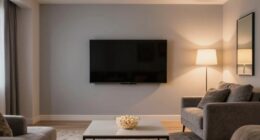
Choosing the right visual display is essential for creating an immersive home theater experience. You have several options, each with unique features. Large flat-panel TVs, like OLED or LED models, offer sharp images, vibrant colors, and easy setup. Projectors can produce a massive screen size, perfect for a true theater feel, but may require a dark room and space for projection. Consider resolution—4K displays provide stunning clarity, while HDR enhances color and contrast. Brightness and refresh rates impact picture quality and motion smoothness, especially during fast action scenes. Connectivity options, such as HDMI ports, ensure you can connect multiple devices. Think about your room size, lighting conditions, and budget to select the display that guarantees the best viewing experience for your space.
Consider Lighting, Acoustics, and Ambience

Creating the right atmosphere in your home theater begins with thoughtful lighting, acoustics, and ambience. Proper lighting minimizes glare and sets the mood, so consider dimmable lights or blackout curtains. Good acoustics ensure clear sound and reduce echoes, so think about adding rugs, curtains, or acoustic panels. The overall ambience should feel cozy and immersive, so choose colors, decor, and furniture that enhance comfort and focus. To optimize your space, focus on these three aspects:
- Use adjustable lighting to control brightness and create a cinematic mood.
- Add soft furnishings or acoustic treatments to improve sound quality.
- Incorporate warm, inviting colors and decor to foster an immersive environment.
These steps help you craft an engaging, comfortable home theater without spending a dime.
Outline Your Next Steps and Decision-Making Process

To effectively move forward with your home theater project, you need to establish a clear decision-making process that guides each step. Start by setting priorities—decide what’s most important to you, like picture quality, sound, or seating comfort. Create a checklist of tasks, such as measuring your space, researching equipment, and budgeting. Break down your project into manageable phases, focusing on planning, design, and implementation. When evaluating options, compare features and costs objectively, avoiding impulse decisions. Keep track of your choices and reasons behind them to stay organized. Regularly review your progress and adjust your plan as needed. This structured approach ensures you stay focused, make informed decisions, and ultimately build a home theater that aligns with your vision.
Frequently Asked Questions
How Can I Maximize Small or Awkward Spaces for a Home Theater?
You can maximize small or awkward spaces by choosing compact furniture that fits snugly, like wall-mounted shelves or fold-away seating. Use vertical space for storage and tech equipment to free up floor area. Opt for a projector instead of a bulky TV to save room, and hang curtains or acoustic panels to improve sound quality without crowding the space. Keep the layout simple and clutter-free for the best viewing experience.
What Are Cost-Effective Ways to Improve Sound Quality Without Upgrades?
You can improve sound quality cost-effectively by adding soft furnishings like rugs, curtains, and cushions to absorb sound reflections. Rearrange furniture to minimize echo and dead spots. Use DIY acoustic panels made from household materials such as blankets or foam. Calibrate your existing audio setup for better clarity. Additionally, position speakers correctly and avoid placing them near walls or corners to achieve a richer, more balanced sound without spending extra.
How Do I Prioritize Features When My Budget Is Limited?
Think of your budget as a treasure map—highlighting the X where your priorities lie. Focus on essential features first, like a good screen and sound system, then add extras later. Cut back on fancy gadgets that don’t impact your viewing experience. By ranking what matters most, you guarantee every dollar is a stepping stone toward your perfect home theater, even with limited funds.
What Are Common Mistakes to Avoid During Planning?
You should avoid overlooking your room’s acoustics, which can considerably impact sound quality. Don’t forget to measure your space accurately to prevent overestimating equipment size or capacity. Resist rushing decisions; take your time to research options and compare prices. Avoid ignoring future expansion possibilities, which could limit your setup later. Finally, don’t forget to plan for proper wiring and power sources to prevent safety hazards and guarantee a clean setup.
How Can I Future-Proof My Home Theater Setup?
To future-proof your home theater, think of it as planting a sturdy tree that grows with you. Choose versatile equipment with upgrade options, like modular speakers and scalable screens. Prioritize high-quality wiring and connections to avoid obsolescence. Keep an eye on emerging tech trends, so you’re ready to adapt without starting from scratch. This way, your setup remains a reliable oasis amid the ever-changing landscape of entertainment technology.
Conclusion
By following these steps, you can confidently plan your home theater in just one evening. For example, imagine mapping out your living room, deciding on a cozy sectional, and choosing a TV size that fits perfectly. With a clear plan, you’ll save time and avoid impulse buys. Now, you’re ready to start researching and shopping smartly, turning your vision into a reality without feeling overwhelmed or rushed.