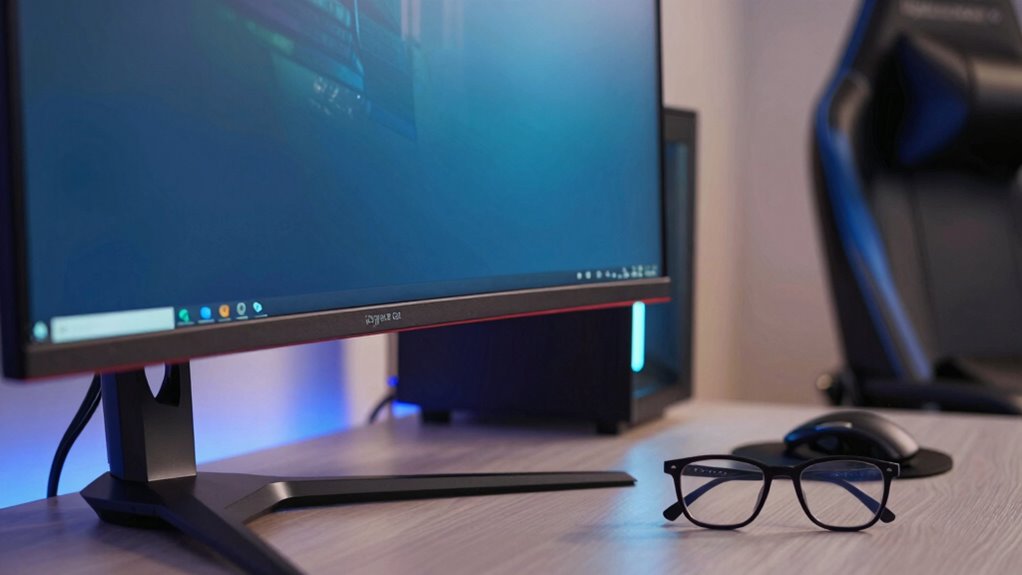

To prevent eye strain during big-screen gaming, follow the 20-20-20 rule: every 20 minutes, look at something 20 feet away for 20 seconds. Keep your screen at eye level and about an arm’s length to reduce focus effort. Make certain you take regular breaks to let your eyes rest and adjust room lighting to minimize glare. Staying mindful of these tips helps keep your eyes comfortable, and if you keep going, you’ll discover more ways to protect your vision.

Get audio and creator gear delivered free — and shop member deals
- Fast, free delivery on millions of items
- Access to Prime Big Deal Days deals on October 6–7
- Prime Video, Amazon Music and more included
Key Takeaways
- Maintain a proper screen distance of about an arm’s length to reduce eye strain.
- Position screens at eye level to promote comfortable viewing angles.
- Adjust brightness and contrast to match ambient lighting for optimal comfort.
- Follow the 20-20-20 rule: look 20 feet away for 20 seconds every 20 minutes.
- Take regular breaks to rest eyes and reduce fatigue during extended gaming sessions.
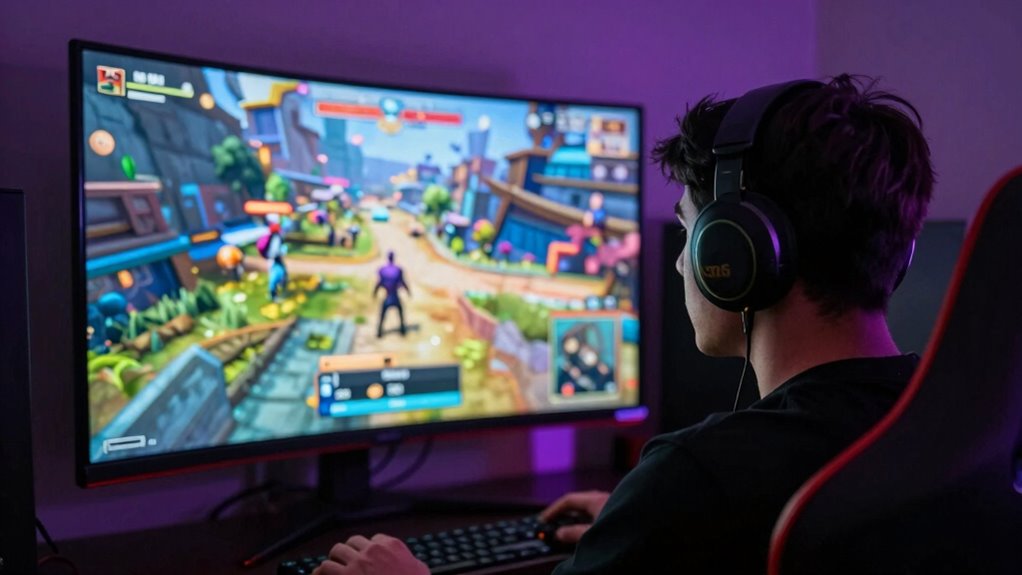
Playing games on a big screen can be immersive and exciting, but it also increases the risk of eye strain if you’re not careful. To protect your eyes, one essential rule is to manage your environment and equipment properly. If you’re using a VR headset, it’s easy to get lost in the game, but ignoring your surroundings and lighting can lead to headaches and fatigue. When using a VR headset, take regular breaks — about every 20 minutes — to give your eyes a rest. Focus on something distant outside the headset or look into the distance to reduce eye fatigue caused by prolonged close-up focus.
Taking regular breaks and focusing on distant objects helps reduce eye fatigue during VR gaming.
Ambient lighting plays a critical role in preventing eye strain during big-screen gaming. Bright rooms or harsh lighting can cause reflections on your screen or VR headset lenses, forcing your eyes to work harder. Ideally, keep the room softly lit with ambient lighting that isn’t too bright or too dim. This balance minimizes glare and reduces contrast between the screen and the surrounding environment, which helps your eyes adapt comfortably. Use warm, indirect lighting if possible, and avoid placing bright lights directly behind or in front of your screen, as they can create glare. Maintaining a comfortable visual environment is essential for reducing eye strain. It’s also beneficial to adjust your display settings for optimal brightness and contrast to further reduce eye fatigue.
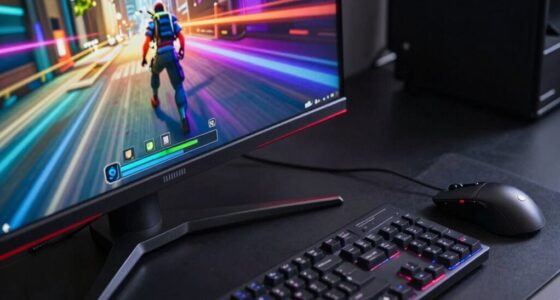
Another key point is to position your display correctly. Your screen should be at eye level and about an arm’s length away from your face. This distance helps reduce eye strain by preventing you from leaning forward or squinting. If you’re using a VR headset, ensure it fits snugly but comfortably, and take breaks to avoid the discomfort that comes from prolonged wear. Remember, your eyes need time to adjust, especially if you switch between VR and regular screens. Staring at screens for long periods causes your eyes to strain because the focus is fixed, so practice the 20-20-20 rule: every 20 minutes, look at something 20 feet away for at least 20 seconds. Staying mindful of visual ergonomics can greatly enhance comfort during extended gaming sessions.
Additionally, maintaining proper screen distance is vital, as it directly impacts how comfortably your eyes can focus during extended periods of use.
As an affiliate, we earn on qualifying purchases.
Frequently Asked Questions
Does Screen Size Directly Correlate With Eye Strain Severity?
Screen size doesn’t directly determine eye strain severity, but larger screens can cause you to adjust your screen brightness and eye movements more. If you keep the brightness too high or make rapid eye movements to scan the screen, your eyes may strain more. To reduce discomfort, set your screen brightness to match ambient lighting, take regular breaks, and minimize excessive eye movement, regardless of screen size.
Are There Specific Games More Likely to Cause Eye Fatigue?
Certain games, like fast-paced shooters or those demanding high peripheral awareness, are more likely to cause eye fatigue. Poor color calibration can strain your eyes during prolonged play, especially with intense visuals. To minimize fatigue, take regular breaks, adjust your screen settings, and make certain your game’s visuals are well-calibrated. Staying aware of your peripheral vision helps prevent overexposure and keeps your eyes comfortable during extended gaming sessions.
How Long Should I Follow the Big-Screen Rule Each Session?
You should follow the big-screen rule for about 20 minutes per session. During this time, sit in an ergonomic chair to support good posture, and make sure proper lighting to reduce glare and eye strain. After 20 minutes, take a 5-10 minute break to rest your eyes. This routine helps prevent fatigue, keeps your eyes comfortable, and promotes overall gaming comfort and health.
Can Eye Exercises Help Reduce Gaming-Related Eye Strain?
Yes, eye exercises can help reduce gaming-related eye strain. They promote eye relaxation and improve blink frequency, which keeps your eyes moist and comfortable. Regularly practicing focusing exercises or the 20-20-20 rule—looking 20 feet away for 20 seconds every 20 minutes—can refresh your eyes and lessen fatigue. Incorporating these habits into your gaming routine helps prevent discomfort and maintains eye health during long sessions.
What Are the Best Monitor Settings for Comfortable Gaming?
Think of your monitor as a window into your gaming world—make it crystal clear. You should set color calibration for accurate hues, reducing eye fatigue, and boost your refresh rate to keep motion smooth and flicker-free. Adjust brightness and contrast for comfortable viewing, and enable blue light filters if available. These settings turn your screen into a friendly portal, letting you game longer without straining your eyes.
blue light blocking glasses for gaming
As an affiliate, we earn on qualifying purchases.
As an affiliate, we earn on qualifying purchases.
Conclusion
By following the big-screen gaming eye strain rule, you protect your vision while enjoying your favorite games. Remember, even as medieval knights kept vigilant at dawn, today’s gamers must also heed their eyes’ needs. Take regular breaks, maintain proper distance, and stay mindful of your screen time—just like a modern-day squire tending to their armor. Keep these habits in mind, and your gaming sessions will be epic, not eyepocalypse. Happy gaming!
ambient room lighting for gaming
As an affiliate, we earn on qualifying purchases.
As an affiliate, we earn on qualifying purchases.
As an affiliate, we earn on qualifying purchases.
Fall Picks
fall essentials
As an affiliate, we earn on qualifying purchases.