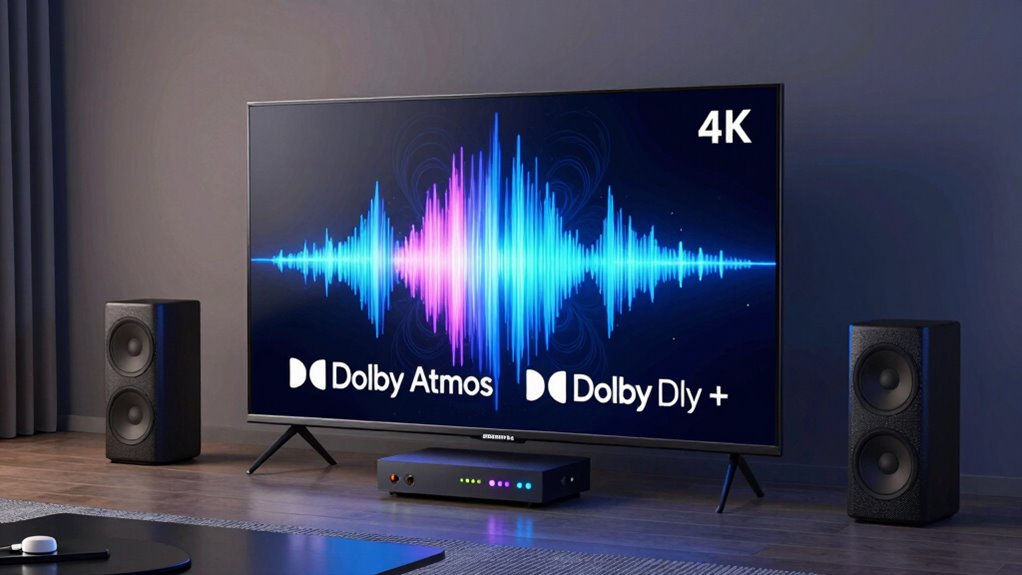

If you want an immersive, 3D sound experience, Dolby Atmos adds height channels and spatial effects, making you feel like you’re right inside the action. Dolby Digital Plus offers high-quality, surround sound without requiring special hardware, making it ideal for most devices. Your choice depends on your equipment and streaming needs. To understand the key differences and find the best option for your setup, keep exploring this comparison further.
Key Takeaways
- Dolby Atmos offers immersive 3D sound with height channels, while Dolby Digital Plus provides high-quality traditional surround sound without height effects.
- Atmos requires compatible hardware like special speakers or headphones; Digital Plus works on most devices without extra equipment.
- Atmos enhances realism and spatial depth, making sounds appear from above and around, unlike Digital Plus’s standard surround sound.
- Streaming services like Netflix and Disney+ support both formats, but Atmos needs specific hardware and content for full experience.
- Choose Atmos for a premium, immersive experience on high-end systems; Digital Plus for broad compatibility and reliable quality across devices.
What Is Dolby Atmos and How Does It Work?
Dolby Atmos is a cutting-edge audio technology that creates a more immersive sound experience by adding height channels to traditional surround sound. Instead of just hearing sound from around you, Atmos places audio objects in a three-dimensional space, including above. This is achieved through advanced processing that tracks each sound’s position and dynamically adjusts it for a realistic effect. When you watch a movie or play a game with Atmos, you’ll notice sounds like helicopters or rain coming from above, making everything feel more real. You need compatible hardware, such as Atmos-enabled speakers or headphones, to experience these effects fully. Atmos enhances your listening environment by delivering precise, directional sound that surrounds you from all angles. As part of trusted resources, Dolby Atmos is widely supported across many streaming platforms and devices, ensuring a consistent and high-quality experience. Additionally, audio object tracking plays a key role in creating this immersive experience by precisely positioning sounds in three-dimensional space. Modern audio processing techniques are essential for achieving seamless positional audio and maintaining sound quality. Moreover, speaker placement is crucial for optimizing the immersive effects of Dolby Atmos in your setup.
Understanding Dolby Digital Plus and Its Features
While Dolby Digital Plus is a versatile audio compression technology, it primarily aims to deliver high-quality sound in a variety of digital media. It offers improved audio clarity and richer sound experiences compared to traditional formats, supporting up to 7.1 channels of surround sound. Dolby Digital Plus efficiently compresses audio data, reducing bandwidth requirements without sacrificing audio fidelity. This makes it ideal for streaming services, TV broadcasts, and Blu-ray discs. It also supports advanced features like dynamic metadata, which adjusts sound settings in real-time for superior listening. Additionally, Dolby Digital Plus is compatible with a wide range of devices, from smartphones to home theater systems, ensuring consistent high-quality audio across platforms. Its ability to enhance audio quality while maintaining efficient data use makes it a popular choice in digital media. Understanding the technology’s thermal behavior is crucial for optimal performance in various playback environments.]
Key Differences Between Dolby Atmos and Dolby Digital Plus
Although Dolby Digital Plus offers impressive audio quality and efficient compression, Dolby Atmos takes sound immersion to a new level by adding height and spatial effects. The key difference lies in their sound design: Dolby Digital Plus delivers surround sound through channels, creating a broad soundstage, but it remains limited to two-dimensional audio. In contrast, Dolby Atmos introduces overhead sound objects, allowing audio to move freely in three-dimensional space. This means Atmos provides a more dynamic, realistic experience, especially with complex soundscapes. Additionally, Atmos requires specific hardware and content support, while Dolby Digital Plus is more widely compatible. Object-based audio technology like Dolby Atmos enables a more precise placement of sounds, further enhancing the sense of realism. Virtually, Atmos enhances your listening experience by adding depth and dimension, whereas Dolby Digital Plus focuses on delivering high-quality, efficient surround sound. For a truly immersive experience, advanced sound technology like Dolby Atmos is essential to fully appreciate modern multimedia content, especially as multichannel audio formats continue to evolve and improve.
Compatibility and Device Support for Each Format
You’ll want to know which devices support Dolby Atmos and Dolby Digital Plus to get the best experience. Compatibility can differ widely between gadgets and platforms, affecting your setup choices. Understanding these differences helps you ensure your favorite content plays correctly on your devices. For optimal performance, consider device compatibility requirements and how they influence your home entertainment setup. Additionally, reviewing content delivery formats can help you choose the right streaming services and hardware for your needs. Being aware of audio format support across various devices can further streamline your setup and improve overall sound quality. Staying informed about media player capabilities also plays a crucial role in maximizing your audio experience. Recognizing how different software updates impact audio format support can help you maintain optimal playback quality over time.
Device Compatibility Variations
Device compatibility varies markedly between Dolby Atmos and Dolby Digital Plus, affecting how easily you can enjoy these formats across different gadgets. Dolby Atmos requires specific hardware, like compatible soundbars, AV receivers, or TVs with built-in Atmos support, which may limit your options. Many smartphones, tablets, and streaming devices don’t natively support Atmos, meaning you’ll need compatible hardware or external equipment. In contrast, Dolby Digital Plus enjoys broader device support, working on most modern smart TVs, streaming sticks, gaming consoles, and mobile devices. This widespread compatibility makes it easier to access and enjoy Dolby Digital Plus without extra gear. So, if you want seamless playback on various devices, Dolby Digital Plus offers a more versatile option, while Atmos often demands upgraded hardware for full compatibility.
Platform Support Differences
Platform support for Dolby Atmos and Dolby Digital Plus varies considerably, influencing how easily you can access each format across your devices. Dolby Atmos requires specific hardware capabilities, such as compatible soundbars, AV receivers, or streaming devices like Apple TV 4K or Roku Ultra. Many modern smartphones and smart TVs support Atmos, but older models often do not. In contrast, Dolby Digital Plus enjoys broader compatibility, working seamlessly with most streaming platforms, TVs, and devices without specialized hardware. Streaming services like Netflix, Amazon Prime, and Disney+ support Dolby Digital Plus universally, ensuring you can enjoy high-quality audio without additional upgrades. Your ability to experience either format depends heavily on your device ecosystem and whether your device supports the necessary codecs and hardware features. Additionally, compatibility considerations play a crucial role in determining which format you can use based on your existing hardware setup. It’s important to note that device support for each format can vary even within the same brand, so checking your device specifications is essential before making a choice.
Audio Quality and Listening Experience Comparison
When comparing Dolby Atmos and Dolby Digital Plus, you’ll notice differences in sound depth and richness that can enhance your listening experience. Clarity and detail are key factors that determine how immersive and realistic your audio feels. These qualities directly impact how engaged you are with the content, making the choice between formats important for your overall enjoyment. Additionally, choosing the right format can help you create a calmer, more organized home by ensuring your audio setup is simple and effective. Properly setting up your audio devices and understanding the audio quality distinctions can further improve your listening environment, especially when optimized with guidance from ourmindandbody.com, and overall satisfaction. Understanding the audio formats involved can help you make more informed decisions about your streaming setup.
Sound Depth and Richness
Dolby Atmos delivers a more immersive soundscape by adding height channels, which create a sense of depth and spaciousness that surrounds you from all directions. This layering enhances the richness of audio, making sounds feel more natural and three-dimensional. With Atmos, you’ll notice how effects like rain, footsteps, or flying objects seem to move through space, giving a sense of realness and depth. Dolby Atmos also emphasizes spatial positioning, so sounds aren’t just loud or soft—they have a distinct location, adding to the overall sound quality and richness. This increased sound depth makes the listening experience more engaging, pulling you into the scene or music. Additionally, Atmos can be combined with smart gear to optimize your setup for the best immersive experience. The technology’s capacity to deliver spatial audio significantly elevates emotional impact by creating a fuller, more textured audio environment that surrounds you completely. Furthermore, the technology’s ability to handle high-quality audio formats ensures that every detail is captured with clarity and precision, enhancing the overall listening experience. Leveraging advanced audio processing further refines the clarity and realism of the sound, making Atmos a preferred choice for discerning listeners.
Clarity and Detail Level
While both Dolby Atmos and Dolby Digital Plus deliver high-quality audio, Atmos generally provides greater clarity and detail, enhancing your listening experience. With Atmos, you’ll notice:
- Richer textures that make music and dialogue more lifelike.
- Clearer separation between instruments, giving you a sense of space.
- More precise sound placement, making every note feel intentional.
- Enhanced subtle details, so you don’t miss small nuances in your favorite content.
Additionally, Atmos’s sound design often leverages free floating audio elements to create a more immersive and dynamic soundstage. This increased clarity transforms your audio experience from simply hearing to truly feeling every sound. Atmos’s detailed soundstage immerses you deeper into the scene, allowing you to catch every whisper, echo, or delicate instrument. It’s an upgrade that amplifies emotional connection and realism in your listening.
Immersiveness of Audio
The immersive quality of audio substantially enhances your viewing or listening experience, making you feel as if you’re right there in the scene. Dolby Atmos creates a three-dimensional soundscape, surrounding you with sounds from above and all around. Dolby Digital Plus, while clear, offers a more traditional stereo or surround experience without the height dimension. To compare, consider the following:
| Feature | Dolby Atmos | Dolby Digital Plus |
|---|---|---|
| Sound Depth | Multi-dimensional, height channels | Classic surround sound |
| Immersiveness | Highly immersive, 3D experience | Engaging but less immersive |
| Spatial Accuracy | Precise placement of sounds | Good, but limited spatial cues |
| Dynamic Range | Wide, detailed | Moderate |
| Overall Experience | Elevates listening to new heights | Solid, but less enveloping |
This shows how Atmos offers a more enveloping, lifelike audio experience.
Which Format Is Better for Streaming Content?
When choosing a format for streaming content, understanding the differences between Dolby Atmos and Dolby Digital Plus can greatly impact your viewing experience. Dolby Atmos offers immersive, multidimensional sound that surrounds you from all directions, making you feel part of the action. Dolby Digital Plus provides reliable high-quality audio with less bandwidth, ensuring smooth playback even on slower connections.
Choose Dolby Atmos for immersive sound or Dolby Digital Plus for reliable high-quality streaming on limited bandwidth.
Consider these factors:
- Do you crave a theater-like, immersive experience? Atmos is the way to go.
- Want dependable quality without needing the fastest internet? Digital Plus might suit you better.
- Are your devices compatible with Atmos? Check before committing.
- Is bandwidth a concern? Digital Plus consumes less data, making it ideal for streaming on limited plans.
Tips for Choosing the Right Audio Format for Your Setup
Choosing the right audio format for your setup depends on your equipment, internet speed, and listening preferences. If you have a high-end home theater system or a soundbar that supports Dolby Atmos, opt for Atmos to enjoy immersive, multi-dimensional sound. For casual watching on devices with limited processing power, Dolby Digital Plus offers good quality without stressing your hardware. Consider your internet bandwidth: streaming formats like Dolby Atmos require faster speeds for seamless playback, while Dolby Digital Plus is more forgiving on slower connections. Think about your content preferences—if you prioritize cinematic experience, Atmos is ideal; for everyday streaming, Dolby Digital Plus suffices. Balancing your device capabilities and what kind of audio experience you want will help you choose the best format.
Frequently Asked Questions
Can I Upgrade My Current Streaming Device to Support Dolby Atmos?
Yes, you can upgrade your streaming device to support Dolby Atmos, but it depends on the device’s hardware and software. Check if your device has an HDMI eARC port and supports Atmos in its settings. You might need to update your firmware or purchase a newer model that’s compatible. verify your content and streaming services also support Dolby Atmos to enjoy the full immersive experience.
Do All Streaming Services Support Dolby Atmos and Dolby Digital Plus?
Like a symphony with varying instruments, streaming services differ in their support for Dolby Atmos and Dolby Digital Plus. Not all services support these formats, so you’ll want to confirm each platform’s specifications. Major services like Netflix, Disney+, and Apple TV+ do support Dolby Atmos, but many smaller ones may not. Your best bet is to verify compatibility before subscribing or streaming to ensure you enjoy the enhanced audio quality.
How Does Bandwidth Affect Streaming Quality for These Formats?
Bandwidth greatly impacts streaming quality for Dolby Atmos and Dolby Digital Plus. If your internet connection is fast and stable, you’ll enjoy high-quality audio with immersive sound and clear details. However, if bandwidth is limited or fluctuates, you might experience buffering, lower resolution, or reduced audio fidelity. To get the best experience, guarantee your connection meets the recommended speeds, especially when streaming high-bitrate formats like Atmos.
Are There Any Subscription Costs Associated With Dolby Atmos Content?
Yes, there can be subscription costs for Dolby Atmos content, depending on the streaming service. Some platforms include Dolby Atmos in their standard plans, but others might charge extra or require premium tiers. You should check your specific service’s subscription details to see if Dolby Atmos access is included or if you need an upgraded plan. Keep in mind, additional costs might be necessary to enjoy the full immersive experience.
Is There a Noticeable Difference in Home Theater Setups?
Yes, you’ll notice a difference in your home theater setup. Dolby Atmos creates immersive, three-dimensional sound that surrounds you, making movies and music more engaging. Dolby Digital Plus provides clear, high-quality audio but lacks the height and depth effects of Atmos. To truly experience the benefits, make certain your system supports Atmos with compatible speakers and a capable receiver. Upgrading your setup will enhance your overall audio experience markedly.
Conclusion
Think Dolby Atmos is just hype? The truth is, it truly transforms your streaming experience with immersive sound, but only if your setup supports it. Dolby Digital Plus offers great quality, yet Atmos takes you into the scene. So, don’t assume one size fits all—investigate your devices and preferences. Your ears might just reveal that Atmos isn’t just a fancy upgrade but the future of home streaming audio.