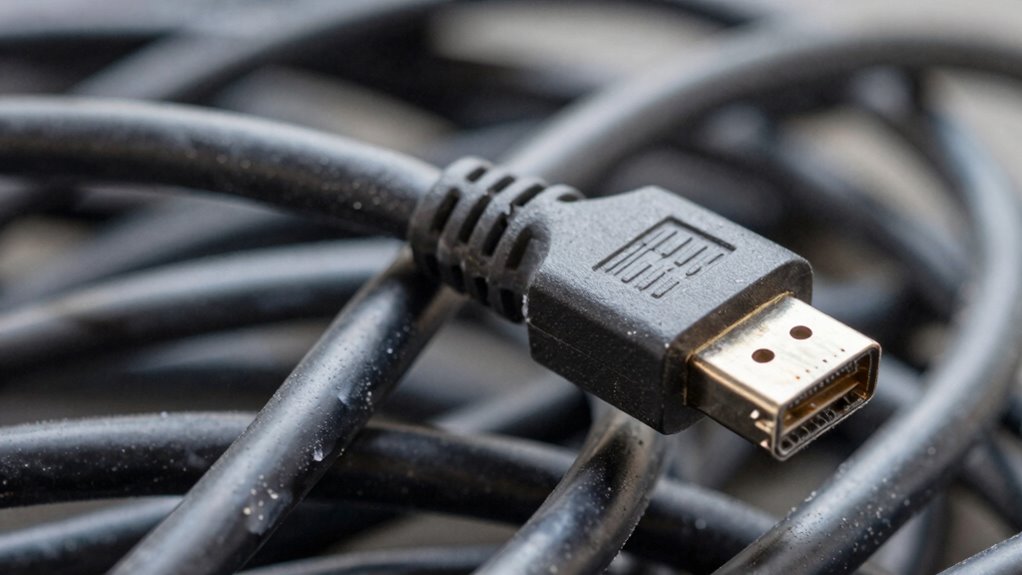

Repeated bends and kinks in your HDMI cable can cause internal wire damage that’s not visible from the outside. This stress weakens connections over time, leading to signal loss and eventual failure. Sharp turns and twisting put strain on the internal wiring, causing frayed or broken strands that disrupt data transmission. To keep your cable lasting longer, it’s essential to understand how improper handling harms its core components. Keep going to uncover more tips to protect your cables and devices.
Key Takeaways
- Sharp bends and kinks apply internal stress, causing wire fatigue and eventual HDMI signal failure over time.
- Internal damage from repeated stress often occurs without visible external signs, leading to hidden cable degradation.
- Proper strain relief and flexible materials prevent internal wire breakage caused by bending or twisting.
- Ignoring cable handling best practices accelerates internal wire fraying, reducing HDMI performance and lifespan.
- Regular inspection and quality construction help maintain HDMI signal integrity by minimizing damage from bends and kinks.
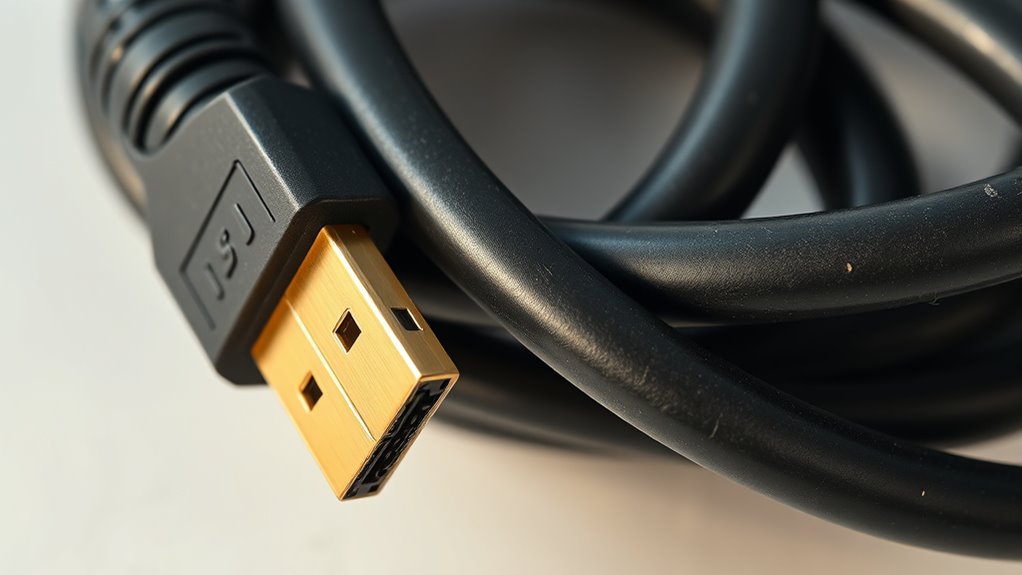
Cables often face bends and kinks that can damage their internal wiring and reduce performance. When you’re using HDMI or other types of cables regularly, you might not realize that these tiny, repeated stresses can cause long-term issues. The key to preventing this damage lies in understanding the importance of flexible materials and strain relief features built into quality cables. Flexible materials allow the cable to bend and twist without cracking or breaking, but they need to be paired with proper strain relief to be effective. Strain relief is a design feature—usually a reinforced rubber or plastic section—that absorbs the stress at the point where the cable connects to the connector. This prevents the internal wires from pulling loose or breaking when the cable is bent or tugged.
Flexible materials and strain relief protect cables from internal damage and maintain performance over time.
If you ignore these design elements, the internal wires can become strained or frayed over time. Every time you bend your cable sharply or kink it, you’re applying stress that can weaken the internal connections. This is especially true if the cable is not designed with flexible materials or lacks adequate strain relief. The damage isn’t always visible from the outside, but internal wire breakage or short circuits can develop gradually, leading to signal loss or complete failure. Over months or years of regular use, these small, unseen stresses accumulate, and your once-reliable HDMI connection can start to falter. Material durability plays a crucial role in how well a cable withstands repetitive bending and stress.
To avoid this, always opt for cables that use high-quality, flexible materials in their construction. These materials bend easily without cracking or cracking over time, which helps maintain consistent performance. Equally important is checking for good strain relief. Cables with reinforced strain relief are better designed to handle everyday tugs, pulls, and bends. When you connect your devices, make sure not to pull on the cable itself; instead, hold the connector and gently guide it into place. This prevents unnecessary stress on the cable and reduces the risk of internal damage.
Proper cable management also plays a role in preserving cable integrity. Use cable clips or ties to prevent excessive bending or looping, especially near the connectors. Remember that even a well-made cable with flexible materials and strain relief can wear out if subjected to constant, sharp bends. Regularly inspecting your cables for signs of wear and replacing them when they start showing signs of damage keeps your connections stable and your devices functioning properly. In the end, investing in quality cables with the right construction features saves you headaches and money down the line.
Frequently Asked Questions
Can Using Cheap HDMI Cables Cause More Damage Over Time?
Using cheap HDMI cables can increase your damage risk over time. Low-quality cables often have poor insulation and weaker connectors, making them more prone to bending and kinking. These issues can cause internal damage to the wires, leading to signal loss or failure. Investing in a higher-quality cable reduces the likelihood of damage, ensuring better durability and reliable performance, saving you money and frustration in the long run.
How Does Temperature Affect HDMI Cable Longevity?
Temperature plays a vital role in your HDMI cable’s longevity. High heat causes thermal degradation, weakening the cable’s materials over time, and can lead to insulation breakdown. When exposed to excessive heat, your cable becomes more prone to failure, reducing signal quality or causing complete loss. Keep your HDMI cables in a cool, well-ventilated space to prevent thermal damage and extend their lifespan.
Do Certain HDMI Connectors Wear Out Faster?
Yes, certain HDMI connectors wear out faster because of connector wear and contact degradation. When you frequently plug and unplug your HDMI cable, the connectors experience physical stress, leading to worn contacts and poor connections over time. Poor handling, dirt, or debris can accelerate this process. To extend your HDMI cable’s lifespan, avoid unnecessary disconnects, handle connectors carefully, and keep them clean to prevent contact degradation.
Is It Safe to Fix a Bent HDMI Cable Myself?
Fixing a bent HDMI cable yourself is generally not recommended, as it can compromise cable safety and lead to further damage. While DIY repair might seem tempting, it risks damaging the internal wiring or connectors, causing more issues down the line. Instead, consider replacing the cable or seeking professional help. Ensuring proper handling and avoiding sharp bends will prolong your cable’s lifespan and keep your setup safe and reliable.
Can Frequent Plugging and Unplugging Damage the Cable?
Yes, frequent plugging and unplugging can damage your HDMI cable. Repeated connector stress weakens the cable over time, especially if it’s bent or kinked, reducing its flexibility. You might notice fraying or loose connections. To prevent this, handle your cable gently, avoid excessive bending, and use strain reliefs. This helps maintain cable integrity and guarantees reliable performance over the long term.
Conclusion
Just like the fabled Greek hero who faced countless perils, your HDMI cable endures daily battles with bends and kinks. These small twists hide the power to weaken your connection over time, much like the slow decay of a mythic hero’s strength. To keep your signal legendary, treat your cable like a treasured artifact—avoid sharp bends and kinks. With care, your connection will remain steadfast, ready to withstand the test of time, just like a true hero’s legacy.