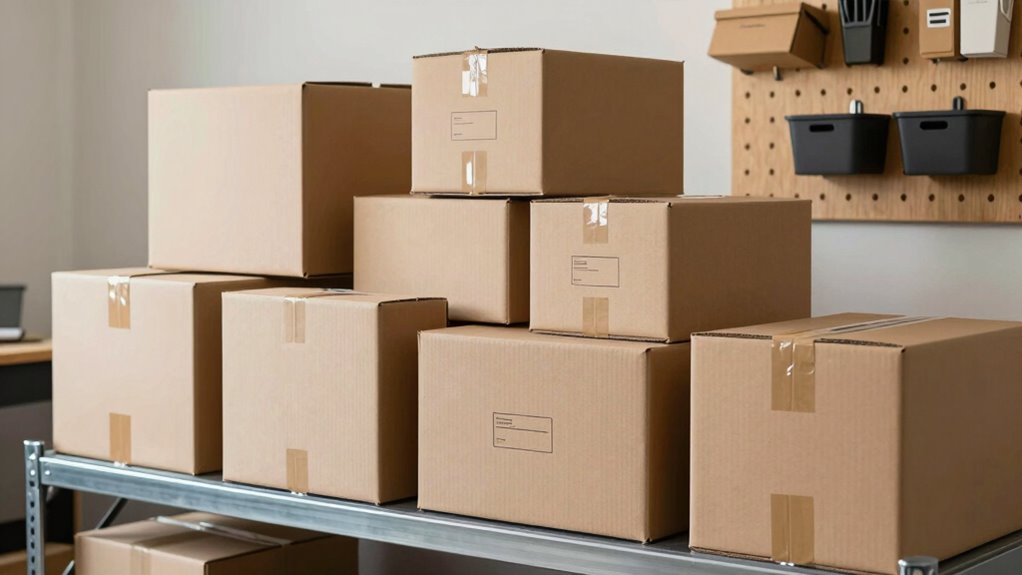

To store your original boxes without cluttering your garage, consider using sturdy shelving units to keep boxes vertically and organized. Use clear plastic bins with lids for smaller items, which help protect against dust and pests while saving space. Label each box clearly with details for easy identification, and cushion fragile items with foam inserts or bubble wrap. Keep the storage area cool, dry, and accessible, so you can maintain order and protect your collectibles long-term—learn more tips to optimize your storage solutions.
Key Takeaways
- Use vertical shelving units or stack boxes on sturdy pallets to maximize space and prevent clutter.
- Store boxes in a climate-controlled, dry area away from direct sunlight and temperature fluctuations.
- Label boxes clearly and consistently for easy identification without opening each one.
- Consider using clear plastic bins with lids for smaller boxes or collectibles to protect from dust and pests.
- Regularly inspect stored boxes and padding to ensure structural integrity and prevent deterioration over time.
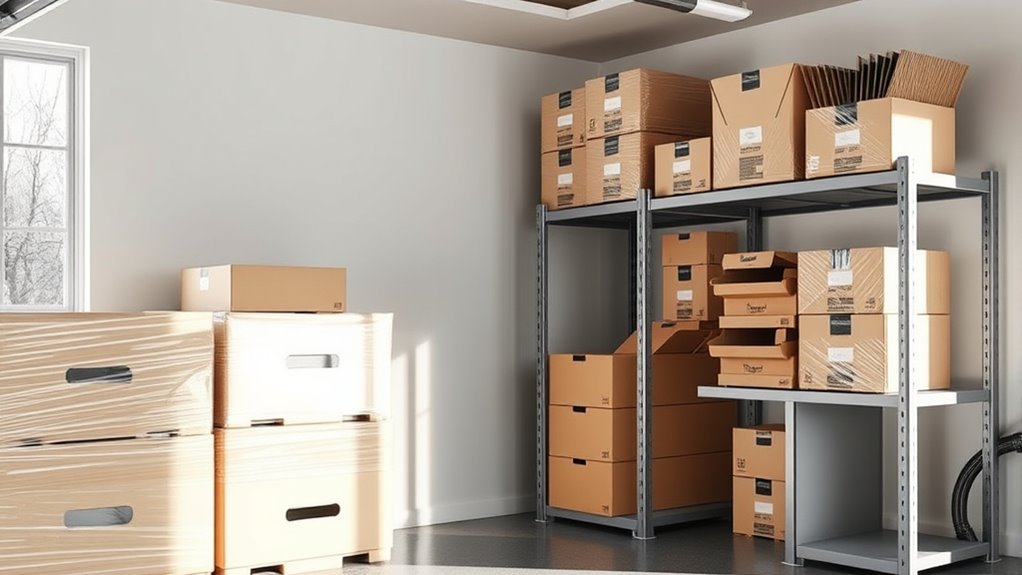
Storing original boxes is essential for preserving the value and condition of your collectibles, electronics, or vintage items. Proper storage guarantees that these items remain in excellent shape, whether you’re a collector or just want to protect your investments. One effective way to keep your original boxes safe is to use protective padding. Foam inserts, bubble wrap, or crumpled packing paper can cushion the boxes and prevent dents, tears, or crushing. When wrapping fragile or bulky boxes, make sure to cover all edges and corners, which are most vulnerable during stacking or movement. Protective padding not only shields against physical damage but also helps in maintaining the structural integrity of the boxes over time. Additionally, considering proper mount and camera setups can help ensure your equipment remains safe during storage and transport.
Labeling techniques are equally important for efficient storage and quick retrieval. You should develop a clear and consistent labeling system that makes identifying the contents at a glance. Use durable labels or masking tape written with a permanent marker, and place them on the top or side of each box. Be specific in your descriptions—include details like the item’s category, date, or any special notes about its condition. This way, you won’t need to open every box to find what you’re looking for, saving you time and reducing unnecessary handling that could damage the contents or the boxes themselves.
Develop a clear labeling system with durable labels for quick, easy identification of stored items.
To optimize space and avoid clutter, consider storing your original boxes vertically on sturdy shelving units. This method prevents stacking boxes directly on top of each other, reducing the risk of crushing or deformation. You can also store boxes in clear plastic bins with lids, which provide added protection against dust, moisture, and pests. If space is tight, nest smaller boxes inside larger ones, but always ensure that each is cushioned and labeled appropriately. Regularly check your storage setup to confirm that protective padding remains intact and labels are legible. This proactive approach helps catch any issues early, preventing long-term damage.
Additionally, keep your storage environment in mind. Aim for a cool, dry, and stable temperature to prevent warping, mold, or deterioration. Avoid areas prone to extreme temperature fluctuations or high humidity, such as basements or attics. When organizing your storage system, prioritize accessibility—place frequently needed items at the front and ensure that your protective padding and labeling techniques support easy identification. With these strategies, you can store your original boxes without filling your garage, maintaining their condition and value while keeping your space neat and functional.

Sakugi Storage Shelves – 5-Tier Large Capacity Shelf Organizer with Hooks, Heavy-Duty Garage Shelving with Leveling Feet, Wobble-Free Rack for Bedroom, Balcony, Garage, 18.1"×12.4"×56.8", Black
STORE MORE WITH EASE: Measuring 18.1"×12.4"×56.8", this 5-tier metal shelving unit offers ample vertical space for organizing household…
As an affiliate, we earn on qualifying purchases.
As an affiliate, we earn on qualifying purchases.
Frequently Asked Questions
How Can I Label Boxes for Easy Identification?
You can label boxes for easy identification by using clear labeling techniques and color coding. Write concise descriptions on each box with a permanent marker, including contents and room location. Use different colored labels or tape for specific categories or rooms, making it quick to find items later. Consistent labeling and color coding streamline your storage system, saving you time and effort when searching for things or reorganizing.
What Is the Best Way to Prevent Box Damage?
To prevent box damage, you should wrap fragile items in bubble wrap before packing them inside. Make certain you store boxes in a cool, dry place to control moisture and prevent warping or mold. Avoid stacking heavy boxes on top of delicate ones, and regularly check for signs of moisture or damage. Using moisture absorbers can also help maintain a safe environment, keeping your boxes and contents in excellent condition.
Should I Store Boxes Vertically or Horizontally?
You should store boxes vertically to optimize space and prevent damage. Vertical stacking techniques allow you to maximize storage efficiency and keep boxes stable, reducing the risk of crushing or warping. Use sturdy shelving or racks to support the boxes securely. This approach makes it easier to access individual boxes without disturbing the entire stack, ensuring your storage remains organized and space is used effectively.
How Often Should I Check Stored Boxes?
You should check your stored boxes every 3 to 6 months. Think of it like tending a garden—regular care prevents pests and damage. During inspections, make certain climate control is maintained, preventing humidity or temperature swings that can harm contents. Look for signs of pests or mold, and re-pack if necessary. Regular checks keep your boxes safe, preserving their contents and avoiding costly surprises later.
Are There Eco-Friendly Storage Options for Boxes?
Yes, you can choose eco-friendly storage options like biodegradable packaging and participate in recycling programs to reduce waste. Look for boxes made from recycled or sustainable materials, and consider reusing or repurposing boxes whenever possible. Recycling programs help guarantee your boxes are properly processed, minimizing environmental impact. By selecting eco-conscious options, you support sustainability while keeping your storage organized and environmentally friendly.
clear plastic storage bins with lids
As an affiliate, we earn on qualifying purchases.
As an affiliate, we earn on qualifying purchases.
Conclusion
So, now you’re a storage genius, all thanks to your clever box-hiding skills. Who knew that stashing your original boxes could turn your cluttered garage into a minimalist paradise? Just remember, next time you move or get bored, those boxes will still be waiting—probably judging you for your organization skills. But hey, at least your prized possessions are safe… and out of sight. Mission accomplished? Or just delaying the inevitable chaos?

6 x 4 inch Large Moving Labels for Boxes, Blank Moving Boxes Labels Stickers, 160pcs 8 Color Coded Moving Stickers Packing Labels Stickers for Home Organization Projects, Kitchen, Storage Bins
Large Size design: 6 x 4" Large brightly color-coded moving labels can make it easy for you to…
As an affiliate, we earn on qualifying purchases.
As an affiliate, we earn on qualifying purchases.

Foam Wrap Roll 10 Inch Wide x 50 FT Length Packing Foam Roll for Moving Supplies and Protection for Fragile, Cushioning Foam Packing Sheets for Wrapping Dish Packing Material
PERFECT CHOICE – Come with 1 Roll Dish Cushion Foam Roll. Dimensions: 10 inches width x 590 inches…
As an affiliate, we earn on qualifying purchases.
As an affiliate, we earn on qualifying purchases.