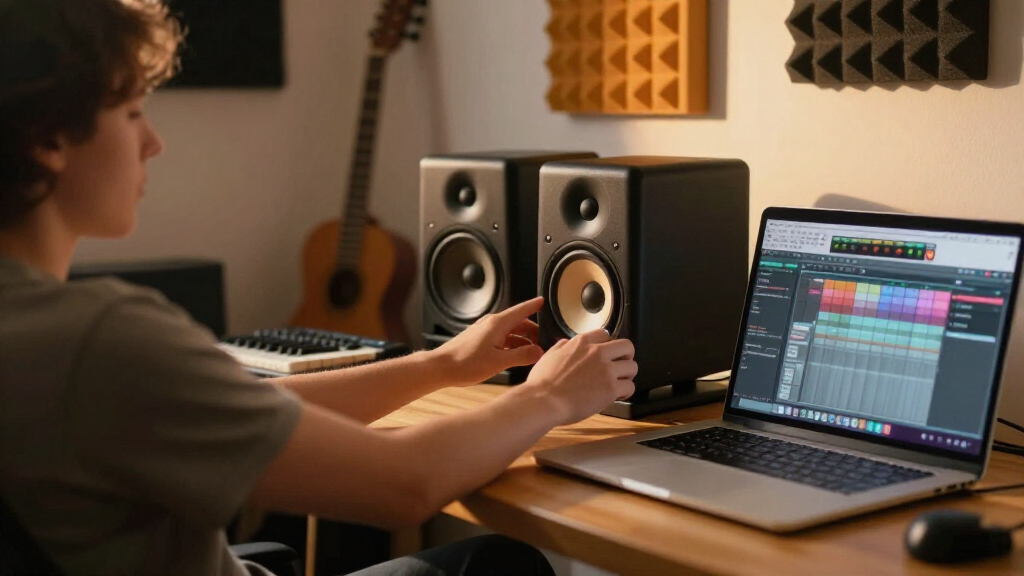

Looking for studio monitor speakers that deliver accurate sound for mixing and production? The PreSonus Eris 3.5 stands out as the best overall choice with its balanced audio and compact design. If you need a budget-friendly yet reliable option, the Edifier MR4 offers impressive clarity for its price. For those seeking premium accuracy and build quality, the Yamaha HS5 delivers detailed sound and durability. Every choice involves tradeoffs between price, size, and sound fidelity, so keep reading for a detailed breakdown to find your ideal pair.

Get audio and creator gear delivered free with Prime
- Fast, free delivery on millions of items
- Prime Video, Amazon Music and more included
- Member-only deals all year
Complete the kit


Key Takeaways
- The top monitors balance accurate sound reproduction with build quality, making them suitable for professional use.
- Size and power output vary widely; larger speakers often provide better bass but require more space and power.
- Budget options can be surprisingly capable but may lack the refinement or durability of higher-end models.
- Connectivity features like Bluetooth or multiple inputs add versatility but can increase cost.
- Choosing the right monitor depends on your room size, workflow, and budget; there’s no one-size-fits-all solution.
| PreSonus Eris 3.5 Powered Studio Monitors, Pair |  | Best Overall for Compact, Professional-Quality Monitoring | Woofer Size: 3.5 inches | Power: 50 watts | Frequency Response: 80 Hz–20 kHz | VIEW LATEST PRICE | See Our Full Breakdown |
| Edifier MR4 Power Studio Monitor Speakers, 4 inch Active Near-Field Speaker |  | Best for Versatile Connectivity in Near-Field Use | Speaker Size: 4 inches | Tweeter: 1-inch silk dome | Woofer: 4-inch composite | VIEW LATEST PRICE | See Our Full Breakdown |
| Mackie CR3.5 Studio Monitors (Pair), 3.5″ Woofers, Tone Knob, Black |  | Best Compact Desktop Monitors for Budget-Friendly Accurate Sound | Size: 3.5-inch woofers | Includes: pair of monitors, isolation pads, cables | Color: Black | VIEW LATEST PRICE | See Our Full Breakdown |
| M-AUDIO BX3 3.5-inch Wired Studio Monitors Pair |  | Best for Professional-Quality Monitoring with Versatile Inputs | Driver Size: 3.5 inches | Woofer Material: Kevlar | Tweeter Type: Silk dome | VIEW LATEST PRICE | See Our Full Breakdown |
| Edifier R1280T Powered Bookshelf Speakers – 2.0 Near Field Studio Monitor |  | Best for Natural Sound and Elegant Home Integration | AUX INPUT: 2 x AUX (3.5mm and dual RCA) | Tweeter: 13mm silk dome | Full Range Unit: 4 inch | VIEW LATEST PRICE | See Our Full Breakdown |
| Yamaha HS3 Powered Studio Monitor in Black, Pair |  | Best Compact Budget Monitor | Type: 2-way bass-reflex powered speaker | Woofer: 3.5 inches | Tweeter: 0.75 inches dome | VIEW LATEST PRICE | See Our Full Breakdown |
| Yamaha HS5 Powered Studio Monitor, Pair |  | Best for Accurate Mixing | Frequency Response: 54 Hz to 30 kHz | Power Output: 45W LF + 25W HF | Speaker Size: 5 inches Woofer, 1 inch Tweeter | VIEW LATEST PRICE | See Our Full Breakdown |
| Yamaha HS4 Powered Studio Monitor (Pair) |  | Best for Versatile Nearfield Monitoring | Type: 2-way bass-reflex powered speaker | Woofer: 4.5 inches | Tweeter: 1 inch | VIEW LATEST PRICE | See Our Full Breakdown |
| JBL 305P MkII 5″ 2-Way Active Studio Monitors (Pair) |  | Best for Professional-Grade Imaging | Size: 11.7 x 7.3 x 9.1 inches | Woofer Size: 5 inches | Amplifier Power: 2 x 41 Watts | VIEW LATEST PRICE | See Our Full Breakdown |
| Edifier MR4 Power Studio Monitor Speakers, 4 inch Active Near-Field Speakers |  | Best Versatile Compact Monitor | Speaker Size: 4 inches | Tweeter Diameter: 2.5 centimeters | Frequency Response: 20 KHz | VIEW LATEST PRICE | See Our Full Breakdown |
| Edifier MR3 Powered Studio Monitor, Bluetooth Active Speaker |  | Best for Versatile, High-Res Listening and Compact Monitoring | Hi-Res Audio Certification: Yes | Frequency Response: 52Hz to 40kHz | Power Output: 18W*2 RMS | VIEW LATEST PRICE | See Our Full Breakdown |
| Yamaha HS4 Powered Studio Monitor in White, Pair |  | Best for Precise, Professional Monitoring in Small Studios | Woofer: 4.5 inches | Tweeter: 1 inch | Frequency Response: 60 Hz – 22 kHz | VIEW LATEST PRICE | See Our Full Breakdown |
| studio monitor speaker | Frequency Response | Inputs | Power Output |
|---|---|---|---|
| PreSonus Eris 3.5 Powered Stud | 80 Hz–20 kHz | TRS, RCA, aux | — |
| Edifier MR4 Power Studio Monit | — | 1/4-inch TRS, RCA, AUX | — |
| Mackie CR3.5 Studio Monitors | — | — | — |
| M-AUDIO BX3 3.5-inch Wired Stu | — | 1/4-inch, 1/8-inch, RCA | 120W |
| Edifier R1280T Powered Bookshe | — | — | — |
| Yamaha HS3 Powered Studio Moni | 70 Hz – 22 kHz (-10 dB) | XLR/TRS Combo, RCA, Stereo Mini | 26 W |
| Yamaha HS5 Powered Studio Moni | 54 Hz to 30 kHz | XLR and TRS | 45W LF + 25W HF |
| Yamaha HS4 Powered Studio Moni | 60 Hz – 22 kHz | XLR/TRS Combo, RCA, Stereo Mini | 26 W |
| JBL 305P MkII 5" 2-Way Active | Not specified | XLR and TRS | — |
| Edifier MR4 Power Studio Monit | 20 KHz | — | — |
| Edifier MR3 Powered Studio Mon | 52Hz to 40kHz | — | 18W*2 RMS |
| Yamaha HS4 Powered Studio Moni | 60 Hz – 22 kHz | XLR/TRS Combo, RCA, Stereo Mini | 26 W + 26 W |
More Details on Our Top Picks
PreSonus Eris 3.5 Powered Studio Monitors, Pair
The PreSonus Eris 3.5 stands out for offering nearfield studio-quality sound in a compact form, making it ideal for desktop setups where space is limited. Compared with larger monitors like the Yamaha HS5, these provide less bass extension but excel in clarity and detail at close range. The adjustable tuning controls help tailor sound for different environments, but the small size limits their usefulness in larger rooms or for mixing bass-heavy tracks. Despite their diminutive stature, they deliver distortion-free volume and versatile connectivity, although they require some setup to optimize sound quality.
Pros:- Delivers professional studio-quality sound in a compact size
- Powerful and distortion-free at any volume
- Customizable sound with built-in tuning controls
- Versatile connectivity options
Cons:- Limited to nearfield listening; not suitable for large rooms
- Small size may not meet all professional needs
- Requires some setup to optimize sound
Best for: Home studio owners or content creators needing high-quality sound in small spaces
Not ideal for: Large rooms or professional mixing environments where full-range monitors are necessary
- Woofer Size:3.5 inches
- Power:50 watts
- Frequency Response:80 Hz–20 kHz
- Inputs:TRS, RCA, aux
- Additional Features:High- and low-frequency tuning controls, headphone jack
Our verdict“This pick is perfect for small-space creators who prioritize clarity and control over size and bass extension.”
Edifier MR4 Power Studio Monitor Speakers, 4 inch Active Near-Field Speaker
The Edifier MR4 offers a balanced mix of professional sound and user-friendly controls, making it a strong choice for creators who need flexible connection options. Unlike the Edifier R1280T, which leans more toward casual listening, the MR4 provides a more accurate sound profile suitable for critical listening and production. Its 4-inch composite woofer and silk dome tweeter deliver clarity and punch, but the absence of wireless features limits mobility. The multiple input options, including 1/4-inch TRS and RCA, make it adaptable to different setups, though it’s not designed for larger spaces or multi-room use.
Pros:- High-quality studio sound with clear highs and punchy bass
- Multiple flexible connection options
- Easy-to-use adjustable controls
- Compact and suitable for desktop use
Cons:- Limited to near-field listening only
- No wireless or Bluetooth connectivity
- Requires careful placement for optimal sound
Best for: Music producers or audio engineers working at close range who need multiple connection options
Not ideal for: Large studio environments or wireless streaming enthusiasts
- Speaker Size:4 inches
- Tweeter:1-inch silk dome
- Woofer:4-inch composite
- Inputs:1/4-inch TRS, RCA, AUX
- Controls:High and low-frequency adjustment, volume, sound modes
Our verdict“Ideal for creators seeking precise sound control and multiple inputs in a nearfield setting.”
Mackie CR3.5 Studio Monitors (Pair), 3.5″ Woofers, Tone Knob, Black
The Mackie CR3.5 is tailored for small desks and home studios that need reliable sound without high expense. Its 3.5-inch woofers and basic tone knob provide adequate accuracy for casual mixing or streaming, but they fall short for critical audio work requiring broader frequency response. Compared with the Edifier R1280T, these monitors are more compact, but the sound might lack fullness and depth in larger or bass-dependent mixes. The included accessories, like isolation pads and cables, make setup straightforward, yet the simplicity of features suggests limited flexibility for advanced sound tweaking.
Pros:- Compact size suitable for small desks
- Provides accurate sound for mixing and streaming
- Includes all necessary accessories in the box
- Affordable price point
Cons:- Limited to small studio or desktop use
- Sound may lack depth for more demanding mixes
- Features are basic compared to higher-end monitors
Best for: Beginner producers or streamers with limited space and budget
Not ideal for: Professional studios needing full-range, high-fidelity sound or larger rooms
- Size:3.5-inch woofers
- Includes:pair of monitors, isolation pads, cables
- Color:Black
Our verdict“A solid choice for beginners or tight spaces where budget and size are key concerns.”
M-AUDIO BX3 3.5-inch Wired Studio Monitors Pair
The M-AUDIO BX3 combines robust power and clarity, making it suitable for detailed music production or gaming at a desktop. Its 3.5-inch Kevlar woofers coupled with silk dome tweeters deliver more punch and clarity than most small monitors, comparable to the Edifier MR4 but with higher wattage. The multiple input options, including front AUX and headphone jack, enhance versatility for different setups, unlike the Edifier R1280T which lacks EQ controls. However, the need for sound profile adjustments and the limited driver size mean it may not serve large-room or bass-heavy needs without additional equipment.
Pros:- High-quality sound with clear highs and punchy bass
- Multiple input options for flexible connectivity
- Compact and attractive for desktop use
- Includes software for immediate music production
Cons:- Requires some setup to optimize sound profile
- Limited to 3.5-inch drivers, not suitable for large spaces
- No wireless or Bluetooth features
Best for: Producers or musicians requiring high output and multiple inputs in a compact package
Not ideal for: Large studios or users seeking wireless connectivity or larger drivers
- Driver Size:3.5 inches
- Woofer Material:Kevlar
- Tweeter Type:Silk dome
- Power Output:120W
- Inputs:1/4-inch, 1/8-inch, RCA
- Additional Features:Front AUX, headphone jack, EQ controls
Our verdict“A versatile, high-performance monitor for those needing powerful sound and multiple inputs at their desktop.”
Edifier R1280T Powered Bookshelf Speakers – 2.0 Near Field Studio Monitor
The Edifier R1280T excels in delivering natural, well-balanced sound suitable for both home listening and light studio work. Its 4-inch full-range driver and 13mm silk dome tweeter produce a warm, accurate response, contrasting with the more clinical sound of smaller monitors like the Mackie CR3. The classic wood finish adds aesthetic value, and the remote control offers convenient adjustments, but the lack of wireless connectivity limits flexibility. This model is less suited for critical studio mixing requiring full-range monitors, instead favoring casual listening and modest production tasks.
Pros:- High-quality studio sound with natural reproduction
- Multiple input options for versatile connectivity
- Elegant wood finish complements home decor
- Remote control for easy adjustments
Cons:- No Bluetooth or wireless connectivity
- Controls on the side panel may be less accessible
- Limited to 2.0 stereo setup without expansion
Best for: Home studio owners or enthusiasts who value sound quality and aesthetic appeal
Not ideal for: Professional studios needing full-range, high-fidelity monitors or wireless features
- AUX INPUT:2 x AUX (3.5mm and dual RCA)
- Tweeter:13mm silk dome
- Full Range Unit:4 inch
- Finish:Wood effect vinyl
- Controls:Side panel knobs for volume, bass, and treble
Our verdict“Ideal for listeners seeking natural sound quality and aesthetic appeal in a compact, home-friendly package.”
Yamaha HS3 Powered Studio Monitor in Black, Pair
The Yamaha HS3 stands out for offering reliable, clear sound in a compact form, making it ideal for small studio spaces or desktop setups. Unlike the larger HS5, it provides a more subdued power output of 26 W, which limits its ability to fill large rooms with sound—yet for nearfield mixing, this is often sufficient. The inclusion of room control and high trim adjustments helps tailor the sound to different environments, though its limited bass response due to the small 3.5-inch woofer means some users might find it lacks punch for bass-heavy genres. Compared to the JBL 305P MkII, the HS3’s simplicity and affordability make it a more approachable choice for starting producers, though it doesn’t match the JBL’s wide imaging or high SPL. This pick makes the most sense for beginners or those working in tight spaces who prioritize clarity over volume.
Pros:- Compact and space-efficient design
- Clear high and mid frequencies for detailed monitoring
- Multiple input options for versatile connectivity
- Includes room control and high trim adjustments
Cons:- Limited to 26 W power output, restricting volume in larger rooms
- Bass response may be insufficient for bass-heavy genres
- Small size limits low-frequency reproduction
Best for: Budget-conscious beginners or desktop producers needing accurate sound in small spaces
Not ideal for: Large room setups or users seeking deep bass and high SPL for loud playback
- Type:2-way bass-reflex powered speaker
- Woofer:3.5 inches
- Tweeter:0.75 inches dome
- Frequency Response:70 Hz – 22 kHz (-10 dB)
- Power Output:26 W
- Inputs:XLR/TRS Combo, RCA, Stereo Mini
Our verdict“This monitor is a smart choice for small spaces and entry-level users prioritizing clarity over volume.”
Yamaha HS5 Powered Studio Monitor, Pair
The Yamaha HS5 is designed to deliver precise, flat response sound, making it ideal for critical mixing tasks. With a 5-inch woofer and a 1-inch dome tweeter, it outperforms the HS3 by offering a broader frequency range—up to 30 kHz—and more headroom with 45W LF and 25W HF amplification. Its bi-amplified design ensures clarity and minimal distortion at high volumes, setting it apart from smaller monitors like the Edifier MR4. While its size and power make it suitable for dedicated studio environments, it requires a good amount of space and proper placement for best results. Unlike the JBL 305P MkII, it doesn’t have room calibration features but compensates with high accuracy. This monitor suits serious producers who need dependable, transparent sound for mixing and mastering.
Pros:- Accurate, flat frequency response for critical listening
- Bi-amplified design offers high clarity with minimal distortion
- Wide frequency range up to 30 kHz
- Multiple input options including balanced XLR and TRS
Cons:- Size may be unsuitable for tiny desktops or cramped rooms
- No onboard room calibration features
- Requires proper placement for optimal performance
Best for: Intermediate to professional audio engineers focused on mixing and sound design
Not ideal for: Small spaces or casual hobbyists who do not need ultra-flat response or high resolution
- Frequency Response:54 Hz to 30 kHz
- Power Output:45W LF + 25W HF
- Speaker Size:5 inches Woofer, 1 inch Tweeter
- Inputs:XLR and TRS
- Dimensions:24″ D x 20″ W x 32″ H
- Weight:5.3 kg
Our verdict“This monitor is best for users seeking professional-grade accuracy for mixing and mastering tasks.”
Yamaha HS4 Powered Studio Monitor (Pair)
The Yamaha HS4 offers a balanced compromise between size and sound quality, with a 4.5-inch woofer and 1-inch tweeter that extend frequency response down to 60 Hz. It shares many features with the HS5, such as room control and high trim adjustments, but its slightly smaller woofer makes it less capable of producing deep bass, which could be a drawback for bass-heavy genres. Compared with the larger HS5, the HS4 is more compact and easier to fit into smaller spaces, though it sacrifices some low-end depth. The 26 W power output is similar, so it’s best suited for nearfield listening rather than large rooms. This monitor suits those who need accurate audio without occupying much space, but it requires careful placement for the best sound.
Pros:- Good balance of size and sound accuracy
- Room control and high trim for tailored sound
- Relatively compact for smaller setups
- Reliable Yamaha build quality
Cons:- Limited bass response due to smaller woofer
- Requires proper positioning to avoid sound imbalance
- No wireless or Bluetooth connectivity
Best for: Home studio owners or producers working in smaller spaces needing accurate monitoring
Not ideal for: Producers requiring deep bass or loud volume for large or untreated rooms
- Type:2-way bass-reflex powered speaker
- Woofer:4.5 inches
- Tweeter:1 inch
- Frequency Response:60 Hz – 22 kHz
- Power Output:26 W
- Inputs:XLR/TRS Combo, RCA, Stereo Mini
Our verdict“This is an excellent monitor for small studio spaces needing accurate sound with manageable size.”
JBL 305P MkII 5″ 2-Way Active Studio Monitors (Pair)
The JBL 305P MkII stands out for its detailed imaging and broad sweet spot, making it ideal for precise mixing and sound design. Its dual 41-watt amplifiers power the 5-inch woofer and provide a lively, dynamic sound that rivals higher-end monitors. Compared to the Yamaha HS5 and HS4, the JBL offers more extensive room control features like Boundary EQ and HF Trim, allowing for more customization in different environments. While it requires calibration for optimal performance—similar to other monitors—the JBL’s robust build and SPL of 108 dB make it suitable for louder playback. It’s less focused on ultra-flat response but excels in immersive, detailed audio reproduction, especially in well-treated rooms.
Pros:- Excellent stereo imaging and wide sweet spot
- Customizable room controls including Boundary EQ and HF Trim
- High SPL capability up to 108 dB
- Durable MDF enclosure for studio use
Cons:- Requires proper calibration for best results
- Limited frequency response details, especially on high end
- Larger size may not suit compact desks
Best for: Sound engineers and advanced producers needing detailed stereo imaging and room customization
Not ideal for: Basic hobbyists or casual listeners who don’t require high SPL or room calibration features
- Size:11.7 x 7.3 x 9.1 inches
- Woofer Size:5 inches
- Amplifier Power:2 x 41 Watts
- Inputs:XLR and TRS
- Peak SPL:108 dB
- Frequency Response:Not specified
Our verdict“This monitor is tailored for professionals seeking detailed sound and flexible room adjustments for critical listening.”
Edifier MR4 Power Studio Monitor Speakers, 4 inch Active Near-Field Speakers
The Edifier MR4 combines a 4-inch composite woofer and 1-inch silk dome tweeter to produce clear, flat response sound suitable for a variety of uses, from music production to casual listening. Its multiple input options—including Bluetooth—make it highly versatile, especially compared to traditional wired-only monitors like the Yamaha HS3. The user-friendly controls and stylish design add to its appeal for desktop setups and small studios. However, the lack of specified power output and absence of waterproofing limit its use in outdoor or high-volume environments. Compared with larger monitors like the Yamaha HS5 or JBL 305P, the MR4’s smaller size and Bluetooth connectivity make it more adaptable for casual and creative uses, though it sacrifices some low-end depth and maximum volume.
Pros:- Flat response for accurate sound reproduction
- Multiple connectivity options including Bluetooth
- Compact and stylish design
- User-friendly controls for sound adjustments
Cons:- Lack of specified power output limits its performance expectations
- No waterproof rating, unsuitable for outdoor use
- Limited low-frequency response due to smaller driver
Best for: Home artists and creators seeking flexible, easy-to-use monitors with wireless options
Not ideal for: Large or professional studios needing deep bass or high SPL for loud mixing
- Speaker Size:4 inches
- Tweeter Diameter:2.5 centimeters
- Frequency Response:20 KHz
- Connectivity:RCA, Auxiliary, TRS, Bluetooth
- Signal-to-Noise Ratio:85 dB
- Enclosure Material:Wood
Our verdict“This monitor is perfect for creators needing flexible connectivity and accurate sound in a compact form factor.”
Edifier MR3 Powered Studio Monitor, Bluetooth Active Speaker
The Edifier MR3 stands out for its high-resolution audio certification, making it a strong choice for those who need accurate sound reproduction without the complexity of larger monitors like the Yamaha HS4. Its multiple connectivity options—including Bluetooth, TRS, RCA, and AUX—offer flexibility for both creative work and casual listening, though its 18W power output may limit its effectiveness in larger spaces. The customizable sound modes through the EDIFIER ConneX app give users control over their sound, yet relying on an app might be inconvenient for some, especially if they prefer hardware controls. Compared with the Yamaha HS4, which provides more raw power and room for detailed mixing, the MR3’s compact MDF cabinet helps reduce distortion, but at the expense of lower volume capacity. This makes it ideal for small studios, desktop setups, or multimedia use where space is tight and high fidelity is desired, but less suitable for large or acoustically challenging environments.
Pros:- High-resolution audio certification guarantees accurate sound reproduction
- Multiple connectivity options including Bluetooth and wired inputs
- Customizable sound modes and EQ adjustments via app
- Compact MDF cabinet reduces distortion
Cons:- Limited to 18W power output, restricting volume in larger rooms
- Dependent on an app for full customization, which may not be user-friendly for everyone
- No advanced DSP or features like built-in microphones
Best for: Creators and casual listeners who want high-resolution audio and multiple connection options in a compact package.
Not ideal for: Large studio environments or users needing high volume output for loud mixing sessions, due to its limited 18W power.
- Hi-Res Audio Certification:Yes
- Frequency Response:52Hz to 40kHz
- Power Output:18W*2 RMS
- Peak SPL:92.5dB
- Drivers:3.5″ mid-low, 1″ tweeters
- Connectivity:TRS, RCA, AUX, Bluetooth
- Modes:Music, Monitor, Custom
- App Support:EDIFIER ConneX app
- Cabinet Material:MDF
Our verdict“This monitor is best suited for small spaces and users who prioritize versatile connectivity and high-res audio over raw power.”
Yamaha HS4 Powered Studio Monitor in White, Pair
The Yamaha HS4 is a reliable choice for those seeking accurate, transparent sound in a compact form, especially when compared to the Edifier MR3’s multimedia focus. Its 4.5-inch woofer and 1-inch dome tweeter deliver a more balanced frequency response, from 60 Hz up to 22 kHz, making it better suited for critical mixing and mastering in smaller studios. The HS4’s higher power rating of 26W + 26W provides more headroom and volume, though it still remains suitable for desktop and small room setups, unlike larger monitors. The inclusion of room and high trim response controls offers tailored sound, but proper placement is essential to avoid bass limitations from the small woofer. While the Yamaha’s price is higher than the MR3, it provides a more even sound profile and greater clarity across the spectrum, making it a preferred choice for serious creators who need precise monitoring without the bulk of larger models.
Pros:- Accurate, transparent sound with clear mids and highs
- Room and high trim response controls for customized tuning
- Multiple input options including XLR/TRS and RCA
- Compact size with included accessories like speaker cable and anti-slip pads
Cons:- Limited bass response due to small 4.5-inch woofer
- Requires careful placement for optimal sound quality
- Higher price point may be a barrier for beginners
Best for: Small studio producers and engineers who need accurate translation and room tuning features in a compact form.
Not ideal for: Environments requiring deep bass or high-volume levels, since its small woofer limits low-end response and loudness.
- Woofer:4.5 inches
- Tweeter:1 inch
- Frequency Response:60 Hz – 22 kHz
- Power Output:26 W + 26 W
- Inputs:XLR/TRS Combo, RCA, Stereo Mini
- Size:Compact, suitable for small spaces
Our verdict“This monitor excels for detailed, transparent sound in small studios, especially when precise control over room acoustics matters most.”

How We Picked
The products in this roundup were evaluated based on sound accuracy, build quality, usability, and value. I prioritized models that are widely recommended by audio professionals and enthusiasts alike, focusing on their performance in real-world studio environments. Each monitor was assessed for clarity, bass response, and how well it reproduces audio without coloring or distortion. The ranking reflects a balance between audio quality and practical considerations like size, connectivity, and price, ensuring options for a range of users from beginners to seasoned professionals.Factors to Consider When Choosing Studio Monitor Speakers
Choosing studio monitor speakers involves several important factors that can significantly impact your mixing and production process. Beyond just sound quality, you need to consider room size, connectivity options, and your budget. Making the right tradeoffs can mean the difference between clear, accurate audio and muddled mixes. Here are key considerations to help you select the best monitors for your specific needs.Size and Power Output
Monitor size directly influences bass response and overall sound presence. Larger speakers with bigger woofers typically produce richer low-end but take up more space and often cost more. Power output matters for louder, clearer sound in larger rooms; underpowered monitors may sound dull or distorted at higher volumes. Match the monitor size and power to your room dimensions and listening volume to avoid issues like distortion or inadequate bass response.
Sound Accuracy and Frequency Response
For mixing, transparency is key. Look for monitors with flat frequency response that don’t overly emphasize bass or treble, ensuring your mixes translate well across systems. Budget models may color sound slightly, which can mislead your EQ decisions. Higher-end options typically provide more precise audio reproduction, helping you catch details that matter for professional results.
Connectivity and Compatibility
Consider the inputs your studio setup requires—XLR, TRS, RCA, or Bluetooth. Versatile monitors with multiple connection options give you flexibility as your gear evolves. Wireless features like Bluetooth can be handy but may introduce latency or compromise sound fidelity. Ensure the monitor’s connectivity aligns with your current and future equipment to avoid additional adapters or upgrades.
Build Quality and Durability
Studio monitors are an investment; durable build quality prevents issues over time. Metal cabinets and solid driver components resist wear and minimize unwanted resonance. Cheaper plastic enclosures or flimsy mounts can degrade sound quality and longevity. Think about your environment—if you move or transport your monitors often, rugged construction becomes even more important.
Budget and Value
While high-end monitors deliver superior accuracy, they come at a premium price. Budget options may sacrifice some fidelity but can still serve well in small or casual setups. Consider your long-term needs: investing a bit more upfront can save you money and frustration later. Balance what you’re willing to spend with the features and quality that match your skill level and project scope.
Frequently Asked Questions
Are powered studio monitor speakers better than passive ones?
Powered monitors have built-in amplifiers, simplifying setup and often resulting in more consistent sound quality because the amplifier and speaker are matched by the manufacturer. Passive monitors require an external amp, which adds complexity but can offer more flexibility in tuning your system. For most home and small studio setups, powered monitors tend to be more convenient and reliable, making them the preferred choice for many users.
How much should I spend on studio monitor speakers?
The price range for quality studio monitors varies widely. Beginners can find reliable options around $200 to $400 per pair that provide decent accuracy. Mid-range models between $500 and $1000 offer better fidelity, durability, and features suitable for professional work. Investing more can improve sound detail and build quality, but it’s possible to start with a budget-friendly pair and upgrade as your needs grow.
Is room treatment necessary if I buy good monitors?
Good monitors can significantly improve your listening experience, but room acoustics still play a vital role. Without proper treatment—like bass traps and diffusers—reflections and standing waves can distort the sound. Even high-quality monitors will struggle to sound their best in untreated spaces. Combining quality speakers with some basic acoustic treatment yields the most accurate and balanced results.
Can I use consumer speakers as studio monitors?
Consumer speakers are generally designed for casual listening and may color the sound, making them unsuitable for critical mixing. Studio monitors prioritize flat frequency response and transparency to provide an honest sound image. While some high-end consumer speakers can perform adequately, investing in dedicated studio monitors ensures more reliable and precise audio reproduction for professional work.
What is the ideal size for studio monitors in small rooms?
In small rooms, monitors with 5-inch or smaller woofers typically work best, as they offer sufficient bass response without overwhelming the space. Larger monitors can produce deep bass but may cause bass buildup or muddiness in tight environments. Pairing smaller monitors with proper acoustic treatment often results in clearer, more accurate sound and better mixing results in confined spaces.
Conclusion
For most users, the PreSonus Eris 3.5 offers a well-rounded, affordable option that balances sound quality with compact size, making it ideal for beginners or small setups. The Yamaha HS5 stands out as the best overall choice, providing detailed, flat response suitable for serious producers. If budget is your main concern, the Edifier MR4 delivers impressive clarity at a lower price point, perfect for hobbyists. For those seeking the highest fidelity and build quality, the Yamaha HS5 or JBL 305P MkII make excellent premium picks. Ultimately, your choice should depend on your room size, workflow, and budget—there’s a perfect pair for every type of user.