
To combine light control and acoustic comfort, start by strategically placing furniture and sound-absorbing materials like upholstered chairs and bookshelves to reduce echoes and noise. Use window treatments like thick curtains to diffuse natural light and block glare, while controlling sound. Choose color schemes that reflect or absorb light appropriately to enhance the ambiance. Carefully balancing these elements creates a space that’s both bright and quiet—if you continue, you’ll discover how to perfectly coordinate these strategies.

Get audio and creator gear delivered free with Prime
- Fast, free delivery on millions of items
- Prime Video, Amazon Music and more included
- Member-only deals all year
Key Takeaways
- Use adjustable window treatments like blinds or shades to control both natural light and sound absorption effectively.
- Incorporate sound-absorbing furniture and textiles, such as upholstered chairs and fabric curtains, to enhance acoustic comfort without sacrificing light.
- Position furniture strategically to diffuse light and break sound waves, reducing echoes and improving overall ambiance.
- Choose color schemes that reflect or absorb light appropriately, complementing acoustic materials for a balanced environment.
- Integrate acoustic panels with strategic lighting to optimize both sound management and visual brightness in the space.

Balancing light control and acoustic comfort is essential for creating a productive and relaxing environment. When you’re designing a space, it’s important to consider how light interacts with the room’s color schemes and furniture placement. These elements influence how light is absorbed, reflected, and diffused, which in turn affects both the ambiance and noise levels. By thoughtfully choosing your color schemes, you can make the room feel brighter or more subdued, depending on your needs. Light, neutral tones like soft grays, beiges, or pastel shades can reflect natural light and help brighten a space, reducing the need for artificial lighting and minimizing harsh echoes. Conversely, darker hues absorb more light, creating a cozy, intimate feel, but you’ll need to incorporate strategic lighting solutions to prevent the room from feeling dim or oppressive.
Furniture placement also plays a vital role in managing sound and light. Positioning furniture to break up open spaces can help absorb sound, reducing echo and noise pollution. For example, placing bookshelves, upholstered chairs, or fabric-covered dividers near reflective surfaces can absorb sound waves, making the environment quieter. When it comes to light, furniture placement affects how natural light filters into the room. Position desks or seating areas near windows to maximize daylight, but be mindful of glare. Using furniture to block direct sunlight during peak hours can prevent glare issues, helping you maintain comfortable lighting levels throughout the day. Additionally, placing heavier, sound-absorbing furniture away from noise sources, like doors or windows, can help contain sound and reduce disruptions.
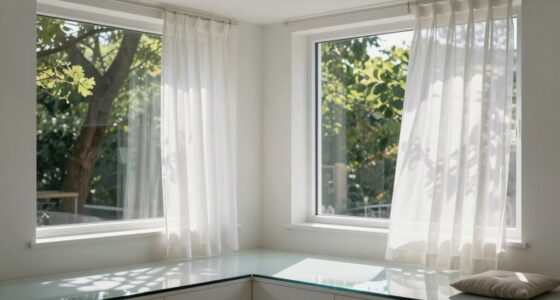
Integrating window treatments such as blinds, shades, or curtains gives you control over light levels while also enhancing acoustic comfort. Thick, textured curtains not only diffuse daylight but also absorb sound, creating a softer acoustic environment. When you choose your color schemes, think about how different hues will interact with your lighting choices. Cool colors tend to reflect light, making a space feel more open and airy, while warm colors absorb light and add coziness. Your furniture placement should complement these color choices, ensuring that light is distributed evenly and that noise is minimized. Incorporating sound-absorbing materials like acoustic panels or fabric-covered surfaces can further enhance comfort and balance light and sound in your space. Understanding the impact of room acoustics can help you make more informed decisions about layout and materials. Furthermore, being aware of how lighting design influences both visual and acoustic aspects can help you optimize your space more effectively. By combining these strategies—carefully selecting color schemes, positioning furniture thoughtfully, and installing flexible window treatments—you can craft a space that balances light control with acoustic comfort, making it both inviting and functional.
sound absorbing curtains for living room
As an affiliate, we earn on qualifying purchases.
As an affiliate, we earn on qualifying purchases.
Frequently Asked Questions
What Are the Best Materials for Sound Absorption and Light Regulation?
You should choose materials like decorative panels and window treatments for effective sound absorption and light regulation. Decorative panels, made from acoustic foam or fabric, absorb sound while adding aesthetic appeal. Window treatments like blackout curtains or blinds help control natural light and reduce noise. Combining these materials allows you to optimize acoustic comfort and light control, creating a balanced, comfortable space.
How Can Technology Enhance Combined Light and Acoustic Control?
Technology enhances your combined light and acoustic control by integrating smart windows and automated shading systems. Smart windows adjust transparency based on sunlight and indoor conditions, reducing glare and heat, while automated shades respond to your preferences or ambient light levels. These tools work together to optimize natural lighting, minimize noise disturbances, and improve overall comfort. With smart technology, you gain seamless control, creating a balanced environment suited to your needs effortlessly.
Are There Specific Design Styles Suited for This Integration?
You’ll find that modern, sleek styles like Scandinavian or contemporary designs are perfect for integrating light control and acoustic comfort. These styles emphasize clean lines and functional spaces, making room for decorative lighting that adds ambiance without clutter. Minimalist furniture complements this approach, creating a harmonious environment where technology seamlessly blends with aesthetics. By choosing these styles, you get a space that’s both stylish and practical, hitting two birds with one stone.
What Are Cost-Effective Solutions for Small-Scale Projects?
For small-scale projects, you can opt for budget-friendly options like adjustable blinds or curtains to control light effectively while enhancing acoustic comfort. Consider installing DIY acoustic panels made from affordable materials, which are easy to assemble and can be customized. Using movable screens or lightweight partitions offers flexible light and sound management. These solutions save costs and are simple to implement, making them ideal for your project’s scope.
How Does Climate Influence Light and Sound Management Choices?
Climate’s a sneaky boss, dictating your light and sound choices. You adapt by embracing climate adaptation, adjusting window shades, and sealing gaps for winter’s chill or summer’s glare. Seasonal adjustments become your secret weapon—adding reflective surfaces for heat or cozy acoustic panels for noisy summers. By listening to climate’s mood swings, you craft a space that’s comfortable year-round, proving you’re smarter than the weather.
adjustable window blinds for light control
As an affiliate, we earn on qualifying purchases.
As an affiliate, we earn on qualifying purchases.
Conclusion
By blending light control and acoustic comfort, you craft a sanctuary where brightness and tranquility dance in harmony. Think of your space as a symphony, each element playing its part seamlessly—shadows and silence weaving a peaceful melody. When you master this balance, your environment transforms into a haven that awakens your senses and calms your mind. Ultimately, it’s about creating a perfect symphony of light and sound, where every moment feels just right—like a gentle, guiding sunset.
As an affiliate, we earn on qualifying purchases.
upholstered noise reducing chairs
As an affiliate, we earn on qualifying purchases.
As an affiliate, we earn on qualifying purchases.
Columbus Day / Indigenous Peoples' Day Picks
long weekend sales
As an affiliate, we earn on qualifying purchases.



![Mike Love Rejoins The Beach Boys On Stage Amid Health Issues [Updated]](https://beamandbass.com/wp-content/uploads/2026/10/mike-love-rejoins-the-beach-boys-on-stage-amid-health-issues-updated-featured-260x140.jpg)