
To guarantee your cable labels stay clear a year later, develop a consistent, easy-to-follow system using durable materials like waterproof laminated labels or plastic tags with a permanent marker. Incorporate color codes or symbols for quick identification and keep digital or printed records for future updates. This approach minimizes confusion and simplifies troubleshooting. If you want to understand how to implement this method effectively, there’s more to discover that can save you time long-term.

Get audio and creator gear delivered free with Prime
- Fast, free delivery on millions of items
- Prime Video, Amazon Music and more included
- Member-only deals all year
Key Takeaways
- Use a consistent, straightforward labeling system with essential details like device name and port number.
- Choose durable, waterproof labels made from plastic or laminated paper for longevity.
- Incorporate color codes or symbols to quickly identify cable types and priorities.
- Maintain detailed digital or physical documentation for easy updates and troubleshooting.
- Select clear, permanent markers or printed labels to ensure labels remain readable over time.

When managing multiple cables in a complex setup, it’s easy to lose track of which wire connects where, leading to confusion and frustration. That’s where the cable label method really shines. By implementing a consistent approach to wire organization and adhering to clear labeling standards, you can save yourself hours of hassle down the line. The key is to create labels that are durable, legible, and logical, so they still make sense a year later.
Start by establishing a straightforward labeling system from the beginning. Use a standard format that includes essential details—like device name, port number, or function—to keep everything uniform. For example, label cables with “Router-Port 1” or “Printer-USB.” This consistency ensures that, even after months or a year, you can quickly identify each cable without deciphering cryptic codes or relying on memory. It’s all about reducing cognitive load and making your wire organization intuitive. Incorporating long-lasting labeling materials helps ensure your labels stand the test of time. Additionally, selecting materials resistant to wear and environmental factors further enhances the longevity of your labels.
Establish a clear, consistent labeling system with essential details for easy, long-term cable identification.
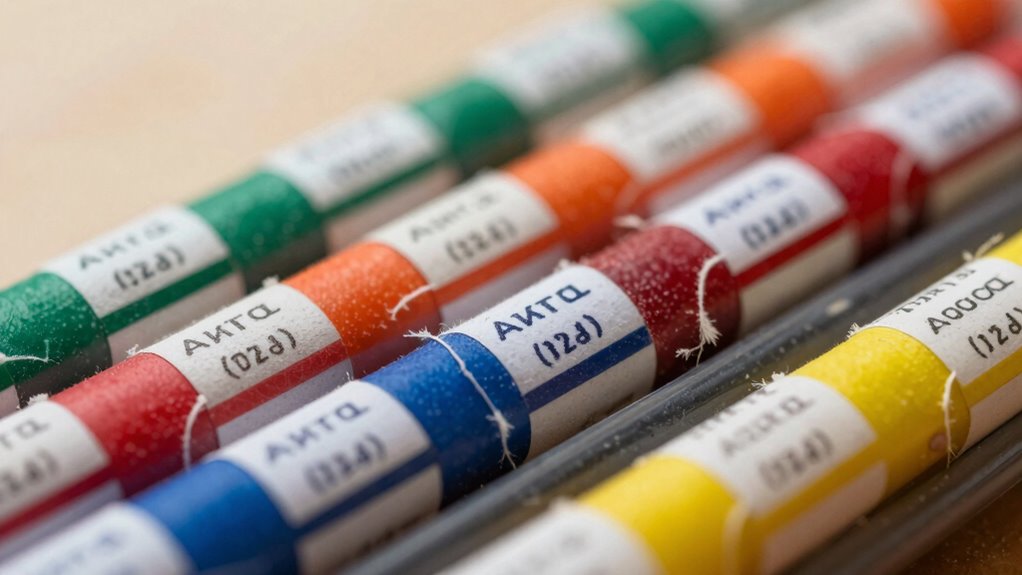
Next, pick a labeling method that withstands the test of time. Labels made from durable materials like plastic or laminated paper tend to last longer and resist wear, especially if your setup involves frequent adjustments or exposure to dust and humidity. Using a fine-tipped permanent marker or printed labels ensures the text remains clear and legible, even after a long period. Avoid cheap adhesive labels that might peel or fade quickly. Clear, waterproof labels are a smart investment, so your wire organization remains intact. Durable labeling materials are especially important for long-term clarity. Incorporating standardized labeling practices helps maintain consistency and makes troubleshooting easier over time.
Another crucial aspect is to follow consistent labeling standards. Decide on a color scheme or symbol system to indicate cable types or priority levels. For instance, red labels for critical connections, blue for secondary, or using icons to denote specific functions. This visual cue system speeds up troubleshooting and makes your entire setup more manageable. As you add new cables, stick to the same standards, so your organization stays uniform over time. Additionally, documenting your system ensures that others can easily understand your organization, reducing confusion for anyone else working on the setup. Proper documentation also facilitates quick reference and updates whenever your system evolves.
Finally, keep a record of your labeling system, whether in a digital spreadsheet or a printed chart. This documentation acts as a reference for future updates or troubleshooting, ensuring your wire organization remains logical a year down the line. When your setup expands or changes, updating your labels and records keeps everything clear and manageable. Maintaining this comprehensive record-keeping simplifies ongoing maintenance and helps prevent disorganization.
In essence, the cable label method, combined with consistent wire organization and clear labeling standards, offers a reliable way to manage your cables. It minimizes confusion, saves time, and ensures your system remains understandable long after the initial setup. With some planning and durable labels, your cable management can be both efficient now and reliable in the future.
As an affiliate, we earn on qualifying purchases.
Frequently Asked Questions
How Durable Are Cable Labels Over Time?
Cable labels are quite durable over time, especially when you choose high-quality materials. You’ll find that their longevity depends on material durability—labels made from weather-resistant plastics or vinyl tend to hold up well against wear, dust, and moisture. With proper application, they can last a year or more without fading or peeling. Regularly check and replace labels as needed to maintain clarity, but overall, they’re a reliable solution for long-term cable identification.
Can the Method Be Applied to Wireless Device Labeling?
Yes, you can apply the cable label method to wireless device labeling. Think of it like giving each wireless gadget a name tag that sticks with it no matter how often it moves. Using durable, compatible labels guarantees your wireless identification remains clear, even with frequent reorganization. Just make certain your labels match the device’s surface and are compatible with wireless environments to avoid peeling or signal interference.
What Tools Are Necessary for Creating Cable Labels?
To create cable labels, you need reliable labeling materials like durable adhesive labels or heat shrink tubing. A compatible printer is essential; choose one that works with your labeling materials—laser or inkjet printers are common options. Make certain your printer supports the size and type of labels you need, and consider tools like label tapes or software for designing clear, legible labels. This setup guarantees long-lasting, professional results.
Are There Eco-Friendly Label Options?
Yes, you can choose eco-friendly label options that are truly game-changers for your cable organization. Imagine using eco alternatives made from recyclable materials that not only simplify your setup but also save the planet in the process. These labels are durable, biodegradable, and environmentally responsible, proving you don’t have to sacrifice quality for sustainability. Going green with your labels makes your cable management smarter, greener, and more impressive than ever.
How Does This Method Compare in Cost to Digital Labeling?
The cost comparison shows that cable labels are generally more affordable upfront compared to digital alternatives, especially when you consider long-term expenses. Digital labeling involves ongoing software subscriptions, hardware costs, and maintenance, while cable labels require only initial supplies. If you’re budget-conscious and need a straightforward, durable solution, cable labels offer a cost-effective choice. Digital options, however, provide flexibility and easy updates, but at a higher recurring expense.
As an affiliate, we earn on qualifying purchases.
Conclusion
By now, you’ve seen how the cable label method simplifies cable management and saves you time. It’s no wonder that 85% of tech enthusiasts still rely on it a year later—proof that simple, effective solutions stand the test of time. So, if you want clutter-free, easily identifiable cables that make troubleshooting a breeze, give this method a try. Trust me, your future self will thank you for it.
As an affiliate, we earn on qualifying purchases.
long-lasting cable labeling system
As an affiliate, we earn on qualifying purchases.
As an affiliate, we earn on qualifying purchases.
Columbus Day / Indigenous Peoples' Day Picks
long weekend sales
As an affiliate, we earn on qualifying purchases.