
To lock in ideal surround sound, sit about 1.5 to 2.5 times the shortest room dimension away from your speakers. This distance helps create a balanced, immersive soundstage, making sure each speaker’s audio reaches you clearly and at the right level. Sitting too close or far can muddy the sound or diminish surround effects. Want to discover more about fine-tuning your setup? Keep exploring to reveal the full potential of your audio experience.

Get audio and creator gear delivered free — and shop member deals
- Fast, free delivery on millions of items
- Access to Prime Big Deal Days deals on October 6–7
- Prime Video, Amazon Music and more included
Key Takeaways
- Sit about 1.5 to 2.5 times the room’s shortest dimension for optimal surround sound immersion.
- Maintain consistent distance from each speaker to the seating area for balanced sound.
- Proper seating distance ensures soundstage clarity and prevents overwhelming or muddy audio.
- Correct placement enhances the surround effect by aligning sound waves with your ears.
- Adjust seating position based on room size and speaker setup to lock in immersive audio quality.
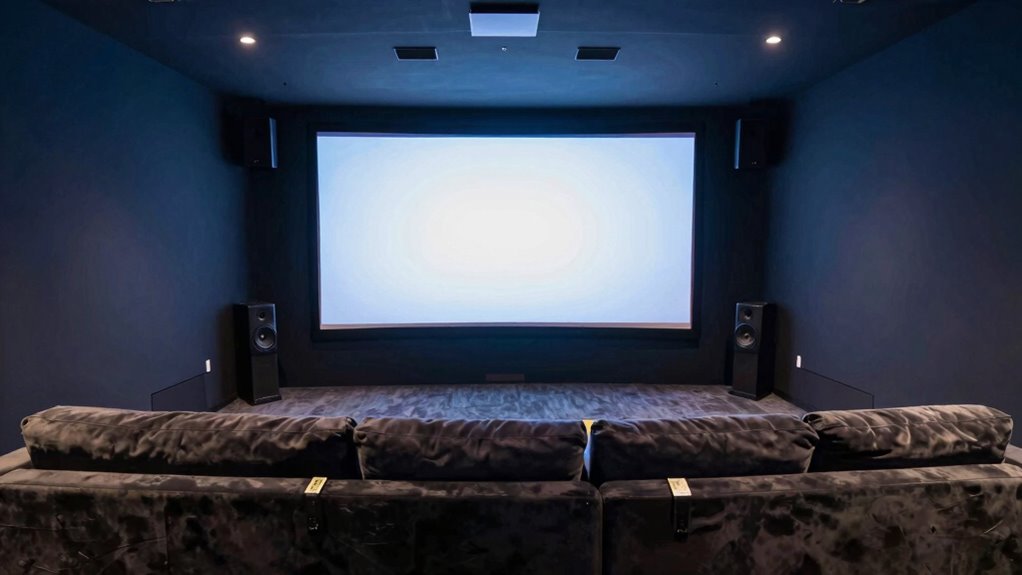
Have you ever wondered how to optimize your surround sound experience? The secret lies in understanding the importance of the right seating distance and its relationship to speaker placement and acoustic treatment. When you sit at the correct distance from your speakers, the soundstage becomes more immersive, giving you a theater-like experience right in your living room. To achieve this, you need to pay close attention to how your speakers are positioned relative to your seating area. Proper speaker placement ensures that sound waves reach you simultaneously and at the right levels, preventing echoes or sound muddiness. The general rule is to position your speakers so that they form an equilateral triangle with your seating spot. This means that the distance between each speaker and your seat should be roughly the same, creating a balanced and cohesive sound environment.
Position your speakers to form an equilateral triangle with your seat for balanced, immersive surround sound.
But placement alone isn’t enough. Acoustic treatment plays a vital role in locking in your surround sound experience. The right acoustic treatment helps control reflections, echoes, and unwanted reverberations that can distort audio clarity. You want to strategically add absorption panels, diffusers, and bass traps to your room, especially on walls that are directly opposite or adjacent to your speakers. These treatments minimize sound bouncing around the room, allowing your speakers’ output to shine through with greater precision. When combined with correct speaker placement, acoustic treatment creates an environment where sound waves travel directly to your ears with minimal interference. This setup enhances dialogue clarity, instrument separation, and overall immersion. Additionally, understanding the room’s acoustics can help you make better decisions about placement and treatment strategies. Exploring room acoustics can reveal how different materials and configurations influence sound behavior in your space. Recognizing the impact of materials in your room can further optimize your surround sound setup. Incorporating acoustic measurements can also provide valuable insights into your room’s unique sound characteristics.
Furthermore, the seating distance rule emphasizes sitting at an ideal distance—not too close and not too far. Sitting too close can overload your senses, making sounds seem overwhelming or muddy, while sitting too far diminishes the surround effect, making the soundstage feel distant or disconnected. Typically, the sweet spot is about 1.5 to 2.5 times the size of your room’s shortest dimension from the speakers, depending on your setup. Adjusting your seating to this sweet spot ensures that you experience the full power and clarity of your surround sound system.
In essence, creating a perfect surround sound environment hinges on thoughtful speaker placement, effective acoustic treatment, and proper seating distance. When these elements work together, your audio becomes more precise, immersive, and true to the original sound. You’ll find yourself genuinely engaged in movies, games, or music, feeling like you’re right inside the action. The right setup doesn’t just improve sound quality—it transforms your entire entertainment experience.
surround sound speaker placement kit
As an affiliate, we earn on qualifying purchases.
As an affiliate, we earn on qualifying purchases.
Frequently Asked Questions
How Does Seating Distance Affect Sound Quality in Surround Sound Systems?
Seating distance plays a vital role in sound quality in surround sound systems. When you sit too close or too far, speaker placement can cause uneven sound distribution, affecting the immersive experience. To optimize, maintain consistent seating distance and consider acoustic treatment to minimize echoes. Proper speaker placement and ideal seating distance guarantee that surround sound locks in, delivering clear, balanced audio with excellent spatial accuracy.
Can Seating Distance Rules Vary Between Different Surround Sound Setups?
Yes, seating distance rules can vary between different surround sound setups. When calibrating your speakers, you may need to adjust based on the room’s acoustics and speaker placement. Proper acoustic treatment helps guarantee consistent sound quality, but ideal seating positions depend on your specific system and room. Speaker calibration tools can help fine-tune the sound, making sure your listening experience is immersive regardless of distance differences.
What Tools Can Help Measure the Optimal Seating Distance?
You can use tools like a tape measure or laser distance meter to accurately measure the ideal seating distance, guaranteeing proper speaker placement. Acoustic calibration devices, such as sound level meters and calibration microphones, help fine-tune your system for balanced surround sound. These tools ensure your seating position aligns with speaker placement guidelines, enhancing the immersive experience and locking in surround sound for consistent, high-quality audio performance.
Is There a Recommended Seating Distance for Small Rooms?
For small rooms, keep your seating arrangement about 1.5 to 2 times the screen size away from the display. This distance helps optimize room acoustics and guarantees clear sound without distortion. Sitting too close can muddle audio, while sitting too far diminishes immersion. Adjust your seat to balance sound clarity and visual comfort, and consider acoustic treatments to improve overall sound quality in tight spaces.
How Do Seating Distance Guidelines Change for Immersive Home Theaters?
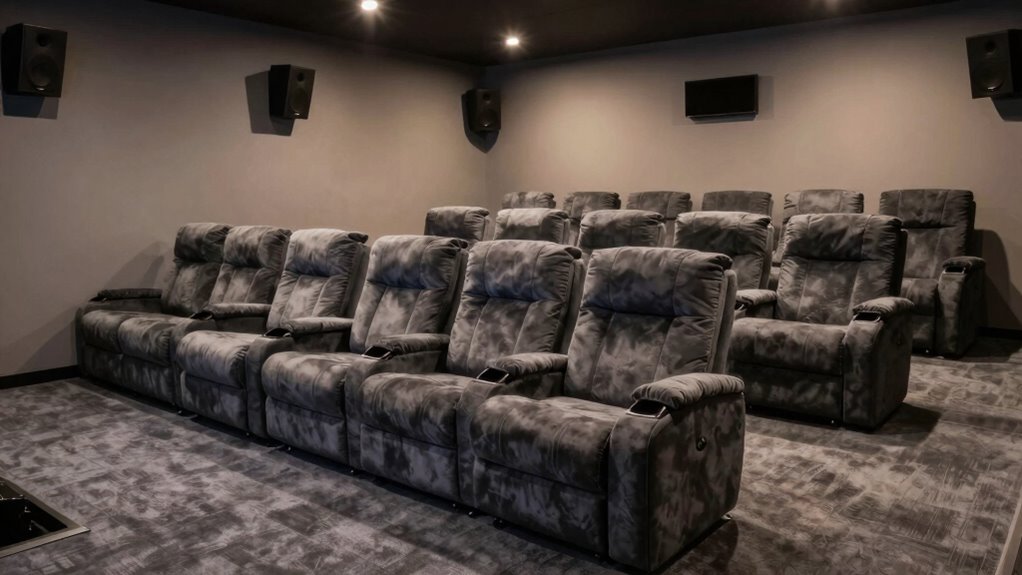
Think of your immersive home theater as a symphony, where every seat plays a crucial role. In such setups, you should position seats closer to the screen—around 1.2 to 1.5 times the screen’s diagonal—enhancing surround sound. Prioritize acoustic treatments and seating ergonomics to guarantee sound waves reach your ears without distortion. This creates a cocoon of sound, making you feel like you’re right there in the action.
acoustic treatment panels for home theater
As an affiliate, we earn on qualifying purchases.
As an affiliate, we earn on qualifying purchases.
Conclusion
Now that you know the seating distance rule, imagine the immersive sound experience waiting just beyond your reach. Stick to the guideline, and every movie night transforms into a cinematic adventure. But beware — a tiny mistake could break the magic. Are you ready to reveal the full potential of your surround sound? The secret lies in that perfect spot, and once you find it, you’ll never settle for less. The next step? It’s yours to take.
As an affiliate, we earn on qualifying purchases.
As an affiliate, we earn on qualifying purchases.
Fall Picks
fall essentials
As an affiliate, we earn on qualifying purchases.