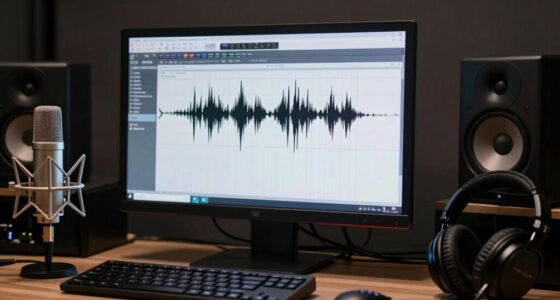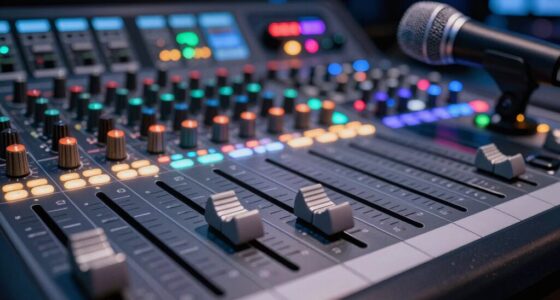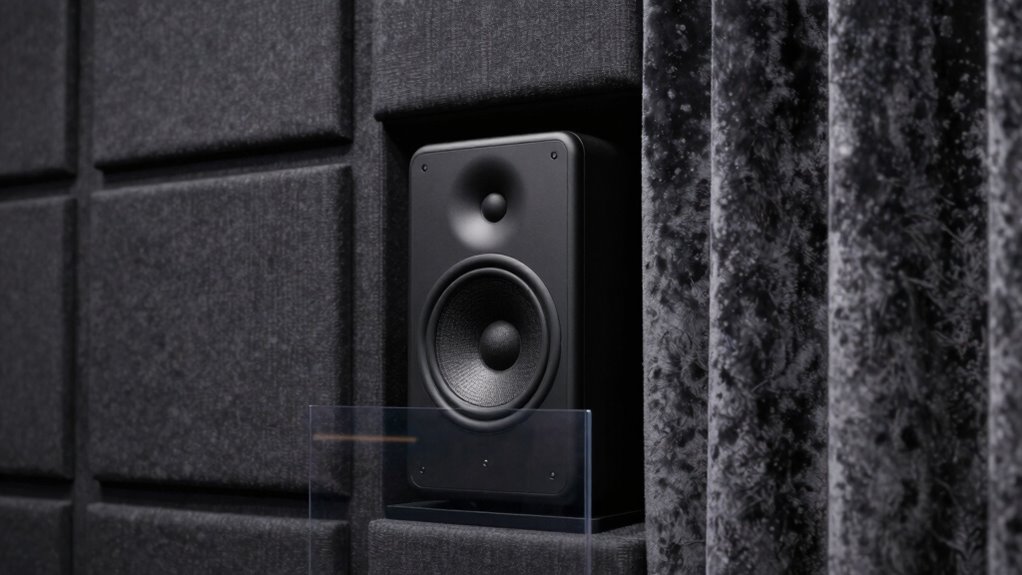

The secret to clearer dialogue at any volume lies in properly placing and tuning your center speaker. Position it directly above or below your display, at ear level, and focus sound toward your seating area. Calibration tools can help balance levels and equalization, preventing voices from being overshadowed. Investing in a high-quality speaker designed for vocal clarity makes a big difference. Keep exploring, and you’ll discover how fine-tuning all system elements can transform your listening experience.
Key Takeaways
- Proper placement of the center speaker directly above or below the display ensures sound aligns with visuals for clarity.
- Acoustic calibration adjusts sound levels and equalization, preventing dialogue from being overwhelmed by effects.
- Selecting a high-quality center speaker designed for vocal reproduction enhances dialogue clarity.
- Positioning the speaker at ear level when seated directs sound precisely toward listeners.
- System-wide integration and calibration optimize the entire audio setup for natural, consistent dialogue at any volume.
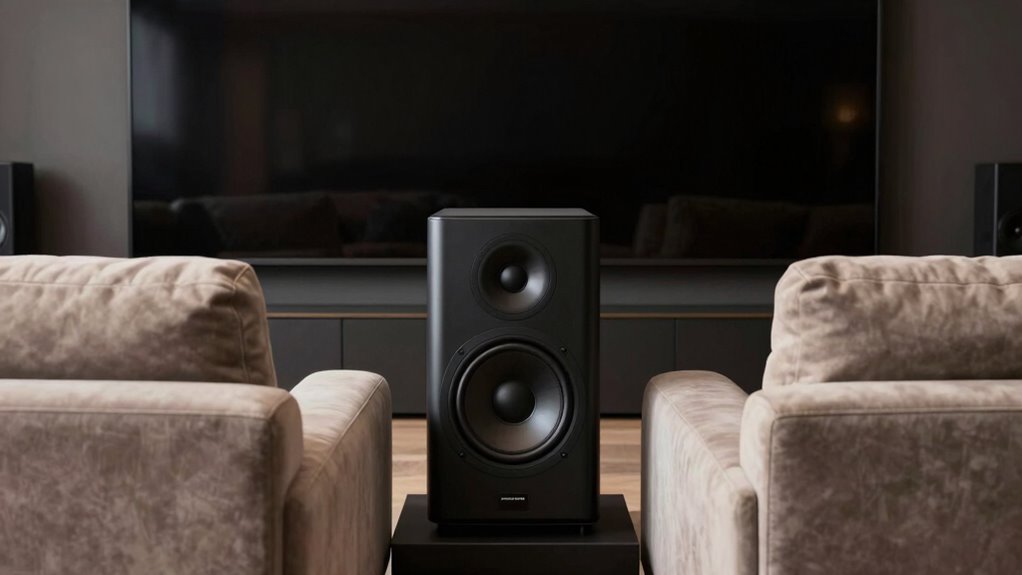
Ever wonder how to make dialogue in your home theater sound crystal clear? The secret often lies in one essential component: the center speaker. This speaker is specifically designed to anchor dialogue, making it easier to understand voices regardless of volume. When you set up your system correctly, the center speaker becomes the cornerstone of your surround sound experience, guaranteeing voices stay crisp and intelligible even during noisy action scenes or at lower volumes. It’s not just about having a good speaker; it’s about how you tune and position it within your acoustic environment.
Surround sound creates an immersive experience, but without proper focus on the center speaker, dialogue can get lost amid sound effects and music. Acoustic tuning plays a critical role here. Properly tuning your home theater allows the center speaker to blend seamlessly with the other speakers, balancing sound levels and frequency response. This guarantees that voices aren’t overshadowed by the booming bass or expansive surround effects. You can achieve this by using calibration tools or a sound meter to fine-tune each speaker’s volume and equalization settings. When the system is well-tuned, the dialogue feels like it’s coming directly from the characters and not just from a random speaker in the room. Additionally, understanding the importance of speaker placement** can significantly enhance clarity. Proper placement ensures the sound stays focused and aligned with the visual source, which is crucial for clarity. Correct sound calibration** is essential for achieving the best possible audio experience, ensuring all elements work together harmoniously.
Positioning your center speaker correctly is equally important. Place it directly above or below your display, centered with the screen, and at ear level when seated. This positioning helps direct sound precisely toward your listening position, reducing muddiness and improving clarity. Keep in mind that the quality of the speaker itself matters—invest in a model that’s designed specifically for dialogue and vocal reproduction. A well-chosen center speaker, combined with meticulous acoustic tuning, transforms the listening experience, making every whisper, every line, and every punchline crystal clear regardless of how loud or soft the scene is. Remember that sound quality can vary widely between models, so choosing a speaker that emphasizes vocal clarity is key. Ensuring your audio setup includes the right components and placement can dramatically improve overall clarity.
In essence, the secret to clearer dialogue isn’t just in the speaker’s quality, but how you integrate it into your entire sound system. When you focus on proper placement, calibration, and the synergy with surrounding speakers, your home theater delivers dialogue that’s sharp, natural, and easy to follow. This attention to detail elevates your viewing experience, making every movie or show more engaging and less tiring to listen to. With the right setup, you won’t have to strain to catch what’s being said—your center speaker will do the heavy lifting, anchoring dialogue perfectly within your surround sound environment. Proper system calibration ensures all components work harmoniously, enhancing overall clarity.
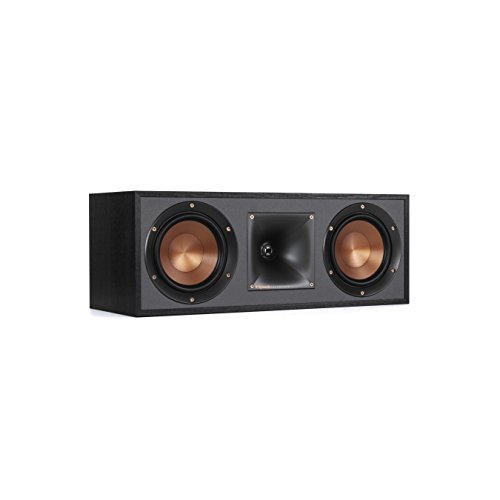
Klipsch R-52C Powerful Detailed Center Channel Home Speaker – Black
- Woofer Size: Dual 5.25-inch spun-copper IMG woofers
- Tweeter Type: 1-inch aluminum LTS tweeter with horn
- Frequency Response: 89Hz – 21kHz ±3dB
As an affiliate, we earn on qualifying purchases.
As an affiliate, we earn on qualifying purchases.
Frequently Asked Questions
How Do I Choose the Best Center Speaker for My Setup?
To choose the best center speaker, start by considering its size and power to match your setup. Focus on speaker calibration to guarantee ideal sound quality and seamless audio synchronization with your other speakers. Look for a model with clear dialogue reproduction and good frequency response. Reading reviews and listening tests can help. Ultimately, a well-calibrated, compatible center speaker enhances clarity and immersion, making your listening experience much better.
Can a Center Speaker Improve Overall Home Theater Sound Quality?
You bet a center speaker can upgrade your home theater sound quality. It acts as the backbone for dialogue clarity, making conversations feel natural. To get the most from it, you’ll want to do speaker calibration and audio calibration carefully. When you fine-tune these settings, your system delivers balanced sound, filling the room without dead spots. It’s the secret sauce that turns good audio into an immersive experience.
What Is the Ideal Placement for a Center Speaker?
You should position your center speaker directly above or below your TV, aligned with the screen’s midline. Proper speaker positioning enhances dialogue clarity and creates an immersive experience. Use sound calibration to fine-tune the speaker’s volume and balance with other channels. Confirm it’s stable and aimed directly at your listening area, which optimizes sound quality and minimizes audio distortion, making your home theater setup truly effective.
Do I Need a Dedicated Amplifier for My Center Speaker?
Think of your center speaker as the heart of your home theater, pumping clear dialogue to every corner. You don’t necessarily need a dedicated amplifier if your receiver can power it effectively. Proper subwoofer integration and surround sound calibration guarantee seamless audio blending, making dialogue crisp and immersive. If your receiver lacks enough power, adding a dedicated amplifier can elevate your listening experience, making sure every word hits just right.
How Does Room Acoustics Affect Center Speaker Performance?
Room acoustics considerably impact your center speaker’s performance by affecting sound clarity and dialogue intelligibility. Poor acoustics, like echoes or sound reflections, can muddy dialogue, making it harder to understand. To improve this, use soundproofing techniques and acoustic treatment, such as adding soft furnishings, acoustic panels, or rugs. These steps help absorb excess sound waves and reduce reflections, ensuring clearer dialogue and a better overall listening experience.
Klipsch R-52C Powerful Detailed Center Channel Home Speaker – Black
- Woofer Size: Dual 5.25-inch spun-copper IMG woofers
- Tweeter Type: 1-inch aluminum LTS tweeter with horn
- Frequency Response: 89Hz – 21kHz ±3dB
As an affiliate, we earn on qualifying purchases.
As an affiliate, we earn on qualifying purchases.
Conclusion
Now that you know the hidden power of your center speaker, imagine the conversations and scenes coming alive with crystal-clear dialogue, no matter the volume. But here’s the catch—there’s one more tweak that could elevate your sound experience even further. Are you ready to unleash its full potential? Stay tuned, because what’s coming next might just change the way you hear every word forever. The secret’s within reach—are you prepared to discover it?

Sound Level Calibrator,Decibel Meter Calibration for Noise Measurement Reader,Output Sound Level 94dB & 114dB output levels for 1 inch and 1/2 inch Microphones
- High Precision Output Levels: 94dB and 114dB calibration levels
- Pre-Calibrated for Accuracy: Calibrated to 94dB at sea level
- Universal Microphone Compatibility: Fits ½ inch and 1-inch microphones
As an affiliate, we earn on qualifying purchases.
As an affiliate, we earn on qualifying purchases.
Klipsch R-52C Powerful Detailed Center Channel Home Speaker – Black
- Woofer Size: Dual 5.25-inch spun-copper IMG woofers
- Tweeter Type: 1-inch aluminum LTS tweeter with horn
- Frequency Response: 89Hz – 21kHz ±3dB
As an affiliate, we earn on qualifying purchases.
As an affiliate, we earn on qualifying purchases.