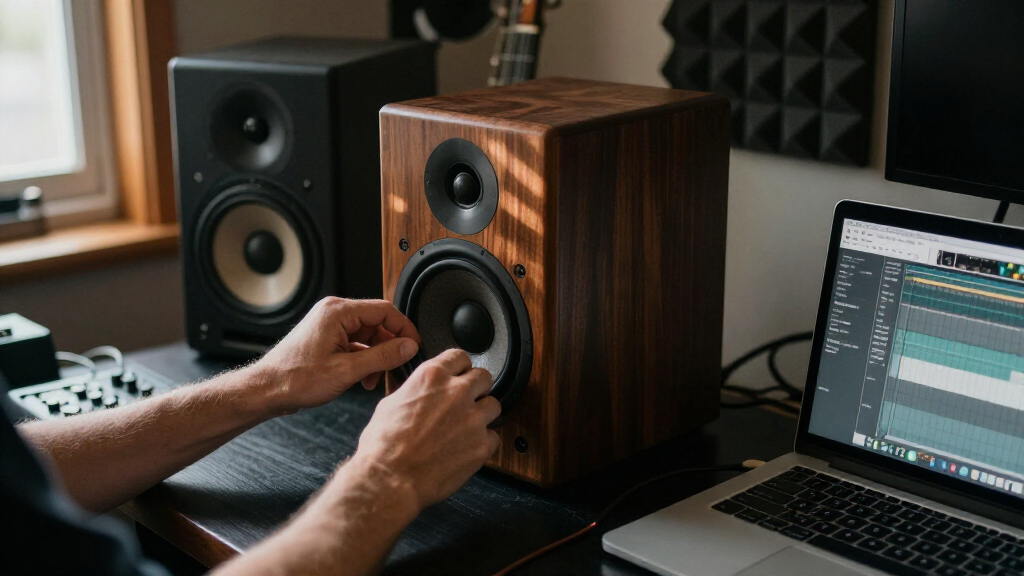
Studio monitor speakers are built to tell you the truth about your mix, and the right pair depends on your room, your budget, and how much low end you actually need. For most buyers, the Yamaha HS5 (Pair) stands out as the best overall choice — it carries the industry-standard HS sound at a price that still leaves room for acoustic treatment. If you want tighter value, the Edifier MR4 delivers a front-ported, genuinely flat response for under $200, while the JBL 305P MkII is the pick if you mix bass-heavy genres and need a 5-inch woofer with real low-end reach. The main tradeoff in this category is simple: smaller monitors save money and space but struggle below 60 Hz, forcing you to lean on headphones for mix decisions. Keep reading for the full breakdown of all 14 pairs.
Complete the kit


Key Takeaways
- The Yamaha HS5 took the top spot because its midrange honesty is unmatched at its price — mixes translate to cars and earbuds with fewer surprises than any other pair here.
- Two products in this lineup are essentially identical apart from color: the Ortizan C7 in black and white. Choose purely on aesthetics or pricing that week — the sound and features don’t change.
- The Edifier MR4 and MR3 form a clear upgrade ladder; the MR4’s larger woofer and front port make it the better value unless desk space is truly tight.
- 3.5-inch models (M-Audio BX3, Mackie CR3.5, PreSonus Eris 3.5) are fine for voiceover and casual listening but hit a low-end wall that makes them risky for full music mixes.
- The JBL 305P MkII was the only monitor here with a 5-inch woofer plus a genuinely useful waveguide, which is why it’s the strongest pick for electronic and hip-hop production.
| Ortizan C7 Powered Studio Monitors Pair with Bluetooth 5.3, Black |  | Best for Wireless Flexibility | Woofer: 3.5-inch carbon fiber | Tweeter: 0.75-inch silk dome | Connectivity: Bluetooth 5.3, RCA, AUX, TRS, USB-C | VIEW LATEST PRICE | See Our Full Breakdown |
| Edifier MR4 Power Studio Monitor Speakers, 4 inch Active Near-Field Speaker |  | Best Value for Accurate Mixing | Woofer: 4-inch composite | Tweeter: 2.5 cm silk dome | Frequency Response: Up to 20 kHz | VIEW LATEST PRICE | See Our Full Breakdown |
| Yamaha HS4 Powered Studio Monitor (Pair, Black) |  | Best Trusted Reference (Compact) | Woofer: 4.5-inch | Tweeter: 1-inch dome | Frequency Response: 60 Hz – 22 kHz | VIEW LATEST PRICE | See Our Full Breakdown |
| M-AUDIO BX3 3.5-Inch Wired Studio Monitors Pair |  | Best for Desktop Creators and Streamers | Woofer: 3.5-inch Kevlar | Tweeter: Silk dome | Power Output: 120W | VIEW LATEST PRICE | See Our Full Breakdown |
| Edifier R1280T Powered Bookshelf Speakers – 2.0 Near Field Studio Monitor |  | Best Studio-Speaker Hybrid for Home Listening | Power Output: 42 Watts RMS | Woofer: 4-inch full-range | Tweeter: 13 mm silk dome | VIEW LATEST PRICE | See Our Full Breakdown |
| Ortizan C7 Powered Studio Monitors Pair with Bluetooth 5.3, White |  | Best Budget Bluetooth Pick | Woofer: 3.5-inch carbon fiber | Tweeter: 0.75-inch silk dome | Connectivity: Bluetooth 5.3, RCA, AUX, TRS, Type-C | VIEW LATEST PRICE | See Our Full Breakdown |
| Yamaha HS3 Powered Studio Monitor, Pair |  | Best for Small Desks | Woofer: 3.5 inches | Tweeter: 0.75-inch dome | Frequency Response: 70 Hz – 22 kHz | VIEW LATEST PRICE | See Our Full Breakdown |
| Yamaha HS5 Powered Studio Monitor, Pair |  | Best for Serious Mixing | Woofer: 5 inches | Tweeter: 1-inch dome | Frequency Response: 54 Hz – 30 kHz | VIEW LATEST PRICE | See Our Full Breakdown |
| Edifier MR3 Powered Studio Monitor, Bluetooth Active Speaker |  | Best Hybrid Monitor-Speaker | Woofer: 3.5 inches | Connectivity: Bluetooth, Balanced TRS, RCA, AUX | Certification: Hi-Res Audio | VIEW LATEST PRICE | See Our Full Breakdown |
| PreSonus Eris E4.5 2-Way 4.5-Inch Near Field Studio Monitor (Pair) |  | Best Tuning Flexibility for the Price | Woofer: 4.5 inches | Tweeter: 1-inch silk dome | Power: 50 watts | VIEW LATEST PRICE | See Our Full Breakdown |
| Edifier MR4 Power Studio Monitor Speakers, 4 inch Active Near-Field Speakers |  | Best Flat Response on a Budget | Speaker Type: Active bookshelf | Woofer: 4 inches | Tweeter: 1 inch (2.54 cm) | VIEW LATEST PRICE | See Our Full Breakdown |
| JBL 305P MkII 5″ 2-Way Active Studio Monitors (Pair) |  | Best for Serious Mixing | Woofer: 5 inches | Configuration: 2-way active, sold as pair | Power: 2 x 41 Watts | VIEW LATEST PRICE | See Our Full Breakdown |
| Mackie CR3.5 Studio Monitors (Pair), 3.5″ Woofers, Tone Knob, Black |  | Best Starter Kit Value | Woofer: 3.5 inches | Tweeter: 1 inch | Inputs: RCA, TRS | VIEW LATEST PRICE | See Our Full Breakdown |
| PreSonus Eris 3.5 Powered Studio Monitors, Pair |  | Best Desktop All-Rounder | Speaker Type: Active, pair | Woofer: 3.5 inches | Power Output: 50 watts | VIEW LATEST PRICE | See Our Full Breakdown |
| studio monitor speaker | Woofer | Tweeter | Enclosure | Inputs |
|---|---|---|---|---|
| Ortizan C7 Powered Studio Moni | 3.5-inch carbon fiber | 0.75-inch silk dome | ABS, metal, and wood | — |
| Edifier MR4 Power Studio Monit | 4-inch composite | 2.5 cm silk dome | Wood | — |
| Yamaha HS4 Powered Studio Moni | 4.5-inch | 1-inch dome | — | — |
| M-AUDIO BX3 3.5-Inch Wired Stu | 3.5-inch Kevlar | Silk dome | — | 1/4-inch, 1/8-inch, RCA |
| Edifier R1280T Powered Bookshe | 4-inch full-range | 13 mm silk dome | Wood | — |
| Ortizan C7 Powered Studio Moni | 3.5-inch carbon fiber | 0.75-inch silk dome | ABS, Metal, Wood | — |
| Yamaha HS3 Powered Studio Moni | 3.5 inches | 0.75-inch dome | Wood | XLR, TRS, RCA, Stereo Mini |
| Yamaha HS5 Powered Studio Moni | 5 inches | 1-inch dome | MDF | XLR, TRS (balanced/unbalanced) |
| Edifier MR3 Powered Studio Mon | 3.5 inches | — | — | — |
| PreSonus Eris E4.5 2-Way 4.5-I | 4.5 inches | 1-inch silk dome | — | 1/4-inch TRS, RCA, 1/8-inch aux |
| Edifier MR4 Power Studio Monit | 4 inches | 1 inch (2.54 cm) | Plastic | RCA, TRS, AUX |
| JBL 305P MkII 5" 2-Way Active | 5 inches | — | MDF | XLR, TRS |
| Mackie CR3.5 Studio Monitors | 3.5 inches | 1 inch | Metal, plastic | RCA, TRS |
| PreSonus Eris 3.5 Powered Stud | 3.5 inches | — | Composite, wood | TRS, RCA, Aux |
More Details on Our Top Picks
Ortizan C7 Powered Studio Monitors Pair with Bluetooth 5.3, Black
The Ortizan C7 stands out for sheer connectivity breadth: Bluetooth 5.3, RCA, AUX, TRS, and USB-C all in one compact pair. Compared with the Edifier R1280T, which is wired-only, the C7 lets a producer switch from phone playback to interface monitoring without touching a cable. The 3.5-inch carbon fiber woofer and silk dome tweeter deliver a tuned, balanced signature, though buyers should know this tuning leans slightly more toward enjoyable listening than the strictly flat response of the Edifier MR4. That makes it a dual-purpose speaker: credible enough for casual mixing, pleasant enough for everyday music. The tradeoff is precision — serious mix engineers will notice the flavor added to the midrange.
Pros:- Five input options including Bluetooth 5.3 and USB-C for effortless source switching
- Carbon fiber woofer delivers clean, balanced mids at desktop volumes
- Compact footprint fits tight desks and small studio corners
- Genuinely versatile as both a monitor and an everyday listening speaker
Cons:- Tuning is flavored rather than flat, which can color mixing decisions
- Corded power only, with no battery option for portable setups
- 3.5-inch woofer lacks the low-end reach of larger monitors like the Yamaha HS5
Best for: Home producers and content creators who want one speaker pair that handles both studio work and wireless casual listening
Not ideal for: Mixing engineers who need a strictly neutral reference — the tuning adds color that can mislead critical decisions
- Woofer:3.5-inch carbon fiber
- Tweeter:0.75-inch silk dome
- Connectivity:Bluetooth 5.3, RCA, AUX, TRS, USB-C
- Bluetooth Range:Up to 18 meters
- Enclosure:ABS, metal, and wood
- Power Source:Corded electric
Our verdict“A sensible pick for creators who want wireless convenience and studio credibility in one pair, but not a pure reference tool.”
Edifier MR4 Power Studio Monitor Speakers, 4 inch Active Near-Field Speaker
Where the Ortizan C7 flatters, the Edifier MR4 tells the truth. Its flat response curve is the reason it earns a spot here: at this price, few monitors prioritize honesty over enjoyment, and that makes the MR4 a better mixing tool than the similarly sized R1280T, which is tuned warmer for living rooms. Bluetooth is included but wired RCA and TRS remain the primary inputs, and the button controls make switching between sound modes simple. The wood enclosure helps keep resonance low for the price. The honest tradeoff is low-end extension — a 4-inch woofer only reaches so far, so bass-heavy genres may need a subwoofer or an upgrade to something like the JBL 305P MkII.
Pros:- Genuinely flat response curve at a budget price point
- Both Bluetooth and wired TRS/RCA inputs for flexible routing
- Wood cabinet reduces resonance compared to plastic rivals like the Ortizan C7
- Simple controls with switchable sound modes for monitoring versus casual listening
Cons:- Limited low-frequency extension from the 4-inch woofer
- No published power output spec, making loudness comparisons difficult
- 85 dB signal-to-noise ratio trails higher-end monitors
Best for: Beginner and intermediate producers who want an honest, flat response without spending premium monitor money
Not ideal for: Electronic music producers who need deep bass extension — the 4-inch woofer rolls off where 808s live
- Woofer:4-inch composite
- Tweeter:2.5 cm silk dome
- Frequency Response:Up to 20 kHz
- Signal-to-Noise Ratio:85 dB
- Connectivity:RCA, AUX, TRS, Bluetooth
- Enclosure:Wood
Our verdict“The most honest mixing reference in this price bracket, ideal for desktop producers who value accuracy over bass impact.”
Yamaha HS4 Powered Studio Monitor (Pair, Black)
The Yamaha HS4 carries the DNA of the industry-standard HS series into a desk-friendly 4.5-inch format. What separates it from the Edifier MR4 and Ortizan C7 is room control and high trim switches — real calibration tools that let you tame bass buildup when speakers sit against a wall, something budget rivals simply don’t offer. Yamaha’s reputation for a revealing, unforgiving midrange is intact here, which is exactly what you want when checking vocal and guitar mixes. The 60 Hz – 22 kHz response is respectable for the size, but 26 watts per side means these are near-field specialists; push them in a large room and they’ll strain where the larger HS5 holds composure.
Pros:- Room control and high trim switches rare at this size and price
- Trusted Yamaha HS-series tuning with revealing, accurate mids
- XLR, TRS, and RCA inputs cover pro and consumer gear alike
- 60 Hz – 22 kHz frequency response reaches lower than most compact rivals
Cons:- 26W maximum output limits usable volume in bigger rooms
- Stainless steel enclosure feels more utilitarian than the warm wood of the Edifier options
- Premium brand pricing compared to equally loud budget alternatives
Best for: Producers and video editors in small rooms or apartments who want Yamaha reference accuracy with calibration controls
Not ideal for: Anyone mixing in a large or treated studio space — the 26W output won’t fill the room at reference levels
- Woofer:4.5-inch
- Tweeter:1-inch dome
- Frequency Response:60 Hz – 22 kHz
- Maximum Output Power:26 watts
- Connectivity:XLR, TRS, RCA
- Controls:Room control, high trim response
Our verdict“The compact monitor for buyers who take mixing seriously and want calibration controls the budget brands don’t provide.”
M-AUDIO BX3 3.5-Inch Wired Studio Monitors Pair
The M-Audio BX3 is built for the desk, not the studio room. With 120W of bi-amplified power, Kevlar woofers, and front-panel headphone and AUX jacks, this pair targets streamers, gamers, and podcasters who plug in, tweak the EQ, and get to work. Compared with the Edifier MR4, the BX3 sacrifices some neutrality for punch — bass hits harder and highs sparkle more, which sounds great on camera but flatters mixes. The front headphone output is a genuine workflow advantage the rear-input Yamaha HS4 can’t match, and bundled MPC Beats software sweetens the deal for newcomers. Just know that desktop real estate is the price of admission.
Pros:- 120W bi-amplified output with surprising punch for 3.5-inch drivers
- Front-panel headphone and AUX inputs make source switching effortless
- Kevlar woofers and silk dome tweeters deliver clear, energetic sound
- Includes MPC Beats software, a real value for new producers
Cons:- Tuning is punchy rather than flat, coloring critical mix decisions
- Takes up meaningful desk space compared to slimmer rivals
- No Bluetooth option for wireless casual playback
Best for: Streamers, podcasters, and desktop creators who want punchy sound and convenient front-panel controls
Not ideal for: Mixing engineers chasing neutrality — the EQ-forward, punchy character flatters rather than reveals
- Woofer:3.5-inch Kevlar
- Tweeter:Silk dome
- Power Output:120W
- Inputs:1/4-inch, 1/8-inch, RCA
- Cabinet:Acoustically-inert MDF
- Included Software:MPC Beats
Our verdict“The best pick for content creators who live at their desk and value convenience and energy over clinical accuracy.”
Edifier R1280T Powered Bookshelf Speakers – 2.0 Near Field Studio Monitor
The Edifier R1280T is the least pure monitor on this list, and that’s deliberate. Its warm, natural tuning, wood veneer cabinet, and included remote make it half studio speaker, half living room furniture — a pairing the black-box Yamaha HS4 and M-Audio BX3 wouldn’t attempt. Compared with its sibling MR4, the R1280T is the listening choice: dual AUX inputs let you keep a PC and phone connected simultaneously, and side-panel bass and treble dials invite personalization rather than accuracy. The 42W RMS output easily fills a bedroom or den. But its 80 Hz frequency floor and flattering curve mean it belongs beside a desk, not in front of a mix.
Pros:- Warm, natural sound that’s genuinely pleasant for long listening sessions
- Dual AUX inputs keep two devices connected at once
- Remote control plus bass and treble dials for easy adjustment
- Classic wood finish that fits home decor far better than studio black
Cons:- No wireless connectivity at all, unlike the Ortizan C7 or Edifier MR4
- Frequency response rolls off at 80 Hz, thinning out bass-heavy material
- 42W output limits performance in large rooms
Best for: Listeners who want a handsome, warm-sounding pair that doubles as casual desktop monitors for home offices
Not ideal for: Producers who need a flat mixing reference — the warm tuning and 80 Hz bass roll-off will mislead decisions
- Power Output:42 Watts RMS
- Woofer:4-inch full-range
- Tweeter:13 mm silk dome
- Frequency Response:From 80 Hz
- Connectivity:Dual AUX, RCA, PC audio
- Remote Control:Yes
- Enclosure:Wood
Our verdict“A lifestyle-friendly speaker pair for listening first and monitoring occasionally — not a serious mixing tool.”
Ortizan C7 Powered Studio Monitors Pair with Bluetooth 5.3, White
For buyers who want wireless convenience without paying a premium, the Ortizan C7 makes a strong case. Bluetooth 5.3 with an 18-meter range means a producer can stream reference tracks from a phone across the room — something the Yamaha HS3 and HS5 simply can’t do, as both are wired-only. The 3.5-inch carbon fiber woofer and silk dome tweeter produce a balanced tone that holds up for casual content creation, though it lacks the sonic precision of the Yamaha models. Input flexibility is generous here: RCA, AUX, TRS, and even Type-C cover nearly every device a creator owns. The tradeoff is build and tuning depth — the ABS-and-wood enclosure doesn’t damp resonance like Yamaha’s all-wood cabinets, and there are no room-correction controls. This option makes sense for desktop creators who value connectivity over surgical accuracy.
Pros:- Bluetooth 5.3 plus RCA, AUX, TRS, and Type-C inputs cover virtually any source
- Balanced, easy-listening sound suitable for content creation and casual production
- Attractive white finish that fits desk setups better than typical black boxes
- Touch controls simplify daily volume and input switching
Cons:- No room-control or tuning switches, so placement problems can’t be corrected
- Hybrid ABS/wood enclosure is less rigid than the all-wood Yamaha cabinets
- Bass extension from a 3.5-inch woofer is limited for low-frequency mixing work
Best for: Content creators and hobbyists who want affordable monitors that pair easily with phones and laptops over Bluetooth
Not ideal for: Mixing engineers who need flat, reference-grade accuracy — the tuning is consumer-friendly, not neutral
- Woofer:3.5-inch carbon fiber
- Tweeter:0.75-inch silk dome
- Connectivity:Bluetooth 5.3, RCA, AUX, TRS, Type-C
- Bluetooth Range:18 meters
- Enclosure:ABS, Metal, Wood
- Controls:Touch
Our verdict“A connectivity-first budget pick for casual creators who want Bluetooth streaming and don’t need reference-level accuracy.”
Yamaha HS3 Powered Studio Monitor, Pair
The HS3 distills Yamaha’s NS-10-inspired studio heritage into a footprint small enough for a dorm desk or a cramped corner setup. Compared with the Ortizan C7 at the same woofer size, the HS3 gives up Bluetooth but gains room control and high trim response switches — the tools that let a monitor adapt to placement against a wall, which cheap models never offer. The 70 Hz to 22 kHz response is honest for the size, but it means bass below 70 Hz simply disappears, a real limitation for electronic music or hip-hop mixing. Inputs are properly professional: XLR, TRS, RCA, and stereo mini. This model is better suited to video editors and podcast producers than bass-heavy music work. Buyers who can spare the desk space should step up to the Yamaha HS5 for its 54 Hz low end and bi-amplified design.
Pros:- Room control and high trim switches rare at this size and price
- Professional XLR and TRS inputs alongside consumer RCA and mini jack
- Trusted Yamaha tuning lineage for honest midrange reproduction
- Genuinely compact footprint for tight workspaces
Cons:- 70 Hz low-frequency limit masks sub-bass content entirely
- No Bluetooth or any wireless option
- 26 W output per pair limits headroom in larger rooms
Best for: Video editors, podcasters, and bedroom producers with very limited desk space
Not ideal for: Producers working bass-heavy genres — the 70 Hz floor hides kick and sub content
- Woofer:3.5 inches
- Tweeter:0.75-inch dome
- Frequency Response:70 Hz – 22 kHz
- Power Output:26 W
- Inputs:XLR, TRS, RCA, Stereo Mini
- Enclosure:Wood
Our verdict“The right small-desk monitor for editors and voice-focused work, as long as deep bass isn’t part of the job.”
Yamaha HS5 Powered Studio Monitor, Pair
This is the pick where accuracy stops being a marketing claim and becomes the whole design brief. The HS5’s 5-inch woofer and 1-inch dome tweeter are each driven by dedicated amplifiers in a bi-amplified layout, which translates to cleaner transients and less intermodulation distortion than the single-path designs in the Ortizan C7 or HS3. The flat response reaching down to 54 Hz means mix decisions made on these speakers translate to cars, earbuds, and clubs — the core job of a monitor. The tradeoff is honest: at this size and price, there’s no Bluetooth, no app control, and no forgiving tuning. Placement matters more than with smaller models, and the bass still won’t reach sub frequencies without a subwoofer. Compared with the Edifier MR3, the HS5 gives up wireless convenience but delivers a noticeably more neutral midrange that rewards careful listeners.
Pros:- Bi-amplified design delivers clean, low-distortion reproduction at volume
- Flat response from 54 Hz to 30 kHz suitable for professional mix translation
- Balanced XLR and TRS inputs integrate with any audio interface
- Industry-standard reputation with abundant matching accessories and subs
Cons:- Requires careful placement and acoustic treatment to perform at its best
- No Bluetooth or consumer-friendly features whatsoever
- Larger footprint than compact models like the HS3 or MR3
Best for: Home studio owners mixing music that needs to translate across playback systems
Not ideal for: Buyers wanting lifestyle convenience — no Bluetooth, no app, and an unforgiving flat sound for casual listening
- Woofer:5 inches
- Tweeter:1-inch dome
- Frequency Response:54 Hz – 30 kHz
- Power Output:70 watts
- Amplification:Bi-amplified
- Inputs:XLR, TRS (balanced/unbalanced)
- Enclosure:MDF
Our verdict“The mixing workhorse of this group — buy it if translation accuracy matters more than convenience features.”
Edifier MR3 Powered Studio Monitor, Bluetooth Active Speaker
The MR3 sits in the gap between studio tool and living-room speaker, and that’s exactly its appeal. Hi-Res Audio certification plus Bluetooth means one pair can serve mixing sessions at the desk and casual streaming on the couch — a dual role the strictly professional Yamaha HS5 refuses to play. App-based tuning and customizable sound modes give it flexibility no other monitor here matches, though that flexibility cuts both ways: preset modes can flatter the sound in ways that mislead a mixing session if left enabled. Compared with the Ortizan C7, the MR3 offers better driver refinement and a stronger feature set at a higher price, but its plastic enclosure is a step down from the wood cabinets Yamaha uses, and a 4-inch driver won’t fill a large room. This pick makes the most sense for buyers who refuse to own two pairs of speakers.
Pros:- Hi-Res Audio certified playback with Bluetooth, RCA, TRS, and AUX inputs
- App control with customizable sound modes for switching between work and leisure
- 85 dB signal-to-noise ratio delivers a clean, quiet noise floor
- Compact footprint works on desks and shelves alike
Cons:- Plastic enclosure is less acoustically inert than the wood cabinets of the Yamaha HS5 or HS3
- Sound modes can color playback if forgotten during mixing sessions
- 4-inch drivers lack the output for larger rooms
Best for: Buyers who want one pair of speakers for both desktop production and everyday music streaming
Not ideal for: Large-room setups or buyers who demand all-wood cabinet construction for serious mixing
- Woofer:3.5 inches
- Connectivity:Bluetooth, Balanced TRS, RCA, AUX
- Certification:Hi-Res Audio
- Signal-to-Noise Ratio:85 dB
- Channels:2 (stereo)
- Control Method:App
Our verdict“The best one-pair compromise for producers who also want great-sounding everyday Bluetooth speakers.”
PreSonus Eris E4.5 2-Way 4.5-Inch Near Field Studio Monitor (Pair)
The Eris E4.5 earns its place through adjustability that rivals cost twice as much. Independent high- and low-frequency tuning controls let the speaker compensate for a desk hugging a wall or a bright, untreated room — the same philosophy Yamaha applies on the HS3, but with finer granularity. Input selection is unusually broad: quarter-inch TRS, RCA, and an eighth-inch aux jack mean no adapter hunting whether the source is an interface, a turntable preamp, or a laptop. The front-panel headphone output with its own amplifier is a genuinely useful touch the Yamahas omit, letting producers check mixes on cans without repatching. Compared with the Edifier MR3, the Eris E4.5 skips Bluetooth entirely, so wireless streamers should look there instead. The Class AB amplification trades a little efficiency for a warmer character some listeners prefer over Class D budget monitors. Deep bass still requires adding a subwoofer.
Pros:- Adjustable high- and low-frequency controls for room and placement correction
- Three input types cover interfaces, consumer gear, and laptops directly
- Front-panel headphone jack with dedicated amplifier for instant monitoring switches
- Accurate, compact form with optional subwoofer integration later
Cons:- No Bluetooth connectivity at any price tier
- Bass extension needs a subwoofer for full-range work
- Tuning controls can confuse first-time monitor buyers
Best for: Producers in imperfect rooms who need tuning controls and a headphone output at their desk
Not ideal for: Wireless-first listeners and anyone needing sub-60 Hz bass without adding a subwoofer
- Woofer:4.5 inches
- Tweeter:1-inch silk dome
- Power:50 watts
- Amplifier:Class AB
- Inputs:1/4-inch TRS, RCA, 1/8-inch aux
- Low-Frequency Tuning:Adjustable
- Power Saving Mode:Yes
Our verdict“The most adaptable mid-size pick here — ideal for untreated rooms and producers who monitor on headphones too.”
Edifier MR4 Power Studio Monitor Speakers, 4 inch Active Near-Field Speakers
The Edifier MR4 stands out for delivering a genuinely flat response curve at a price that undercuts the Yamaha HS5 by a wide margin, which matters if your goal is honest mixing rather than flattering playback. The adjustable high- and low-frequency trims let you nudge the tuning toward your room without abandoning the neutral baseline — a feature the smaller M-Audio BX3 simply doesn’t offer with the same precision.
The tradeoff is build quality: the plastic enclosure feels less substantial than the MDF cabinets on the JBL 305P MkII, and resonance at higher volumes is a real possibility. Compared with the Mackie CR3.5, the MR4’s 4-inch woofer reaches slightly deeper, but you still shouldn’t expect authoritative low end from drivers this size.
Pros:- Genuinely flat frequency response for accurate mixing at a budget price
- Adjustable high- and low-frequency tuning controls
- Multiple wired inputs including RCA and TRS
- Compact footprint that fits desktop setups
Cons:- Plastic enclosure may resonate and feels less durable than MDF alternatives
- No wireless connectivity at all
Best for: Home producers and podcasters who want honest, mix-ready sound without paying professional monitor prices
Not ideal for: Producers who mix at high volumes in larger rooms — the plastic cabinet and 4-inch woofer won’t hold up like the JBL 305P MkII
- Speaker Type:Active bookshelf
- Woofer:4 inches
- Tweeter:1 inch (2.54 cm)
- Inputs:RCA, TRS, AUX
- Tuning Controls:Adjustable high and low frequency
- Enclosure:Plastic
- Power Source:Active (powered)
- Color:White
Our verdict“This pick makes the most sense for budget-conscious creators who prioritize a flat, truthful signal over premium build or convenience features.”
JBL 305P MkII 5″ 2-Way Active Studio Monitors (Pair)
The JBL 305P MkII is the most professional-leaning option in this batch, and its Boundary EQ and HF Trim room controls are what separate it from the Edifier MR4 or PreSonus Eris 3.5. Those controls let you compensate for desk placement and wall proximity — the kind of calibration that genuinely changes how your mixes translate to car stereos and earbuds.
Dual 41-watt amplifiers and a 5-inch woofer give it more headroom and a 108 dB peak SPL that the smaller 3.5-inch options here can’t approach. That said, this capability comes with demands: the 305P needs breathing room and careful positioning to image properly, and its XLR/TRS-only inputs mean you’ll want a proper audio interface rather than a laptop headphone jack.
Pros:- Precise stereo imaging with a wide sweet spot
- Boundary EQ and HF Trim controls for real room correction
- Substantial amplification with 108 dB peak output
- Solid MDF enclosure built for daily studio use
Cons:- Requires careful placement and adequate space to perform as intended
- Needs an audio interface — no consumer-friendly AUX input
- More expensive than every other option in this batch
Best for: Producers, mixing engineers, and podcasters with treated or semi-treated rooms who need mixes that translate across systems
Not ideal for: Beginners or casual desktop listeners — the price, size, and interface requirement make it overkill for streaming background music
- Woofer:5 inches
- Configuration:2-way active, sold as pair
- Power:2 x 41 Watts
- Inputs:XLR, TRS
- Peak SPL:108 dB
- Room Controls:Boundary EQ, HF Trim
- Enclosure:MDF
- Dimensions:11.7 x 7.3 x 9.1 inches per speaker
Our verdict“If mixing accuracy is the whole point of your purchase and you have the desk space and interface to support it, this is the pick that will grow with you.”
Mackie CR3.5 Studio Monitors (Pair), 3.5″ Woofers, Tone Knob, Black
The Mackie CR3.5 wins on out-of-the-box readiness: unlike the JBL 305P MkII, which assumes you already own cables and an interface, this pair ships with isolation pads and all necessary cables included. That bundle approach makes it the truest plug-and-play entry point in the lineup for someone building a first desktop studio.
The front-facing tone knob is more of a casual-listening convenience than a mixing tool — it’s less precise than the discrete high/low trim controls on the PreSonus Eris 3.5 — but it suits the CR3.5’s dual identity as both work speaker and desk stereo. Compared with the Eris 3.5, the Mackie’s 3.5-inch drivers share the same bass limitation, though the included location switch helps when placing them against a wall.
Pros:- Includes isolation pads and cables — genuinely ready to use on arrival
- Tone knob for quick sound shaping between work and leisure
- RCA and TRS inputs cover both consumer and pro sources
- Location switch compensates for wall-adjacent placement
Cons:- 3.5-inch drivers lack deep bass extension
- Tone knob is coarse compared with the Eris 3.5’s dedicated HF/LF tuning
Best for: First-time creators and students who want a complete desktop monitoring package with nothing extra to buy
Not ideal for: Producers chasing accurate low-end mixing — the 3.5-inch woofer rolls off too early for bass-heavy genres
- Woofer:3.5 inches
- Tweeter:1 inch
- Inputs:RCA, TRS
- Controls:Tone knob, location switch
- Mounting:Tabletop
- Enclosure:Metal, plastic
- Channels:2
- Finish:Black vinyl wrap
Our verdict“This is the smart buy for beginners who value a complete, affordable package over the finer tuning control of the PreSonus Eris 3.5.”
PreSonus Eris 3.5 Powered Studio Monitors, Pair
The PreSonus Eris 3.5 is the most versatile lifestyle-and-work pick here: it handles music production, gaming, movies, and streaming with the same balanced signature, and its built-in headphone jack — absent on the Mackie CR3.5 — makes late-night session switching effortless. The dedicated high- and low-frequency tuning controls are also more surgical than Mackie’s single tone knob, giving you genuine room-tailoring ability on a desktop budget.
Against the Edifier MR4, the Eris offers similar tuning flexibility with broader input options, though its 80 Hz low-end limit means sub-bass simply isn’t part of the picture. The 50-watt output is ample for near-field desktop duty, but anyone expecting the JBL 305P MkII’s headroom in a larger room will be disappointed.
Pros:- Clear, balanced tuning with tight bass for its class
- Separate high- and low-frequency tuning controls for room matching
- Front headphone jack for private monitoring
- TRS, RCA, and AUX inputs plus compact desktop-friendly design
Cons:- Bass rolls off at 80 Hz — well above where sub-bass lives
- No Bluetooth or wireless option
- 50W output limits its usefulness beyond near-field desktop distances
Best for: Desktop creators who split time between mixing, gaming, and streaming and want one pair of speakers for everything
Not ideal for: Buyers in large rooms or bass-focused genres — the 80 Hz floor and modest power won’t fill the space or reproduce sub-bass
- Speaker Type:Active, pair
- Woofer:3.5 inches
- Power Output:50 watts
- Frequency Response:80 Hz–20 kHz
- Inputs:TRS, RCA, Aux
- Tuning Controls:High- and low-frequency adjustment
- Extra Features:Built-in headphone jack
- Enclosure:Composite, wood
Our verdict“Choose the Eris 3.5 if your monitors live on a desk and pull double duty for work and entertainment, and skip it if deep bass or big-room volume is the priority.”
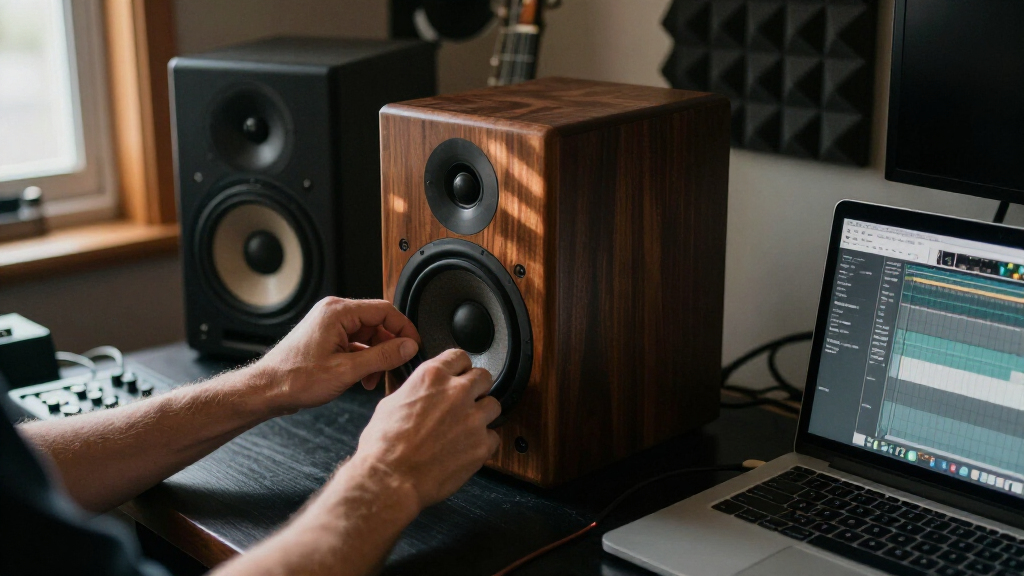
How We Picked
I judged every pair on four criteria: spectral accuracy (does the speaker flatter the mix or tell the truth), low-end reach for the woofer size, connectivity and room controls (trim switches, Bluetooth, input options), and value per dollar against the rest of this specific lineup rather than the market at large. Because these 14 monitors span roughly $100 to $400 a pair, I treated them as a ladder — each pick had to justify its rung compared to the model directly below it.
That logic drove the ranking. Reference-grade accuracy pushed the Yamaha HS5 and JBL 305P MkII to the top; the Edifier MR4 and PreSonus Eris E4.5 earned mid-tier spots by offering pro-style tuning controls at near-budget prices; and the compact 3.5-inch pairs ranked lower for mixing but were re-scored as beginner and content-creation picks where their size becomes a strength rather than a limitation.
Factors to Consider When Choosing Studio Monitor Speakers
Before you pick a pair from the list above, it helps to understand why monitors at the same price can sound and behave so differently. These are the factors that actually change what you hear at your desk.Woofer Size Determines What You Can Trust
The single biggest divider in this lineup is driver size, and it matters more than any spec sheet frequency range. A 3.5-inch woofer physically cannot move enough air to reproduce kick drums and bass lines accurately, so mixes made on small monitors often fall apart in the car where the low end suddenly appears. A 5-inch woofer reaches down to a usable 50–55 Hz, which covers most instruments except the deepest sub-bass. My advice: match woofer size to your genre, not your budget ceiling. If you produce EDM or hip-hop, anything under 5 inches will push you into headphone-checking on every track. If you mix podcasts, vocals, or acoustic material, a 3.5-inch pair is genuinely sufficient and saves both money and desk space.
Front Port vs. Rear Port Changes Your Placement Options
Most monitors in this roundup use a bass reflex port, and where that port sits has practical consequences buyers often discover too late. A rear-ported speaker placed against a wall will boom unpredictably because the reflected port output reinforces certain bass frequencies — a common mistake that ruins an otherwise accurate monitor. Front-ported designs, like the Edifier MR4, tolerate close-wall placement far better, which makes them the smarter buy for small bedrooms and cramped desks. Before purchasing, measure how far your monitors will sit from the wall. Anything under 20 cm strongly favors a front port or a sealed design, and no amount of EQ can fully fix a placement problem.
Room Correction Controls Are Worth Paying For
Several monitors here include high- and low-frequency trim switches, and buyers routinely ignore them — a mistake. These controls exist because a monitor’s published response was measured in an anechoic chamber, not your bedroom. A monitor with a −2 dB low-cut switch lets you compensate for desk bounce and wall reinforcement without reaching for broad EQ, which keeps your mix decisions clean. The Yamaha HS5 and JBL 305P MkII both offer this, and it’s part of why they outrank cheaper pairs with similar raw drivers. If your room is untreated — and most home studios are — treat tuning controls as a must-have feature, not a bonus.
Bluetooth Is Convenient but Not Neutral
Several picks here, including the Ortizan C7 and Edifier MR3, include Bluetooth, and it changes what the product actually is. A Bluetooth monitor is partly a consumer speaker — great for casual listening and switching between your phone and interface — but the wireless codec adds compression that makes it unsuitable for critical mix decisions. If your primary use is production, wired connectivity should be your working path and Bluetooth just a convenience. If you want one pair that doubles as desk speakers for music and video, the Bluetooth models make more sense than buying separate bookshelf speakers. Be honest about which buyer you are before paying extra for the feature.
Pair Matching and Consistency
All 14 products here ship as matched pairs, but manufacturing tolerance still varies between brands, and it affects stereo imaging more than most buyers realize. Two monitors that differ even slightly in level or response will smear your stereo field, making pan decisions unreliable. Established pro-audio brands like Yamaha, JBL, and PreSonus maintain tighter matching tolerances than generic consumer brands, and that consistency is part of what you’re buying at the higher price points. If you hear a slightly different character between left and right speakers, most manufacturers will exchange under warranty — don’t live with it. Imaging accuracy is one of the quiet advantages of paying for a proven studio line.
When to Pay More — and When Not To
The honest answer in this category: upgrade your monitors when your room and skills have outgrown them, not before. A $400 pair in an untreated bedroom sounds marginally better than a $150 pair because the room dominates what you hear. Spending your first $100 on acoustic panels and monitor isolation pads usually improves accuracy more than a woofer upgrade. Pay more when you need deeper low end for your genre, louder clean output for a bigger room, or trim controls for a difficult space. Skip the upgrade if you’re still learning to hear compression and EQ — a modest pair like the Eris 3.5 will teach those skills just as effectively.
Frequently Asked Questions
Should I buy the Yamaha HS5 or save money with the HS4 or HS3?
The three Yamaha tiers map cleanly to room size and genre. The HS5’s 5-inch woofer reaches around 54 Hz, which is low enough for full music mixing in most genres, while the HS4 and HS3 roll off earlier and leave you guessing about bass content. If you produce anything with a kick drum or 808s, the HS5 justifies its higher price — the smaller models will push low-end decisions onto headphones. The HS4 makes sense for voiceover, streaming, and small bedrooms where the HS5’s output would overwhelm the space. My rule: buy the HS5 unless your room is genuinely tiny or your material has no low end.
Is the JBL 305P MkII worth the extra cost over the Edifier MR4?
It depends on what you’re mixing. The JBL’s 5-inch woofer and Image Control Waveguide give it a wider sweet spot and more extended low end, which matters for electronic, hip-hop, and anyone who moves around while working. The MR4 counters with a front port that tolerates wall placement, a lower price, and Bluetooth-free simplicity that keeps the signal path clean. For a first serious pair in a small room, the MR4 is the better value. For producers whose mixes need to survive club systems and car stereos, the 305P MkII’s low-end authority earns its premium. Choose based on genre, not brand loyalty.
Can 3.5-inch monitors like the Mackie CR3.5 or Eris 3.5 actually work for music production?
They can, with a clear limitation attached. Pairs like the Mackie CR3.5 and PreSonus Eris 3.5 are accurate in the mids and highs, which covers vocals, guitars, and most mixing decisions — plenty of bedroom producers finish tracks on them. The problem starts below about 70 Hz, where these woofers simply stop delivering, so bass levels and sub content become guesswork unless you verify on headphones. If you already own decent closed-back headphones, a small monitor pair plus headphone checking is a legitimate workflow. If you don’t, budget for both or move up to a 4.5-inch model like the Eris E4.5.
Do I need an audio interface to use these monitors, or can I plug them into my computer?
Most of these pairs will accept a headphone-jack output directly from your computer, but that convenience costs you quality. A computer’s built-in output carries electrical noise and often lacks the volume control you need at arm’s length — reaching behind a monitor to adjust level gets old fast. An affordable interface gives you a clean signal, a proper volume knob, and balanced TRS connections that reject interference over longer cable runs. The Bluetooth-capable models like the Ortizan C7 sidestep this for casual listening, but wireless adds compression you don’t want while mixing. If production is the goal, plan on an interface even a basic one.
Is there any difference between the black and white Ortizan C7, or the two Edifier MR4 listings?
In both cases, no — these are color or seller variants of identical hardware, not different generations. The black and white Ortizan C7 pairs share the same drivers, amplification, and Bluetooth 5.3, so pick whichever finish matches your setup or whichever listing is cheaper at the moment. The two Edifier MR4 listings cover the same speaker as well; compare shipped price and seller reputation rather than assuming one is an upgraded version. This kind of duplicate listing is common on marketplaces and can create the illusion of more options than really exist. Focus your comparison on the genuinely distinct models in this roundup.
Conclusion
After comparing all 14 pairs, the right choice comes down to what you’re making and where. Best overall goes to the Yamaha HS5 — its honest midrange and pro pedigree make it the safest long-term buy for anyone serious about mixing. Best value belongs to the Edifier MR4, which brings front-ported placement flexibility and a flat response to a price that undercuts everything comparable. If you want the closest thing to a pro studio in this lineup, the JBL 305P MkII is the best premium pick, especially for bass-heavy genres. Beginners and content creators should start with the PreSonus Eris 3.5 or Mackie CR3.5 — cheap, forgiving, and enough monitor to learn on. For tight desks and dual listening-plus-casual use, the Ortizan C7 with Bluetooth covers both jobs, and the Yamaha HS4 fits small rooms where the HS5 would be overkill. Whatever you pick, treat the room as part of the system — a modest pair placed well will outperform a great pair fighting your walls.