Choosing studio headphones for creators means balancing honest sound against comfort, isolation, and budget — and this lineup spans all of those tradeoffs. The Beyerdynamic DT 770 Pro (80 Ohm) earns the top spot for its exceptional comfort during long editing sessions and its closed-back isolation, which makes it a workhorse for recording vocals and tracking. The Audio-Technica ATH-M50X stands out as the most versatile all-rounder with its foldable design and energetic but revealing tuning, while the FIFINE HD8 proves that beginners can get usable monitoring sound for under $30. The main tension you’ll face in this category is between open-back accuracy (better for mixing) and closed-back isolation (needed for recording), plus how much impedance your audio interface can actually drive. Keep reading for the full breakdown of all 11 models.
Complete the kit


Key Takeaways
- Closed-back models dominated this roundup because creators record as well as mix — the DT 770 Pro, ATH-M50X, and HD 280 Pro all isolate well enough to track vocals without bleed, while the open-back DT 990 Pro and semi-open K240 are mixing-only tools.
- Price does not scale linearly with usefulness here: the jump from the M20x to the M40x delivers far more real-world value than the jump from the M40x to the M50X.
- Impedance is the hidden dealbreaker — the 250 Ohm DT 990 Pro will sound thin and quiet straight from a laptop, while the 80 Ohm DT 770 Pro works with most interfaces without a dedicated amp.
- Coiled versus straight cables changed the rankings more than expected: the Sony MDR7506’s coiled cable is loved on set but annoying at a desk, where the M50X’s detachable cable wins.
- Sub-$50 picks (FIFINE HD8, TASCAM TH-02) are genuinely usable for podcasting and content monitoring, but none of them should be your only reference for final mix decisions.
| Audio-Technica ATH-M50X Professional Studio Monitor Headphones, Black |  | Best Overall | Driver Size: 45 mm | Design: Closed-back, circumaural | Earcup Swivel: 90 degrees | VIEW LATEST PRICE | See Our Full Breakdown |
| Beyerdynamic DT 770 PRO 80 Ohm Over-Ear Studio Headphones |  | Best for Long Recording Sessions | Impedance: 80 Ohm | Design: Over-ear, closed-back | Cable: 3m straight, fixed | VIEW LATEST PRICE | See Our Full Breakdown |
| FIFINE HD8 Wired Studio Monitor Headphones |  | Best Budget All-Rounder | Driver Size: 50 mm | Frequency Range: 20Hz–20kHz | Design: Closed-back, over-ear | VIEW LATEST PRICE | See Our Full Breakdown |
| Audio-Technica ATH-M40x Professional Studio Monitor Headphones, Black |  | Best Value for Accurate Mixing | Driver Size: 40 mm | Driver Details: Rare earth magnets, copper-clad aluminum wire voice coils | Design: Closed-back, circumaural | VIEW LATEST PRICE | See Our Full Breakdown |
| TASCAM TH-02 Professional Studio Monitor Headphones, Wired, Over Ear |  | Best Starter Pick | Design: Closed-back, over-ear | Type: Wired dynamic | Foldable: Yes | VIEW LATEST PRICE | See Our Full Breakdown |
| Sennheiser HD 280 Pro Headphones, Black |  | Best Noise Isolation for Recording | Type: Closed-back, over-ear | Noise Attenuation: Up to 32 dB | Cable Length: 9.8 feet, coiled | VIEW LATEST PRICE | See Our Full Breakdown |
| Audio-Technica ATH-M30x Professional Studio Monitor Headphones, Black |  | Best Value Workhorse | Driver Size: 40mm | Design: Circumaural, closed-back | Cable: Single-side exit | VIEW LATEST PRICE | See Our Full Breakdown |
| AKG K240 Studio Semi-Open Studio Headphones | 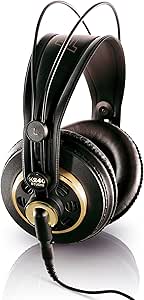 | Best for Mixing Accuracy | Design: Semi-open, over-ear | Transducer Size: 30 mm XXL | Connectivity: Stereo 1/8″ connector with 1/4″ adapter | VIEW LATEST PRICE | See Our Full Breakdown |
| Audio-Technica ATH-M20x Professional Studio Monitor Headphones, Black, White |  | Best Budget Starter Pair | Driver Size: 40 mm | Magnet Type: Rare earth | Voice Coil: Copper-clad aluminum | VIEW LATEST PRICE | See Our Full Breakdown |
| Sony MDR7506 Professional Large Diaphragm Headphones |  | Best Industry Standard | Driver Size: 40 mm | Magnet Type: Neodymium | Frequency Response: 10 Hz to 20 kHz | VIEW LATEST PRICE | See Our Full Breakdown |
| Beyerdynamic DT 990 Pro (250 Ohm) Open-Back Studio Headphones, Black |  | Best for Mixing and Mastering | Impedance: 250 Ohm | Design: Open-back over-ear | Color: Black | VIEW LATEST PRICE | See Our Full Breakdown |
| studio headphones for creator | Design | Color | Driver Size | Cable |
|---|---|---|---|---|
| Audio-Technica ATH-M50X Profes | Closed-back, circumaural | Black | 45 mm | Detachable |
| Beyerdynamic DT 770 PRO 80 Ohm | Over-ear, closed-back | Gray | — | 3m straight, fixed |
| FIFINE HD8 Wired Studio Monito | Closed-back, over-ear | — | 50 mm | Detachable coiled, 9.8 ft |
| Audio-Technica ATH-M40x Profes | Closed-back, circumaural | Black | 40 mm | — |
| TASCAM TH-02 Professional Stud | Closed-back, over-ear | — | — | Fixed wired |
| Sennheiser HD 280 Pro Headphon | Collapsible, swiveling earcups | Black | — | — |
| Audio-Technica ATH-M30x Profes | Circumaural, closed-back | Black | 40mm | Single-side exit |
| AKG K240 Studio Semi-Open Stud | Semi-open, over-ear | — | — | — |
| Audio-Technica ATH-M20x Profes | Circumaural, closed-back | White (also available in Black) | 40 mm | — |
| Sony MDR7506 Professional Larg | Closed-back, over-ear, foldable | — | 40 mm | — |
| Beyerdynamic DT 990 Pro | Open-back over-ear | Black | — | 3m coiled |
More Details on Our Top Picks
Audio-Technica ATH-M50X Professional Studio Monitor Headphones, Black
The ATH-M50X earns the top spot because it nails the balance creators actually need: a V-shaped but detailed tuning that makes tracking enjoyable without hiding mixing problems, plus the practical details — detachable cable, 90-degree swiveling earcups, and a collapsible frame — that survive daily studio abuse. Compared with the Beyerdynamic DT 770 PRO, the M50X is easier to drive straight from a laptop or phone, which matters if you move between a desk setup and mobile recording. It shares the same detachable-cable convenience as its sibling, the ATH-M40x, but the larger 45mm drivers deliver noticeably deeper bass extension. The tradeoff: that bass emphasis flatters mixes in a way the flatter M40x does not, so engineers chasing neutral reference tuning may find it colored.
Pros:- Detailed sound with deep, controlled bass that works for tracking and casual listening
- Detachable cable prevents the most common headphone failure point
- Collapsible, swiveling design built for mobile and DJ-style workflows
- Runs well without a dedicated headphone amp
Cons:- Bass-forward tuning is less neutral than dedicated mixing references
- Bulky compared with lighter closed-back options like the TASCAM TH-02
Best for: Producers and content creators who want one durable pair for tracking, editing, and everyday listening without a headphone amp
Not ideal for: Purists seeking the flattest possible reference for final mix translation — the boosted low end can mislead low-frequency decisions
- Driver Size:45 mm
- Design:Closed-back, circumaural
- Earcup Swivel:90 degrees
- Cable:Detachable
- Materials:Professional grade earpads and headband
- Color:Black
Our verdict“If you can only buy one pair of studio headphones, this is the safest all-around pick for creators who track, edit, and listen on the same cans.”
Beyerdynamic DT 770 PRO 80 Ohm Over-Ear Studio Headphones
Where the ATH-M50X goes for excitement, the DT 770 PRO goes for stamina. Its velour ear pads and spring-steel headband remain comfortable through six-hour tracking days, something pleather-padded rivals like the HD 280 Pro struggle to match. The 80-ohm version is the sweet spot in the lineup: it pairs well with an audio interface while retaining headroom and a wide, spacious closed-back soundstage. Isolation is strong enough for vocal booths and drum rooms without bleed into the mic. The catch is real, though — plug it into a phone and it sounds thin and quiet, and the fixed 3m coiled cable means a damaged cord is a repair, not a swap like on the M50X.
Pros:- Velour pads stay cool and comfortable over very long sessions
- Excellent passive isolation that keeps bleed out of microphones
- German-built, serviceable construction with replaceable parts
- More refined treble and soundstage than most closed-back rivals
Cons:- Needs an audio interface or headphone amp to sound its best
- Non-detachable cable makes damage harder and costlier to fix
Best for: Home studio owners with an audio interface who record vocals or instruments and need comfort during marathon sessions
Not ideal for: Creators working from phones, tablets, or laptops with no amp — the 80-ohm impedance starves these of volume and bass
- Impedance:80 Ohm
- Design:Over-ear, closed-back
- Cable:3m straight, fixed
- Adapter:1/4-inch (6.3mm)
- Ear Pads:Replaceable velour
- Headband:Durable spring steel
- Made In:Germany
- Color:Gray
Our verdict“This is the pick for anyone tracking through an interface who values session-long comfort over plug-and-play convenience.”
FIFINE HD8 Wired Studio Monitor Headphones
The FIFINE HD8 undercuts the ATH-M50X by a wide margin while borrowing its best ideas: 50mm drivers, a detachable coiled cable, and both 3.5mm and 1/4-inch plugs in the box. That dual-connector bundle makes it immediately usable with a camera, an interface, or a mixer — genuinely useful for video creators who bounce between rigs. The tuning is balanced rather than flat, which keeps long editing sessions fatigue-free. Against the similarly priced TASCAM TH-02, the HD8 wins on accessories and driver size, but it can’t match the isolation or refinement of the ATH-M40x a tier above. Expect a plasticky feel and a coiled cable that grabs on everything — this is a value play, not a lifetime purchase.
Pros:- Excellent price-to-performance for beginner setups
- Detachable coiled cable with both 3.5mm and 1/4-inch connectors included
- 50mm drivers deliver full bass and clear treble
- Light 265g weight is comfortable for long edits
Cons:- Build quality feels budget-grade compared with the M40x or DT 770 PRO
- Coiled cable tangles and can yank gear off a desk
Best for: Beginner podcasters, streamers, and video editors who want capable monitoring without a studio budget
Not ideal for: Anyone doing final mix decisions — the tuning and build don’t have the accuracy or durability of pricier monitors
- Driver Size:50 mm
- Frequency Range:20Hz–20kHz
- Design:Closed-back, over-ear
- Weight:265g
- Cable:Detachable coiled, 9.8 ft
- Connectors:3.5mm and 1/4-inch
- Isolation:Passive noise isolation
Our verdict“A sensible entry point that covers the basics well, as long as you accept build compromises at the price.”
Audio-Technica ATH-M40x Professional Studio Monitor Headphones, Black
Think of the ATH-M40x as the honest sibling of the ATH-M50X: same family, same detachable cables and swiveling cups, but a flatter, more neutral tuning that makes it the better tool for judging mix balance. Its 40mm drivers with rare-earth magnets trade the M50X’s bass punch for midrange honesty — exactly what you want when deciding whether a vocal sits right. It also undercuts the DT 770 PRO while running happily from a laptop’s headphone jack, no amp required. The compromises are familiar ones for closed-back studio cans: it’s wired only, the fixed fit can feel clampy until the pads break in, and it’s too bulky to be a casual commuter headphone.
Pros:- Flatter, more neutral tuning than the M50X for mixing decisions
- Detachable cables and 90-degree swiveling cups at a lower price
- Strong passive isolation for loud environments
- Easy to drive from laptops and interfaces alike
Cons:- No wireless option and a long fixed cable for mobile use
- Bulky, studio-bound design with a clampy initial fit
Best for: Mixing-focused producers and audio-for-video editors who want flat response at a mid-tier price
Not ideal for: Creators wanting a single headphone for studio work plus travel and casual listening — it’s too big and too studio-focused for that
- Driver Size:40 mm
- Driver Details:Rare earth magnets, copper-clad aluminum wire voice coils
- Design:Closed-back, circumaural
- Earcup Swivel:90 degrees
- Cables:Detachable
- Color:Black
Our verdict“The smart buy if your priority is mix accuracy per dollar rather than listening excitement.”
TASCAM TH-02 Professional Studio Monitor Headphones, Wired, Over Ear
The TASCAM TH-02 exists for one moment: the week you realize phone earbuds aren’t cutting it and you need closed-back monitoring for almost no money. Its foldable frame and included 1/4-inch adapter make it more travel-friendly than the bulkier ATH-M40x, and the padded headband is comfortable enough for podcast editing or learning to mix. Compared with the FIFINE HD8, you give up the detachable cable — a real risk at this price — but gain a slightly warmer, bass-forward presentation that flatters vocal tracking. It’s far from the DT 770 PRO‘s league in detail and isolation, so treat it as a first rung, not a destination. If monitoring becomes serious work, you’ll outgrow it within a year.
Pros:- Very low cost with usable sound for basic tracking
- Foldable, lightweight design that travels well
- Includes 1/4-inch and 3.5mm adapters for broad compatibility
- Comfortable padded headband and ear pads
Cons:- Fixed cable — the most common failure at this price can’t be swapped
- Isolation and accuracy fall well short of the M40x or DT 770 PRO
Best for: First-time creators and students who need acceptable closed-back monitoring for the lowest possible spend
Not ideal for: Anyone beyond beginner level — isolation, detail, and build won’t keep pace with serious tracking or mixing work
- Design:Closed-back, over-ear
- Type:Wired dynamic
- Foldable:Yes
- Cable:Fixed wired
- Included Adapter:1/4-inch (6.3mm)
- Additional Adapter:3.5mm to 1/4-inch
- Sound Profile:Rich bass, clear highs
Our verdict“A cheap, low-risk first pair for learning the ropes — just plan to upgrade once you know what you need.”
Sennheiser HD 280 Pro Headphones, Black
The HD 280 Pro earns its spot through sheer isolation — up to 32 dB of passive attenuation is genuinely hard to match in this price bracket, and it matters most when you’re tracking vocals or guitar in the same room as a live amp. Compared with the Sony MDR7506, the Sennheiser keeps more outside noise out, though the Sony delivers a slightly more familiar, flattering tuning for reference listening. The replaceable ear pads are a quiet advantage over similarly priced rivals: instead of retiring the headphones when padding wears flat, you refresh them for a fraction of the cost. The tradeoff is comfort — the clamping force that enables that isolation can feel tight over long mixing sessions, and the coiled cable, while long, adds drag. This pick makes the most sense for creators who track more than they mix.
Pros:- Up to 32 dB passive noise attenuation — among the best isolation at this price
- Replaceable ear pads extend usable lifespan by years
- Foldable and lightweight for transport between rooms or locations
- 9.8-foot coiled cable reaches across a typical studio desk setup
Cons:- Clamping force that creates the isolation can feel tight for wider heads
- Coiled cable adds pull and can snag on desk gear
Best for: Home studio owners recording live instruments or vocals who need to hear the click track over loud sources
Not ideal for: Producers doing marathon mixing sessions — the tight clamp and coiled cable get fatiguing before hour three
- Type:Closed-back, over-ear
- Noise Attenuation:Up to 32 dB
- Cable Length:9.8 feet, coiled
- Connectivity:Wired
- Design:Collapsible, swiveling earcups
- Ear Pads:Replaceable
- Color:Black
Our verdict“If you record loud sources and need maximum bleed control on a budget, this is the tracking headphone to beat.”
Audio-Technica ATH-M30x Professional Studio Monitor Headphones, Black
Sitting between the cheaper ATH-M20x and the flagship ATH-M50X, the M30x hits the sweet spot in Audio-Technica’s lineup: you get most of the M50X’s clarity at a noticeably lower price, without the M20x’s blurrier low end. What stands out is the mid-range clarity — vocals and guitars sit forward in the mix, which makes this model genuinely useful for podcast editing and vocal-forward production rather than just casual monitoring. The single-side cable exit is a small design choice with a real payoff: fewer tangles, less cable noise bleeding into your takes. The honest tradeoff is bass. Compared with the Sennheiser HD 280 Pro, low frequencies feel lighter, so bass-heavy genres don’t translate as faithfully, and the padding is thinner for extended sessions.
Pros:- Forward, clear midrange that flatters vocal editing work
- Single-side cable exit reduces tangles and handling noise
- Collapsible design travels well for mobile sessions
- Meaningful step up in detail over the cheaper M20x
Cons:- Bass response is lean compared with the HD 280 Pro or M50X
- Thinner padding than pricier siblings makes long sessions less comfortable
Best for: Podcasters, voiceover artists, and beginner producers who need honest midrange on a tight budget
Not ideal for: Bass music producers — the lean low end will hide problems that show up on club systems
- Driver Size:40mm
- Design:Circumaural, closed-back
- Cable:Single-side exit
- Foldable:Yes
- Sound Character:Detailed with emphasized midrange
- Color:Black
Our verdict“The smartest spend in the lineup for vocal-focused creators who want studio honesty without flagship pricing.”
AKG K240 Studio Semi-Open Studio Headphones
The K240 takes the opposite approach from everything else in this batch: a semi-open back that trades isolation for openness. That design choice is the whole reason it’s here — the wider, more natural soundstage makes panning decisions and reverb tails easier to judge, something closed models like the Sony MDR7506 or the ATH-M30x can’t replicate. Paired with the self-adjusting headband, it’s also one of the few options here that stays comfortable through a full album mix. But the tradeoff cuts both ways: sound leaks in and out, so tracking vocals through these means bleed into the mic, and anyone sharing a room will hear your session. Compared with the fully open Beyerdynamic DT 990 Pro, the K240 is gentler on leak while staying cheaper and easier to drive from an audio interface.
Pros:- Open, natural soundstage that makes mixing decisions easier
- Self-adjusting headband stays comfortable through long sessions
- Includes 1/4-inch adapter and long 9.9-foot cable for studio flexibility
- Solid dynamic range from the 30mm XXL transducers
Cons:- Semi-open design leaks sound in and out — no isolation for tracking
- Lower sensitivity to rough handling than plastic-bodied rivals
Best for: Mixing and mastering engineers working in quiet rooms who prioritize soundstage over isolation
Not ideal for: Anyone tracking vocals or recording in shared spaces — the semi-open back leaks sound both directions
- Design:Semi-open, over-ear
- Transducer Size:30 mm XXL
- Connectivity:Stereo 1/8″ connector with 1/4″ adapter
- Cable Length:9.9 feet
- Headband:Self-adjusting
- Best Use:Mixing, mastering, podcast production, hi-fi listening
Our verdict“The mixing-side counterpart to closed tracking cans — buy these for decisions, not for isolation.”
Audio-Technica ATH-M20x Professional Studio Monitor Headphones, Black, White
This is the entry door to studio listening, and it takes the job seriously where it counts: 40mm drivers with rare-earth magnets and copper-clad aluminum voice coils give it a low-end authority its price tag doesn’t promise. Against the TASCAM TH-02, another budget staple, the M20x holds up better in loud environments thanks to its circumaural seal. Compared with its sibling, the ATH-M30x, you give up some midrange refinement and foldability — the M20x doesn’t collapse flat — but you keep most of the durability and isolation for less money. That makes it a strong first pair for creators still figuring out whether audio is a hobby or a career. The honest limit is comfort: the padding is firm and the headband is basic, so multi-hour editing marathons will remind you why pricier models exist.
Pros:- Enhanced low-frequency response unusual at this price point
- Circumaural design provides good isolation in loud rooms
- Durable build survives being tossed in a backpack
- 40mm rare-earth drivers deliver respectable detail for budget monitoring
Cons:- Firmer padding and basic headband limit long-session comfort
- Doesn’t fold, so it’s less portable than the M30x or HD 280 Pro
Best for: New creators and students who need reliable closed-back monitoring for the lowest sensible price
Not ideal for: Anyone editing for more than a couple of hours daily — the firm padding and basic headband get uncomfortable
- Driver Size:40 mm
- Magnet Type:Rare earth
- Voice Coil:Copper-clad aluminum
- Design:Circumaural, closed-back
- Cable Exit:Single-side
- Color:White (also available in Black)
Our verdict“The cheapest pair here that still sounds like a studio tool rather than consumer earbuds — a low-risk first buy.”
Sony MDR7506 Professional Large Diaphragm Headphones
Few headphones can claim the MDR7506’s résumé — it’s the pair you’ll see hanging in broadcast booths, edit suites, and rental studios worldwide, and that status is a feature in itself. Its bright, detailed top end surfaces sibilance, hiss, and harshness that smoother headphones like the Sennheiser HD 280 Pro politely hide, which is exactly why editors trust it for QC passes. The 10 Hz to 20 kHz response and gold-plated connector round out a spec sheet that has barely changed in decades because it hasn’t needed to. The tradeoffs are old-school too: the cable doesn’t detach, so a damaged cord means a repair rather than a swap, and the pleather pads wear out faster than the Sennheiser’s replaceable ones — though third-party replacements are cheap and everywhere. This pick makes the most sense for creators who want the same reference the industry already uses.
Pros:- Decades-proven tuning that exposes flaws other headphones smooth over
- Wide 10 Hz–20 kHz response with detailed, revealing high end
- Foldable with included soft case and 1/4-inch adapter
- Cheapest replacement parts ecosystem of any studio headphone
Cons:- Non-detachable cord — damage means repair, not a quick swap
- Bright treble can fatigue listeners during long music sessions
- Bulky design and long fixed cord limit portability
Best for: Video editors, journalists, and content creators who want the broadcast-industry reference standard for catching audio flaws
Not ideal for: Anyone who wants modern conveniences — no detachable cable, no folding flat, no wireless option
- Driver Size:40 mm
- Magnet Type:Neodymium
- Frequency Response:10 Hz to 20 kHz
- Design:Closed-back, over-ear, foldable
- Cord Length:9.8 feet
- Connector:Gold-plated plug with 1/4-inch adapter
- Included Accessories:Soft case, 1/4-inch adapter
Our verdict“Buy it to hear what broadcast professionals hear — skip it if you want detachable cables or a warmer, more forgiving sound.”
Beyerdynamic DT 990 Pro (250 Ohm) Open-Back Studio Headphones, Black
Every roundup needs an open-back reference point, and this option claims that spot convincingly. Where the Sony MDR7506 and Audio-Technica ATH-M50X seal you off from the world, this model’s open-back design creates a wider, more natural stereo image — the kind of spatial honesty that makes panning decisions and reverb balance far easier to judge during final mixdowns. Compared with its sibling, the Beyerdynamic DT 770 PRO 80 Ohm, it trades isolation for transparency, which is exactly the right trade at the mastering stage. The 250-ohm impedance means it wants real power: plugged straight into a laptop or phone it will sound thin and quiet, so a decent audio interface or headphone amp is effectively mandatory. Sound leakage also rules it out for recording vocalists or tracking in shared spaces.
Pros:- Exceptionally wide and natural stereo imaging for mixing and mastering decisions
- Soft velour ear pads and spring-steel headband stay comfortable through marathon sessions
- German build quality with replaceable parts built to last for years
- Open-back design reduces ear fatigue during long critical-listening sessions
Cons:- 250-ohm impedance requires a headphone amp or audio interface to reach proper volume — useless straight from a phone
- Open-back construction leaks sound both ways, so it fails for recording and noisy environments
Best for: Producers and mastering engineers who do critical mixing on a powered interface or headphone amp and want the most spacious, honest soundstage in this price class
Not ideal for: Creators tracking vocals or working in noisy or shared rooms — the open-back design leaks sound in both directions and offers almost no isolation
- Impedance:250 Ohm
- Design:Open-back over-ear
- Color:Black
- Cable:3m coiled
- Includes:1/4-inch adapter
- Ear Pads:Soft velour
- Headband:Spring steel
- Made in:Germany
Our verdict“If your final stage is mixing or mastering on powered gear and isolation doesn’t matter, this is the reference-sound pick; everyone else should grab the DT 770 PRO instead.”
How We Picked
I evaluated each pair of headphones through the lens of what creators actually do: record vocals and instruments, monitor while editing, check mixes, and wear the things for hours at a time. That meant judging isolation and bleed control for tracking, tuning honesty for mixing decisions, long-session comfort including clamp force and ear pad depth, and practicality — cable type, replaceable parts, and whether the impedance works with typical interfaces. A pair that sounds great but can’t be driven by a Scarlett-class interface scored lower, because most creators don’t own a headphone amp.
The ranking also weights versatility over specialization. The DT 770 Pro claims the top spot because it does tracking and mixing well, while the technically excellent DT 990 Pro ranks lower for being open-back — unusable for recording despite its superb soundstage. Budget models were judged on whether they’re a legitimate starting point or a false economy, which is why the FIFINE HD8 outranks pricier beginner options that duplicate what cheaper models already do.
| studio headphones for creator | Color |
|---|---|
| Audio-Technica ATH-M50X Profes | Black |
| Beyerdynamic DT 770 PRO 80 Ohm | Gray |
| FIFINE HD8 Wired Studio Monito | — |
| Audio-Technica ATH-M40x Profes | Black |
| TASCAM TH-02 Professional Stud | — |
| Sennheiser HD 280 Pro Headphon | Black |
| Audio-Technica ATH-M30x Profes | Black |
| AKG K240 Studio Semi-Open Stud | — |
| Audio-Technica ATH-M20x Profes | White (also available in Black) |
| Sony MDR7506 Professional Larg | — |
| Beyerdynamic DT 990 Pro | Black |
Factors to Consider When Choosing Studio Headphones For Creators
Before clicking buy, it helps to understand the forces that actually shape a studio headphone decision. These are the factors that separated the winners from the also-rans in this lineup — and the mistakes I see buyers make most often.Closed-Back vs. Open-Back: Match the Design to Your Workflow
This is the single biggest decision, and it depends on what you do most. Closed-back headphones like the DT 770 Pro and HD 280 Pro seal sound in, which prevents your backing track from bleeding into a vocal mic — a must if you record anything. Open-back models like the DT 990 Pro offer a wider, more natural soundstage that reveals mixing issues closed-backs hide, but they leak sound badly and let room noise in. The common mistake is buying one pair to do both jobs. If you record and mix, a closed-back is the safer single purchase; if you only mix and work in a quiet room, open-back rewards you. Many creators eventually own one of each, but start with whichever matches 70% of your workload.
Impedance: The Spec That Decides If They’ll Even Work
Impedance, measured in ohms, determines how much power the headphones need to reach a healthy volume. Anything at or below 80 ohms works comfortably with most audio interfaces and even laptops, which is a key reason the 80 Ohm DT 770 Pro outranks its 250 Ohm sibling in this lineup. High-impedance models like the 250 Ohm DT 990 Pro or the 600-ohm variants need a dedicated headphone amp to sound their best — plugged straight into a phone, they sound thin, quiet, and bass-shy, and buyers often blame the headphones. The mistake to avoid is assuming higher impedance means higher quality. It doesn’t; it just changes the power requirement. Check what your interface can drive before committing.
Flat Tuning vs. Fun Tuning: Why ‘Accurate’ Matters for Creators
Consumer headphones flatter music with boosted bass and scooped mids; studio headphones are tuned to tell the truth. That honesty is what lets you hear a muddy low-mid buildup or harsh sibilance before your audience does. The Sony MDR7506 is famous for a slightly hyped upper range that actually helps expose problems in voice recordings, while the ATH-M40x is flatter and more neutral than its pricier M50X sibling. The trap here is buying headphones that sound pleasant in the store — pleasing headphones produce mixes that fall apart in cars and earbuds. If a mix translated from your headphones sounds wrong everywhere else, the tuning is the culprit, not your ears.
Comfort and Clamp Force: The Long-Session Factor
Creators wear headphones for three, four, six hours at a stretch, and comfort failures end sessions early. The variables that matter are clamp pressure, ear pad depth (shallow pads press drivers against your ears), and headband padding. The DT 770 Pro’s velour pads and gentle clamp made it the comfort champion here, while tighter-clamping models like the HD 280 Pro trade long-session ease for better isolation. Also check whether ear pads are replaceable — pads compress and flake within a couple of years, and on some budget models they’re glued in, effectively ending the headphone’s life. A $40 pad replacement can double the lifespan of a $150 headphone.
Cables, Ports, and Practical Details That Annoy You Daily
Small design choices become daily friction. A detachable cable, as on the ATH-M50X, means a $15 replacement when the cable fails instead of soldering or a dead headphone — and fixed cables always fail eventually. Coiled cables like the MDR7506’s are great on a video set but drag on a desk. Think about connectors too: if you record into a phone, camera, or interface with a 3.5mm jack, a screw-on 1/4″ adapter (standard on the DT 770 Pro) gets clumsy. Single-sided cables tangle less than dual-sided ones. None of these details show up on a spec sheet comparison, but they’re the difference between headphones you forget about and headphones you fight with.
When to Spend More — and When Not To
The honest price curve in this category is steep at the bottom and flat near the top. Going from a $25 TASCAM TH-02 to a $99 ATH-M40x buys a genuinely large jump in clarity and comfort; going from the M40x to a $169 M50X buys a smaller refinement. Beyond that, returns diminish unless you have treated acoustics, a decent interface, and trained ears to hear the difference. My advice: if you’re earning money from your content, buy in the $99–$170 range once instead of upgrading twice. If you’re experimenting or just starting, a $30–$60 pair plus saving the difference for a better microphone or interface will improve your output more than premium headphones would.
Frequently Asked Questions
Can I use studio headphones for gaming, streaming, and casual listening too?
Yes, and most creators do — but with adjusted expectations. Closed-back studio models like the ATH-M50X and DT 770 Pro work fine for gaming and streaming thanks to a decent soundstage and clear positional detail, though dedicated gaming headsets add a built-in mic and virtual surround that some players prefer. For casual music listening, the honest tuning can feel underwhelming at first because there’s no artificial bass boost; the M50X is the easiest studio pair to enjoy casually, while flatter models like the M40x sound more clinical. If your listening is 50/50 work and play, the M50X is the best compromise in this lineup. Pure workhorses like the HD 280 Pro are best treated as tools only.
Do I need a headphone amp for these models?
Most likely not. Roughly nine of the eleven models here are low-impedance (under 80 ohms) and drive comfortably from any audio interface, laptop, or even a phone. The exceptions are the Beyerdynamic DT 990 Pro at 250 ohms, which really wants a dedicated amp or a strong interface headphone output to deliver its bass weight, and to a lesser degree the 80 Ohm DT 770 Pro on weaker devices. If you already own an interface like a Focusrite Scarlett or Behringer UMC series, its headphone output handles everything in this list except the DT 990 Pro comfortably. Buying the 250 Ohm DT 990 without an amp is the most common regret I see in this category, so budget for amplification or pick a lower-impedance alternative.
Are cheap studio headphones like the FIFINE HD8 or TASCAM TH-02 actually good enough for recording podcasts?
For podcasting and voiceover work, yes — the demands are lower than for music mixing because you mainly need to hear yourself clearly and catch plosives, clicks, and background noise. Both budget models isolate acceptably and reproduce speech well enough for those tasks. Where they fall short is detail retrieval in dense mixes: bass definition blurs and treble gets grainy, which can lead to bad EQ decisions on music or polished audio dramas. A sensible path many creators take is starting with a $30 pair, putting the savings toward a better mic or acoustic treatment, and upgrading headphones once their ears outgrow the gear. If you’re publishing music, treat budget headphones as a monitoring tool, not a final-check tool.
ATH-M40x vs. ATH-M50X: is the more expensive one worth it?
It depends on what you value. The M40x is flatter and more neutral, which arguably makes it the better pure mixing reference, while the M50X adds bass presence and treble energy that makes it more engaging to listen to and better at exposing problems in vocals. The M50X also has a detachable cable and foldable design — two practical advantages for creators who travel or record on location. If you mix music seriously and want maximum honesty per dollar, the M40x is arguably the smarter buy. If you split time between mixing, editing, and casual listening, the M50X justifies its higher price. Neither is a wrong choice; the $50–70 difference buys versatility more than accuracy.
Why did the open-back DT 990 Pro rank lower if it supposedly sounds better?
Because this roundup is for creators, not dedicated mix engineers, and open-back headphones fail at half the creative workflow. The DT 990 Pro’s soundstage and detail are genuinely excellent — better for critical listening than any closed-back here — but it leaks sound outward, meaning your track bleeds into the mic while recording vocals, and it lets room noise in while editing. Creators who do everything in one pair of headphones need that isolation. It ranks as a specialized pick for someone who already owns closed-backs for tracking or works exclusively in mixing on a quiet room with an amp. If that describes you, it may be the best-sounding option on this list. For everyone else, the DT 770 Pro delivers 85% of the quality with none of the restrictions.
Conclusion
Matching the right pair to your situation closes the decision quickly. For best overall, the Beyerdynamic DT 770 Pro (80 Ohm) is the pick — it tracks, mixes, and survives marathon sessions better than anything else here. The Audio-Technica ATH-M50X is the best choice for creators who travel or want one headphone for work and play, thanks to its foldable build and detachable cable. For best value, the ATH-M40x delivers near-flagship accuracy at a mid-tier price, and it’s the pair I’d point most working creators toward. Beginners should grab the FIFINE HD8 — possibly two, given the price — and spend the savings on a better mic. For premium and specific needs, the DT 990 Pro is the mixing specialist for amp-equipped quiet rooms, the Sony MDR7506 remains the voice-and-video standard, and the HD 280 Pro wins for maximum isolation on loud recording sessions. Whatever you choose, buy for the 70% of your workload you actually do, not the fantasy workflow — your headphones should disappear while you create.