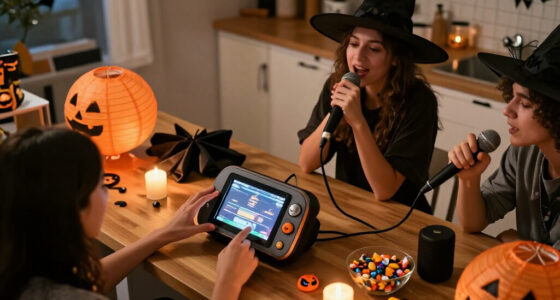
For most compact desks, I’d start with the ADAM Audio D3V: its dedicated desktop design makes it the strongest all-around choice in this group. The Edifier MR4 is a compelling alternative for buyers who want a straightforward near-field pair, while the PreSonus Eris 3.5 is a practical entry point with a small footprint. The main tradeoffs are desk space and low-frequency reach, studio-focused controls versus convenient Bluetooth, and how much you need to hear subtle mix details. Larger cabinets such as the Yamaha HS4 and PreSonus Eris 4.5BT may suit listeners who can give their speakers more room. Read on for the full breakdown and a guide to choosing the right pair for your setup.

Get audio and creator gear delivered free with Prime
- Fast, free delivery on millions of items
- Prime Video, Amazon Music and more included
- Member-only deals all year
Complete the kit


Key Takeaways
- The ADAM Audio D3V leads for desktop use because this roundup’s strongest overall pick is purpose-built for a compact listening position, rather than simply being a smaller version of a larger studio speaker.
- Four-inch models are not interchangeable: the Edifier MR4, Yamaha HS4, and Pioneer DJ DM-40D occupy similar size territory, but buyers should choose based on their priorities in studio-oriented listening, room fit, or DJ-focused use.
- The PreSonus Eris 3.5 family offers several routes into the same compact format. Choose among standard, Bluetooth, and white versions based on connectivity and appearance, not an assumption that color changes sound.
- Bluetooth is a convenience feature, not a substitute for a studio connection. The Bluetooth Eris models suit mixed-use desks, while buyers focused on production should give wired inputs and listening placement greater weight.
- Moving up to larger speakers costs desk space as well as money. The Eris 4.5BT and Yamaha HS4 make more sense when the desk and listening distance can accommodate them; a bigger cabinet cannot fix poor placement or an unsuitable room.
| PreSonus Eris 3.5 Powered Studio Monitors, Stereo Pair |  | Best Overall for Wired Desktop Setups | Speaker type: Active media reference monitors | Included quantity: Stereo pair | Amplification: 50 watts | VIEW LATEST PRICE | See Our Full Breakdown |
| PreSonus Eris 3.5 Bluetooth Powered Desktop Studio Monitors, 50W, Black (Pair) |  | Best for Bluetooth Convenience | Speaker type: Multimedia monitors | Included quantity: Pair | Power output: 50 watts | VIEW LATEST PRICE | See Our Full Breakdown |
| Edifier MR4 4-Inch Active Near-Field Studio Monitor Speakers | 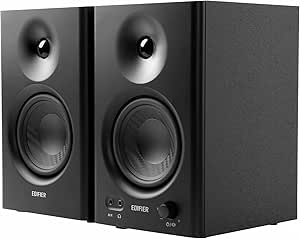 | Best for Larger Drivers and Listening Modes | Speaker type: Active studio monitor | Audio output mode: Stereo | Maximum output power: 42 watts | VIEW LATEST PRICE | See Our Full Breakdown |
| Mackie CR3.5 Powered Studio Monitors, Pair, 3.5-Inch Woofers, Black | 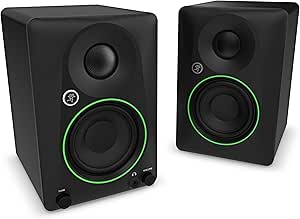 | Best for Placement Flexibility | Speaker type: Powered studio monitors | Included quantity: Pair | Maximum output power: 50 watts | VIEW LATEST PRICE | See Our Full Breakdown |
| PreSonus Eris 3.5 Powered Desktop Studio Monitors, Stereo Pair, 50W, White |  | Best White Finish Pick | Speaker type: Multimedia studio monitors | Included quantity: Stereo pair | Amplification: 50 watts total; 25 watts per side | VIEW LATEST PRICE | See Our Full Breakdown |
| ADAM Audio D3V Active Desktop Studio Monitor Speakers, Black |  | Best for Flexible Desktop Connectivity | Speaker type: Powered studio monitor pair | Woofer: 3.5-inch aluminum | Tweeter: 1.5-inch D-ART ribbon | VIEW LATEST PRICE | See Our Full Breakdown |
| Yamaha HS4 Powered Studio Monitors, Black, Pair |  | Best for Compact Wired Studio Setups | Speaker type: Powered studio monitor pair | Woofer: 4.5-inch cone | Tweeter: 1-inch dome | VIEW LATEST PRICE | See Our Full Breakdown |
| PreSonus Eris 4.5BT Bluetooth Powered Desktop Studio Monitors, Pair, Black |  | Best for Bluetooth and Everyday Listening | Speaker type: Powered desktop studio monitor pair | Woofer: 4.5-inch woven-composite | Tweeter: 1-inch silk dome | VIEW LATEST PRICE | See Our Full Breakdown |
| Yamaha HS3 Powered Studio Monitors, Black, Pair |  | Best for Small Desk Editing | Speaker type: Powered studio monitor pair | Woofer: 3.5-inch cone | Tweeter: 0.75-inch dome | VIEW LATEST PRICE | See Our Full Breakdown |
| Ortizan C7 Powered Studio Monitor Speakers, Pair, Black |  | Best Compact Multi-Source Pick | Speaker type: Powered studio monitor pair | Mid-bass driver: 3.5-inch carbon fiber | Tweeter: 0.75-inch silk dome | VIEW LATEST PRICE | See Our Full Breakdown |
| Pioneer DJ DM-40D 4-Inch Active Desktop Monitor Speakers, Pair, Black |  | Best for DJing and Production Mode Switching | Speaker type: Active monitor speakers | Quantity: Pair | Woofer diameter: 4 inches | VIEW LATEST PRICE | See Our Full Breakdown |
| desktop studio monitor speaker | Speaker type | Inputs |
|---|---|---|
| PreSonus Eris 3.5 Powered Stud | Active media reference monitors | Balanced TRS, RCA, front-panel aux |
| PreSonus Eris 3.5 Bluetooth Po | Multimedia monitors | Balanced TRS, RCA, aux |
| Edifier MR4 4-Inch Active Near | Active studio monitor | Balanced TRS, RCA, AUX |
| Mackie CR3.5 Powered Studio Mo | Powered studio monitors | RCA, TRS |
| PreSonus Eris 3.5 Powered Desk | Multimedia studio monitors | Balanced TRS, RCA, 1/8-inch stereo aux |
| ADAM Audio D3V Active Desktop | Powered studio monitor pair | USB-C, balanced 1/4-inch TRS |
| Yamaha HS4 Powered Studio Moni | Powered studio monitor pair | XLR/TRS combo, RCA, stereo mini |
| PreSonus Eris 4.5BT Bluetooth | Powered desktop studio monitor pair | 1/4-inch TRS balanced, RCA unbalanced, 1/8-inch TRS auxiliary |
| Yamaha HS3 Powered Studio Moni | Powered studio monitor pair | XLR/TRS combo, RCA, stereo mini |
| Ortizan C7 Powered Studio Moni | Powered studio monitor pair | — |
| Pioneer DJ DM-40D 4-Inch Activ | Active monitor speakers | — |
More Details on Our Top Picks
PreSonus Eris 3.5 Powered Studio Monitors, Stereo Pair
I rank this Eris 3.5 as the most balanced wired pick for a desktop studio because it pairs 50 watts of amplification with flexible connections and useful room tuning. Balanced TRS suits an audio interface, while RCA and front-panel aux make it easy to add consumer gear without changing speakers. The front headphone output is handy when late-night editing calls for private listening. Compared with the Bluetooth-equipped PreSonus Eris 3.5 Bluetooth, this version gives up wireless streaming but keeps the core wired setup simple. Its 3.5-inch woofers also cannot deliver the low-end reach of the larger Edifier MR4, so bass-heavy mixes may need headphones or a subwoofer. I’d choose it for a compact desk where connection flexibility matters more than Bluetooth.
Pros:- 50 watts of built-in amplification for a powered stereo setup
- Balanced TRS, RCA, and front-panel aux inputs accommodate different sources
- High- and low-frequency controls help tailor the sound to desk placement
- Front headphone output supports private monitoring
Cons:- 3.5-inch woofers limit deep-bass output compared with the Edifier MR4’s 4-inch drivers
- No Bluetooth connectivity
- Requires corded power
Best for: Desktop producers who connect an audio interface and want several wired inputs, room tuning, and a headphone jack in a compact stereo pair.
Not ideal for: Listeners who want wireless playback or strong deep bass from the monitors alone; the Bluetooth Eris 3.5 or larger-woofer options may suit them better.
- Speaker type:Active media reference monitors
- Included quantity:Stereo pair
- Amplification:50 watts
- Frequency response:80 Hz–20 kHz
- Drivers:3.5-inch woofer; 1-inch tweeter
- Inputs:Balanced TRS, RCA, front-panel aux
- Controls and output:High- and low-frequency tuning; front headphone output
- Dimensions:5.5 × 6 × 8.3 inches
Our verdict“Choose this wired Eris 3.5 pair for a flexible, space-conscious desktop setup; skip it if Bluetooth or substantial bass is a priority.”
PreSonus Eris 3.5 Bluetooth Powered Desktop Studio Monitors, 50W, Black (Pair)
The Eris 3.5 Bluetooth earns its place for desktop users who want wireless playback alongside studio-oriented connections. Bluetooth 5.0 makes quick listening from a phone or laptop easy, while TRS and RCA remain available for an interface or other wired source. Its 50-watt amplification, tuning controls, and headphone jack otherwise mirror the practical appeal of the wired PreSonus Eris 3.5. That convenience comes with a limitation: Bluetooth is useful for casual playback, but I’d use a wired connection for production work where consistent signal handling matters. Like the Mackie CR3.5, these use 3.5-inch woofers, so neither is a strong choice for deep bass without help. Pick this pair if switching between work audio and wireless personal listening matters more than larger drivers.
Pros:- Bluetooth 5.0 adds wireless streaming to a useful wired input selection
- 50-watt amplification in a compact stereo pair
- High- and low-frequency controls allow basic room adjustment
- Front headphone jack supports private listening
Cons:- 3.5-inch woofers provide limited deep-bass response
- Requires a constant corded power connection
- Bluetooth convenience does not replace a wired signal for production-focused listening
Best for: Home producers and desktop listeners who want Bluetooth for casual streaming but still need wired inputs for an interface or computer.
Not ideal for: Buyers seeking authoritative low bass or a battery-powered speaker; the small woofers and corded power make this a desk-bound option.
- Speaker type:Multimedia monitors
- Included quantity:Pair
- Power output:50 watts
- Drivers:3.5-inch woofer; 1-inch tweeter
- Bluetooth:Version 5.0; stated range 10 meters
- Inputs:Balanced TRS, RCA, aux
- Headphone output:Front headphone jack
- Dimensions:5.5 × 6 × 8.3 inches
Our verdict“Choose this Eris pair when wireless streaming is a useful extra to a wired desktop setup, but not when deep bass is the main goal.”
Edifier MR4 4-Inch Active Near-Field Studio Monitor Speakers
The Edifier MR4 is the lineup’s clearest choice for buyers who want 4-inch woofers and a switch between monitor and music modes. That larger driver gives it a more promising foundation for fuller desktop playback than the 3.5-inch PreSonus Eris 3.5 models, though the supplied data does not specify a frequency range, so I would not assume it replaces a subwoofer for bass-critical work. Its MDF enclosures are designed to reduce resonance, and the TRS, RCA, and AUX inputs cover common studio and everyday sources. Separate high- and low-frequency controls add placement flexibility. In exchange, the MR4 is wired-only: unlike the Bluetooth Eris, it cannot stream wirelessly. I’d favor it for a desk that prioritizes a larger woofer and selectable listening modes over Bluetooth convenience.
Pros:- 4-inch composite woofers are larger than the drivers in the Eris 3.5 and Mackie CR3.5
- Monitor and music modes suit both production and casual playback
- Balanced TRS, RCA, and AUX inputs support a range of wired sources
- MDF enclosures are designed to reduce resonance
Cons:- No wireless connectivity is specified
- No frequency response range is provided in the product data
- Not waterproof
Best for: Desktop creators who want 4-inch woofers, wired studio connections, and separate monitor and music modes for work and everyday listening.
Not ideal for: Buyers who need Bluetooth, water resistance, or a stated low-frequency extension to guide bass-critical monitor selection.
- Speaker type:Active studio monitor
- Audio output mode:Stereo
- Maximum output power:42 watts
- Drivers:4-inch woofer; 1-inch silk dome tweeter
- Enclosure:MDF wood
- Inputs:Balanced TRS, RCA, AUX
- Modes:Monitor and music
- Output:Front headphone output
- Signal-to-noise ratio:85 dB
Our verdict“Choose the MR4 if larger drivers and selectable listening modes matter more than Bluetooth or a published frequency range.”
Mackie CR3.5 Powered Studio Monitors, Pair, 3.5-Inch Woofers, Black
The Mackie CR3.5 stands out for its location switch, which lets desk users adapt bass response for desktop or bookshelf placement. That makes it a more placement-focused choice than the PreSonus Eris 3.5, whose high- and low-frequency controls offer broader tonal adjustment instead. A tone knob provides a quick way to shift the sound for reference work or casual listening, and the included isolation pads and cables reduce the number of setup extras to source. The tradeoff is a more limited stated connection set: the listed inputs are RCA and TRS, while the Eris also includes front aux and a headphone output. Its 3.5-inch woofers share the same basic bass limitation as the compact Eris pair. I’d pick the Mackie when placement adaptability and included accessories matter most.
Pros:- Location switch adapts bass response for desktop or bookshelf placement
- Tone knob allows quick sound adjustment
- Includes foam isolation pads and connection cables
- Compact stereo pair suits desks and small studios
Cons:- 3.5-inch woofers limit bass output compared with larger-driver monitors such as the Edifier MR4
- Listed inputs are limited to RCA and TRS, with no headphone output specified
- One-year warranty is specified
Best for: Desktop users who may move their monitors between a desk and bookshelf and want included isolation pads and connection cables.
Not ideal for: Producers who need a front headphone jack, an aux input, or more detailed room tuning than a tone knob and placement switch provide.
- Speaker type:Powered studio monitors
- Included quantity:Pair
- Maximum output power:50 watts
- Drivers:3.5-inch woofer; 1-inch tweeter
- Inputs:RCA, TRS
- Sound and placement controls:Tone knob; desktop/bookshelf location switch
- Included accessories:Isolation pads, speaker wire, 1/8-inch-to-1/8-inch cable, 1/8-inch-to-RCA cable
- Dimensions:7.1 × 5.5 × 8.1 inches
- Warranty:One year
Our verdict“Choose the CR3.5 for flexible placement and included setup accessories, but look elsewhere if you need a headphone jack or larger woofers.”
PreSonus Eris 3.5 Powered Desktop Studio Monitors, Stereo Pair, 50W, White
This white Eris 3.5 offers the same practical desktop formula as the black wired PreSonus Eris 3.5: 50 watts, TRS/RCA/aux inputs, tuning controls, and a front headphone output. Its defining difference is the white finish, making it a straightforward match for a light-colored desk or studio without giving up the wired connectivity that suits an interface-based setup. Against the PreSonus Eris 3.5 Bluetooth, it skips wireless playback; against the 4-inch Edifier MR4, it gives up woofer size and the monitor/music mode switch. The stated 80 Hz–20 kHz range sets a clear expectation, but compact 3.5-inch drivers still leave limited low-end output. I’d choose this version when the color fits the workspace and its familiar wired feature set is enough.
Pros:- White finish suits light-colored desk and studio setups
- 50 watts total amplification in a stereo pair
- TRS, RCA, and 1/8-inch aux inputs support varied sources
- High- and low-frequency tuning plus front headphone output
Cons:- 3.5-inch woofers may not provide enough low-frequency output for bass-focused work
- No Bluetooth connectivity
- Not water resistant
Best for: Desktop producers building a light-colored workspace who want a compact, wired stereo pair with multiple inputs and a front headphone output.
Not ideal for: Buyers who need Bluetooth, deeper bass from larger drivers, or a monitor/music mode switch like the Edifier MR4 offers.
- Speaker type:Multimedia studio monitors
- Included quantity:Stereo pair
- Amplification:50 watts total; 25 watts per side
- Frequency range:80 Hz–20 kHz
- Drivers:3.5-inch woofer; 1-inch tweeter
- Inputs:Balanced TRS, RCA, 1/8-inch stereo aux
- Controls and output:High- and low-frequency tuning; front-panel 1/8-inch headphone output
- Color:White
Our verdict“Choose the white Eris 3.5 for a coordinated desktop setup with flexible wired connections, not for wireless playback or deep bass.”
ADAM Audio D3V Active Desktop Studio Monitor Speakers, Black
The ADAM Audio D3V is the most connection-flexible pick here for a desktop setup that moves between computer playback and analog studio gear. Its USB-C input can connect directly to a computer or compatible mobile device, while balanced TRS inputs accommodate audio interfaces and other analog sources. Compared with the Yamaha HS4, the D3V offers direct USB-C playback and a ribbon tweeter, plus a stated low-frequency limit of 45 Hz rather than the HS4’s 60 Hz. That reach may help with bass-heavy editing, though it does not replace a subwoofer for checking very deep bass. The angled stands and placement switches are useful on a desk, but the listed dimensions point to a comparatively substantial footprint. I’d choose it for connectivity and placement options, not for a tiny workspace.
Pros:- USB-C supports direct playback from compatible computers and mobile devices.
- Balanced TRS inputs connect to audio interfaces and other analog equipment.
- Placement adjustment switches and angled stands help adapt the speakers to a desktop.
- 3/8-inch microphone stand mounting points add placement flexibility beyond a tabletop.
Cons:- The listed dimensions indicate a relatively large desktop footprint.
- Corded electric power limits placement to locations near an outlet.
- A stated response down to 45 Hz still does not provide subwoofer-level deep bass.
Best for: Desktop producers and editors who want direct USB-C playback alongside balanced analog connections and adjustable speaker placement.
Not ideal for: Buyers with very shallow or crowded desks, or anyone who needs a small speaker footprint and does not need USB-C or stand-mount options.
- Speaker type:Powered studio monitor pair
- Woofer:3.5-inch aluminum
- Tweeter:1.5-inch D-ART ribbon
- Amplifier power:80 W
- Frequency response:Down to 45 Hz
- Inputs:USB-C, balanced 1/4-inch TRS
- Mounting:Tabletop or microphone stand
- Dimensions:12.25 × 12.25 × 8.5 inches (D × W × H)
Our verdict“Choose the D3V if you want USB-C and balanced studio connections in one desktop pair and have room for its larger footprint.”
Yamaha HS4 Powered Studio Monitors, Black, Pair
The Yamaha HS4 suits buyers who want a conventional wired monitor pair with room controls and more input choices than a bare-bones desktop setup. Its XLR/TRS combo, RCA, and stereo mini inputs make it easier to connect an interface, consumer audio source, or computer output without relying on one connection type. Compared with the smaller Yamaha HS3, the HS4 has a 4.5-inch woofer rather than a 3.5-inch unit, which gives it a more suitable starting point for listeners who want fuller low-mid output, though the stated response still falls away below 60 Hz. Room control and high trim controls can help tailor playback to a desk or nearby wall. The tradeoff is the listed 26-watt maximum output and no wireless input; the PreSonus Eris 4.5BT is a better fit if Bluetooth matters.
Pros:- XLR/TRS combo, RCA, and stereo mini inputs suit a mix of studio and consumer sources.
- Room control and high trim settings allow response adjustments for the listening position.
- The 4.5-inch woofer is larger than the HS3’s 3.5-inch driver.
- Included cables and anti-slip pads help with basic desktop setup.
Cons:- Maximum output power is listed as 26 watts.
- No Bluetooth or other wireless connectivity is specified.
- Frequency response is listed down to 60 Hz at -10 dB, limiting deep-bass monitoring.
Best for: Home-studio users and video editors who need a compact wired pair with connections for an interface, RCA source, and stereo-mini device.
Not ideal for: Buyers who want Bluetooth playback, high output for a large room, or strong low-bass extension without a subwoofer.
- Speaker type:Powered studio monitor pair
- Woofer:4.5-inch cone
- Tweeter:1-inch dome
- Maximum output power:26 W
- Frequency response:60 Hz–22 kHz (-10 dB)
- Inputs:XLR/TRS combo, RCA, stereo mini
- Controls:Room control and high trim
- Included accessories:Anti-slip pads, 2.5 m speaker cable, 1.5 m stereo mini-to-RCA cable
Our verdict“Pick the HS4 for a flexible wired desktop setup with room controls, but choose the Eris 4.5BT if wireless playback is a priority.”
PreSonus Eris 4.5BT Bluetooth Powered Desktop Studio Monitors, Pair, Black
The PreSonus Eris 4.5BT is the easiest fit in this group for a desk that serves both creative work and casual listening. Bluetooth 5.0 adds wireless playback, while balanced TRS, RCA, and front-panel auxiliary inputs keep wired sources available. That versatility sets it apart from the wired-only Yamaha HS4; the HS4’s listed 60 Hz low end is also lower than the Eris 4.5BT’s 70 Hz, so neither should be treated as a substitute for a subwoofer when checking deep bass. Acoustic tuning controls let you adjust high and low frequencies, and the headphone output supports private monitoring without reaching behind the speakers. The 4.5-inch woofers and 50 watts total power make this a flexible desktop pair, but Bluetooth convenience does not make it a dedicated wireless speaker: it still needs corded power.
Pros:- Bluetooth 5.0 enables wireless playback from compatible devices.
- Balanced TRS, RCA, and front-panel auxiliary inputs cover several wired sources.
- High- and low-frequency controls allow adjustment for the room.
- Front headphone output supports private listening from the desk.
Cons:- Listed frequency response begins at 70 Hz, so deep bass monitoring may call for a subwoofer.
- Requires corded electric power despite its Bluetooth connectivity.
- USB-C input is not listed for direct computer playback.
Best for: Desktop creators who alternate between wired editing or production and Bluetooth music, gaming, or video playback.
Not ideal for: Users who need deeper bass for mix decisions, a battery-powered speaker, or a setup built around USB-C direct audio.
- Speaker type:Powered desktop studio monitor pair
- Woofer:4.5-inch woven-composite
- Tweeter:1-inch silk dome
- Power:50 W total; 25 W per speaker
- Frequency response:70 Hz–20 kHz
- Bluetooth:Version 5.0
- Inputs:1/4-inch TRS balanced, RCA unbalanced, 1/8-inch TRS auxiliary
- Outputs:Front-panel headphone output
Our verdict“Choose the Eris 4.5BT for a desktop that needs Bluetooth convenience and wired flexibility, rather than the HS4’s more studio-focused low-end reach.”
Yamaha HS3 Powered Studio Monitors, Black, Pair
For a crowded desk, the Yamaha HS3 keeps the basic appeal of Yamaha’s HS line in a smaller two-way pair. Its 3.5-inch woofers take up less space than the HS4’s 4.5-inch drivers, making the HS3 a more practical choice when monitor placement competes with a keyboard, display, or other gear. XLR/TRS combo, RCA, and stereo mini inputs give it broad wired compatibility, while room control and high trim response settings offer some adjustment for desk placement. Compared with the Ortizan C7, the HS3 gives up Bluetooth but lists a 70 Hz–22 kHz response range and includes cables and anti-slip pads. Neither is a deep-bass solution, and the HS3’s 26-watt output and modest woofer size make it better suited to near-field editing than filling a large room. I’d skip it if wireless playback is part of the brief.
Pros:- Compact 3.5-inch woofer design suits limited desktop space.
- XLR/TRS combo, RCA, and stereo mini inputs support varied wired sources.
- Room control and high trim response controls allow basic placement adjustments.
- Includes speaker and stereo mini-to-RCA cables plus anti-slip pads.
Cons:- No wireless connectivity is specified.
- The 70 Hz lower response limit offers limited deep-bass information.
- Listed output power is 26 watts, making it a modest-output option.
Best for: Video editors, music learners, and home-studio users who need a wired monitor pair that fits a limited desk and connects to common audio sources.
Not ideal for: Listeners who want Bluetooth, stronger bass extension, or enough output to serve as speakers across a large room.
- Speaker type:Powered studio monitor pair
- Woofer:3.5-inch cone
- Tweeter:0.75-inch dome
- Output power:26 W
- Frequency response:70 Hz–22 kHz (-10 dB)
- Inputs:XLR/TRS combo, RCA, stereo mini
- Enclosure material:Wood
- Included accessories:Stereo mini–RCA cable, 2.5 m speaker cable, anti-slip pads
Our verdict“Pick the HS3 when desk space and flexible wired inputs matter more than Bluetooth or fuller bass from a larger monitor.”
Ortizan C7 Powered Studio Monitor Speakers, Pair, Black
The Ortizan C7 packs several ways to connect a desktop setup into a compact pair: Bluetooth 5.3, USB, RCA, AUX, and balanced TRS are listed, along with a front headphone output. That breadth makes it more adaptable for mixed computer, phone, gaming, and studio-source use than the Yamaha HS3, which offers wired inputs but no wireless connection. The C7’s 3.5-inch carbon fiber mid-bass driver, silk-dome tweeter, and 24-bit DAC are aimed at balanced desktop playback, but the provided specifications do not state power or frequency response. Buyers seeking clearly documented output and bass limits may prefer the Yamaha or the ADAM Audio D3V, whose response is specified down to 45 Hz. The C7’s small dimensions help on tight desks, though that compact form may not suit listeners wanting larger-scale output.
Pros:- Bluetooth 5.3 and USB expand playback options beyond wired analog inputs.
- Balanced TRS, RCA, and AUX support studio and consumer sources.
- 24-bit DAC and two-way driver design are specified for desktop playback.
- Front headphone output provides convenient private listening.
Cons:- Power output and frequency response are not provided in the supplied specifications.
- Compact dimensions may not suit buyers seeking larger-scale sound or output.
- Requires corded electric power despite Bluetooth support.
Best for: Desktop and gaming users who want a compact pair with Bluetooth, USB, balanced TRS, and a front headphone connection for multiple source types.
Not ideal for: Critical mix engineers who need published frequency-response and power figures, or listeners who want a larger speaker for stronger room-filling output.
- Speaker type:Powered studio monitor pair
- Mid-bass driver:3.5-inch carbon fiber
- Tweeter:0.75-inch silk dome
- DAC:24-bit
- Connectivity:Bluetooth 5.3, USB, RCA, 3.5 mm AUX, 6.35 mm TRS
- Additional connection:Front headphone output
- Dimensions:5.11 × 5.9 × 7.67 inches
- Power source:Corded electric
Our verdict“Choose the C7 for compact, multi-source desktop playback, but favor a monitor with published response and power figures for more specification-led mixing decisions.”
Pioneer DJ DM-40D 4-Inch Active Desktop Monitor Speakers, Pair, Black
The Pioneer DJ DM-40D suits desktop users who want one compact pair for both DJ practice and music production. Its switchable DJ and Production sound modes let you choose a tuning geared toward each task, rather than keeping the same presentation for mixing and casual playback. Compared with the Edifier MR4, the DM-40D puts more emphasis on this DJ-to-production flexibility; both use 4-inch woofers, so neither is a large-room solution.
Built-in amplification, RCA and mini-jack inputs, a front headphone socket, and a level knob make setup and everyday adjustments straightforward. The tradeoff is wired-only connectivity, with no Bluetooth option like some Eris models. Its compact tabletop format works well in a small DJ or production station, but buyers seeking broader low-frequency reach or a more expansive mixing setup should look at larger monitors such as the Yamaha HS4.
Pros:- Switchable DJ and Production modes adapt the sound presentation to different desktop tasks.
- Built-in amplification avoids the need for a separate amplifier.
- RCA and mini-jack inputs support common wired audio sources.
- Front headphone socket and level knob make listening changes and volume adjustments convenient.
Cons:- Wired-only connectivity does not support Bluetooth playback.
- Four-inch woofers are better suited to near-field desktop use than larger rooms or bass-heavy monitoring needs.
- Not water resistant.
Best for: Desktop DJs who also make music and want compact powered monitors with task-specific sound modes and easy headphone access.
Not ideal for: Buyers who need wireless playback, water resistance, or monitors for a larger room with more low-frequency output.
- Speaker type:Active monitor speakers
- Quantity:Pair
- Woofer diameter:4 inches
- Tweeter diameter:19 millimeters
- Sound modes:DJ and Production
- Connectivity:RCA, mini-jack, auxiliary
- Power source:Corded electric
- Mounting type:Tabletop
- Warranty:1-year limited manufacturer warranty
Our verdict“Choose the DM-40D if you want compact desktop monitors for both DJ practice and production, but skip it if wireless playback or stronger low-frequency reach is a priority.”
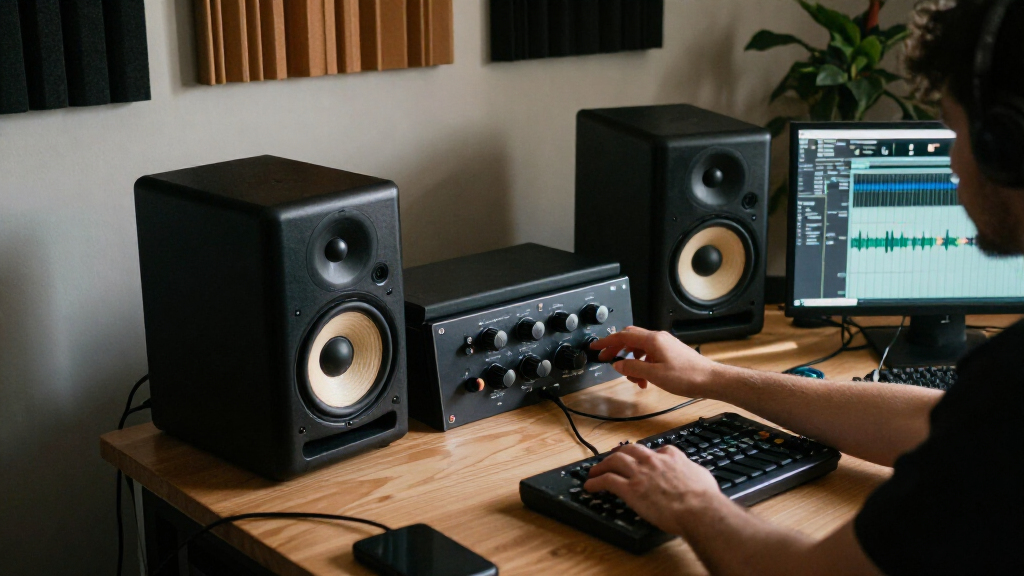
How We Picked
I ranked these desktop studio monitor speakers by how well their size, connection options, and intended use fit a close listening position. I weighed practical desk fit, suitability for music production and editing, ease of connecting common sources, and the tradeoff between compact cabinets and fuller low-frequency output. Build and usability mattered too: a useful desktop pair should be manageable to set up and operate without demanding more space or complexity than its likely buyer wants.
The order reflects how well each model balances those needs, not a claim that every listener needs the same sound or features. The D3V takes the overall lead for its desktop-first role; the MR4 and Eris 3.5 options follow as approachable compact alternatives with different priorities. Larger pairs rank lower for a small-desk brief, while Bluetooth, DJ use, and distinctive tuning can make models such as the Eris 4.5BT, DM-40D, and Yamaha HS speakers better fits for specific buyers. I treat closely related Eris versions as separate choices because their connectivity and appearance can change what makes sense for a given setup.
Factors to Consider When Choosing Desktop Studio Monitor Speakers
Choosing desktop monitors is less about picking the largest specification and more about matching the speaker to your desk, listening distance, and everyday workflow. I’d settle these broader questions before choosing between models:
Match Cabinet Size to Your Desk and Listening Distance
Measure the usable desk area before comparing speaker dimensions, including space for a screen, keyboard, and stands or isolation pads. A speaker that sits too close to a wall or crowds the listening position can be harder to place well than a smaller pair. Compact models are often the sensible choice for a near-field setup, but their cabinets may not deliver the same low-frequency weight as larger designs. Moving up a size only helps when the desk and listening distance can accommodate it. If you need more bass for production, consider whether headphones or a separate subwoofer would fit your workflow better than oversized monitors. I’d prioritize a workable listening triangle over buying the biggest pair that can physically fit.
Decide Whether You Need Studio Connections or Everyday Convenience
List the devices you’ll connect before choosing a model: an audio interface, computer, phone, game console, or DJ controller may call for different inputs. Bluetooth can make casual listening and phone playback easy, but it adds convenience rather than improving a wired production signal. Buyers who switch between sources should check how inputs are selected and whether the needed cables are included or must be bought separately. A common mistake is choosing wireless features first, then finding that the desired studio connection is awkward or unavailable. If your monitors will mostly serve one computer through an interface, dependable wired connectivity may be more useful than Bluetooth. For a shared desk, flexible connections can justify giving up a few studio-focused conveniences.
Set Realistic Expectations for Bass in a Small Room
Small desktop monitors cannot reproduce very deep bass with the same authority as larger systems, and room placement can make perceived bass uneven even when a speaker has more capable hardware. That matters when mixing kick drums, bass instruments, or sound effects, because a desk can exaggerate or reduce certain frequencies. Avoid judging a speaker’s bass by cabinet size alone; listen at your intended distance and check mixes on headphones or another playback system. A subwoofer may extend the low end, but it also takes space and needs careful level and placement adjustment. If your work depends on accurate low-frequency decisions, room treatment and cross-checking may matter more than moving from a compact pair to a slightly larger one. For general editing and everyday listening, compact bass limits may be an acceptable tradeoff.
Treat Controls and Room Adjustment as Part of the Setup
Desktop placement can put speakers close to walls, corners, or reflective screens, so any available tuning controls can help adapt a pair to its surroundings. Before buying, check whether adjustments are on the front or rear and whether you can reach them once the speakers are installed. Rear controls may be fine for a fixed setup but frustrating if you often switch between listening positions. Do not expect built-in controls to correct every room or placement problem; moving the speakers and reducing nearby reflections can have a larger effect. New buyers often spend time comparing driver sizes while overlooking whether the controls are practical for their desk. Think about the setup you can maintain day to day, not only the features listed on a spec sheet.
Choose for Your Main Task, Not a Label
“Studio monitor” does not mean every pair will suit every kind of production or listening. A beginner editing podcasts may value simple connections and compact dimensions more than subtle mix scrutiny, while a music producer may place greater weight on consistent near-field listening and repeatable setup. DJ practice can call for a different balance of convenience and everyday playback than critical mixing. Decide which task takes most of your time, then treat secondary uses as bonuses rather than letting them drive the whole purchase. A speaker with extra wireless features may be a good shared-desk choice but needlessly complicated for a fixed interface setup. Matching the speaker’s role to your actual work is a better reason to pay more than choosing based on a professional-sounding label.
Pay More Only When the Upgrade Solves a Real Limitation
Extra spending makes sense when it addresses a clear problem, such as needing more connection flexibility, a larger listening setup, or a speaker built around desktop placement. It is less useful when your main limitation is poor positioning, a noisy room, or an untreated desk area. Before upgrading, write down what your current or prospective setup cannot do: connect the needed source, fit beside your display, or support your intended listening task. Then compare models against that specific need instead of assuming a higher tier automatically brings a better result for every buyer. Also account for supporting purchases such as cables, stands, and isolation pads when planning the system. For many compact desks, a well-placed entry-level pair is a better decision than paying for size or features that will go unused.
Frequently Asked Questions
Are Bluetooth studio monitors suitable for making music?
They can be convenient for casual playback, but I would use a wired connection for production whenever possible. Bluetooth adds a wireless link that can introduce latency, which may be distracting when recording or monitoring in time with a session. It can also make source switching and troubleshooting less straightforward than a direct cable connection. If you choose a Bluetooth model for a shared desk, check that it also supports the wired setup you plan to use with your computer or audio interface. Treat wireless playback as an added convenience rather than the main reason to choose studio monitors.
Should I choose a 3.5-inch or 4-inch pair for a small desk?
Start with the space around your screen and the distance from the speakers to your listening position, not the driver size alone. A 3.5-inch pair is often easier to fit into a very tight setup, while a 4-inch model may suit a desk with more room and a little more listening distance. Larger drivers do not automatically mean a better match if the speakers must sit too close to a wall or crowd your work area. If low bass is your main concern, neither size guarantees that your room will reproduce it accurately. Check the cabinet dimensions and plan the placement before deciding that a larger pair is the right upgrade.
Can I use desktop studio monitors without an audio interface?
Often, yes, but it depends on the monitor’s inputs and the output available on your computer or source. Some buyers can connect directly with a suitable cable, while others may need an interface or another adapter to match the connections correctly. An interface is useful for music production because it can provide convenient inputs and outputs, but it is not automatically required just to hear computer audio. Check the connection types on both devices before ordering cables, especially if you plan to connect more than one source. Avoid assuming that a product labeled “powered” includes every cable or connection needed for your setup.
Do I need a subwoofer with compact studio monitors?
Not necessarily: a compact pair may be enough for editing, practice, and general listening if you do not need strong deep-bass output. A subwoofer can add low-frequency extension, but it also takes up room and needs level and placement adjustments to blend with the main speakers. For mixing, adding bass without checking the setup can lead to decisions that do not translate well elsewhere. I’d first learn how your monitors sound in their actual desk position and cross-check bass-heavy material on headphones or another playback system. Add a sub only when you can identify a real low-frequency limitation and have space to set it up properly.
Which features should a beginner prioritize over extra power?
I’d put an easy-to-understand wired connection, manageable cabinet size, and practical controls ahead of a power figure on its own. A beginner benefits most from speakers that fit the listening position and are simple to connect to the computer or interface already in use. Bluetooth may be handy, but it does not replace learning consistent speaker placement or checking mixes on other systems. Also confirm whether the pair includes the cables you need, since missing connections can complicate setup. Once the basics work well, room adjustment features or a larger cabinet may be worthwhile if they solve a specific limitation.
Conclusion
For a single recommendation, I’d choose the ADAM Audio D3V as the best overall fit for a desktop-focused setup. The Edifier MR4 is my best value-style pick for buyers who want a compact, studio-oriented pair without prioritizing wireless extras, while the PreSonus Eris 3.5 is the best beginner choice for a straightforward entry into near-field listening. If you want a more premium desktop-focused option, consider the D3V; if your desk can handle a larger pair and Bluetooth matters, the Eris 4.5BT is a more fitting specific-use choice. For DJ practice, compare the Pioneer DJ DM-40D with the studio-first models, and choose the Yamaha HS3 or HS4 only if their size and studio-monitor role suit your space. The best pick is the one that fits your desk, connections, and main task—not simply the largest model on the list.