
Wireless DJ headphones can cut cable clutter during practice, but wireless delay and connection type matter more for cueing than everyday listening features. My best overall pick is the AlphaTheta HDJ-F10, which is designed around DJ use with SonicLink and noise cancelling; the HDJ-F10-TX adds its transmitter for a more complete low-latency setup. For a modular alternative, the AIAIAI TMA-2 DJ Wireless stands out, while the OneOdio Studio Max 1 offers both wireless and wired listening. The main tradeoffs are cueing latency, dependable wired backup, isolation, and whether a transmitter is included. Read on for how these ten options differ and which one fits your setup.

Get audio and creator gear delivered free with Prime
- Fast, free delivery on millions of items
- Prime Video, Amazon Music and more included
- Member-only deals all year
Complete the kit


Key Takeaways
- The AlphaTheta HDJ-F10 models lead this lineup for DJ-focused wireless use; the TX version bundles a transmitter, while the standard version leaves that part of the setup to the buyer.
- AIAIAI TMA-2 DJ Wireless and OneOdio Studio Max 1 offer different kinds of flexibility: AIAIAI is modular, while OneOdio combines wireless listening with a wired mode.
- Bluetooth convenience is not the same as low-latency cueing; the HDJ-CUE1BT and OneOdio A70 make more sense for practice and general listening than latency-sensitive mixing.
- The wired Pioneer HDJ-X5 and HDJ-CUE1 avoid wireless delay altogether, making them sensible picks when a cable matters more than wireless freedom.
- The AYVVPII silent-disco set serves a distinct group-listening purpose, while the PUPGSIS PG-MXPRO needs closer scrutiny for DJ workflow and connection details.
| AIAIAI TMA-2 DJ Wireless Over-Ear Headphones, Black |  | Best for Low-Latency Wireless Mixing | Connectivity: W+ Link and Bluetooth | Audio latency: 10 ms | Battery life: More than 25 hours | VIEW LATEST PRICE | See Our Full Breakdown |
| AYVVPII Silent Disco Wireless LED Headphones with UHF Transmitter, 2 Headphones |  | Best for Shared Silent-DJ Events | Wireless technology: UHF RF | Included items: Two headphones and one transmitter | Audio input: 3.5 mm jack or RCA | VIEW LATEST PRICE | See Our Full Breakdown |
| Pioneer DJ HDJ-X5 Professional DJ Headphones, Black |  | Best for Traditional Wired Club Monitoring | Connectivity: Wired; no wireless connectivity specified | Driver size and type: 40 mm dynamic | Frequency response: Up to 30,000 Hz | VIEW LATEST PRICE | See Our Full Breakdown |
| Pioneer DJ HDJ-CUE1BT On-Ear Bluetooth DJ Headphones |  | Best Hybrid Pick for Travel | Connectivity: Bluetooth and wired | Cable: 1.2 m coiled; 1.8 m extended | Ear placement: On-ear | VIEW LATEST PRICE | See Our Full Breakdown |
| Pioneer DJ HDJ-CUE1 On-Ear Wired DJ Headphones, Foldable, Dark Silver |  | Best Entry-Level Wired Cueing Pick | Connectivity: Wired | Ear placement: On-ear | Weight: 215 g | VIEW LATEST PRICE | See Our Full Breakdown |
| PUPGSIS PG-MXPRO Wireless DJ Headphones |  | Best for Flexible Connections | Wireless modes: 2.4 GHz and Bluetooth 5.3 | Wired connection: 3.5 mm AUX; 6.35 mm adapter included | Latency: 20 ms in 2.4 GHz mode | VIEW LATEST PRICE | See Our Full Breakdown |
| OneOdio Studio Max 1 Wireless DJ and Wired Studio Headphones |  | Best for Long Sessions | Driver size: 50 mm | Wireless connectivity: Bluetooth; Bluetooth version listed as 5.2 in product details and 5.3 in description | Wired connectivity: 3.5 mm and 6.35 mm | VIEW LATEST PRICE | See Our Full Breakdown |
| AlphaTheta HDJ-F10 Wireless DJ Headphones with SonicLink and Noise Cancelling |  | Best for Low-Latency Monitoring | Driver size and type: 40 mm dynamic; PEEK drivers | Connectivity: SonicLink, Bluetooth, and wired | SonicLink latency: 9 ms | VIEW LATEST PRICE | See Our Full Breakdown |
| AlphaTheta HDJ-F10-TX Wireless DJ Headphones with SonicLink Transmitter |  | Best Complete Wireless DJ Kit | Included transmitter: HP-TX01 | Wireless technology: SonicLink and Bluetooth | SonicLink latency: 9 ms | VIEW LATEST PRICE | See Our Full Breakdown |
| OneOdio A70 Bluetooth Over-Ear Headphones, Black |  | Best for Bluetooth and Wired Flexibility | Driver size: 40 mm neodymium | Connectivity: Bluetooth, 3.5 mm, and 6.35 mm wired | Bluetooth version: 5.3 | VIEW LATEST PRICE | See Our Full Breakdown |
| wireless DJ headphone | Connectivity | Battery life | Weight | Warranty |
|---|---|---|---|---|
| AIAIAI TMA-2 DJ Wireless Over- | W+ Link and Bluetooth | More than 25 hours | 217 g | — |
| AYVVPII Silent Disco Wireless | — | Up to 10 hours | — | — |
| Pioneer DJ HDJ-X5 Professional | Wired; no wireless connectivity specified | — | 2.1 pounds | 1 year limited |
| Pioneer DJ HDJ-CUE1BT On-Ear B | Bluetooth and wired | — | 250 g | — |
| Pioneer DJ HDJ-CUE1 On-Ear Wir | Wired | — | 215 g | 1 year manufacturer |
| PUPGSIS PG-MXPRO Wireless DJ H | — | Up to 60 hours Bluetooth; up to 30 hours 2.4 GHz | — | 1 year |
| OneOdio Studio Max 1 Wireless | — | Up to 120 hours Bluetooth; up to 50 hours with dongle | — | — |
| AlphaTheta HDJ-F10 Wireless DJ | SonicLink, Bluetooth, and wired | Up to 9 hours SonicLink; up to 30 hours Bluetooth | 2.2 pounds | 2 years |
| AlphaTheta HDJ-F10-TX Wireless | — | Up to 9 hours SonicLink; up to 30 hours Bluetooth | 2.3 pounds | 2 years |
| OneOdio A70 Bluetooth Over-Ear | Bluetooth, 3.5 mm, and 6.35 mm wired | — | — | 24 months |
More Details on Our Top Picks
AIAIAI TMA-2 DJ Wireless Over-Ear Headphones, Black
The AIAIAI TMA-2 DJ Wireless is the clearest fit here for DJs who want to move around without giving up a connection designed for mixing. Its 10 ms W+ Link audio latency is a more DJ-focused wireless feature than the Bluetooth listening offered by the Pioneer DJ HDJ-CUE1BT, while Bluetooth remains available for everyday playback. A battery life of more than 25 hours also gives it a substantial advantage over the AYVVPII silent-disco set’s stated 10 hours per charge.
The modular, replaceable parts help make this a more adaptable long-term choice, and its 217 g listed weight keeps the build light. The tradeoffs are its premium, specialized wireless setup and a fit caveat: the product data describes memory foam isolation cushions, but also notes that the cushions may feel on-ear to some people despite the over-ear listing. Choose a wired model if you want a straightforward cable-first setup.
Pros:- W+ Link is specified at 10 ms latency for wireless DJ mixing.
- More than 25 hours of battery life supports extended use between charges.
- Bluetooth and app-based EQ add flexibility for everyday listening.
- Lightweight modular construction allows parts to be replaced.
Cons:- The cushion fit may feel on-ear to some users despite the over-ear listing.
- The wireless mixing feature set is more specialized than a basic wired DJ setup.
- The 217 g listing may not capture the fit preferences of DJs who need larger earcups.
Best for: DJs who want low-latency wireless cueing for mixing, long battery life, and replaceable headphone parts.
Not ideal for: DJs who prefer a simple wired connection or need a guaranteed spacious over-ear fit, since the cushion fit may not suit everyone.
- Connectivity:W+ Link and Bluetooth
- Audio latency:10 ms
- Battery life:More than 25 hours
- Driver size and type:40 mm dynamic
- Fit:Over-ear
- Weight:217 g
- Impedance:32 ohm
- Noise control:Sound isolation
Our verdict“Choose the TMA-2 DJ Wireless if low-latency cable-free mixing matters more than a simple wired setup.”
AYVVPII Silent Disco Wireless LED Headphones with UHF Transmitter, 2 Headphones
The AYVVPII Silent UHF9-series serves a different purpose from the individual DJ headphones in this roundup: it comes with two headphones and one UHF transmitter, making it a practical bundle for silent parties, group sessions, or shared audio. Its transmitter accepts 3.5 mm or RCA output, so it can connect to common audio sources without relying on Bluetooth pairing. The advertised range of about 500 m is useful for events where listeners may be spread across a venue, though real-world conditions can affect wireless range.
This is not the best choice for a DJ who wants a personal, portable mixing headset. The AIAIAI TMA-2 DJ Wireless is more directly equipped for individual wireless mixing, with its specified 10 ms W+ Link latency and longer battery life. The AYVVPII instead prioritizes multiple listeners and transmitter-based broadcasting. Its up to 10 hours of battery life is also shorter than the AIAIAI’s, and the headphones are not water resistant.
Pros:- Includes two headphones and a UHF transmitter.
- Transmitter accepts 3.5 mm and RCA audio outputs.
- Advertised transmission range is about 500 m.
- Rechargeable headphones provide up to 10 hours of use per charge.
Cons:- The 10-hour maximum battery life is shorter than the AIAIAI TMA-2 DJ Wireless specification.
- The shared transmitter system is less suited to a single DJ’s individual mixing workflow.
- The headphones are not water resistant.
Best for: Event hosts, instructors, or DJs running silent-disco sessions who need two wireless headsets and a transmitter in one system.
Not ideal for: Solo club DJs seeking low-latency personal cueing, or anyone who needs headphones suitable for outdoor use in wet conditions.
- Wireless technology:UHF RF
- Included items:Two headphones and one transmitter
- Audio input:3.5 mm jack or RCA
- Advertised transmission range:About 500 m
- Battery life:Up to 10 hours
- Charge time:3 hours
- Fit:Over-ear
- Water resistance:Not water resistant
Our verdict“Pick the AYVVPII system for shared silent-audio events, not as a personal wireless DJ mixing headset.”
Pioneer DJ HDJ-X5 Professional DJ Headphones, Black
The Pioneer DJ HDJ-X5 is the lineup’s wired workhorse: its passive isolation, swivel earcups, and 40 mm drivers suit cueing in loud environments without adding wireless complexity. The rotating cups support one-ear monitoring, a familiar advantage behind the decks. Its durability claims also stand out, with the design described as having passed the US Military Standard Shock test.
That wired focus is also the main reason to choose carefully. Unlike the AIAIAI TMA-2 DJ Wireless or the Bluetooth-capable Pioneer DJ HDJ-CUE1BT, the HDJ-X5 has no wireless connectivity specified, so it cannot provide cable-free listening. The listed weight of 2.1 pounds is also much heavier than the 250 g HDJ-CUE1BT listing, which may make long sessions less comfortable. It makes the most sense for DJs who value a straightforward wired signal and durable monitoring over mobility.
Pros:- Passive noise isolation helps with monitoring in loud environments.
- Swiveling earcups support one-ear cueing.
- 40 mm dynamic drivers are specified for clear monitoring.
- Design is reported to have passed the US Military Standard Shock test.
Cons:- No wireless connectivity is specified, unlike the HDJ-CUE1BT and AIAIAI TMA-2 DJ Wireless.
- The listed 2.1-pound weight may feel heavy during extended wear.
- Its wired-only setup limits movement away from the mixer.
Best for: Club and practice-room DJs who want wired cueing, passive isolation, and swivel cups for one-ear monitoring.
Not ideal for: DJs who need wireless playback or a lightweight headset for long sessions, given the lack of specified wireless connectivity and its 2.1-pound listed weight.
- Connectivity:Wired; no wireless connectivity specified
- Driver size and type:40 mm dynamic
- Frequency response:Up to 30,000 Hz
- Impedance:32 ohm
- Sensitivity:102 dB
- Weight:2.1 pounds
- Ear placement:Over-ear
- Warranty:1 year limited
Our verdict“Choose the HDJ-X5 if durable, isolated wired monitoring matters more than wireless freedom or low weight.”
Pioneer DJ HDJ-CUE1BT On-Ear Bluetooth DJ Headphones
The Pioneer DJ HDJ-CUE1BT is the flexible travel option for DJs who want Bluetooth listening at home or on the move, plus a cable for monitoring at the decks. That Bluetooth-and-wired combination makes it more versatile for daily use than the wired-only HDJ-CUE1, while the swivel cups retain a useful one-ear cueing position. Its foldable design and 250 g weight also make it easier to pack than the much heavier listed HDJ-X5.
For mixing, the included 1.2 m coiled cable extends to 1.8 m, giving a direct wired option when Bluetooth is not suitable. The sound tuning emphasizes bass and kick drums, which can help beatmatching but may not suit listeners seeking a more neutral presentation. Its on-ear fit can also become uncomfortable during long sessions. Compared with the AIAIAI TMA-2 DJ Wireless, it does not list a dedicated low-latency wireless mixing link, so Bluetooth is better treated as a listening feature.
Pros:- Bluetooth listening and wired monitoring cover separate everyday and DJ uses.
- Swivel earcups support one-ear cueing.
- Foldable design and 250 g weight suit travel.
- Bass- and kick-focused tuning can help with beatmatching.
Cons:- On-ear fit may be uncomfortable during long sessions.
- Bluetooth is not specified as a low-latency mixing connection, unlike the AIAIAI TMA-2 DJ Wireless’s W+ Link.
- Bass-forward tuning may not suit listeners who prefer a neutral sound.
Best for: Traveling or beginner DJs who want one foldable headset for Bluetooth listening and wired cueing.
Not ideal for: DJs who need over-ear comfort for long sets or a specified low-latency wireless link for mixing.
- Connectivity:Bluetooth and wired
- Cable:1.2 m coiled; 1.8 m extended
- Ear placement:On-ear
- Driver size and type:40 mm dynamic
- Impedance:36 ohm
- Sensitivity:104 dB
- Weight:250 g
- Features:Foldable design, swivel earcups, sound isolation
Our verdict“Choose the HDJ-CUE1BT if travel-friendly Bluetooth listening and wired DJ monitoring matter more than over-ear comfort or dedicated low-latency wireless mixing.”
Pioneer DJ HDJ-CUE1 On-Ear Wired DJ Headphones, Foldable, Dark Silver
The Pioneer DJ HDJ-CUE1 is the straightforward entry point for DJs who would rather have a direct cable connection than pay for wireless features they will not use. Its tuning emphasizes bass and kick drums, helping keep low-frequency cues audible while beatmatching, and its swivel earcups make one-ear monitoring easier. A detachable coiled cable with a locking bayonet-style connector is a practical feature: it gives some flexibility for replacement while helping keep the cable secured during use.
Compared with the HDJ-CUE1BT, this model gives up Bluetooth playback and cable-free convenience, but keeps the core wired cueing approach in a lighter listed 215 g design. Its foldable build is also easier to pack than the larger HDJ-X5. The compromise is inherent to the wired setup: movement is tied to the cable, and the on-ear fit may not suit every DJ for long sessions. Pick it for simple deck use, not wireless listening.
Pros:- Bass-focused tuning helps make kick drums and low-frequency cues clear.
- Swivel earcups support one-ear monitoring.
- Foldable design and 215 g listed weight aid portability.
- Detachable coiled cable uses a locking bayonet-style connector.
Cons:- Wired connection limits movement compared with the HDJ-CUE1BT and AIAIAI TMA-2 DJ Wireless.
- No Bluetooth listening feature is specified.
- On-ear fit may not be comfortable for every DJ during extended sessions.
Best for: New DJs who want lightweight, foldable wired headphones with swivel cups and a replaceable, locking cable.
Not ideal for: DJs who want Bluetooth listening, cable-free movement, or an over-ear fit for extended sets.
- Connectivity:Wired
- Ear placement:On-ear
- Weight:215 g
- Cable:Detachable 1.2 m coiled cable
- Cable connector:Locking bayonet-style connector
- Design:Foldable
- Monitoring feature:Swivel earcups for one-ear monitoring
- Warranty:1 year manufacturer
Our verdict“Choose the HDJ-CUE1 if you want a portable, cable-first starter headset and do not need wireless listening.”
PUPGSIS PG-MXPRO Wireless DJ Headphones
The PUPGSIS PG-MXPRO is a practical pick for DJs who want to move between a mixer, a low-latency wireless setup, and everyday Bluetooth listening without changing headphones. Its 20 ms 2.4 GHz mode is better suited to monitoring than ordinary Bluetooth, while the included AUX cable and 6.35 mm adapter provide a wired fallback. The 180° rotating ear cups also support single-ear cueing, a useful DJ feature that the more general-purpose OneOdio A70 does not pair with a dedicated 2.4 GHz mode.
The tradeoff is that its wireless monitoring battery claim drops to 30 hours, half the Bluetooth figure, and the listed details do not include active noise cancellation. I’d choose it over the A70 for its more DJ-focused wireless options, but the AlphaTheta HDJ-F10 is the stronger fit for buyers prioritizing very low SonicLink latency and noise control.
Pros:- Offers 2.4 GHz, Bluetooth 5.3, and wired AUX connections
- 20 ms latency in 2.4 GHz mode is suited to wireless monitoring
- 180° rotating ear cups support single-ear cueing
- Includes a 6.35 mm adapter, transmitter, and storage case
Cons:- Stated battery life falls to 30 hours in 2.4 GHz mode
- Active noise cancellation is not listed
- 20 ms latency is higher than the 9 ms SonicLink figure for the AlphaTheta HDJ-F10
Best for: DJs who want one set of headphones for 2.4 GHz monitoring, Bluetooth listening, and wired mixer connections, plus rotating cups for single-ear cueing.
Not ideal for: Performers who need active noise cancellation or the lowest stated wireless latency; the listed features do not include ANC, and SonicLink on the AlphaTheta HDJ-F10 is rated at 9 ms.
- Wireless modes:2.4 GHz and Bluetooth 5.3
- Wired connection:3.5 mm AUX; 6.35 mm adapter included
- Latency:20 ms in 2.4 GHz mode
- Battery life:Up to 60 hours Bluetooth; up to 30 hours 2.4 GHz
- Drivers:50 mm dynamic
- Frequency response:20 Hz–40 kHz
- Ear cup rotation:180°
- Warranty:1 year
Our verdict“Choose the PG-MXPRO if you want flexible connection options and single-ear monitoring, but skip it if ANC or the lowest listed wireless latency is your priority.”
OneOdio Studio Max 1 Wireless DJ and Wired Studio Headphones
The OneOdio Studio Max 1 stands out for buyers who dislike frequent charging: its stated battery life reaches 120 hours over Bluetooth and 50 hours with the transmitter. A quick five-minute charge is listed to add five hours of playback, while the included transmitter and 20 ms latency give it a wireless monitoring option. Compared with the PUPGSIS PG-MXPRO, it offers a much longer stated Bluetooth runtime and adds Hi-Res Audio and LDAC support; the PUPGSIS, by contrast, lists a clear Bluetooth version and a 20–40 kHz frequency response.
Rotating cups, a foldable frame, and a travel bag make the Studio Max 1 easier to carry between sessions, and its 3.5 mm and 6.35 mm connections preserve wired use. The product information is inconsistent about whether Bluetooth is 5.2 or 5.3, though, and its 20 ms latency does not match the 9 ms SonicLink figure of the AlphaTheta HDJ-F10. I’d favor this model for endurance and versatility, not for the tightest wireless cueing.
Pros:- Up to 120 hours of stated Bluetooth playback
- Quick charge is listed to provide five hours of playback in five minutes
- Includes a transmitter and supports 3.5 mm and 6.35 mm wired connections
- Foldable design, rotating ear cups, and travel bag aid portability
Cons:- Bluetooth version is inconsistent across the product details
- 20 ms latency is higher than the 9 ms listed for AlphaTheta SonicLink
- Battery life with the transmitter is listed as 50 hours, well below its Bluetooth figure
Best for: DJs and producers who need long stretches of Bluetooth playback, a transmitter for wireless monitoring, and wired connections for studio or mixer use.
Not ideal for: DJs who need clearly documented wireless specifications or the lowest listed monitoring latency; its Bluetooth version is reported as both 5.2 and 5.3, and its latency is 20 ms.
- Driver size:50 mm
- Wireless connectivity:Bluetooth; Bluetooth version listed as 5.2 in product details and 5.3 in description
- Wired connectivity:3.5 mm and 6.35 mm
- Latency:20 ms
- Battery life:Up to 120 hours Bluetooth; up to 50 hours with dongle
- Quick charge:Five minutes for up to five hours of playback
- Audio features:Hi-Res Audio, LDAC, and LC3 decoding
- Microphones:Dual-mic ENC
- Ear cup rotation:180°
Our verdict“Pick the Studio Max 1 for long playback and broad wired and wireless use, but choose the HDJ-F10 if lower stated monitoring latency matters more.”
AlphaTheta HDJ-F10 Wireless DJ Headphones with SonicLink and Noise Cancelling
The AlphaTheta HDJ-F10 is the clearest choice here for DJs who put monitoring response ahead of marathon battery life. Its 9 ms SonicLink latency is lower than the 20 ms figures listed for the OneOdio Studio Max 1 and PUPGSIS PG-MXPRO, making it the lineup’s more focused wireless cueing option. Bluetooth and wired connections add flexibility away from a DJ setup, while active noise cancelling and transparency modes let listeners reduce outside sound or stay more aware of it.
That monitoring focus has a real cost in runtime: SonicLink is rated for up to 9 hours, compared with the OneOdio Studio Max 1’s listed 50 hours with its transmitter. The HDJ-F10 still claims up to 30 hours over Bluetooth, but its 2.2-pound listed weight may also matter to DJs who carry gear between venues. I’d choose it for responsive wireless monitoring and noise control, not for all-day transmitter use.
Pros:- SonicLink latency is listed at 9 ms
- Supports SonicLink, Bluetooth, and wired listening
- Active noise cancelling and transparency modes support different listening environments
- Durable design is listed as tested to MIL-STD-810H
Cons:- SonicLink battery life is rated for up to nine hours
- The listed 2.2-pound weight may be burdensome for frequent travel
- The included transmitter is not specified in the supplied product details
Best for: DJs who want low-latency wireless cueing, active noise cancelling, and the option to switch to Bluetooth or wired listening.
Not ideal for: DJs who need long wireless monitoring shifts without recharging or prioritize a lighter carry; SonicLink is rated for up to nine hours and the listed weight is 2.2 pounds.
- Driver size and type:40 mm dynamic; PEEK drivers
- Connectivity:SonicLink, Bluetooth, and wired
- SonicLink latency:9 ms
- Battery life:Up to 9 hours SonicLink; up to 30 hours Bluetooth
- Noise control:Active noise cancelling and transparency modes
- Audio impedance:32 ohm
- Weight:2.2 pounds
- Warranty:2 years
Our verdict“Choose the HDJ-F10 if responsive wireless cueing and noise control matter more than long SonicLink runtime or a lighter headset.”
AlphaTheta HDJ-F10-TX Wireless DJ Headphones with SonicLink Transmitter
The AlphaTheta HDJ-F10-TX makes the most sense for DJs who want the HDJ-F10 platform supplied with its HP-TX01 SonicLink transmitter. That bundled transmitter is the key difference from the HDJ-F10 listing: it gives buyers a defined path to the headphones’ 9 ms low-latency monitoring, rather than leaving transmitter inclusion unspecified. Bluetooth and wired listening remain available, and noise cancelling and transparency modes make the set more adaptable outside a booth.
Its core tradeoff matches the HDJ-F10: SonicLink battery life is rated for up to 9 hours, while Bluetooth reaches up to 30 hours. The OneOdio Studio Max 1 lasts longer by its stated figures, especially over Bluetooth, but its 20 ms latency is higher than the AlphaTheta’s SonicLink specification. At a listed 2.3 pounds, this bundle is also a substantial piece of kit to carry. I’d favor it over the standalone HDJ-F10 when having the transmitter included matters; the audio and runtime figures are otherwise closely aligned.
Pros:- Includes the HP-TX01 transmitter for SonicLink monitoring
- SonicLink latency is listed at 9 ms
- Supports Bluetooth and wired listening as alternatives
- Includes noise cancelling and transparency modes, with shock-tested construction
Cons:- SonicLink battery life is rated for up to nine hours
- Listed weight is 2.3 pounds
- Compared with the OneOdio Studio Max 1, its stated Bluetooth runtime is much shorter
Best for: DJs buying a dedicated low-latency wireless monitoring setup who want the SonicLink transmitter included alongside Bluetooth and wired options.
Not ideal for: DJs who already own a compatible transmitter, need more than nine hours of SonicLink use per charge, or want a lighter travel headset.
- Included transmitter:HP-TX01
- Wireless technology:SonicLink and Bluetooth
- SonicLink latency:9 ms
- Driver size:40 mm PEEK drivers
- Battery life:Up to 9 hours SonicLink; up to 30 hours Bluetooth
- Design:Over-ear
- Weight:2.3 pounds
- Warranty:2 years
Our verdict“Choose the HDJ-F10-TX if you want the SonicLink transmitter bundled for low-latency DJ monitoring, and skip it if runtime or carry weight is your main concern.”
OneOdio A70 Bluetooth Over-Ear Headphones, Black
The OneOdio A70 suits buyers who want Bluetooth for casual listening but still need conventional cables for a mixer or studio interface. Its 3.5 mm and 6.35 mm connections make wired use straightforward, and the listed 72-hour wireless playtime exceeds the PUPGSIS PG-MXPRO’s Bluetooth figure of up to 60 hours. Foldable, rotatable ear cups and audio sharing add practical flexibility for travel and shared listening.
It is less specialized for wireless DJ monitoring than the PG-MXPRO, which includes a dedicated 2.4 GHz mode rated at 20 ms, or either AlphaTheta HDJ-F10 model with 9 ms SonicLink. The A70’s supplied details list Bluetooth but no low-latency transmitter, so I’d treat its wireless connection primarily as a convenience for listening and calls—not assume it will suit cueing where timing matters. Its sharing feature also needs a wired connection. This is a versatile general-purpose pick, not the lineup’s strongest wireless monitoring tool.
Pros:- Up to 72 hours of stated wireless playtime
- Includes both 3.5 mm and 6.35 mm audio cables
- Bluetooth 5.3 supports wireless everyday listening
- Foldable, rotatable design and audio sharing add flexibility
Cons:- No dedicated low-latency wireless monitoring mode is listed
- Audio sharing with additional headphones requires a wired connection
- The supplied details do not state active noise cancellation
Best for: Home DJs and hobbyists who want long Bluetooth listening between sessions, plus included 3.5 mm and 6.35 mm cables for wired mixer or studio use.
Not ideal for: DJs who need documented low-latency wireless cueing; unlike the PG-MXPRO and AlphaTheta HDJ-F10 models, the supplied details list no dedicated wireless transmitter or latency figure.
- Driver size:40 mm neodymium
- Connectivity:Bluetooth, 3.5 mm, and 6.35 mm wired
- Bluetooth version:5.3
- Bluetooth range:10 meters
- Wireless playtime:Up to 72 hours
- Microphone:Built-in HD microphone with noise reduction
- Design:Foldable and rotatable
- Warranty:24 months
Our verdict“Choose the A70 for long Bluetooth playback and easy wired compatibility, but choose a transmitter-equipped model if you need wireless DJ cueing.”
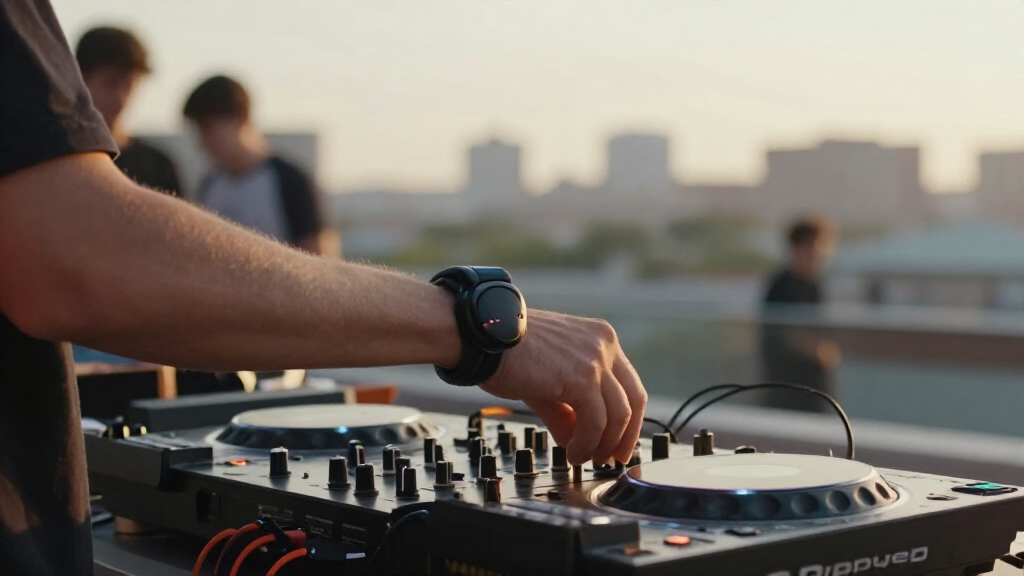
How We Picked
I ranked these options by how well their connection setup fits real DJ tasks: cueing tracks, monitoring a mix, and moving around without losing reliable audio. Wireless latency and connection method matter more here than general Bluetooth convenience, so models with DJ-oriented wireless systems or a clear wired fallback rank ahead of headphones aimed mainly at casual listening. I also weighed isolation, fit, folding or modular design, and whether the product description indicates a transmitter is included.
The lineup includes dedicated DJ headphones, hybrid studio models, standard Bluetooth headphones, and a silent-disco kit, so I did not treat them as interchangeable. Ranking reflects DJ suitability first, then versatility and practical setup needs. Wired Pioneer models remain useful comparisons, but they rank below capable wireless-first choices for a roundup focused on wireless DJ headphones. Where the supplied product details do not establish a feature, I avoid assuming it is present.
| wireless DJ headphone | Connectivity | Battery life |
|---|---|---|
| AIAIAI TMA-2 DJ Wireless Over- | W+ Link and Bluetooth | More than 25 hours |
| AYVVPII Silent Disco Wireless | — | Up to 10 hours |
| Pioneer DJ HDJ-X5 Professional | Wired; no wireless connectivity specified | — |
| Pioneer DJ HDJ-CUE1BT On-Ear B | Bluetooth and wired | — |
| Pioneer DJ HDJ-CUE1 On-Ear Wir | Wired | — |
| PUPGSIS PG-MXPRO Wireless DJ H | — | Up to 60 hours Bluetooth; up to 30 hours 2.4 GHz |
| OneOdio Studio Max 1 Wireless | — | Up to 120 hours Bluetooth; up to 50 hours with dongle |
| AlphaTheta HDJ-F10 Wireless DJ | SonicLink, Bluetooth, and wired | Up to 9 hours SonicLink; up to 30 hours Bluetooth |
| AlphaTheta HDJ-F10-TX Wireless | — | Up to 9 hours SonicLink; up to 30 hours Bluetooth |
| OneOdio A70 Bluetooth Over-Ear | Bluetooth, 3.5 mm, and 6.35 mm wired | — |
Factors to Consider When Choosing Wireless DJ Headphones
Before choosing, decide what “wireless” needs to do in your setup. Wireless listening, wireless cueing, and group audio are different jobs, and a headphone that handles one well may not suit the others.
Match Wireless Latency to the Job
For beatmatching, delayed monitoring can make a cue feel out of step with the source, even when the headphones sound pleasant. Check which wireless connection is used and whether it is intended for DJ monitoring rather than ordinary phone playback. Bluetooth is convenient for practice tracks and everyday listening, but its behavior can vary with the source device and connection mode. A dedicated transmitter-based system may suit cueing better, though it adds another device to power and carry. If you cannot confirm the latency behavior for your equipment, keep a wired option available. Do not assume that the word “wireless” alone means a model is ready for live mixing.
Plan for a Wired Fallback
A cable can save a session when a battery runs low, a wireless link drops, or a deck does not support your preferred connection. Check whether wired listening works on the exact model and whether the required cable is included or needs a separate purchase. A wired mode also helps when you want to use the same headphones with a mixer, interface, or other source that lacks a compatible wireless transmitter. Some products in this roundup are wired-only, so they avoid wireless delay but do not meet a strict need for cable-free monitoring. Decide whether wireless is your main workflow or an added convenience before paying for it. That choice can matter more than a long feature list.
Check Isolation and Fit in Your Booth
Headphones used near speakers need enough isolation for you to hear cue details without turning the level excessively high. Over-ear designs often provide more coverage, while on-ear models may pack and move differently; neither style fits every head or listening habit. Look for a secure fit that stays put when you move and earcups or pads that suit longer sessions. Noise cancelling can help reduce steady background sound, but it is not a substitute for passive isolation from loud booth monitors. If you mix in a noisy room, prioritize seal and comfort alongside any electronic noise-control feature. A poor fit can undermine otherwise capable monitoring.
Count the Pieces in a Transmitter Setup
Some wireless systems depend on a dedicated transmitter, and the headphones alone may not provide the full connection you expect. Confirm what comes in the box, how the transmitter connects to your mixer or deck, and whether the connection matches your existing outputs. A bundled transmitter can simplify setup, but it also means another device and cable to manage. If you already own compatible equipment, a headphone-only option may be enough; if not, compare the complete system rather than the headset name. This is especially relevant when comparing the HDJ-F10 with the HDJ-F10-TX. Checking compatibility before buying can prevent a wireless setup that cannot connect to your source.
Separate DJ Headphones From Group-Listening Gear
A silent-disco system is built around sending audio to multiple listeners, not necessarily around precise single-user cueing at a DJ mixer. If your goal is to host an event or let several people hear the same program, a transmitter-and-headphone kit may fit better than a conventional DJ headset. For mixing, focus instead on monitoring behavior, isolation, fit, and a connection suited to your audio source. Likewise, a general Bluetooth headphone can be useful between sets without being the right tool for beatmatching. Buying by product category alone can lead to a mismatch. Start with the task, then choose the design that supports it.
Pay for Features You Will Actually Use
Premium wireless systems make the most sense when their connection method and added functions solve a real problem in your setup. If you mainly practice at home, a wired DJ model or a Bluetooth hybrid with a cable option may cover more needs without adding transmitter complexity. Modular construction can appeal if replaceable components and personalization matter to you, while a compact folding design may be more useful for a commuting beginner. Noise cancelling is worthwhile when background sound is a recurring issue, not simply because it appears on a spec sheet. Compare the full kit, including accessories and connection requirements, rather than judging by the headphone alone. Spend more for a clear workflow benefit, not a feature you may leave unused.
Frequently Asked Questions
Can I beatmatch reliably over Bluetooth?
Bluetooth can work for casual practice, but it may add enough delay to make cue timing feel less direct. The exact result depends on the headphone, source device, and connection mode, so do not assume every Bluetooth model behaves the same way. For live mixing or tight beatmatching, check for a DJ-oriented low-latency system or use a wired connection. A wired fallback is especially useful if you plan to connect to different decks or mixers. Choose Bluetooth-first headphones when convenience matters more than precise cue response.
Do I need the HDJ-F10-TX, or is the HDJ-F10 enough?
The key difference for a buyer is whether the transmitter is part of the package. The HDJ-F10-TX is the more ready-to-connect choice if you need the matching transmitter for its SonicLink setup. The standard HDJ-F10 may suit someone who already has compatible gear or wants to choose the transmitter separately. Before deciding, confirm that the transmitter connects to your mixer or deck and that the included accessories cover your setup. The bundled version reduces one compatibility decision, while the headphone-only route can make sense if you already own the needed equipment.
Are wired DJ headphones still worth buying if I want wireless?
Yes, if your priority is dependable cue timing and you are willing to use a cable while mixing. Wired models avoid wireless delay and do not depend on a headphone battery or transmitter link. They can also serve as a reference point when evaluating whether wireless convenience is worth the extra setup. A wired pair will not meet a strict cable-free requirement, though, and it offers less freedom to move around. If you want both options, focus on a hybrid model with a confirmed wired mode rather than assuming every wireless headset supports one.
Is a silent-disco headphone kit suitable for DJ monitoring?
It may suit an event where multiple people need to hear the same transmitted program, but that is a different need from one DJ cueing tracks at a mixer. Check the system’s connection to your audio source and its monitoring delay before using it for beatmatching. A multi-listener kit may prioritize shared listening over the fit, isolation, and controls a DJ wants in a booth. If your main job is mixing, a dedicated DJ headphone is the safer starting point. Choose a silent-disco set when group listening is the primary use.
Which features should a beginner prioritize over noise cancelling?
Start with a secure, comfortable fit, clear monitoring, and a connection that works with the equipment you already own. For a beginner, a wired fallback can be more useful than noise cancelling because it avoids wireless delay and battery concerns while learning to cue. Folding or easy-to-carry construction can also help if the headphones will travel between home and practice spaces. Noise cancelling is more relevant when steady ambient sound interferes with listening, but it does not replace good isolation. Check the required cables and transmitter before buying so the first setup is straightforward.
Conclusion
For the strongest DJ-focused wireless setup in this lineup, I would choose the AlphaTheta HDJ-F10; pick the HDJ-F10-TX if you want its transmitter included. The OneOdio Studio Max 1 is my value-minded hybrid choice for someone who wants both wireless and wired listening, while the Pioneer DJ HDJ-CUE1 is a practical beginner option if avoiding wireless delay matters more than cable-free use. For a modular approach, consider the AIAIAI TMA-2 DJ Wireless; for group listening, the AYVVPII silent-disco kit serves a more specific purpose. Choose the HDJ-X5 or wired CUE1 when reliable wired monitoring is the priority, and treat the Bluetooth-focused CUE1BT and OneOdio A70 as better fits for practice and everyday listening than latency-sensitive mixing.
Halloween Picks
halloween
As an affiliate, we earn on qualifying purchases.