
To stop door rattles during bass scenes without construction, start by inspecting and tightening all screws and clips securing the panels. Add soundproofing materials like damping mats or foam behind the panels to absorb vibrations. Also, seal any gaps with foam or rubber strips to prevent metal-to-metal contact. Securing loose parts and layering damping techniques can markedly reduce rattles. Keep exploring for more simple tricks to keep your sound crisp and quiet with minimal effort.
Key Takeaways
- Apply sound deadening mats or damping foam behind door panels to absorb vibrations.
- Tighten all screws and bolts securing the door panels to prevent looseness.
- Install rubber strips or foam padding along panel edges to reduce metal-to-metal contact.
- Use damping materials like foam tape on specific areas prone to shaking during bass hits.
- Regularly inspect and secure fasteners to maintain a tight, rattle-free door environment.
If your car doors rattle every time the bass hits hard, it can ruin your listening experience and even cause long-term damage. Fortunately, you don’t need to tear apart your vehicle or undertake major construction to fix this problem. Instead, you can use effective soundproofing techniques and simple door panel modifications that keep your music crisp and your car quiet during those bass-heavy moments. The key is to identify what’s causing the rattling and then apply targeted solutions that dampen vibrations without extensive work.
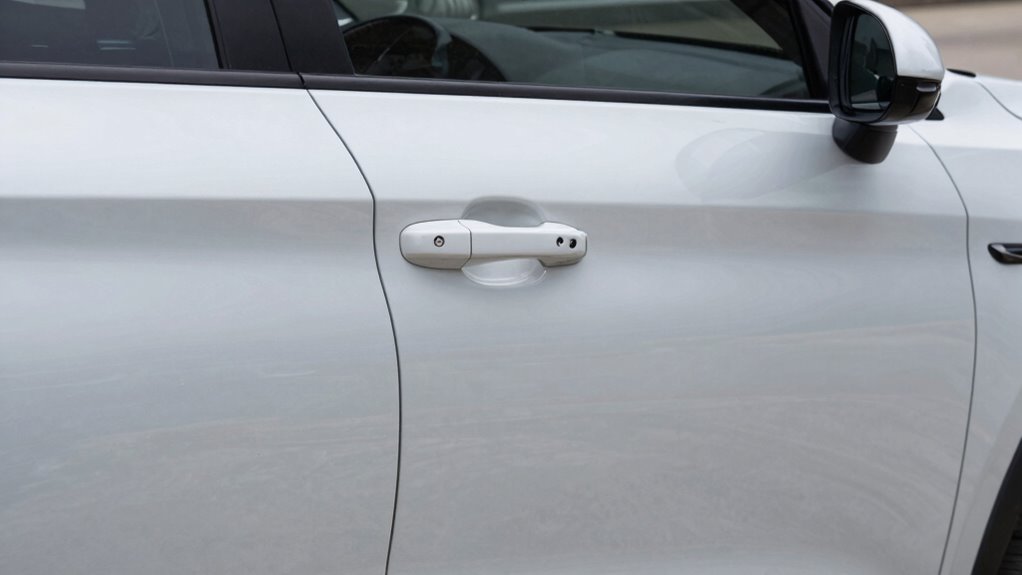
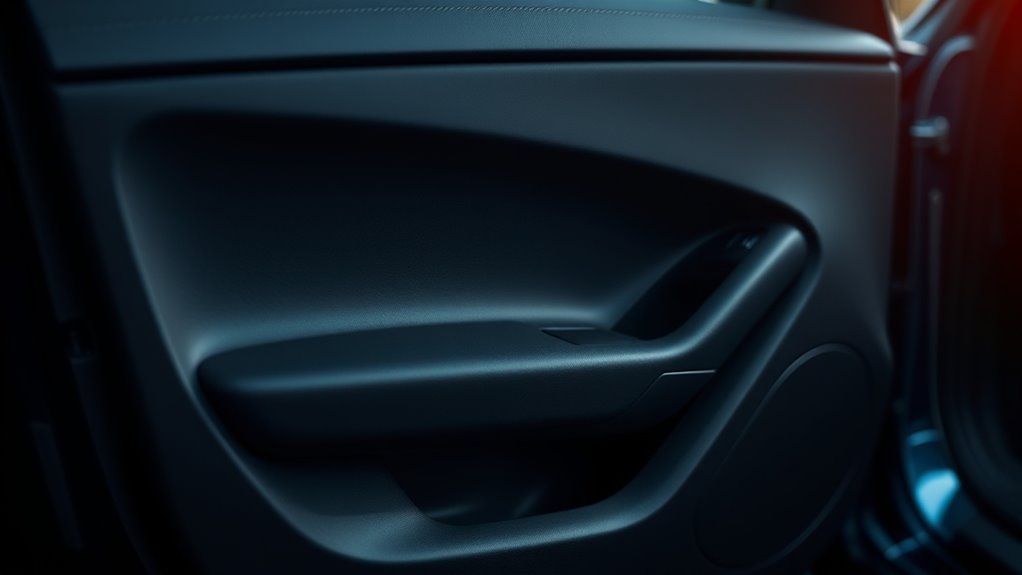
Start by inspecting your door panels closely. Often, rattling occurs because panels aren’t secured tightly or because gaps exist that allow vibrations to resonate. You can improve this by adding some foam or damping material behind the panels. These soundproofing techniques absorb vibrations before they reach the outer metal, reducing the rattle. Peel back the door panel carefully, and look for loose areas or gaps. Use high-quality sound deadening mats or mass-loaded vinyl to fill in these spaces and secure loose parts. This approach doesn’t require permanent modifications; it’s a straightforward way to enhance the stability of your door panels.
Inspect door panels for looseness or gaps and add damping material to reduce vibrations and rattles.
Door panel modifications are also simple and effective. For example, adding extra foam padding or rubber strips along the edges of the panels can prevent metal-to-metal contact, which is often the culprit behind rattles. You might also consider installing thicker or more insulated door liners, which further dampen vibrations. These modifications help absorb the energy from bass vibrations, preventing them from transferring into the door structure and causing noise. If you notice specific areas that shake excessively, applying an adhesive-backed damping sheet or even foam tape can make a significant difference. These small tweaks aren’t disruptive or costly but can drastically improve sound quality and reduce rattles during intense bass scenes.
Another tip is to tighten all screws and bolts holding the door panels in place. Over time, vibrations can loosen these fasteners, making rattling worse. A quick check and tightening can restore a snug fit, cutting down on unwanted noise. Additionally, understanding vibration damping principles can help you choose the most effective materials and methods for your specific vehicle. Combining this with soundproofing techniques and door panel modifications creates a layered defense against rattles, giving you clearer sound and a quieter ride.
car door soundproofing mats
As an affiliate, we earn on qualifying purchases.
As an affiliate, we earn on qualifying purchases.
Frequently Asked Questions
Will These Solutions Work on All Types of Vehicle Doors?
These solutions may not work on all vehicle doors because door material compatibility varies. Some doors with specialized materials or complex structures might require specific adjustments. For best results, consider professional installation options, as experts can tailor solutions to your vehicle’s door type. They guarantee the fix is effective and won’t cause damage, providing peace of mind that your rattling issues are properly addressed regardless of your car’s door material.
Can Door Rattles Affect Vehicle Safety or Security?
Imagine your vehicle’s door rattling like a tambourine—yes, that’s how vehicle vibration can affect door lock security. Rattles may not immediately threaten safety, but persistent vibrations could weaken door components over time. This can compromise your security, making it easier for someone to break in. So, yes, door rattles can impact vehicle safety and security, emphasizing the importance of fixing them to maintain the integrity of your vehicle.
How Long Do the Fixes Typically Last?
The fixes for door rattles usually last several months to a few years, depending on your durability concerns and maintenance frequency. If you opt for simple solutions like padding or adhesive, expect to reapply them periodically as they wear or loosen over time. Regularly checking and maintaining these fixes helps prolong their effectiveness, ensuring your door stays quiet during bass scenes without needing constant attention or costly repairs.
Are There Any DIY Risks or Mistakes to Avoid?
You might worry about DIY pitfalls, but avoiding common mistakes is simple if you follow instructions carefully. Be cautious when applying foam or padding; too much can interfere with door operation. Don’t rush the process—measure twice, cut once. Always disconnect the battery before working on door components to prevent electrical issues. By staying patient and precise, you’ll successfully stop door rattles without risking damage or creating new problems.
Do These Methods Impact Door Warranty or Vehicle Resale Value?
These methods typically won’t impact your door warranty or resale value if done correctly. Just guarantee you don’t damage any factory parts or alter the door structure, as that could void warranty coverage or reduce resale value. Always follow instructions carefully, and if you’re unsure, consult your vehicle’s manufacturer or a professional. Properly applied, these fixes can improve your audio experience without risking your vehicle’s long-term value.
car door damping foam
As an affiliate, we earn on qualifying purchases.
As an affiliate, we earn on qualifying purchases.
Conclusion
Now, you know how to stop door rattles during bass scenes. You can tighten, add padding, or secure the door to reduce vibrations. You can test, adjust, and repeat until your sound is perfect. You can enjoy deep bass without distraction, peaceful nights without rattling noise, and a better listening experience every time. Take action today, apply these tips, and enjoy the silence that comes with solid, rattle-free doors.
rubber door edge seal strips
As an affiliate, we earn on qualifying purchases.
As an affiliate, we earn on qualifying purchases.
car door vibration dampening kit
As an affiliate, we earn on qualifying purchases.
As an affiliate, we earn on qualifying purchases.