
To reduce echo without making your living room look like a studio, incorporate soft textiles like plush cushions, thick rugs, and upholstered furniture to absorb sound naturally. Strategically place layered rugs and arrange furniture to break up sound waves. Add decorative wall hangings or artwork with fabric or textured materials to help scatter sound. Using discreet acoustic panels or diffusers can blend seamlessly into your decor. Keep exploring for more ideas to create a cozy, stylish space.
Key Takeaways
- Incorporate soft textiles like plush cushions, throw blankets, and upholstered furniture to absorb sound naturally without cluttering the space.
- Use layered, textured rugs and carpets in high-traffic areas to dampen echo while adding visual warmth.
- Arrange furniture to create multiple sound-absorbing surfaces and avoid direct wall-to-wall alignment for better acoustics.
- Add discreet acoustic panels or fabric wall hangings that blend with decor to reduce sound reflection subtly.
- Fill open spaces with decorative items like bookshelves, art, or plants to scatter sound waves without sacrificing style.
Incorporate Soft Textiles and Fabrics

Adding soft textiles and fabrics to your living room can substantially reduce echo. When you introduce items like plush cushions, throw blankets, and upholstered furniture, you create surfaces that absorb sound waves instead of bouncing them around. Choose fabrics with varied textures and thicknesses to maximize sound absorption. For example, velvet or heavy cotton drapes can help dampen reflections from windows and walls. Incorporate fabric-covered furniture such as sofas and armchairs, which are highly effective at absorbing sound. Even small touches like decorative pillows can make a difference. The key is to balance these textiles throughout the space, ensuring sound waves are absorbed from multiple angles. Implementing sound-absorbing materials such as acoustic panels or rugs can further enhance your room’s acoustics without sacrificing style or comfort. Additionally, arranging textiles to cover multiple surfaces helps prevent sound reflection, creating a more intimate and less echoey environment. Using a variety of soft surfaces in your decor can also help manage reverberation, making your living room more comfortable for listening and conversation. This simple step enhances your room’s acoustics without sacrificing style or comfort.
Use Rugs and Carpets Strategically

Using rugs and carpets strategically can substantially cut down on echo in your living room. Layering area rugs and choosing textured, plush materials helps absorb sound more effectively. Opt for thick, soft options to create a cozy, noise-reducing environment. Incorporating practical, room-by-room solutions into your rug choices can further enhance sound absorption and maintain a balanced, inviting space. Additionally, selecting rugs with sound-absorbing fibers can significantly improve acoustic comfort. To optimize these effects, consider the UST projector and ALR screen placement, which can influence the room’s acoustics and overall ambiance. Incorporating acoustic-friendly materials into your decor can also contribute to a more peaceful atmosphere. Using sound-absorbing materials like thick rugs and soft furnishings can make a notable difference in reducing echo and improving room acoustics.
Layer With Area Rugs
Layering area rugs is an effective way to absorb sound and reduce echo, especially in large or hard-surfaced living rooms. By stacking multiple rugs, you create more soft surfaces that dampen noise. To maximize this effect, consider:
- Placing a large rug under your seating area to cover bare floors.
- Adding smaller rugs in high-traffic spots to break up sound waves.
- Using different textures and pile heights for better sound absorption.
- Arranging rugs to cover as much of the floor as possible without cluttering the space.
- Choosing rugs with high pile density to enhance sound dampening properties.
Additionally, selecting rugs with appropriate materials can further improve acoustic performance and style. Incorporating smart home automation can help optimize your living room environment for better acoustics by adjusting lighting and sound settings automatically. This layered approach not only improves acoustics but also adds visual interest and coziness to your living room. By selecting acoustically friendly fabrics, you can create a more comfortable, stylish space that minimizes echo without sacrificing design. It’s a simple, effective way to tame echo without sacrificing style.
Incorporate Textured Carpets
Incorporating textured carpets and rugs strategically can substantially enhance sound absorption in your living room. Opt for rugs with varied pile heights and surfaces, like shag or woven designs, to disrupt sound waves more effectively. Place these textured pieces in high-traffic areas or under furniture to maximize their impact. Layering different textures creates a more complex surface that absorbs echoes better than flat carpets alone. Avoid overly smooth or thin rugs, which reflect sound instead of dampening it. Combining textured rugs with other soft furnishings amplifies their effect, creating a cozy, inviting space that minimizes echo without sacrificing style. Using sound-absorbing materials can further improve acoustics and reduce noise reverberation. Selecting rugs made from natural fibers like wool can also enhance their sound absorption properties. Incorporating acoustic treatment strategies into your decor can help optimize the overall sound quality in your living space. Additionally, choosing textured fabrics for cushions and throws can further diffuse sound waves and improve acoustics. By choosing the right textures and placement, you can significantly reduce echo while maintaining a natural, lived-in look.
Choose Thick, Plush Materials
Thick, plush rugs and carpets are among the most effective tools for minimizing echo in your living room. Their dense fibers absorb sound waves, reducing reverberation and creating a cozy atmosphere. To maximize their effectiveness, consider these tips:
- Place rugs in high-traffic areas to absorb more sound.
- Layer multiple rugs for added thickness and soundproofing.
- Choose deep-pile or shaggy textures for better sound absorption.
- Cover large sections of the floor with plush materials to dampen echoes throughout the room.
- Select high-quality, well-crafted rugs, as their material density enhances sound absorption and longevity. Additionally, opting for rugs made from natural fibers like wool can further improve soundproofing due to their superior absorption qualities. Investing in sound-absorbing materials can significantly enhance the overall acoustic comfort of your living space. Incorporating natural fiber rugs can also contribute to a more sustainable and eco-friendly home environment, as natural fibers often have lower environmental impacts during production.
Arrange Furniture to Break Up Sound Waves
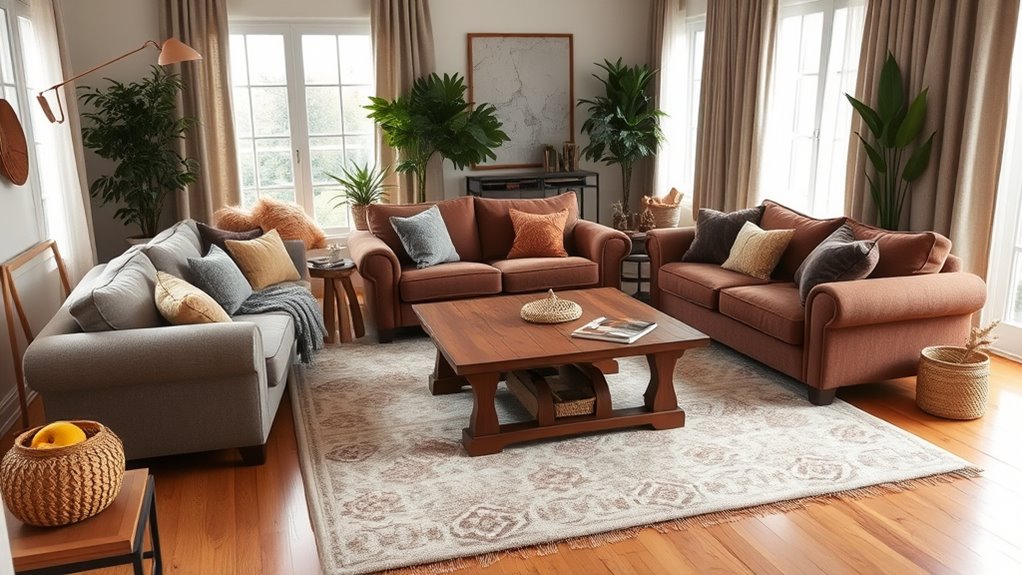
To effectively reduce echo in your living room, you should strategically arrange your furniture to break up sound waves. Place larger pieces like sofas and armchairs in a way that creates multiple surfaces for sound absorption and deflection. Avoid lining up furniture against walls; instead, stagger pieces to prevent sound from bouncing directly across the room. Incorporate bookcases, side tables, or open shelving units to disrupt sound paths further. Use soft, textured furniture and cushions to absorb sound energy. Positioning furniture thoughtfully helps scatter sound waves, reducing their intensity and creating a more balanced acoustic environment. The goal is to break up the continuous flow of sound, preventing echoes while maintaining a cozy, inviting space. Additionally, understanding sound absorption principles can help you optimize your furniture layout more effectively, especially considering how sound waves interact with various materials and configurations.
Add Wall Hangings and Artwork

Adding wall hangings and artwork can substantially improve your living room’s acoustics by disrupting sound waves. These items absorb and scatter sound, reducing echo without cluttering the space. To maximize their effect, consider these options:
Decorative wall art and textiles effectively reduce echo by absorbing and scattering sound waves naturally.
- Hang large, textured tapestries or fabric art to absorb sound across a broad area.
- Use framed paintings or photographs with thick mats to help break up sound reflections.
- Incorporate decorative textiles like woven wall hangings or quilts for added sound absorption.
- Mount shelves with books or decorative items that create uneven surfaces, scattering sound waves efficiently.
- Understanding sound dispersion can help you strategically place these items for optimal acoustic benefits. Additionally, incorporating soundproofing materials into your decor can further enhance the reduction of echo and improve overall room acoustics.
- Selecting appropriate wall coverings that balance aesthetics and acoustic performance can provide a more comprehensive sound management solution.
These solutions blend seamlessly into your decor, making your space both stylish and acoustically friendly. They’re an easy, effective way to cut echo without sacrificing aesthetic appeal.
Install Discreet Acoustic Panels or Diffusers
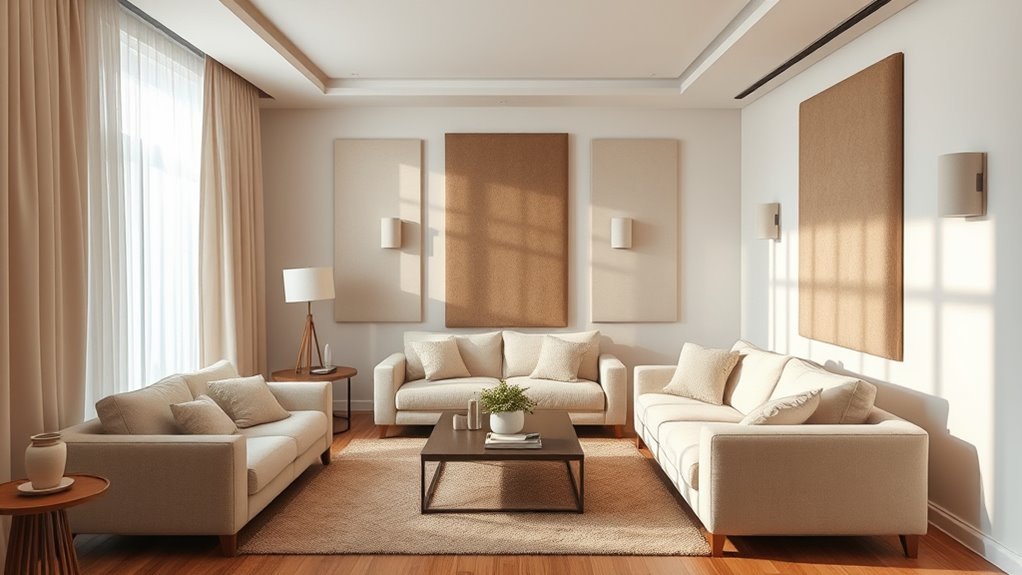
Have you considered using discreet acoustic panels or diffusers to improve your living room’s sound quality? These panels can absorb or scatter sound waves without cluttering your space’s aesthetic. Choose designs that blend seamlessly with your walls, like fabric-covered panels or sleek wood finishes. Place them strategically on walls where sound tends to bounce or echo, such as behind seating areas or near loud sources like TVs. Diffusers, which break up sound waves rather than absorb them, can be hidden behind furniture or integrated into wall decor. Installing these panels or diffusers is straightforward and minimally invasive. They help reduce echo and improve clarity while maintaining your room’s stylish look. The key is to select discreet options that complement your décor, ensuring your living room stays inviting and functional.
Optimize Room Layout for Better Sound Absorption
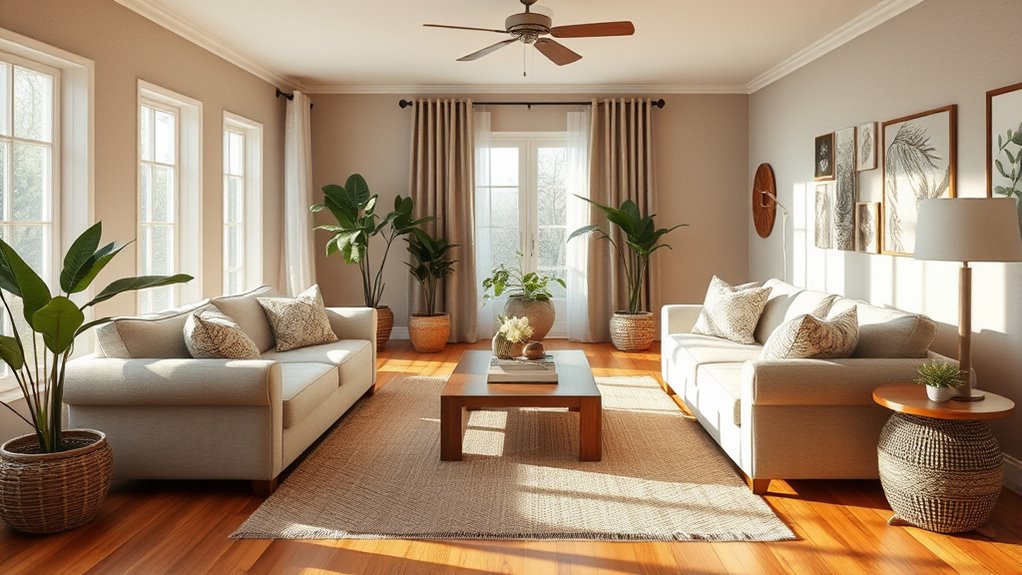
Adjusting your room’s layout can substantially reduce echo by controlling how sound waves travel and reflect. Rearranging furniture and belongings helps break up sound paths, preventing sound from bouncing directly between hard surfaces. To optimize your layout, consider these tips:
- Place large, soft furniture like sofas or armchairs against walls to absorb sound.
- Avoid lining up reflective surfaces directly opposite each other.
- Position bookshelves or decorative items strategically to diffuse sound waves.
- Keep open spaces minimal, filling them with rugs or cushions to dampen echoes.
Frequently Asked Questions
Can Plants Help Reduce Echo in a Living Room?
Yes, plants can help reduce echo in your living room. They absorb sound waves and break up reflections, making the space acoustically warmer. Place a variety of lush, leafy plants around the room, especially near hard surfaces like windows and walls. Not only do they improve sound quality, but they also add a touch of nature and style to your space, creating a more cozy and inviting environment.
What DIY Methods Are Effective for Sound Absorption?
While sleek and minimalist designs often seem incompatible with sound absorption, you can blend DIY methods seamlessly into your living room. Use heavy curtains or fabric wall hangings to dampen sound naturally. Place bookshelves filled with books against walls to diffuse echoes. Incorporate soft rugs or cushions on furniture for added absorption. These simple, effective solutions combine practicality with style, reducing echo without sacrificing your living room’s aesthetic charm.
How Does Room Size Influence Echo Reduction Strategies?
Room size greatly influences your echo reduction strategies. In larger rooms, you’ll want to add more soft furnishings like rugs, curtains, and upholstered furniture to absorb sound. For smaller spaces, focus on placing acoustic panels or wall hangings strategically without cluttering. Using smaller rugs or multi-layered curtains helps control sound reflections effectively. Tailor your approach based on the room’s dimensions to achieve better sound quality without sacrificing style.
Are There Decorative Items That Also Improve Acoustics?
Think of decorative items as the cozy blankets for your room’s sound. You can add plush rugs, upholstered furniture, and thick curtains that act like sound-absorbing cushions. Plants with broad leaves also help dampen echoes naturally. These stylish choices not only boost your room’s decor but also soften sound reflections, turning your living space into a more inviting haven without sacrificing style.
How Often Should Acoustic Treatments Be Maintained or Replaced?
You should check your acoustic treatments every six to twelve months. Look for dust buildup, wear, or damage, and clean or replace them as needed. Over time, fabrics can degrade, and materials may lose effectiveness. Regular maintenance keeps your space sounding great without sacrificing style. If you notice persistent echo or degraded sound quality, it’s time to replace or upgrade your treatments to maintain ideal acoustics.
Conclusion
By mixing soft textiles, strategic furniture placement, and subtle acoustic treatments, you can effectively reduce echo without turning your living room into a studio. Imagine hosting friends and enjoying cozy conversations, all while maintaining a stylish space—like Sarah, who added rugs and wall hangings, transforming her echoey living room into a warm, inviting haven. With these simple tips, you’ll create a comfortable, sound-friendly environment that looks great and sounds even better.