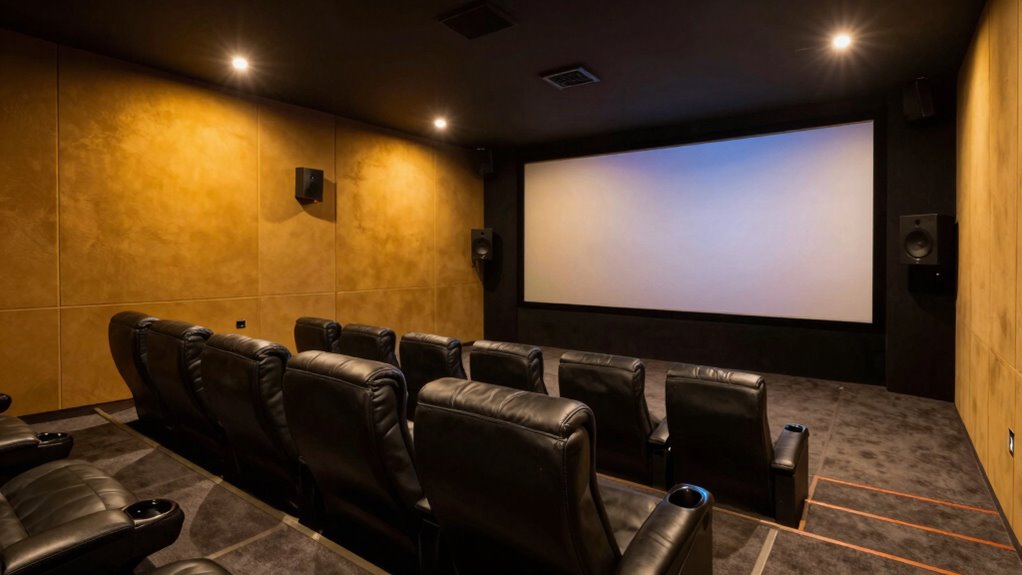

To get the best bass and surround sound, position your main seats about one-third into the room from the back wall, along the central axis, to promote bass wave harmony. Angle seats slightly toward the speakers and keep them at ear level for surround effects. Elevating seats or using tiered platforms can improve acoustics and visuals. For more tips, you’ll discover how key adjustments make your home theater sound incredible.
Key Takeaways
- Position main seats along the room’s central axis, about one-third from the back wall for optimal bass development.
- Place seats slightly angled toward surround speakers at 90-110° for immersive sound.
- Avoid placing seats against walls or in corners to prevent muddled acoustics and boomy bass.
- Elevate seats on risers or tiers to improve sound wave reception and reduce echoes.
- Keep seats away from reflective surfaces like walls and windows to minimize sound reflections and enhance clarity.

Herdio 6.5 Inch 800W Outdoor Bluetooth Speakers Wired Waterproof with Multifunctional Amplifier, Wall Mount Speaker System for Patio Home Poolside Deck Backyard(2 Pairs,Black)
【Full-Range Speakers】The high powered full range indoor outdoor speakers wired waterproof has a maximum power output of 800...
As an affiliate, we earn on qualifying purchases.
Optimal Placement of Main Seating for Bass Response
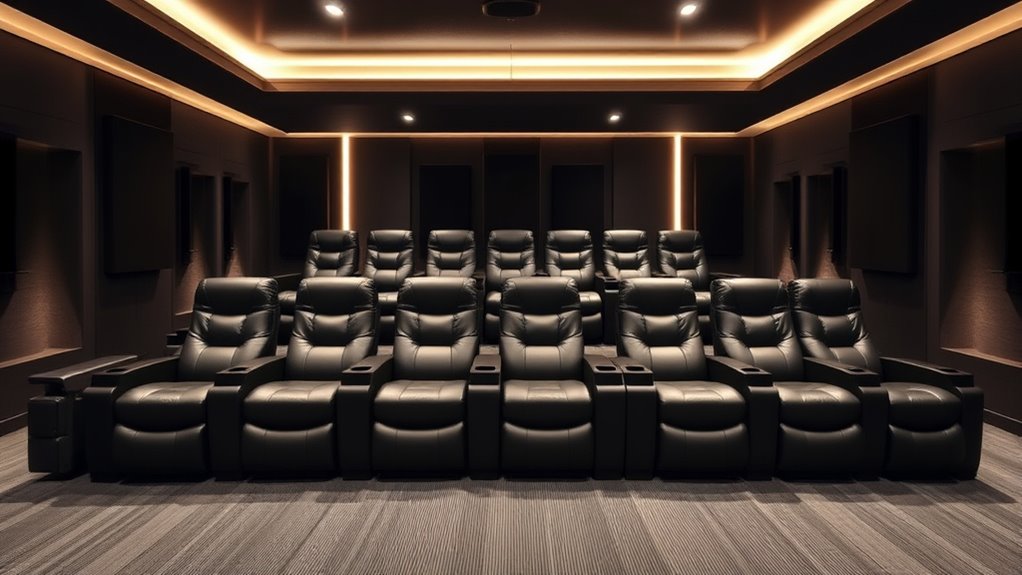
To achieve the best bass response in your home theater, you need to carefully consider where you place the main seating. The ideal spot is typically along the central axis of the room, where bass waves combine constructively. Avoid placing seats directly against walls or in corners, as this can cause boomy, uneven sounds. Instead, position your seating about 1/3 of the way into the room from the back wall, allowing bass frequencies to develop fully. Use a subwoofer to enhance bass uniformity, and experiment with different placements to find the spot where bass sounds tight and balanced. Remember, small adjustments in seat placement can markedly improve your listening experience by optimizing how bass frequencies reach you. Additionally, understanding room acoustics can help you make more informed decisions about seating and speaker placement for the best sound quality. Considering speaker placement can further refine your overall audio experience. Proper cable management can also prevent unwanted vibrations that might interfere with bass clarity.

STUDIOFINIX 6.5 Inch Outdoor Speakers Wall-Mounted 800W - Waterproof and High-Performance Audio Solution for Indoor/Outdoor,Home,Patio,Garden,Backyard(4 Passive Speakers Bundle/Black)
〖Powerful Performance〗: Boasting a peak power handling of 800 watts, it delivers a full range of dynamic sound...
As an affiliate, we earn on qualifying purchases.
Positioning Surround Sound Seats for Immersive Experience
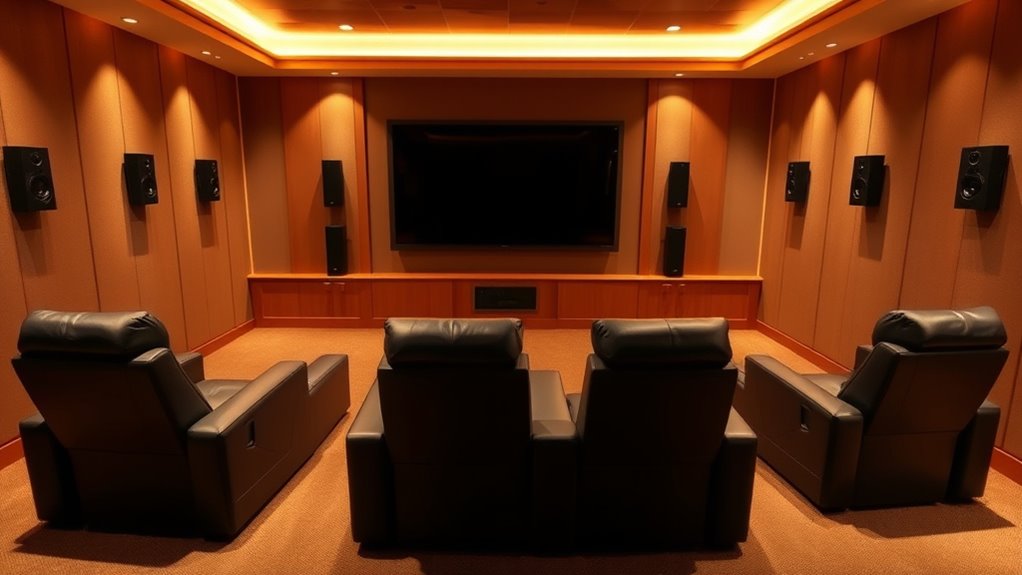
Ever wonder how to position your surround sound seats for maximum immersion? The key is to place your seats so that you feel enveloped by the sound. Typically, surround seats should be angled slightly toward the speakers, about 90 to 110 degrees from the main listening position. Position them slightly behind or to the sides of your primary seats, ensuring the speakers’ sound reaches you directly without obstruction. Keep them at ear level for clarity and comfort. Avoid placing seats too close to walls or corners, which can cause sound reflections and muddiness. If you have multiple rows, stagger them to prevent sound overlap and ensure all seats experience balanced surround effects. Proper placement enhances the sense of being inside the action, heightening your immersive experience. Integrating connected audio technology can further optimize sound quality and synchronization for a truly immersive environment. Additionally, experimenting with seat placement can help you fine-tune your setup for the best acoustic and visual balance. Considering the contrast ratio of your projector can also improve how well dark scenes are rendered, adding to the overall immersion. To further elevate your setup, consider testing different seat arrangements to find the most immersive and comfortable configuration. Incorporating smart home audio controls can also simplify adjustments and maintain optimal sound settings effortlessly.

Polk Audio Atrium 4 Weatherproof Outdoor Speakers with Powerful Bass (Pair, Black), All-Weather Durability, Broad Sound Coverage, Speed-Lock Mounting System
EASY INSTALLATION - One-click speed-lock mounting bracket offers anti-slip, one-handed installation. Mount these outdoor speakers wired vertically or...
As an affiliate, we earn on qualifying purchases.
The Ideal Distance From the Screen for Different Viewing Angles
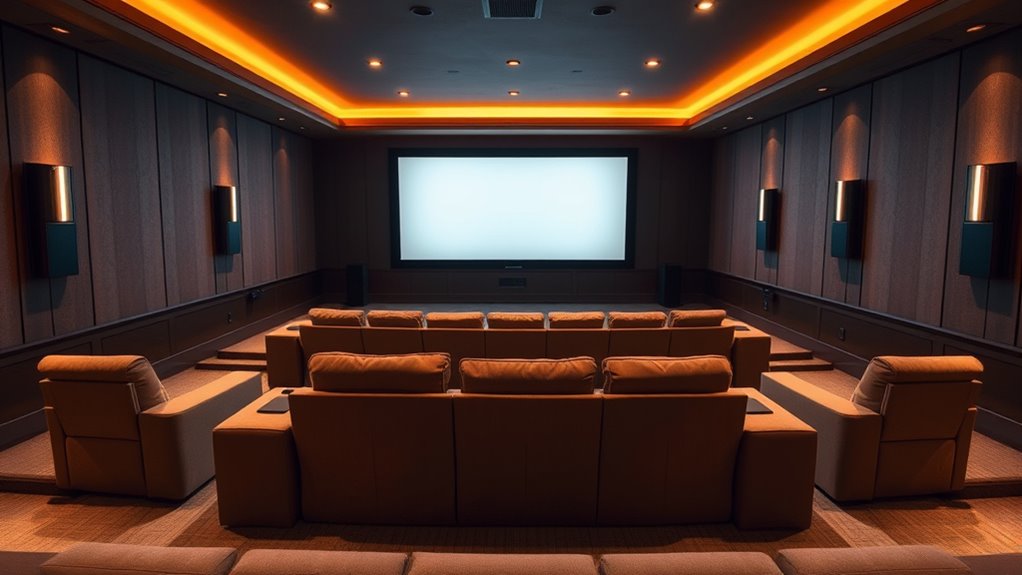
To get the best viewing experience, you need to ensure the optimal distance from the screen based on your seat’s angle. Sitting too close can strain your eyes, while sitting too far reduces immersion. Finding the right balance ensures you enjoy clear images and a truly immersive home theater. Additionally, considering audio placement can enhance bass response and surround sound effects, making your setup more effective. Proper speaker positioning can significantly improve the overall sound quality and help create a more convincing surround sound environment. Paying attention to acoustic treatment can further optimize sound quality by reducing echoes and improving clarity throughout the room. Understanding room acoustics can also help you arrange your seats for the best auditory experience.
Optimal Viewing Angles
Finding the right distance from the screen is essential for an immersive home theater experience, as it directly impacts your viewing comfort and picture clarity. To achieve ideal viewing angles, position your seats so that your eyes are roughly at a 30 to 40-degree angle from the screen’s center. This range ensures you see the entire picture comfortably without excessive head movement or distortion. Sitting too close can cause neck strain and make you notice pixelation, while sitting too far reduces immersion and detail. Ideally, your seats should be arranged so that you’re slightly above or at eye level with the center of the screen, allowing for a natural, comfortable viewing experience. Proper angles enhance image clarity and prevent discomfort during long viewing sessions.
Distance for Immersion
Determining the right distance from the screen enhances your home theater experience by ensuring clear images and comfortable viewing angles. The ideal distance depends on your screen size and viewing preferences. A common guideline is to sit about 1.5 to 2.5 times the diagonal measurement of your screen. For example, if you have a 100-inch screen, sitting between 12.5 and 20.8 feet away provides an immersive view without straining your eyes or compromising picture quality. Closer distances increase immersion but can cause distortion or difficulty in seeing the whole image. Too far back, and you’ll miss out on detail and engagement. Adjust your seating to balance clarity, comfort, and immersion, creating an best viewing experience tailored to your space.

6.5 Inch Max 800W Outdoor Bluetooth Speakers Waterproof Wired with Multifunctional Amplifier Wall Mount Outdoor Speaker System for Patio Garden Poolside Home(4 Speakers,Black)
Powerful Acoustics: Unmatched Sound Output,Each speaker pumps out an impressive 200 watts, with a pair delivering a combined...
As an affiliate, we earn on qualifying purchases.
Arranging Seats to Minimize Sound Reflection and Echoes
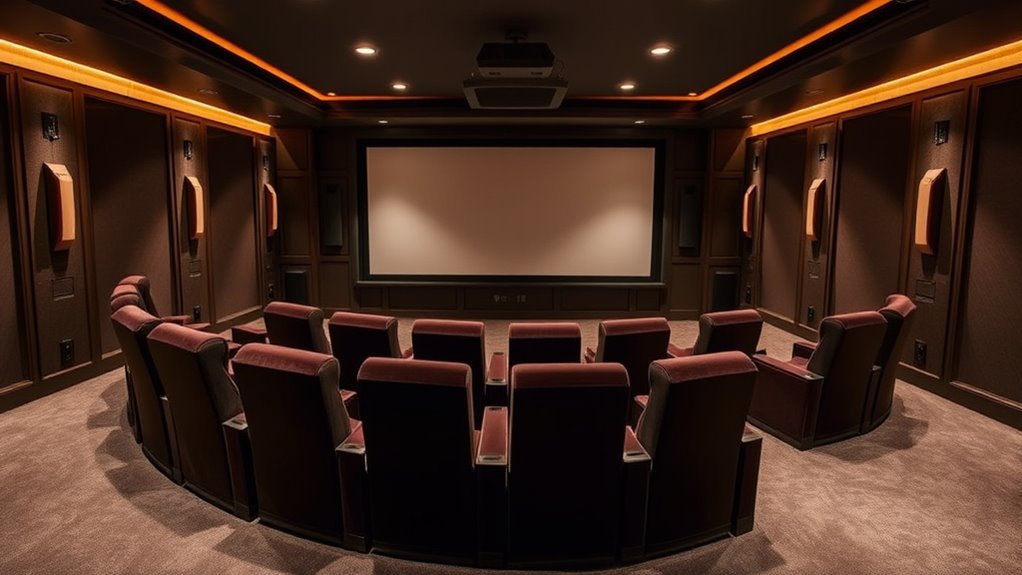
To reduce sound reflection and echoes, you should focus on ideal seating placement that avoids direct lines to reflective surfaces. Incorporating acoustic treatments like diffusers and absorbers can further improve sound quality around your seats. By carefully arranging your seats and using strategic acoustic solutions, you’ll create a more immersive and clear home theater experience. Additionally, understanding soundproofing techniques can help prevent external noise from disrupting your listening environment. Proper room layout can also significantly enhance the overall acoustics and minimize unwanted reverberations.
Optimal Seating Placement
Arranging seats thoughtfully can considerably reduce sound reflections and echoes in your home theater. Positioning your seats away from walls and reflective surfaces minimizes unwanted sound bouncing. Aim for a central spot that balances clarity and immersion, avoiding corners where sound can become muddled. The optimal seating area allows sound waves to reach your ears directly, enhancing bass response and surround effects. Consider the following layout:
| Best Spot | Good Spot | Less Ideal |
|---|---|---|
| Center of room | Slightly off-center | Near walls or corners |
| Equal distance from speakers | Slightly angled | Reflective surfaces |
| Clear sound experience | Moderate reflections | Echo-prone areas |
This setup helps you enjoy balanced sound, immersive effects, and a more enjoyable viewing experience.
Acoustic Treatment Strategies
Effective acoustic treatment begins with thoughtful seat placement to minimize sound reflections and echoes. Position your seats away from reflective surfaces like large windows, bare walls, or shiny floors. Use furniture and decor, such as plush rugs, wall panels, or acoustic panels, to absorb sound waves that bounce around the room. Consider placing seats at ideal angles and distances from speakers to reduce direct reflections that can muddy audio clarity. Avoid placing seats directly against walls, which can cause bass buildup and echo. Instead, create a balanced environment where sound can disperse evenly. Proper seat placement, combined with strategic acoustic treatments, enhances sound quality by reducing unwanted echoes and reflections, leading to a more immersive and clear listening experience in your home theater. Additionally, incorporating free floating seating options can help prevent sound transmission through the floor and improve overall acoustics.
Creating a Sweet Spot for Balanced Audio and Visuals
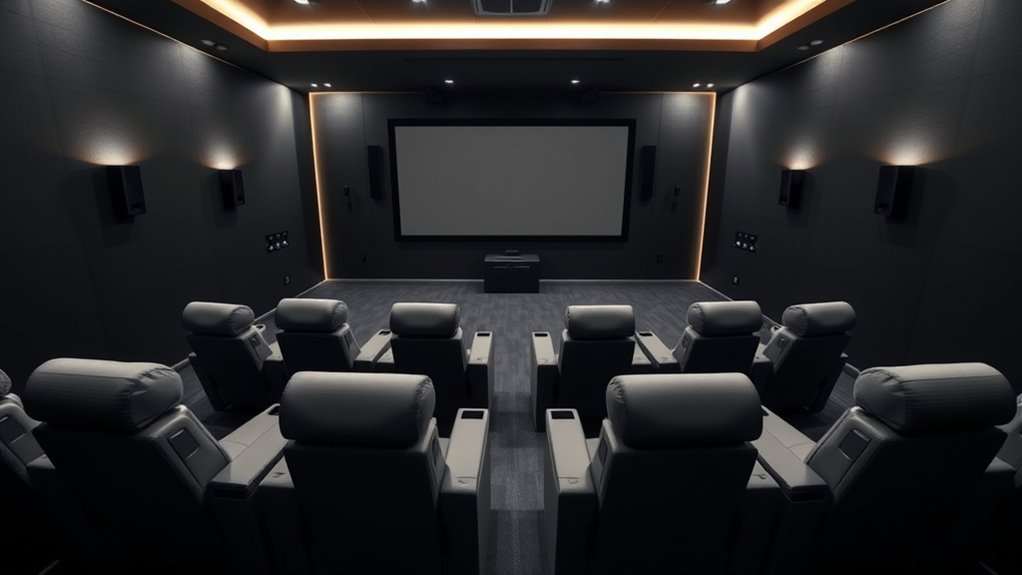
Achieving a balanced audio and visual experience hinges on carefully locating your seats in the home theater. Your goal is to find the spot where sound waves and images align perfectly. Typically, this is the “sweet spot,” usually centered and slightly back from the screen. To optimize this, consider the table below for ideal seating positions:
| Seat Placement | Benefits |
|---|---|
| Center of the room, 1/3 from front | Best for stereo and surround sound |
| Slightly elevated position | Reduced glare and better visuals |
| Equal distance from sides and back | Balanced sound distribution |
Positioning your seats based on these principles ensures immersive sound and crisp images, making your home theater experience truly enjoyable. For the best possible experience, also consider acoustic treatments to enhance sound quality throughout the space. Additionally, experimenting with seat placement can help you fine-tune your setup for optimal comfort and performance. Proper seat placement is crucial for maximizing the effectiveness of your surround sound system and creating an engaging viewing environment.
Tips for Seating in Small vs. Large Home Theaters
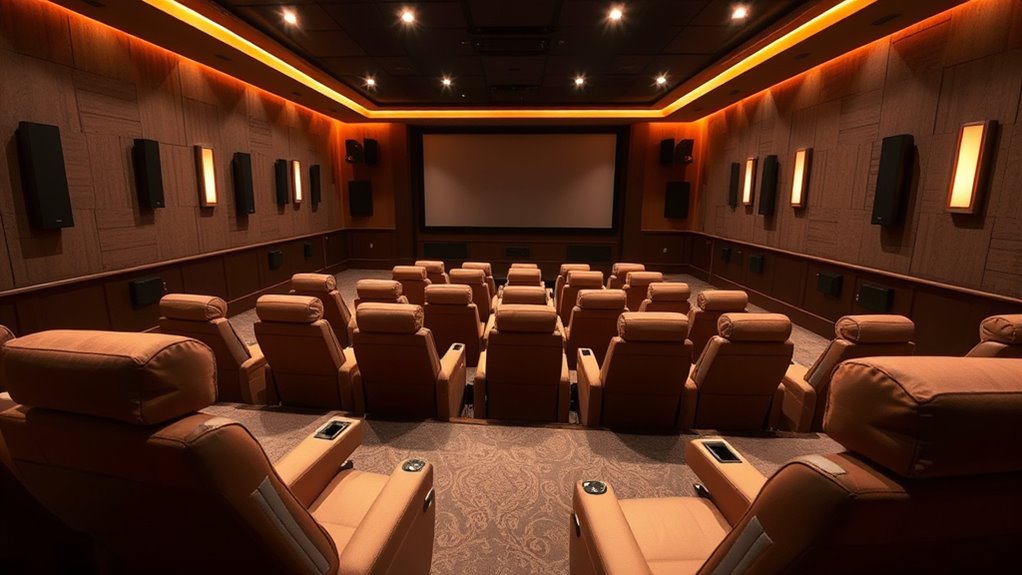
Have you considered how your home theater’s size impacts your seating choices? In smaller rooms, you’ll want to keep seats closer to the screen and speakers to maintain an immersive experience. Avoid placing seats too far back, which can diminish sound clarity and visual impact. Compact spaces benefit from fewer rows and carefully positioned seats to prevent overcrowding. In larger theaters, you have more flexibility. You can add multiple rows, but ensure each seat has a clear line of sight and good sound access. Use tiered or riser seating if possible to improve sightlines and acoustics. Additionally, UST projector rankings by throw distance and brightness can help determine optimal seating placement for a balanced viewing environment. Regardless of size, focus on creating a balanced layout that emphasizes the primary listening and viewing zones, ensuring everyone gets a quality experience without feeling overwhelmed or disconnected.
Considering Elevation and Tiered Seating for Better Acoustics
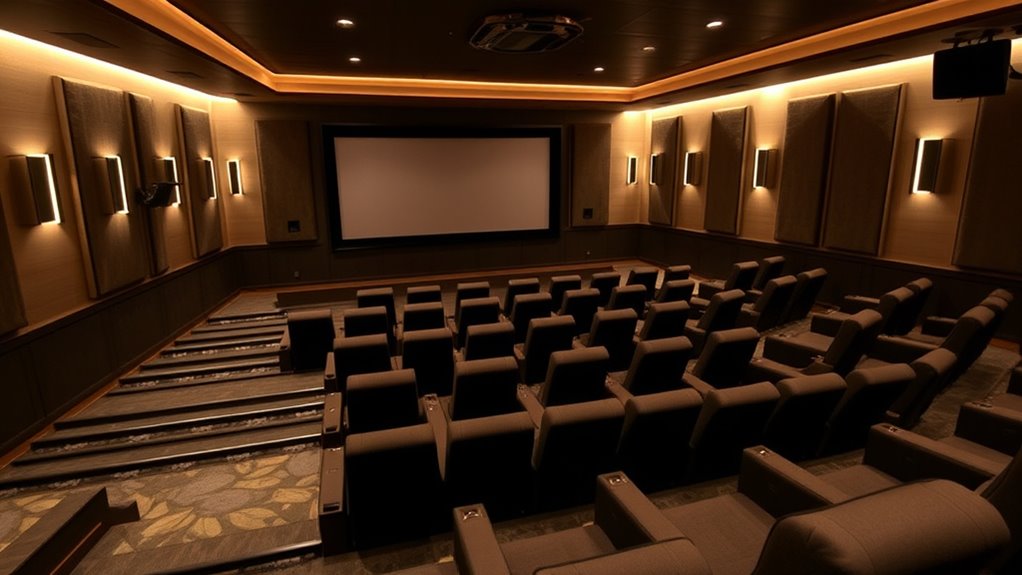
Elevating your home theater seats can substantially enhance both sound quality and the viewing experience. When seats are placed on a tiered platform, sound waves from speakers reach your ears more directly, reducing echoes and improving clarity. Elevation helps prevent obstructions between your seats and speakers, ensuring consistent audio for everyone. Tiered seating also creates better sightlines, allowing everyone to see the screen clearly without craning their necks. Additionally, varying seat heights can help optimize bass response and surround sound immersion, as sound waves bounce more evenly around the room. When planning elevation, consider gentle slopes rather than steep angles to maintain comfort. Properly designed tiered seating balances sightlines and acoustics, making your home theater more immersive and acoustically balanced.
How to Arrange Multiple Rows for Uniform Sound Coverage
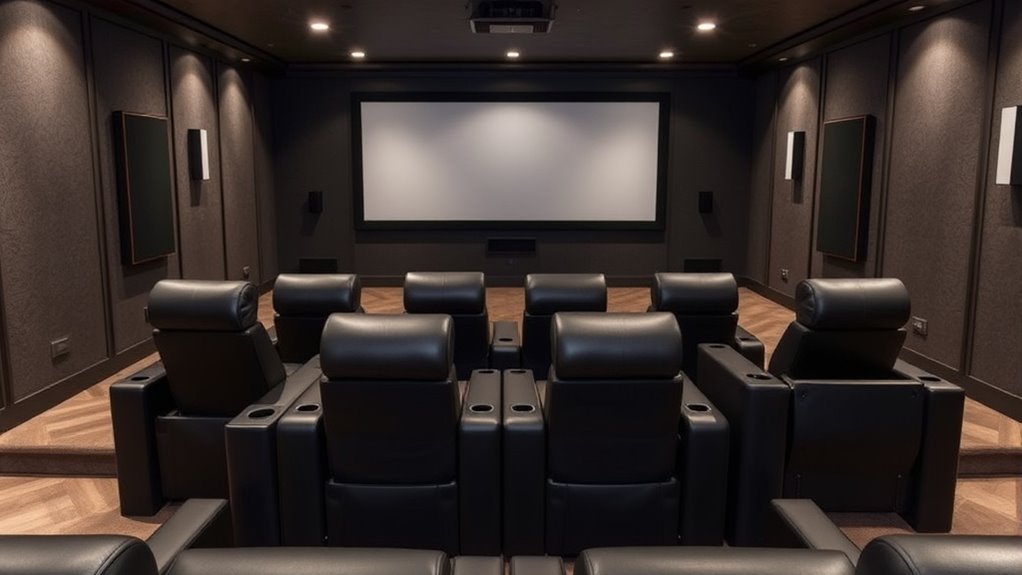
Arranging multiple rows in your home theater requires careful planning to guarantee every seat receives sound evenly. Position the front row directly facing the screen and place the second row behind, maintaining a comfortable distance that prevents sound overlap or dead zones. Use risers or platforms to elevate the second row, ensuring sound reaches all seats equally and avoiding sound shadowing from the row in front. Keep aisles clear to reduce sound interference and prevent seats from being too close to speakers or walls, which can distort audio. Consider symmetry in placement; evenly distribute seats relative to the speakers and screen. Using acoustic treatments like bass traps and diffusers can help assure consistent sound coverage across all rows, creating a balanced listening experience for everyone. Additionally, soundproofing techniques can minimize external noise and improve overall audio clarity within your home theater. Proper speaker placement is essential to achieve uniform sound distribution and immersive audio for all viewers, and implementing room acoustics adjustments can further enhance sound quality and prevent echo or dead spots.
Adjusting Seating for Different Types of Audio Content
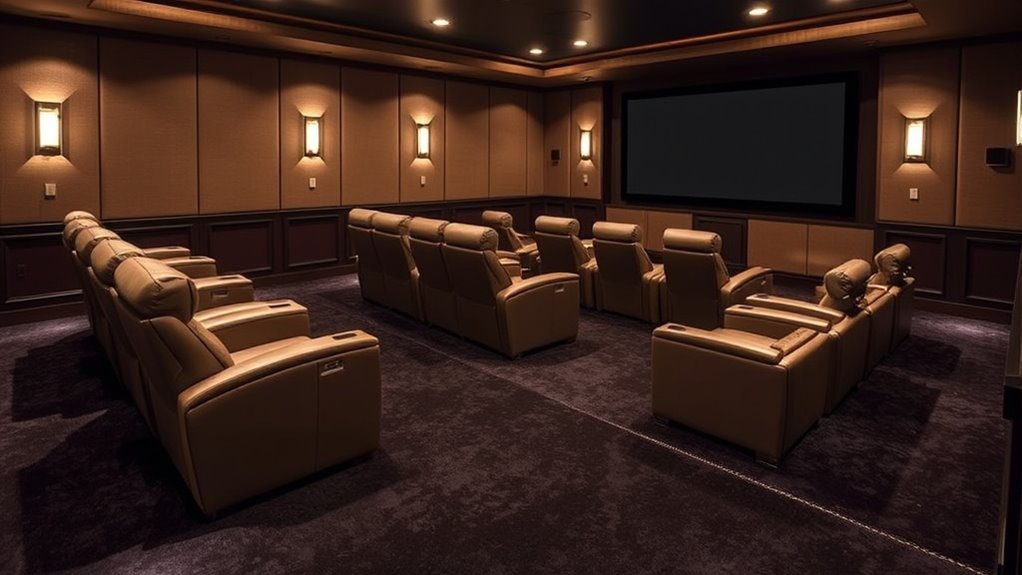
Did you know that different types of audio content can influence the ideal seating position in your home theater? For example, movies with immersive surround sound benefit from seats centered in the room, while music or gaming might require different placements for maximum clarity. To tailor your seating, consider the content you’ll enjoy most. Use the table below as a guide:
| Content Type | Best Seat Position | Surround Sound Focus |
|---|---|---|
| Movies (Surround) | Centered, near the midline | Front and rear speakers |
| Music | Slightly off-center, closer to speakers | Stereo imaging, clarity |
| Video Games | Slightly forward, near the action zone | Dynamic surround for immersion |
Adjust your seats based on your favorite content for the best experience. Recognizing how audio content interacts with your speaker setup can greatly enhance your home theater experience.
Frequently Asked Questions
How Can I Prevent Seat Reflections From Affecting Sound Quality?
To prevent seat reflections from affecting sound quality, you should position your seats away from reflective surfaces like walls or windows. Use acoustic panels or diffusers behind and around your seating area to absorb sound waves. Soft furnishings like cushions and curtains also help reduce reflections. Additionally, angling seats slightly away from speakers minimizes direct sound bouncing, ensuring clearer audio and a more immersive experience.
What Seating Arrangements Optimize Both Viewing Angle and Sound Clarity?
You should position your seats directly facing the screen, slightly elevated if possible, to optimize viewing angles. For sound clarity, place seats at least a few feet back from the speakers to prevent reflections. Keep the seating arrangement centered and avoid obstructing speaker paths. This setup ensures you experience immersive visuals and crystal-clear sound, drawing you into the action without distraction. Small adjustments can make a huge difference in your home theater experience.
How Do I Accommodate Different Audio Formats With Seat Placement?
You should position seats to face the main speakers directly, ensuring that you’re aligned with the ideal listening angles for various audio formats. Place chairs centrally but slightly back from the screen, avoiding obstructions. Use adjustable seating if possible, so you can tweak positions for immersive surround sound or enhanced bass. This way, you enjoy clear audio regardless of the format, creating an optimal listening experience tailored to different sound setups.
What’s the Best Way to Balance Sound for Multiple Viewers?
You want balanced sound for multiple viewers, so position seats thoughtfully. Place seats at equal distances from speakers to guarantee even sound distribution. Avoid clustering everyone in one spot; instead, create a seating layout that surrounds the main speakers. Use adjustable or angled seats to fine-tune sound for each viewer. This approach helps everyone enjoy clear dialogue, immersive surround, and balanced bass, no matter where they sit.
How Does Room Shape Influence Optimal Seating Positions?
Room shape markedly impacts your seating choices. If your room is rectangular, position seats along the central axis to avoid sound reflections from walls, ensuring clear audio and ideal bass response. For irregularly shaped rooms, experiment with different spots to minimize sound distortion and dead zones. You should also consider angling seats toward the screen, avoiding corners, and maintaining distance from walls to improve sound quality and comfort.
Conclusion
Now that you know where to place your seats, the perfect home theater experience is within reach. But remember, small adjustments can make a big difference. Will you find that elusive sweet spot? Can you optimize your seating for every movie and soundtrack? Keep experimenting, stay attentive to sound and sight, and the immersive environment you crave will unfold. The key is in your hands—are you ready to make your theater truly exceptional?