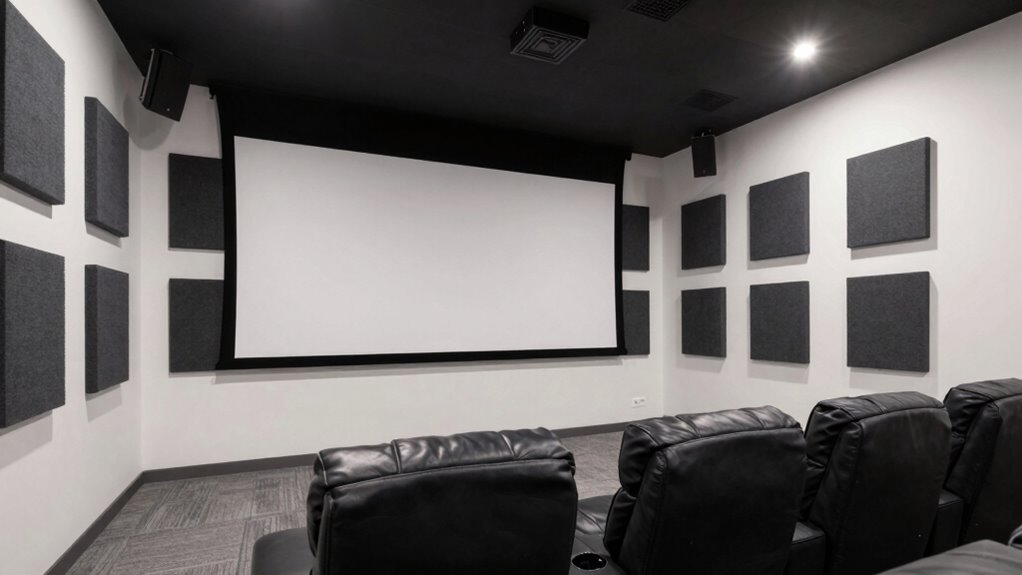

When setting up your new theater room, start by adding bass traps in the corners to control low-frequency resonances. Then, install acoustic panels at ear level on the walls to reduce sound reflections and improve clarity. Focus on these first to create a solid foundation for great sound. As you progress, exploring placement and style options will help you fine-tune both sound and style—stay tuned to learn more about optimizing your space.
Open a free Amazon Business account
Business pricing, bulk buying and tax-exempt orders.
As an affiliate, we earn on qualifying purchases.
Key Takeaways
- Prioritize bass traps in room corners to control low-frequency resonances and improve overall sound clarity.
- Install acoustic panels at ear level on walls to reduce reflections and flutter echoes.
- Choose panels that complement your room’s decor for an aesthetic blend with functional acoustic benefits.
- Properly secure and position panels for optimal performance and long-term effectiveness.
- Experiment with placement to achieve balanced sound absorption and prevent dead zones.

Installing the first panels in your new theater room marks an exciting step toward achieving ideal sound quality and a professional look. These initial acoustic treatments set the foundation for a space that sounds as good as it looks. When choosing your first panels, focus on those that will make the most noticeable difference in sound clarity and overall ambiance. Typically, you’ll want to start with bass traps and acoustic panels designed to absorb mid and high frequencies. Bass traps are essential in corners where low-frequency sound waves tend to gather and cause boomy or muddy audio. Acoustic panels placed strategically on the walls help reduce echoes and flutter echoes, creating a more controlled listening environment. Additionally, proper ventilation plays a crucial role in maintaining indoor air quality, especially in a confined space like a theater room. As you select your panels, keep in mind that visual aesthetics matter just as much as acoustic performance. It’s tempting to overlook design in favor of function, but since your panels will be a visible part of the room, they should complement your style. Many acoustic panels come in various colors, fabrics, and patterns, allowing you to match or contrast with your décor. You might choose fabric-covered panels that blend seamlessly into the walls or go for bold, decorative designs that add character to your space. When considering visual aesthetics, think about how the panels will fit into the overall look of your theater room. Proper placement combined with an attractive design guarantees your room doesn’t just sound great but also looks inviting. Placement is vital in maximizing the effectiveness of your acoustic treatments. Start by positioning bass traps in the corners where sound waves tend to concentrate, then install the acoustic panels at ear level on the walls where sound reflections are most prominent. This targeted approach helps in reducing unwanted resonances and deadening sound reflections, resulting in cleaner, more precise audio. Remember, the goal is to craft a balanced environment where sound waves are absorbed evenly without creating dead zones. Incorporating soundproofing techniques can further enhance your room’s acoustic isolation and prevent sound leakage to other parts of your home. Furthermore, choosing the right materials can significantly impact both the acoustic performance and visual appeal of your panels. Exploring different material options can help you find panels that meet your aesthetic and functional needs. Additionally, paying attention to the installation process ensures your panels are securely mounted and properly aligned for optimal performance. Finally, don’t rush your decision. Take time to listen and adjust as you go, experimenting with different panel locations and styles until you find the perfect balance. Your first panels aren’t just about improving sound—they’re about setting the tone for the entire room’s look and feel. With thoughtful choices, your acoustic treatments will enhance both the visual aesthetics and acoustic performance, transforming your space into a true home theater haven.
As an affiliate, we earn on qualifying purchases.
Frequently Asked Questions
How Do I Choose the Best Panel Materials for Sound Quality?
To choose the best panel materials for sound quality, consider soundproofing options that suit your needs. Select materials like acoustic foam, fiberglass, or mineral wool, which absorb sound effectively. These panels enhance acoustic treatment benefits by reducing echoes and improving clarity. Think about your room’s size and use, then select panels that balance sound absorption with aesthetics, ensuring your theater offers ideal sound quality and a comfortable viewing experience.
What Is the Ideal Placement Height for Theater Panels?
You should place your theater panels at ear level, typically around 3 to 4 feet from the floor, to optimize sound absorption and reduce echoes. This height guarantees they target the primary reflection points, enhancing audio clarity. Additionally, consider visual aesthetics by choosing panel colors and styles that blend seamlessly with your room decor. Proper placement improves sound quality while maintaining an attractive, cohesive look in your theater space.
Are There Any Budget-Friendly Panel Options Available?
Why pay more when budget-friendly options exist? You can find DIY installation panels made from eco-friendly materials that won’t break the bank. Look for foam panels, recycled fabric, or reclaimed wood—it’s like giving your theater a green hug without stretching your wallet. These affordable, sustainable choices are easy to install and can dramatically improve sound quality, proving that good taste and good savings can go hand in hand.
How Do Panels Affect Room Acoustics Over Time?
Panels greatly improve room acoustics over time by maintaining sound absorption and echo reduction. As you use your theater room, panels continue to absorb excess sound waves, preventing echoes from building up and causing distortion. Regularly maintaining and updating your panels guarantees consistent sound quality, so your viewing experience remains ideal. Proper acoustic panels help your room stay acoustically balanced, even after extended use, providing clear, immersive audio every time you watch.
Can Panels Be Customized to Match Room Decor?
Yes, panels can definitely be customized to match your room decor. You can choose colors, textures, and finishes that coordinate with your existing design style, ensuring seamless decor matching. Many providers offer custom options, allowing you to select fabric or material that complements your decor theme. This way, your acoustic panels enhance both the room’s aesthetics and functionality, creating a cohesive, stylish atmosphere that’s perfect for your theater experience.
acoustic wall panels for soundproofing
As an affiliate, we earn on qualifying purchases.
As an affiliate, we earn on qualifying purchases.
Conclusion
Think of your theater room as a canvas waiting for its first brushstrokes. Starting with the right panels sets the tone for an immersive experience, transforming your space from mere room to cinematic sanctuary. Don’t wait to create a haven where every movie feels like a premiere. Remember, the foundation you lay today shapes the magic of tomorrow—so pick your panels wisely and let your home theater dreams unfold with every perfect detail.
As an affiliate, we earn on qualifying purchases.
As an affiliate, we earn on qualifying purchases.
NFL season / tailgating Picks
team gear
As an affiliate, we earn on qualifying purchases.




![2026 Emmy Awards Winners Revealed [Updating Live]](https://beamandbass.com/wp-content/uploads/2026/09/2026-emmy-awards-winners-revealed-updating-live-featured-260x140.jpg)