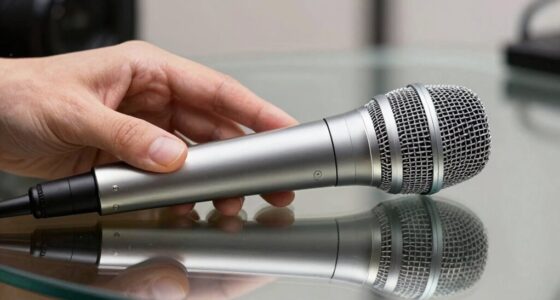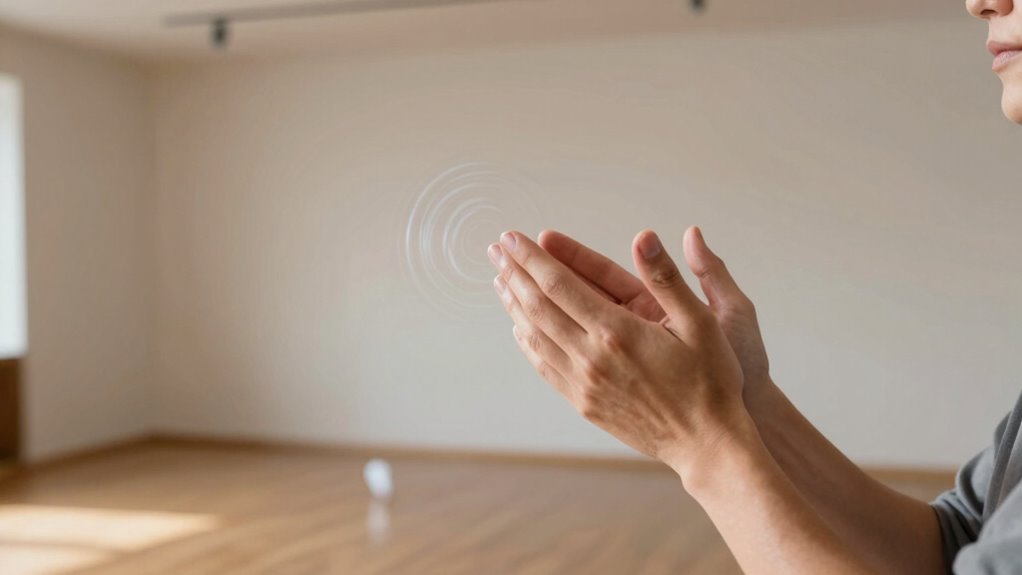

To check for echoes without spending anything, stand somewhere in the room and make a loud, sharp clap. Listen carefully for a delayed sound that follows the initial noise, indicating reflection. Try the test in different areas and vary the volume to see how much an echo appears. Strong echoes mean hard surfaces reflecting sound, while minimal echoes suggest better absorption. Keep exploring these techniques to better understand your space’s acoustics.
Key Takeaways
- Stand in different areas of the room and give sharp, loud claps to detect echoes.
- Listen carefully for delayed repetitions following each clap to identify sound reflection.
- Vary clap volume and position to assess how surfaces affect echo strength.
- Notice if echoes are clear and prolonged or minimal, indicating room surface properties.
- Use results to determine where soft materials or acoustic treatments can reduce problematic echoes.
If you’re concerned about hearing an echo during a clap test, understanding how to perform the proper procedure is essential. Echoes occur because of sound reflection, where sound waves bounce off surfaces and return to your ears, creating a delayed repetition of the original noise. By mastering a simple clap test, you can evaluate the acoustics of a space without needing any specialized equipment. This process is a basic form of acoustic testing, helping you identify areas with excessive sound reflection or poor sound absorption. To ensure accurate results, consider the room’s acoustic properties, which influence how sound waves behave within the space. Start by standing in the middle of the room or the area you want to assess. Make a sharp, loud clap and listen carefully. If you hear a clear, delayed echo following the initial sound, it indicates that sound reflection is strong, and the space may have hard, reflective surfaces like bare walls, tile floors, or ceilings. These surfaces tend to bounce sound waves more aggressively, causing noticeable echoes. Conversely, if your clap sounds crisp and immediate with little or no echo, the room likely has good sound absorption qualities, possibly due to soft furnishings, carpets, or acoustic panels that dampen sound reflection. To perform a more reliable test, repeat the clap from different locations within the space. Pay attention to differences in echo quality. If you find echoes are more prominent near certain walls or corners, those areas might need additional sound absorption treatment. Also, try clapping at different volumes—sometimes softer claps produce less noticeable echoes, so adjusting your volume can help you better understand how sound reflects within the space. Keep in mind that the acoustics of a room are influenced by its shape and size, as well as the materials used in its construction. Larger rooms with high ceilings tend to produce more pronounced echoes, especially if surfaces are hard and flat. Small, furnished spaces typically absorb sound effectively, minimizing echoes. Using this simple clap test regularly can help you identify problem areas and decide where to add soft materials or acoustic treatments to improve sound quality.
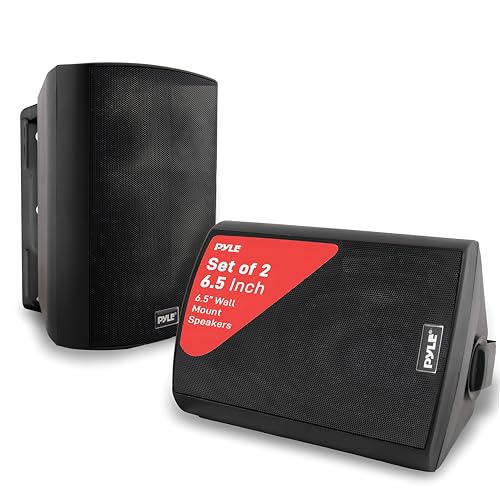
Pyle 6.5-Inch Wall Mount Waterproof Bluetooth Speaker System – Indoor/Outdoor Audio Pair with Built-in Digital Amplifier, Weather-Resistant Housing, High-Power Sound, Easy Installation (Black)
300 WATT POWER: This high powered 2-way full range audio projection loudspeaker system has a maximum power output...
As an affiliate, we earn on qualifying purchases.
Frequently Asked Questions
Can the Clap Test Determine the Exact Size of a Room?
No, the clap test can’t determine the exact size of a room. It mainly reveals sound reflection patterns and how echo behaves, which can give you a rough idea of room dimensions. By listening to how the clap sound bounces, you can identify large or small spaces, but precise measurements require more detailed tools. The test helps you understand echo characteristics, not exact room size.
Is the Clap Test Effective Outdoors or Only Indoors?
Like a pebble tossed into a pond, the clap test’s effectiveness fades outdoors. You won’t get a clear sense of echo distortion because outdoor acoustics scatter sound waves, making echoes weak or nonexistent. Indoors, walls reflect sound, creating noticeable echoes. Outside, open space absorbs and disperses sound, so the clap test isn’t reliable for gauging echo quality. It’s best reserved for enclosed environments where echoes can truly bounce back.
How Loud Should I Clap for an Accurate Echo Check?
You should clap loudly enough to produce a clear sound reflection, but prevent overdoing it, which may cause distortion. Aim for a steady, sharp clap that creates an acoustic measurement you can easily hear echo back. This way, your sound reflection will be distinct, helping you accurately assess echo quality. The right volume ensures reliable results without overwhelming the environment, especially indoors where echoes are more pronounced.
Can Background Noise Affect the Clap Test Results?
Yes, background noise can definitely influence your clap test results. Ambient interference from sounds like conversations, traffic, or appliances can mask the echo, making it harder to detect accurately. To get the best results, find a quiet environment with minimal background noise. Clapping in a calm space ensures you hear the echo clearly, giving you a more precise assessment of your room’s acoustics.
How Often Should I Perform the Clap Test for Reliable Data?
You should perform the clap test weekly to keep noise interference from muddying your data. Think of it as tuning a musical instrument—you need regular checks to stay in harmony. Testing too often might invite unnecessary noise interference, while infrequent tests risk missing changes in your echo environment. Stick to a consistent testing frequency, like once a week, to guarantee your results stay reliable and accurate over time.

Herdio 6.5 Inch 800W Outdoor Bluetooth Speakers Wired Waterproof with Multifunctional Amplifier, Wall Mount Speaker System for Patio Home Poolside Deck Backyard(2 Pairs,Black)
【Full-Range Speakers】The high powered full range indoor outdoor speakers wired waterproof has a maximum power output of 800...
As an affiliate, we earn on qualifying purchases.
Conclusion
Next time you’re in a quiet space, give a loud clap and listen carefully. It’s funny how, just as you notice the faint echo bouncing back, a nearby window or wall suddenly comes into view, almost like it’s been waiting to reveal itself. That simple clap becomes your secret tool, turning an everyday moment into a quick, free way to check your space’s acoustics. Sometimes, the best solutions come when you least expect them.

STUDIOFINIX 6.5 Inch Outdoor Speakers Wall-Mounted 800W - Waterproof and High-Performance Audio Solution for Indoor/Outdoor,Home,Patio,Garden,Backyard(4 Passive Speakers Bundle/Black)
〖Powerful Performance〗: Boasting a peak power handling of 800 watts, it delivers a full range of dynamic sound...
As an affiliate, we earn on qualifying purchases.

Polk Audio Atrium 4 Weatherproof Outdoor Speakers with Powerful Bass (Pair, Black), All-Weather Durability, Broad Sound Coverage, Speed-Lock Mounting System
EASY INSTALLATION - One-click speed-lock mounting bracket offers anti-slip, one-handed installation. Mount these outdoor speakers wired vertically or...
As an affiliate, we earn on qualifying purchases.