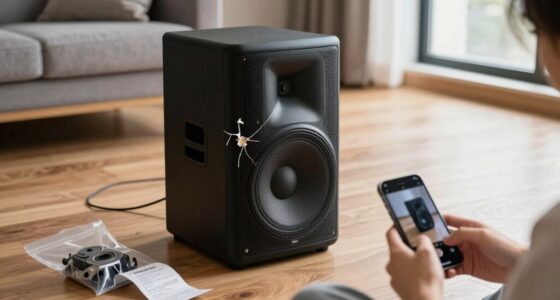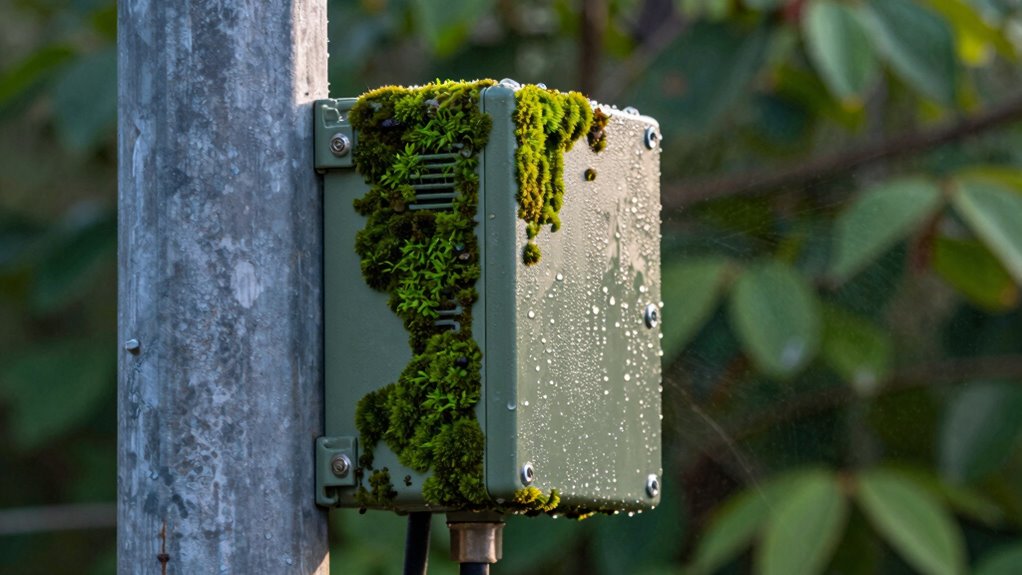

To keep outdoor electronics safe from humidity and dew, you should use weatherproof enclosures with proper seals and desiccants to block moisture. Protect against power surges by installing surge protectors and grounding systems. Regularly inspect equipment for signs of corrosion and moisture buildup. Ensuring good insulation, weatherproof cables, and proper installation practices greatly reduce risks. Staying proactive with these measures will help you learn more about safeguarding your devices in challenging environments.
Key Takeaways
- Use weatherproof enclosures with proper sealing and gaskets to prevent moisture ingress.
- Incorporate desiccants inside enclosures to absorb residual humidity and reduce dew formation.
- Install surge protectors and proper grounding to safeguard against power surges and electrical faults.
- Regularly inspect equipment for signs of moisture, corrosion, or damage, and perform maintenance promptly.
- Ensure all cables and connectors are weatherproof, rated for outdoor use, and properly sealed to prevent water contact.

Outdoor electronics are used more frequently than ever, but they come with unique safety risks. Exposure to the elements, especially humidity and dew, can cause serious damage if you’re not prepared. Moisture is a primary culprit behind corrosion, which can compromise the functionality and safety of your devices. To combat this, you need to focus on corrosion prevention strategies. One of the most effective ways is to guarantee your equipment is housed in weatherproof enclosures. These enclosures act as barriers, shielding your electronics from water, dust, and other environmental hazards that can accelerate corrosion. When selecting weatherproof enclosures, look for those with proper sealing and gaskets to maintain a tight fit and prevent moisture ingress. This simple step can greatly extend the lifespan of your outdoor electronics and reduce the risk of failure. Additionally, understanding the thermal behavior of electronic devices helps in choosing appropriate protective measures to prevent overheating or condensation issues. Dew forms when moisture in the air condenses on cooler surfaces, and if your electronics aren’t protected, this moisture can seep into sensitive components. To minimize this risk, consider using weatherproof enclosures that provide a tight seal, preventing dew from reaching internal parts. Additionally, you can employ desiccants inside the enclosures to absorb residual moisture. Proper ventilation can also help, but it must be designed carefully to avoid letting water or dust inside. Regular inspections are essential; look for signs of moisture buildup or corrosion, and address issues promptly before they cause more damage. Power management is equally essential when it comes to outdoor electronics safety. Power surges caused by lightning or fluctuations in the grid can damage your devices or create safety hazards. Installing surge protectors and grounding systems is necessary to safeguard your equipment. Proper wiring and weatherproof junction boxes help prevent accidental shorts and electrical faults. When working with outdoor power sources, always ensure that cables and connectors are rated for outdoor use and are weatherproof. Proper insulation and secure connections reduce the risk of moisture-related shorts, which can lead to fires or equipment failure.
Frequently Asked Questions
How Can I Tell if Outdoor Electronics Are Water-Damaged?
You can tell if outdoor electronics are water-damaged by checking for corrosion indicators like rust or discoloration on connectors and circuit boards. Conduct moisture testing using a moisture meter or look for signs of condensation inside the device. If you notice any corrosion, rust, or moisture buildup, it’s a clear sign that water damage has occurred. Always inspect thoroughly to prevent further damage or potential electrical hazards.
What Are the Best Protective Enclosures for Outdoor Devices?
You should choose protective enclosures that use weatherproofing techniques like sealing gaskets and corrosion-resistant materials. Look for enclosures made from UV-rated plastics or coated metals that resist rust and corrosion. These features guarantee your outdoor devices stay safe from humidity, dew, and rain. Properly sealed enclosures prevent water ingress, helping extend the lifespan of your electronics and maintaining reliable operation in various weather conditions.
How Often Should Outdoor Electronics Be Inspected for Moisture?
You should inspect your outdoor electronics at least quarterly to guarantee corrosion prevention and moisture monitoring. Regular checks help you catch early signs of moisture buildup, dew, or humidity that can damage your devices. Staying vigilant allows you to maintain ideal performance, extend device lifespan, and prevent costly repairs. Make inspections a routine part of your maintenance schedule, so you can protect your investment and keep everything functioning smoothly.
Are There Specific Safety Standards for Outdoor Electronic Installations?
Yes, there are specific safety standards for outdoor electronic installations. You should follow grounding practices to prevent electrical shocks and guarantee equipment safety. Implement surge protection devices to guard against voltage spikes caused by lightning or power surges. Always adhere to local codes and manufacturer guidelines, and consider standards like IEEE or IEC for thorough safety measures. Regular inspections and proper installation help maintain safe, reliable outdoor electronic systems.
What Backup Power Options Are Recommended for Outdoor Electronics?
Imagine a storm rolling in as your outdoor electronics stand firm. To keep them safe, you should consider solar backup systems and battery storage. These options provide reliable power when the grid fails, ensuring your devices stay operational. Solar backup harnesses sunlight to generate energy, while battery storage keeps that power on hand. Together, they create a resilient shield against power outages, safeguarding your outdoor electronics in any weather.
Conclusion
By mastering moisture management and maintaining proper power practices, you protect your outdoor electronics from damage. Stay vigilant against humidity, dew, and dampness, and always prioritize safety with smart setups. Remember, safeguarding your gadgets isn’t just a task—it’s a timely, tactical technique that transforms trouble into trust. With careful caution and consistent checks, you’ll create a secure, stress-free outdoor space. Keep corrosion at bay, and enjoy your electronics everywhere with ease and confidence.