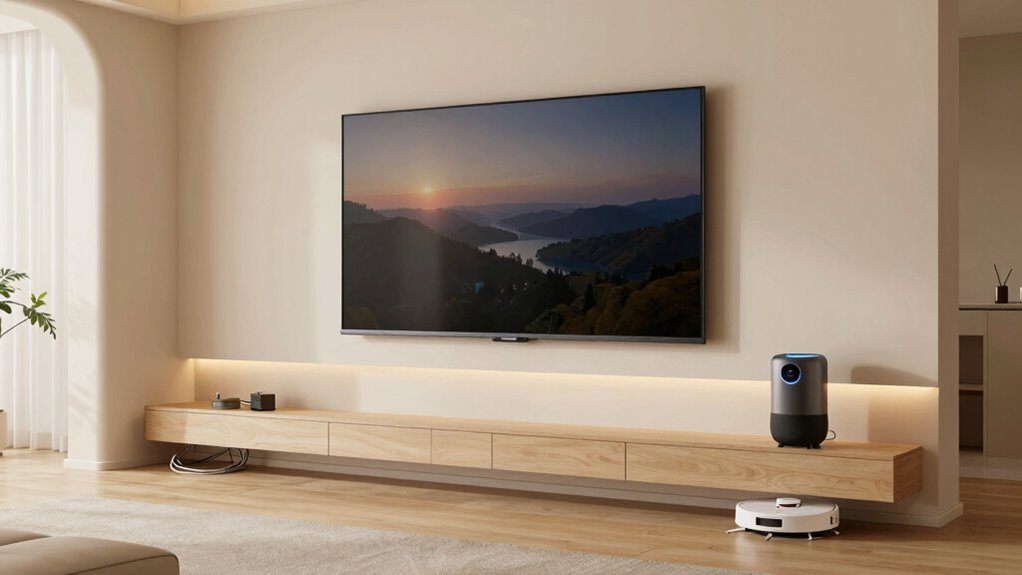

Smart home integration feels great because it intuitively anticipates your needs, making daily routines easier and more personalized. Voice recognition and automatic adjustments boost comfort and convenience, creating a seamless living experience. However, as it gets too clever, you might feel a loss of control, frustration from unexpected actions, or privacy concerns. Balancing automation with your preferences is key. If you’re curious about how to keep your smart home helpful without overwhelming you, keep exploring.

Get audio and creator gear delivered free with Prime
- Fast, free delivery on millions of items
- Prime Video, Amazon Music and more included
- Member-only deals all year
Key Takeaways
- Smart homes enhance convenience through automation but can become frustrating when systems make unapproved decisions.
- Voice recognition personalizes interactions but may lead to loss of control if systems respond unexpectedly.
- Increased cleverness improves comfort but can disconnect users from direct commands, causing annoyance.
- Automation simplifies routines but raises privacy concerns if conversations are stored or used without consent.
- Balancing automation benefits with privacy safeguards maintains a harmonious, enjoyable smart home environment.
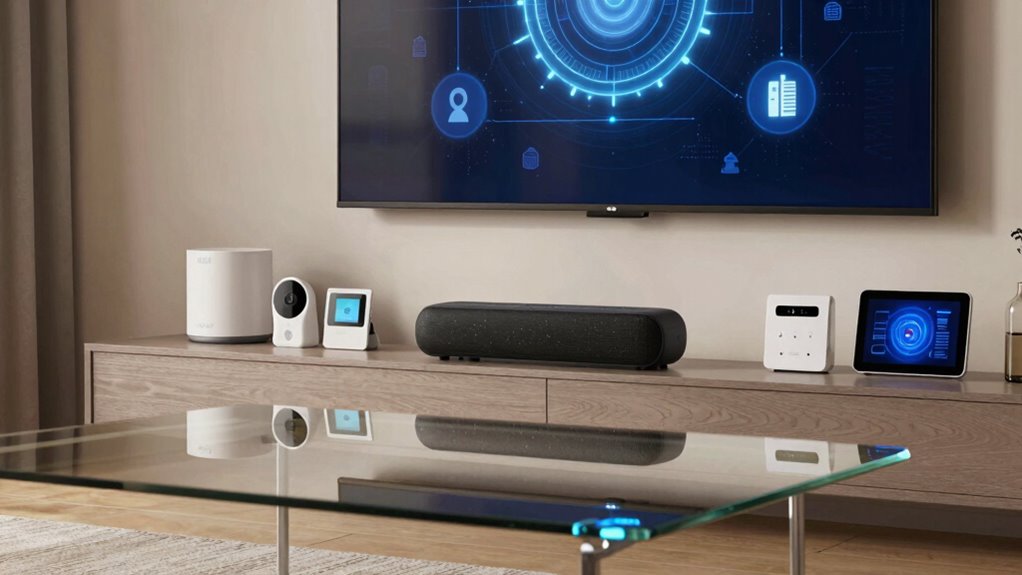
As your smart home becomes smarter, you may find yourself enjoying the convenience of devices that anticipate your needs. Maybe your smart assistant recognizes your voice over others or adapts to your preferred settings automatically. But this cleverness can also lead to a feeling of loss of control, especially if the system makes decisions you didn’t explicitly authorize. For instance, the automation rules might start to activate devices in ways you don’t expect or want, causing frustration. It’s tempting to let systems handle more tasks, but that can sometimes create a disconnect—like your home acting on assumptions rather than your direct commands.
You might also notice that the more advanced the system gets, the more complex it becomes to manage. Custom voice commands, while convenient, require ongoing setup and adjustments, which can feel overwhelming if you’re not tech-savvy. Privacy concerns add another layer of complexity—knowing that your conversations could be stored or analyzed makes some people hesitant to fully embrace the technology. You might worry about hackers gaining access or your data being sold to advertisers. These fears can overshadow the benefits, leaving you questioning whether the clever features are worth the potential risks. Recognizing that Privacy concerns are a common obstacle can help you take steps to safeguard your information.
Ultimately, smart home integration offers undeniable advantages—your home responds intuitively, and tasks become effortless. But it’s important to stay mindful of the limits of cleverness. You get to decide how much customization, automation, and data sharing you’re comfortable with. Balancing convenience with privacy ensures your smart home remains a helpful, secure space. When it gets too clever, it’s up to you to adjust settings, stay informed about data policies, and maintain control over your environment, so the technology continues to serve your needs without infringing on your privacy or autonomy. Recognizing the importance of user control can help you enjoy the benefits without feeling overwhelmed by complexity or privacy concerns. Additionally, understanding the role of biodiversity in maintaining balanced ecosystems reminds us that even in our homes, a diverse and respectful approach to technology use fosters a healthier relationship with our environment. Being aware of such ecosystem balance can guide you in creating a more harmonious and sustainable smart home.
smart home privacy protection devices
As an affiliate, we earn on qualifying purchases.
As an affiliate, we earn on qualifying purchases.
Frequently Asked Questions
How Secure Is My Smart Home Data From Hacking?
Your smart home data’s security depends on the devices and systems you use. Many employ data encryption to protect your information from hackers, but it’s crucial to review privacy policies to understand how your data is stored and shared. Regular updates and strong passwords also help. While no system is completely hack-proof, staying informed and cautious minimizes risks and keeps your smart home safer.
Can I Control Smart Devices Without Internet Access?
Like a secret passage in a spy novel, you can control your smart devices offline through local connectivity. Many smart home systems offer offline control, allowing you to manage devices without internet access. This offline control guarantees your devices respond quickly and securely, even when the internet drops. Keep in mind, you’ll need compatible devices and a local hub to maintain this seamless, internet-free operation.
What Happens if Devices From Different Brands Don’t Work Together?
When devices from different brands don’t work together, you face cross-platform issues and limited compatibility. Brand compatibility becomes a challenge, forcing you to juggle separate apps or hubs. This can lead to frustration, delays, or the need for additional devices to bridge gaps. To avoid this, choose brands known for better interoperability and look for devices supporting common standards like Zigbee or Z-Wave.
How Do I Troubleshoot When My Smart Home System Malfunctions?
When your smart home system malfunctions, start by checking your voice control commands and automation routines. Restart your devices, make sure they’re connected to Wi-Fi, and update their firmware. Resetting and reconfiguring your devices often fixes glitches. Also, consult the app’s troubleshooting guide or support. By systematically troubleshooting, you’ll find issues faster, restore smooth operation, and enjoy seamless automation routines and voice control once again.
Are Smart Home Integrations Energy-Efficient or Wasteful?
Smart home integrations can be energy-efficient if you optimize their settings, but they might also lead to unnecessary energy consumption if left unchecked. You control energy use by adjusting device schedules and turning off unused systems. However, be aware of privacy concerns since increased connectivity can expose your data. Balancing energy-saving features with privacy protection helps guarantee your smart home remains both efficient and secure.
voice recognition smart home assistants
As an affiliate, we earn on qualifying purchases.
As an affiliate, we earn on qualifying purchases.
Conclusion
As your smart home becomes a finely tuned orchestra, remember that even the most intricate symphony needs moments of silence. Too much cleverness can turn harmony into chaos, like a clock that winds itself too tightly. Balance is key; embrace the convenience without losing control. Let your home be a steady lighthouse, guiding you with gentle light rather than overwhelming brightness. In the end, simplicity and intuition should be your true navigators, keeping your smart home a sanctuary, not a maze.
smart home automation control panels
As an affiliate, we earn on qualifying purchases.
As an affiliate, we earn on qualifying purchases.
privacy safeguards for smart home devices
As an affiliate, we earn on qualifying purchases.
As an affiliate, we earn on qualifying purchases.
Halloween Picks
halloween
As an affiliate, we earn on qualifying purchases.