TL;DR

Get audio and creator gear delivered free — and shop member deals
- Fast, free delivery on millions of items
- Access to Prime Big Deal Days deals on October 6–7
- Prime Video, Amazon Music and more included
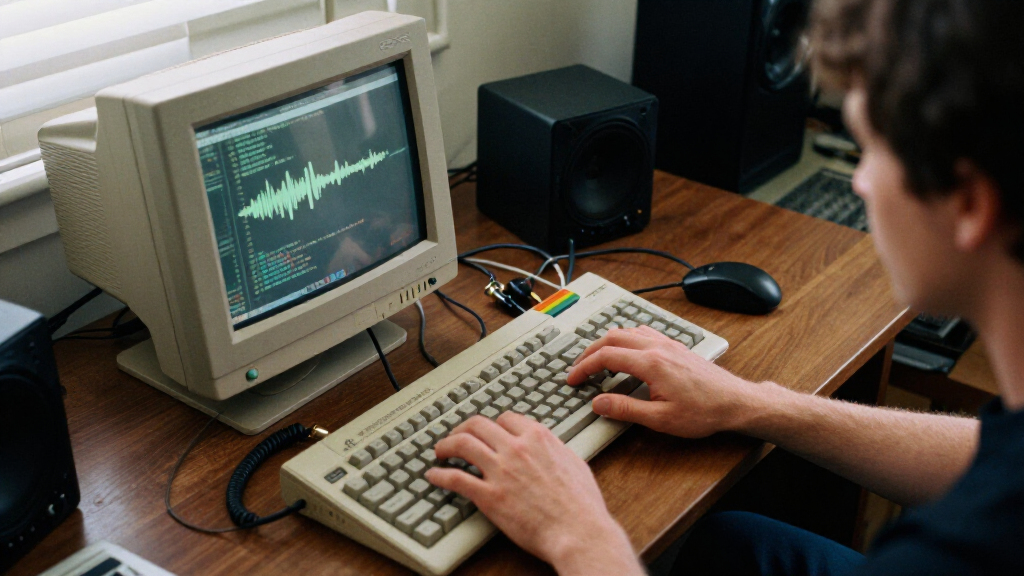
A Bumbershoot Software report published Sept. 26 describes a software method for playing digital audio through the ZX Spectrum’s 1-bit beeper. The author says the demo ran on a 48K Spectrum, an Omni 128 rebuild and several emulators, while noting that playback is quiet without amplification and uses nearly all available RAM for the samples tested.
Bumbershoot Software has published a demonstration of digital audio played through the ZX Spectrum’s 1-bit beeper, reporting successful runs on a 48K Spectrum, a modern Omni 128 rebuild and multiple emulators. The technique matters to retro-computing enthusiasts because it produces sampled audio using the machine’s simple speaker output, without a dedicated sound chip.
The report describes a software-driven playback method that rapidly switches the beeper on and off to shape each audio pulse. By varying the pulse width while keeping each sample’s overall timing consistent, the program aims to create a more finely varying sound wave than a simple on-off tone. The Spectrum has no dedicated timer for setting the sample rate or pulse width, so the program must handle both in software.
The author says the demo was tested on a 48K Spectrum by a Mastodon user identified as “gmc,” and on the Omni 128, a modern system rebuild, by Tom Harte. The author also reports compatibility with Fuse, EightyOne, Zesarux, Spectaculator and Clock Signal emulators. These are the report’s stated test results; it does not provide independent test documentation in the supplied material.
There are practical limits. The author says playback is very soft without an external amplifier, and samples at the length and quality used in the experiments take effectively all available RAM. The implementation also required two full rewrites and tightly timed assembly code, according to the report.
Audio From a Single Speaker
The demonstration shows how software can extend the sound output of hardware built around a basic one-bit speaker. For Spectrum developers and preservation communities, it offers a way to explore sampled audio on machines that lack a dedicated audio chip, while showing the trade-offs in volume, memory and processor time.
The result is a technical demonstration rather than evidence that the method is practical for typical games or programs. A need for nearly all available RAM and an external amplifier could limit longer or louder uses. The report says the technique has straightforward possible improvements, but the supplied account does not detail them.
From PC Speaker to Spectrum
The author traces the approach to early 1990s DOS games that played sound effects or music through the PC speaker. The report says the PC was easier to program for this purpose because a programmable hardware timer could control pulse timing independently of the main system clock. The Spectrum lacks that timer, requiring cycle-counted software to produce the pulses and maintain sample timing.
That difference shaped the implementation. The author says assembly language was needed to meet the timing constraints and manage the limited registers. The project forms the final installment of a series about the Spectrum’s beeper; the author also planned to discuss sound engines by Dmitry Milk and Michael J. Mahon’s RTSynth for the Apple IIe, which address related but different playback problems.
““But it does work.””
— Bumbershoot Software report
Limits of the Demonstration
The supplied report does not specify the demo’s exact sample duration, audio format or precise RAM usage. It also does not provide measurements of playback volume or explain how performance varies among Spectrum models. The author says the method could be improved, but the specific changes and their effects are not described in the supplied material.
Further Spectrum Sound Tests
The author said the series would close with discussion of sound engines by Dmitry Milk and Michael J. Mahon, including RTSynth for the Apple IIe. No release date or follow-up test schedule is given. The immediate next step for readers seeking to assess the technique is to run the demo on compatible hardware or an emulator and compare its sound and resource demands with the author’s account.
Key Questions
What is the ZX Spectrum beeper technique?
It uses software to switch the Spectrum’s 1-bit speaker output on and off with carefully timed pulses, varying pulse width to play sampled audio.
Where has the demo been tested?
The author reports tests on a 48K Spectrum and an Omni 128 rebuild, and compatibility with Fuse, EightyOne, Zesarux, Spectaculator and Clock Signal emulators.
Does playback need extra hardware?
The author says the sound is very soft without an external amplifier. The report does not say an amplifier is required for the program to run.
How much memory does the audio use?
For samples of the length and quality tested, the author says the required RAM is effectively all of it. The supplied material gives no exact byte count.
Source: hn
Fall Picks
fall essentials
As an affiliate, we earn on qualifying purchases.