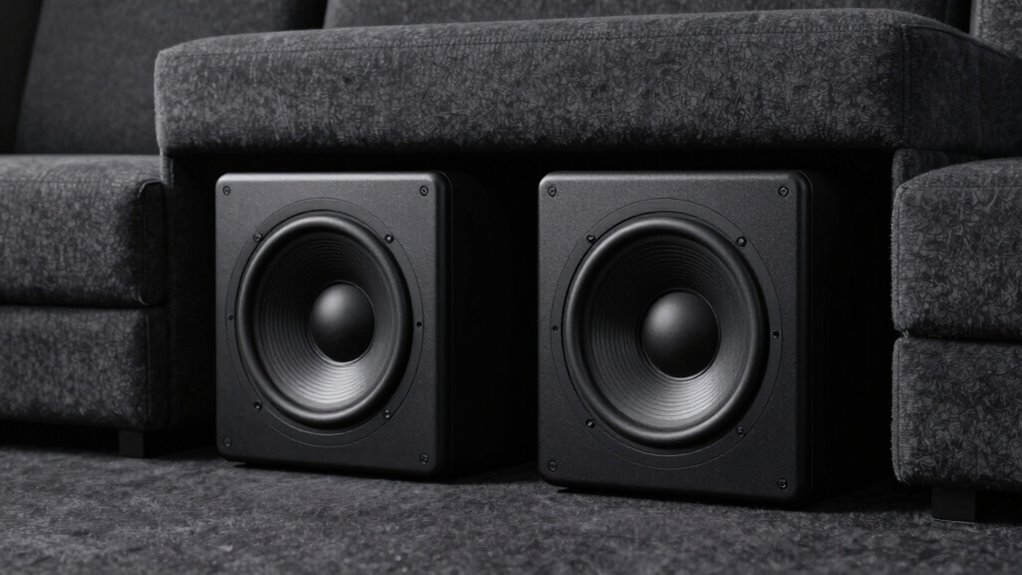

Using dual subs rather than one big sub creates a smoother sound experience because it distributes bass more evenly across the room. Multiple subs reduce room resonances and phase cancellation, which can cause peaks and dips in bass response. This even distribution helps fill in sound dips and minimizes boominess or hollow tones. Proper placement and calibration make a big difference. Keep exploring how this setup can transform your listening for even better, more natural bass performance.
Key Takeaways
- Multiple subs distribute bass energy more evenly, reducing peaks and dips caused by room modes.
- Two subs create multiple sound emission points, minimizing resonances and improving bass consistency.
- Proper phase alignment between two subs prevents cancellation and enhances smooth sound reinforcement.
- Calibration techniques optimize the interaction between subs, resulting in a more balanced and natural bass response.
- Dual subs reduce the impact of room resonances, leading to a more seamless and immersive listening experience.
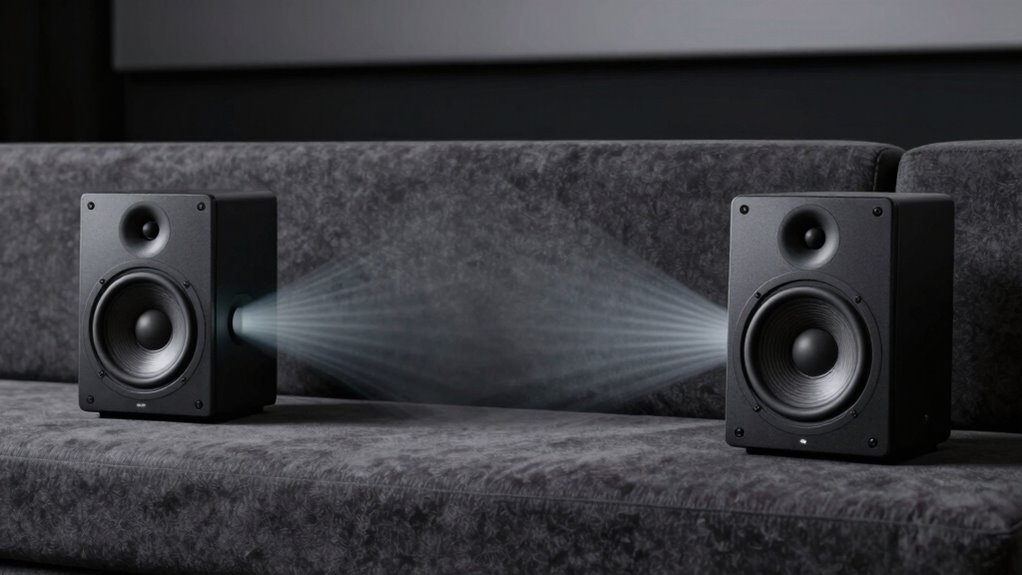
Have you ever wondered why two smaller subs often deliver a smoother bass experience than a single large sub? The answer lies in how sound waves interact within your room, especially when considering phenomena like phase cancellation and room modes. When you use just one subwoofer, you might notice uneven bass response, with some notes feeling boomy or hollow. This happens because of room modes—resonances at specific frequencies caused by the dimensions of your space. These resonances amplify certain bass notes, creating peaks, while others get canceled out, leading to dips in sound quality. A single sub struggles to evenly distribute bass energy, making the experience less smooth.
Adding a second subwoofer can considerably reduce these issues. By placing two smaller subs in different locations, you create multiple points of sound emission that help even out the bass response. When both subs operate in unison, they produce sound waves that combine more evenly across the room. This reduces the severity of room modes and helps fill in the dips caused by phase cancellation. Phase cancellation occurs when sound waves from the subwoofers are out of sync, causing some frequencies to cancel each other out. With two subs, you can better manage phase relationships, ensuring the sound waves reinforce rather than cancel each other. Understanding room acoustics is crucial for optimizing this setup effectively. Additionally, proper subwoofer placement and calibration are essential to maximize these benefits.
The key advantage of dual subs is their ability to minimize the effects of room modes. Instead of relying on a single point source, which can accentuate certain resonances, two subs distribute the bass energy more uniformly. This results in a smoother, more consistent bass response, where you won’t feel sudden jumps or dips in sound. Proper calibration techniques such as phase alignment and level matching can further enhance the bass smoothness. They help you fine-tune the system so that the sound waves from each sub work together seamlessly, reducing problematic phase interactions. Proper placement and calibration can significantly enhance the overall sound experience, making subwoofer placement an essential consideration. Utilizing measurement tools can also aid in achieving optimal sound quality.
In essence, two smaller subs give you more control over how bass interacts with your room’s acoustics. They help mitigate the unwanted effects of phase cancellation and room modes, creating a more balanced and natural sound experience. Instead of feeling overwhelmed by uneven bass or noticing specific resonances, you’ll enjoy a bass that feels integrated and smooth throughout your listening space. This approach doesn’t just improve sound quality; it transforms your entire listening experience into something more immersive and enjoyable, making dual subs a smart choice for audiophiles and home theater enthusiasts alike.
As an affiliate, we earn on qualifying purchases.
Frequently Asked Questions
How Does Speaker Placement Affect Perceived Smoothness?
Speaker placement markedly impacts perceived smoothness by affecting phase alignment and frequency response. When you position your speakers carefully, you minimize phase issues, ensuring sound waves align properly. This reduces peaks and dips in frequency response, creating a more seamless and balanced sound. Proper placement helps your dual subs work together harmoniously, resulting in a smoother, more consistent bass experience without sudden volume changes or uneven response.
Can Dual Subs Improve Overall Sound Quality Beyond Smoothness?
Yes, dual subs can enhance overall sound quality by improving bass integration and making calibration easier. With two subs, you get more even sound distribution, reducing dead spots and minimizing phase issues. Proper subwoofer calibration guarantees seamless blending with your main speakers. This combination results in clearer, more accurate bass across your listening area, elevating your entire audio experience beyond just feeling smoother.
What Are Common Mistakes When Setting up Dual Subwoofers?
When setting up dual subwoofers, common mistakes include neglecting proper subwoofer calibration and phase alignment. You might overlook adjusting the phase settings, causing cancellation or reinforcement issues. Make certain you calibrate each subwoofer accurately with your receiver’s test tone, and align their phase settings to avoid uneven bass response. Failing to do these steps can result in muddled sound and less smooth bass, defeating the benefits of dual subwoofers.
Do Dual Subs Require More Power or Amplifiers?
You need more power and amplifiers for dual subs to perform effectively. When setting up, proper subwoofer calibration ensures they work seamlessly together. Dual subs don’t just double the bass; they often require separate amplifier channels or more powerful amps to handle the increased demand. Think of it as giving each sub its own stage, so neither is left in the shadows. This guarantees smooth, balanced sound without distortion.
How Does Room Acoustics Influence Subwoofer Performance?
Room acoustics substantially influence your subwoofer performance. Room modes cause bass frequencies to resonate unevenly, creating boomy or dull sounds. Acoustic treatments, like bass traps and diffusers, help absorb and diffuse sound waves, minimizing these issues. By controlling room modes and improving sound clarity, your dual subs will produce smoother, more consistent bass, enhancing your overall listening experience. Proper room setup is essential for ideal subwoofer performance.
best subwoofer calibration tools
As an affiliate, we earn on qualifying purchases.
As an affiliate, we earn on qualifying purchases.
Conclusion
So, it’s pretty wild how adding that second subwoofer can unexpectedly make your sound feel smoother—almost like a coincidence, right? It’s as if the universe conspired to give your ears a more seamless experience. When your dual subs work together, they cancel out awkward bumps and dips, creating a more balanced bass. It’s the kind of small upgrade that unexpectedly transforms your listening vibe, making everything feel just a little more perfect than expected.
subwoofer phase alignment device
As an affiliate, we earn on qualifying purchases.
As an affiliate, we earn on qualifying purchases.
room acoustic treatment for subwoofers
As an affiliate, we earn on qualifying purchases.
As an affiliate, we earn on qualifying purchases.