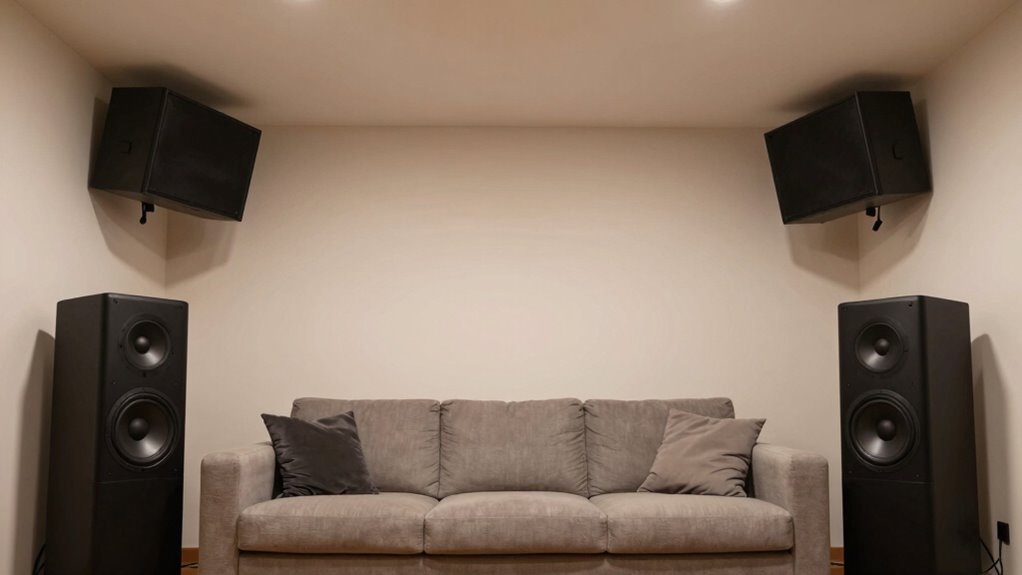
To create an immersive surround sound experience, position your front speakers directly facing your listening spot at about 22-30° angles for natural imaging. Surround and rear speakers should be placed about 135° from your ears, slightly behind or to the sides, and aimed toward your listening position. Keep all speakers at ear level and symmetrical for balanced sound. Proper angles and placement make your setup truly surround you—continue to explore for more expert tips.
Key Takeaways
- Position front speakers at 22-30° angles toward the listening position for a natural, immersive soundstage.
- Place surround and rear speakers approximately 135° from the listening area for effective surround effects.
- Keep all speakers at ear level when seated to ensure accurate sound localization and clarity.
- Angle speakers inward (“toe-in”) to focus sound directly toward the listener, enhancing stereo imaging.
- Maintain symmetry and proper distances around the listening position to create a cohesive and enveloping surround sound environment.

Herdio 6.5 Inch 800W Outdoor Bluetooth Speakers Wired Waterproof with Multifunctional Amplifier, Wall Mount Speaker System for Patio Home Poolside Deck Backyard(2 Pairs,Black)
【Full-Range Speakers】The high powered full range indoor outdoor speakers wired waterproof has a maximum power output of 800...
As an affiliate, we earn on qualifying purchases.
Understanding the Optimal Listening Zone
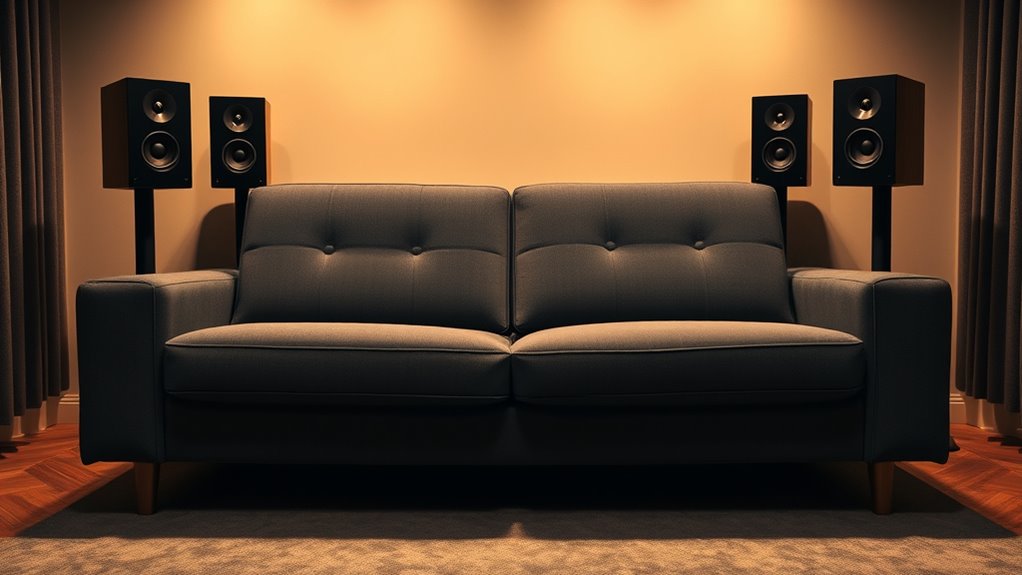
To experience the best sound quality, you need to understand the ideal listening zone. This zone is the area where sound waves from your speakers combine harmoniously, creating a balanced, immersive experience. Typically, it’s centered around your primary listening position, such as your sofa or chair. Keep in mind that speakers should be positioned so that the sound reaches your ears directly, without excessive reflections or obstructions. Sitting too far off to the sides or too close to walls can distort the sound. You want a clear, direct path for the audio to reach you. By focusing on this perfect zone, you’ll ensure the audio feels natural, full, and engaging—making your listening experience truly surround sound. Proper speaker placement enhances the overall audio quality and immersiveness of your listening environment. Additionally, adjusting the speaker angles to direct sound precisely toward your ears can significantly improve clarity and spatial accuracy. Understanding the listening zone can help you optimize your setup for a truly immersive sound experience. Paying attention to room acoustics and minimizing reflective surfaces further enhances the quality within this zone.

STUDIOFINIX 6.5 Inch Outdoor Speakers Wall-Mounted 800W - Waterproof and High-Performance Audio Solution for Indoor/Outdoor,Home,Patio,Garden,Backyard(4 Passive Speakers Bundle/Black)
〖Powerful Performance〗: Boasting a peak power handling of 800 watts, it delivers a full range of dynamic sound...
As an affiliate, we earn on qualifying purchases.
The Importance of Speaker Height and Vertical Angles
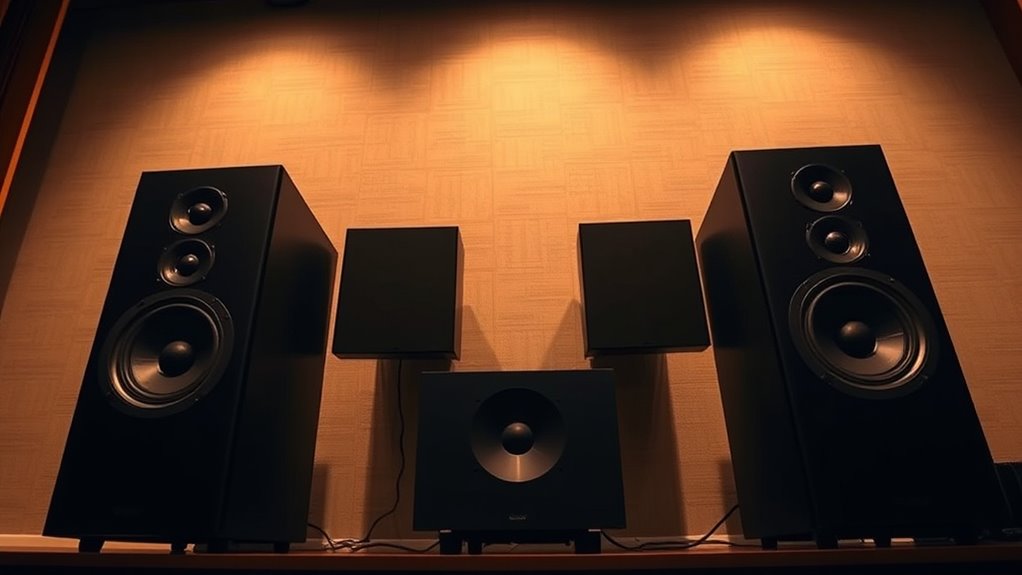
Getting your speakers to ear level guarantees clearer sound and better immersion. Using vertical tilt techniques can direct sound precisely where you want it, improving overall quality. Proper height and angles help avoid sound drop-off, so you experience consistent audio across your listening area. Additionally, speaker calibration ensures optimal sound distribution tailored to your space. Correct speaker placement is essential for creating an immersive listening environment that maximizes sound clarity and experience. Implementing thermal behavior understanding can also help optimize speaker positioning by considering how sound and heat distribution affect performance in different environments. Recognizing the importance of well-sourced coverage in speaker documentation can further enhance accurate placement strategies. Considering environmental acoustics can also significantly impact how sound is perceived and should be factored into your placement decisions.
Optimal Ear Level
Ensuring your speakers are at ear level is essential for achieving accurate sound imaging and a balanced listening experience. When speakers are aligned with your ears, sound waves reach you directly, making it easier to perceive direction and depth. Proper height reduces sound distortion caused by reflections and minimizes listener fatigue. To optimize your setup:
- Place speakers so their tweeters are roughly at your ear height when seated
- Avoid positioning speakers too high or low, which can skew stereo imaging
- Maintain consistent height across all speakers for even sound distribution
- Soundproofing techniques can further improve audio clarity by reducing external reflections and noise. Additionally, considering speaker placement principles can help enhance overall sound quality and immersion.
Vertical Tilt Techniques
Have you considered how vertical tilt can dramatically improve your speaker setup? Adjusting the tilt directs sound precisely toward your ears, enhancing clarity and immersion. When speakers are mounted too high or too low, sound may become muffled or uneven, disrupting your listening experience. Slightly tilting speakers downward toward your seating area ensures the high frequencies reach your ears directly, maintaining sharp detail. Conversely, if your speakers are too low, tilting them upward can help project sound better across the room. Keep in mind, small adjustments make a big difference—experiment with minor tilt angles until you find the sweet spot. Proper vertical tilt guarantees your system delivers balanced, clear sound, making your listening sessions more engaging and true to the intended audio experience. Paying attention to speaker placement and vertical angles can truly elevate your overall sound quality. Additionally, understanding sound projection techniques can further optimize your setup for immersive listening.
Avoiding Sound Drop-off
To prevent sound drop-off, paying attention to your speaker height and vertical angles is essential. When speakers are too high or low, sound loses clarity and volume before reaching your ears. Proper vertical alignment ensures a direct path of sound, maintaining consistent volume and quality. Adjusting the height and tilt minimizes sound dispersion issues, especially in larger rooms. Keep in mind these key points:
- Place speakers at ear level for ideal sound delivery
- Tilt speakers downward toward your listening position
- Avoid placing speakers too high or too low, which causes sound attenuation
- Understanding sound dispersion helps optimize your speaker setup for a more immersive experience
- Considering acoustic treatment can further enhance sound clarity and reduce unwanted reflections in your space
- Being mindful of speaker placement ensures optimal sound performance and minimizes dead zones within your environment

Polk Audio Atrium 4 Weatherproof Outdoor Speakers with Powerful Bass (Pair, Black), All-Weather Durability, Broad Sound Coverage, Speed-Lock Mounting System
EASY INSTALLATION - One-click speed-lock mounting bracket offers anti-slip, one-handed installation. Mount these outdoor speakers wired vertically or...
As an affiliate, we earn on qualifying purchases.
Setting the Correct Horizontal Angles for Front Speakers
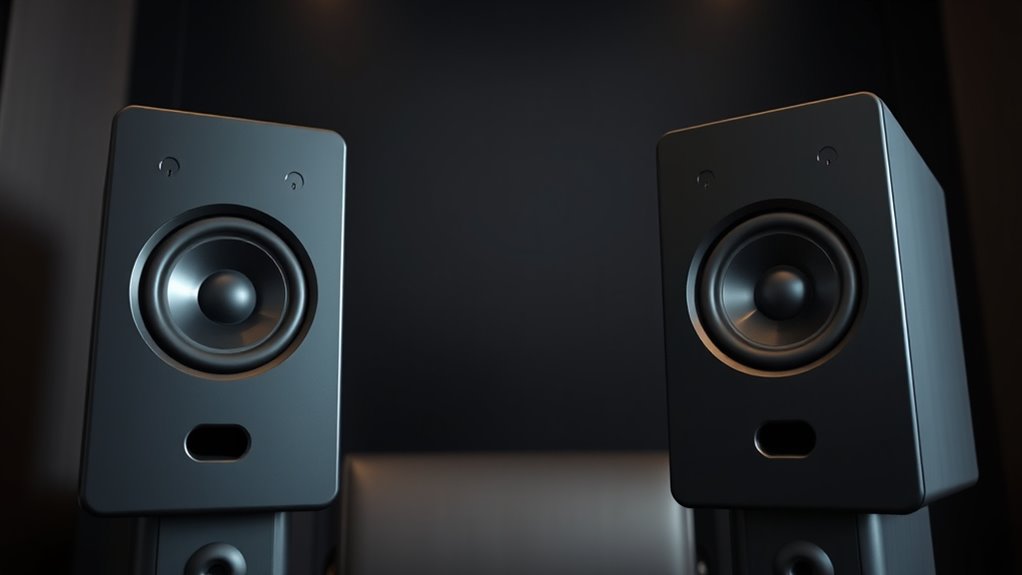
Getting the horizontal angles right for your front speakers is essential for an immersive and balanced soundstage. Ideally, your speakers should be aimed directly at your listening position, forming an angle of about 22 to 30 degrees from your seating spot. This ensures that sound reaches your ears clearly without distortion or imbalance. To achieve this, position your speakers so they face inward, slightly toward your listening area. Use a protractor or a speaker angle guide to fine-tune the orientation. Keep the speakers at ear level when seated for maximum clarity. Correct angles help create a cohesive sound image, making dialogue clear and music or effects feel natural and enveloping. Proper setup maximizes your speakers’ performance and enhances your overall listening experience. Additionally, understanding the listening environment can significantly influence how you set your speaker angles for optimal sound. Adjusting your setup based on room acoustics can further improve sound quality and surround effect. Paying attention to speaker placement can also make a notable difference in achieving a true surround experience. It’s also beneficial to consider the distance between speakers to ensure even sound distribution across your listening area.

6.5 Inch Max 800W Outdoor Bluetooth Speakers Waterproof Wired with Multifunctional Amplifier Wall Mount Outdoor Speaker System for Patio Garden Poolside Home(4 Speakers,Black)
Powerful Acoustics: Unmatched Sound Output,Each speaker pumps out an impressive 200 watts, with a pair delivering a combined...
As an affiliate, we earn on qualifying purchases.
Positioning Surround and Rear Speakers for Immersive Sound

To create immersive sound, you need to position your surround and rear speakers at the right angles. Ideally, the rear speakers should be placed about 135 degrees from your listening position, ensuring even sound coverage. Maintaining symmetry with your side speakers enhances the overall audio experience and prevents gaps or overlaps. Incorporating focused sound delivery techniques can further optimize your surround sound setup for a truly immersive experience. Proper speaker placement also considers speaker type and room acoustics to maximize sound clarity and depth. Additionally, paying attention to Free Floating principles can help in avoiding sound obstructions and reflections that diminish audio quality, as understanding the acoustic environment is crucial for achieving optimal sound performance. Recognizing how speaker placement influences sound distribution allows for more effective sound localization and a richer listening experience.
Optimal Rear Speaker Angles
Achieving the best immersive sound experience depends heavily on placing your rear speakers at the right angles. Proper placement ensures a seamless, enveloping sound field. For ideal rear speaker angles, position them approximately 110 to 120 degrees from your main listening position. This angle allows sound to reach you naturally, creating a realistic surround effect. Keep the speakers slightly behind your ears for clarity. Avoid placing them too close to walls or corners, which can distort sound. Use these guidelines to fine-tune your setup:
- Position rear speakers 110–120 degrees from your listening spot
- Keep speakers slightly behind ear level
- Maintain some distance from walls to prevent sound reflection
Surround Sound Symmetry
Positioning your surround and rear speakers symmetrically around your listening area creates a balanced soundscape that immerses you fully in the audio. Symmetry ensures that sound waves reach your ears evenly, enhancing clarity and spatial accuracy. Place the speakers at equal distances from your listening position, ideally at ear level, to maintain consistency. If your front speakers are centered, align your surround and rear speakers on either side or slightly behind to avoid gaps or overlaps. This setup prevents sound imbalance, making effects like footsteps or ambient noises feel natural and immersive. Consistent placement also simplifies calibration, helping you achieve ideal sound quality without guesswork. Ultimately, symmetrical positioning creates a cohesive environment where every sound feels like it’s happening around you.
Adjusting Speaker Angles for Different Room Layouts
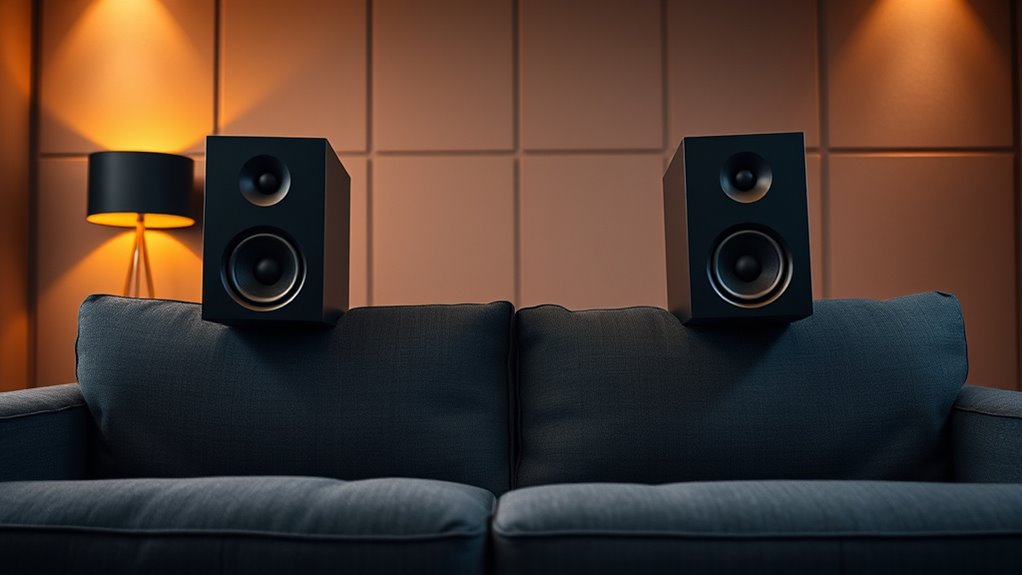
Adjusting speaker angles is essential because different room layouts can considerably impact sound quality. The shape, size, and furniture placement influence how sound waves travel and reflect. To optimize your setup, consider these key points:
Properly angle speakers to optimize sound in any room layout.
- Position speakers closer to walls or corners to enhance bass without causing muddiness.
- Angle speakers toward the listening area to create a focused sound stage.
- Adjust for obstructions like furniture or decor that can block or reflect sound, ensuring clear and balanced audio.
Fine-Tuning for Precision and Clarity
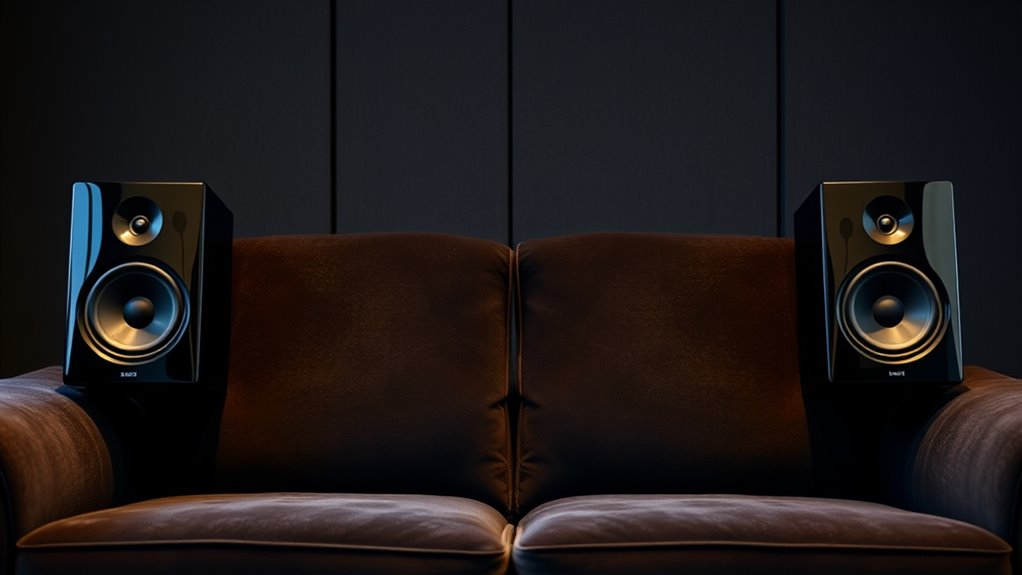
To guarantee your speakers deliver the clearest and most accurate sound, fine-tuning involves making small, precise adjustments beyond basic placement. Start by carefully leveling your speakers so they’re perfectly horizontal, preventing sound distortion. Then, experiment with toe-in angles—slightly turning speakers inward—to improve stereo imaging and focus. Adjust the distance from walls to reduce unwanted reflections and bass muddiness. Use your ears to listen for clarity, ensuring vocals are crisp and instruments are well-defined. Don’t forget to calibrate your system with a sound meter or room correction software if available. These subtle tweaks can dramatically enhance the overall listening experience, transforming a good setup into an exceptional one with pinpoint accuracy and pristine sound quality.
Frequently Asked Questions
How Do Room Acoustics Influence Optimal Speaker Angles?
Room acoustics greatly influence your ideal speaker angles by affecting sound reflection and absorption. If your room has hard surfaces like glass or tile, you’ll want to angle your speakers slightly inward to minimize echo and guarantee clear sound. Soft furnishings like curtains and carpets help absorb reflections, allowing you to place speakers at more precise angles. Adjusting for these acoustics helps create a surround sound experience that feels more natural and immersive.
What Tools Can Help Measure Ideal Speaker Angles Precisely?
Using a laser pointer or a digital angle finder makes it easy to measure your ideal speaker angles precisely. While a protractor or a smartphone app with augmented reality features can also help, these tools provide accuracy and ease of use. You’ll appreciate how quickly you can fine-tune your setup, contrasting the manual effort with the precision these devices offer. This way, your surround sound feels truly immersive.
How Do Speaker Angles Vary for Different Types of Audio Content?
You should adjust speaker angles based on the type of audio content. For movies, aim for a more immersive experience by angling surround speakers slightly towards your listening position, around 110-120 degrees. For music, keep speakers more evenly spaced and angled directly at you for clarity. Gaming often benefits from a wider angle to enhance spatial awareness. Tailoring angles ensures ideal sound quality and an immersive experience tailored to each audio type.
Can Adjustable Speakers Simplify Achieving Perfect Angles?
Yes, adjustable speakers can make it much easier to find the perfect angles. With the flexibility to tilt and swivel, you can fine-tune the direction to guarantee your sound surrounds you just right. It’s like having your cake and eating it too—saving you time and hassle. Whether you’re listening to movies or gaming, adjustable speakers help you dial in the ideal sound stage effortlessly, making your setup truly immersive.
How Often Should Speaker Angles Be Re-Evaluated After Setup?
You should re-evaluate your speaker angles every six months or if you notice a change in sound quality. Regular checks guarantee your setup remains ideal, especially if you move furniture or change room acoustics. Adjustments might be needed after upgrades or repairs. Staying attentive to how your sound feels will help you maintain an immersive surround experience, keeping your angles precise and your audio consistent.
Conclusion
Getting your speaker angles right can transform your listening experience from ordinary to immersive. Did you know that speakers placed within a 10-20 degree angle from your listening position deliver the most accurate surround sound? Imagine feeling completely enveloped in a movie or concert—it’s like being right there. By fine-tuning your speaker placement and angles, you create a perfect sonic environment that makes every note and sound effect truly come alive.