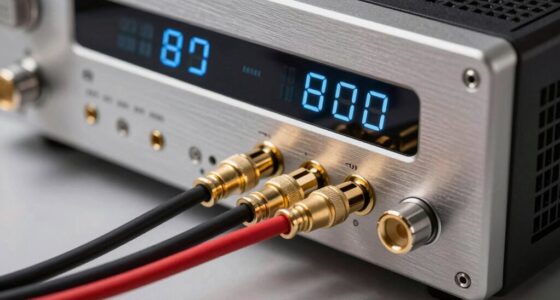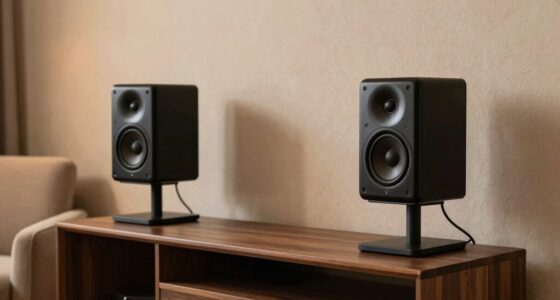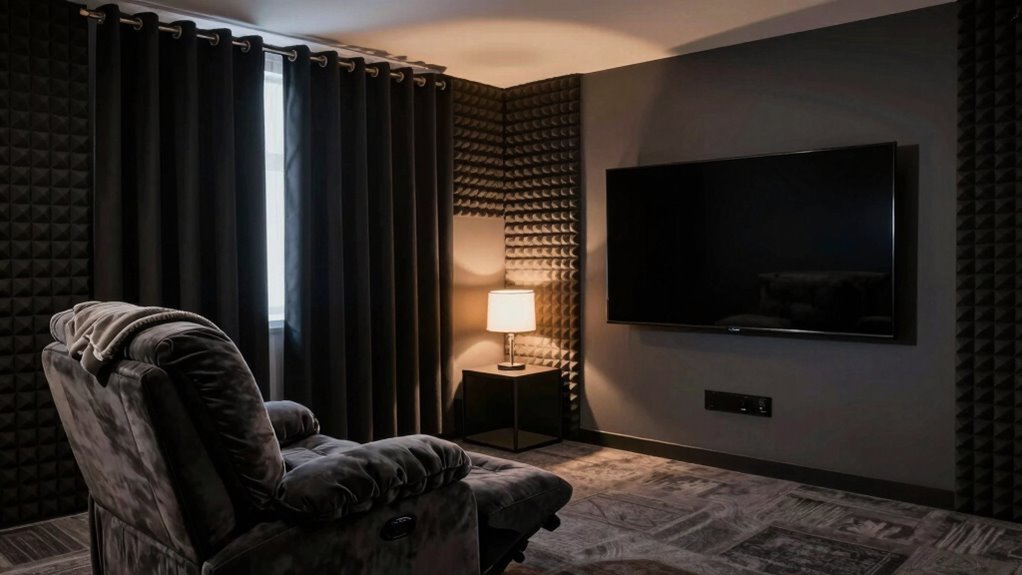

To create a ‘Quiet Hours’ home theater in your apartment, start by adding acoustic panels or foam tiles on walls and hanging heavy curtains over windows and gaps to dampen sound escape. Use thick rugs and carpets to absorb vibrations and place speakers away from shared walls, angling them inward. Incorporate furniture with dense fabric and consider bookshelf barriers behind speakers. For more tips on optimizing your setup, keep exploring effective strategies to enjoy your theater quietly.
Key Takeaways
- Use acoustic panels and foam tiles to absorb sound and prevent noise from escaping your theater space.
- Place heavy curtains over windows and door gaps to dampen sound leakage during quiet hours.
- Position speakers at ear level, angled inward, and away from shared walls to minimize disturbance to neighbors.
- Incorporate furniture like bookcases and rugs to absorb sound reflections and vibrations within the room.
- Keep volume at moderate levels and utilize soundproofing barriers to balance audio clarity with noise reduction.
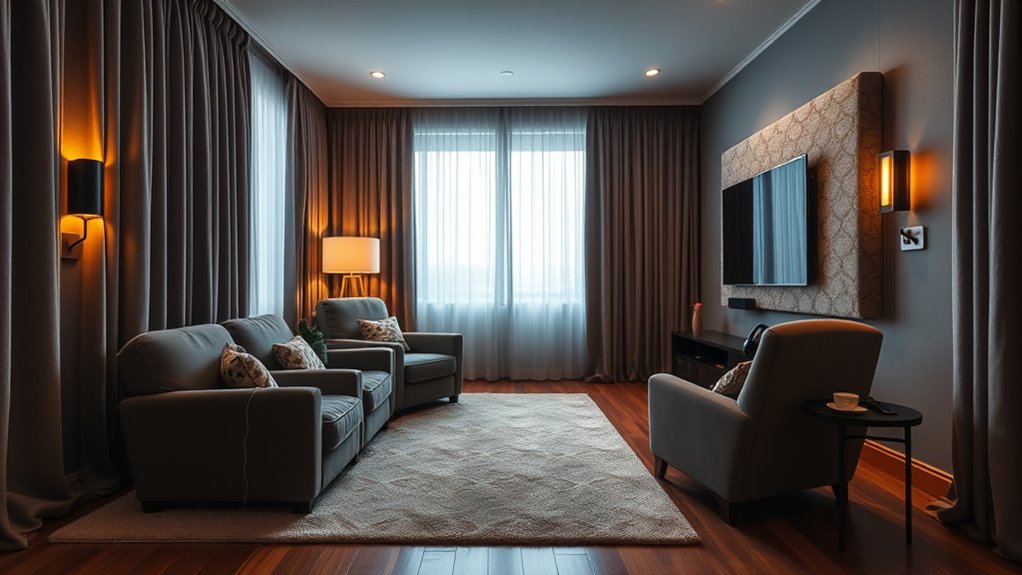
Ever wondered how to enjoy your home theater without disturbing neighbors or roommates? The key lies in smart soundproofing techniques and thoughtful speaker placement. When you set up your system with these strategies in mind, you can immerse yourself in your favorite movies and shows without causing a racket. Start by focusing on soundproofing techniques that minimize noise escape. Use acoustic panels or foam tiles on your walls to absorb sound waves and prevent them from traveling through walls. Heavy curtains or blankets over windows and door gaps also help dampen sound. Placing a thick rug or carpet on the floor can absorb vibrations that might otherwise echo and carry noise downstairs or to neighboring units. Additionally, consider investing in a subwoofer isolation pad. This reduces vibrations through the floor and keeps bass sounds from resonating too loudly in your apartment. Incorporating modern kitchen technology like smart soundproofing solutions can further enhance noise control and convenience.
Next, pay attention to speaker placement. Position your speakers carefully to direct sound inward rather than outward. For example, place your front speakers at ear level, angled slightly towards your listening position. Avoid placing speakers directly against shared walls or near windows, as this can amplify sound leakage. Instead, position them a few inches away from the walls to reduce sound reflection and minimize disturbance. If possible, set up your speakers in a corner of the room that’s least adjacent to neighbors or other rooms. Incorporating bookshelf or wall-mounted speakers can also help keep sound contained within your space. Using a center channel speaker directly in front of your viewing area ensures dialogue is clear without needing excessively loud volume.
To further reduce noise, consider adding a sound barrier behind your setup. For instance, placing furniture like bookcases filled with books or dense fabric-covered panels behind your speakers can absorb some of the sound energy. When you combine these soundproofing techniques with strategic speaker placement, you create a more controlled audio environment. This means you won’t have to crank up the volume to get good sound quality, which benefits your neighbors and roommates. Remember, the goal is to enjoy your entertainment without sacrificing peace in your shared living space. With some simple adjustments, you can craft a home theater that’s both immersive and considerate. It’s all about balancing sound quality with noise control, and that starts with smart setup choices.

Focusound 52 Pack Acoustic Foam Panels 1" x 12" x 12" Sound Proof Foam Panles Soundproofing Noise Cancelling Wedge Panels for Home Office Recoding Studio with 300PCS Double-Side Adhesive
- Soundproofing Design: Triangular grooves for noise absorption
- Includes Adhesive Tape: 300pcs double-sided adhesive for easy installation
- Easy Shape Recovery: Reforms after soaking in water
As an affiliate, we earn on qualifying purchases.
As an affiliate, we earn on qualifying purchases.
Frequently Asked Questions
How Can I Soundproof My Apartment Without Professional Help?
You can soundproof your apartment with DIY soundproofing techniques and acoustic treatments. Start by sealing gaps around doors and windows with weatherstripping or draft stoppers. Add heavy curtains or acoustic panels to absorb sound. Use furniture and rugs to minimize noise transfer. These simple steps help reduce noise without professional help, creating a quieter environment for your home theater setup and maintaining good neighbor relations.
What Are the Best Noise-Canceling Headphones for Movie Viewing?
Think of noise-canceling headphones as your personal fortress against distractions. The best models, like Sony WH-1000XM4 or Bose QuietComfort 45, utilize advanced noise-canceling technology to block out external noise. Plus, they prioritize headphone comfort, so you can enjoy movies for hours without discomfort. Choose headphones with plush ear cushions and adjustable headbands, ensuring both immersive sound and a cozy fit. These will transform your movie nights into uninterrupted escapes.
How Do I Prevent Sound Leakage Through Windows?
To prevent sound leakage through windows, you should focus on window insulation and curtain solutions. Install weatherstripping or acoustic window inserts to block noise effectively. Use heavy, soundproof curtains or layered blackout drapes to absorb sound and minimize leakage. Combining these methods creates a barrier that keeps your home theater quiet during quiet hours, ensuring you enjoy your movies without disturbing neighbors or being disturbed by outside noise.
Can Furniture Placement Reduce Noise Transfer?
Imagine you’re in the middle of a silent film era—your furniture arrangement can definitely reduce noise transfer. Positioning bookshelves, couches, and rugs strategically creates an acoustic optimization barrier, absorbing sound waves and blocking noise from leaking through walls or floors. You should place large, plush furniture against shared walls and use soft materials to dampen sound, making your home theater setup quieter for you and your neighbors alike.
Are There Legal Restrictions on Noise Levels in Apartments?
Yes, there are legal restrictions on noise levels in apartments. You need to follow your local apartment noise ordinances and building sound policies, which set acceptable noise limits and quiet hours. Check with your landlord or property management to understand these rules, and be mindful of noise during designated quiet hours to avoid penalties or complaints. Staying within these guidelines keeps your home peaceful and legally compliant.
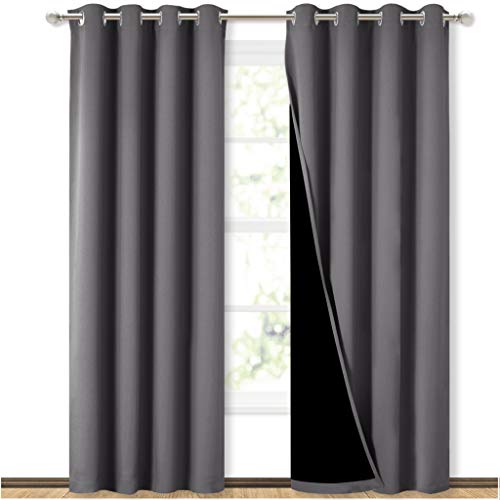
NICETOWN Grey Full Shade Curtain Panels for Dining Room 52×84 in 2 Panels
- Blackout and Noise Reduction: Blocks light and reduces noise
- Size and Quantity: 52 x 84 inches per panel, set of 2
- Easy Installation: Silver grommets fit standard rods
As an affiliate, we earn on qualifying purchases.
As an affiliate, we earn on qualifying purchases.
Conclusion
Now that you’ve mastered the art of a quiet, cozy home theater, you’re ready to relax and enjoy movies without disturbance. By blending soundproofing, strategic setup, and subtle solutions, you create a calm, clutter-free cinema space. Remember, patience and planning pave the path to peaceful viewing. So, settle in, savor the silence, and let your quiet hours be a cherished escape—your perfect, peaceful, and private piece of paradise.

SVS SoundPath Subwoofer Isolation System, 4-Pack
- Affordable and discreet design: Alternative to platforms and risers
- Universal compatibility: Fits any brand with screw-in feet
- Easy installation options: Uses tape or adhesive pads if no threads
As an affiliate, we earn on qualifying purchases.
As an affiliate, we earn on qualifying purchases.

Polk Audio T15 100 Watt Home Theater Bookshelf Speakers, Black, 1 Pair
- Rich, Immersive Home Theater Sound: Deep bass and clear audio with 0.75" tweeter and 5.25" driver
- Wall-Mountable Design: Flexible placement as front, rear, or side speakers
- Expandable Home Audio System: Compatible with T50 towers, T30 center, and subwoofer
As an affiliate, we earn on qualifying purchases.
As an affiliate, we earn on qualifying purchases.