You can turn your existing rugs, curtains, and furniture into effective acoustic treatments by using their sound-absorbing qualities. Thick rugs and heavy curtains help soak up sound waves, reducing echoes and noise, while furniture placement can block reflection points and break sound paths. Layering textiles throughout your space improves overall clarity. Keep in mind, arranging your items thoughtfully can make a real difference—learn how to maximize their benefits for better sound and comfort.

Get audio and creator gear delivered free with Prime
- Fast, free delivery on millions of items
- Prime Video, Amazon Music and more included
- Member-only deals all year
Key Takeaways
- Rugs, curtains, and furniture absorb sound waves, reducing echo and background noise naturally and cost-effectively.
- Thick, textured rugs and heavy curtains maximize sound absorption by trapping air and dampening reflections.
- Strategic furniture placement, like placing sofas away from walls, minimizes sound bounce and enhances room acoustics.
- Layering household textiles creates a balanced acoustic environment without expensive professional treatments.
- Using existing soft furnishings is an affordable way to improve sound quality and reduce echo in any space.
thick area rug for sound absorption
As an affiliate, we earn on qualifying purchases.
As an affiliate, we earn on qualifying purchases.
How Soft Furnishings Absorb Sound Waves

Have you ever wondered why rooms with thick rugs and heavy curtains sound quieter? It’s because soft furnishings like these absorb sound waves rather than bouncing them around. When sound hits a soft surface, part of its energy is converted into heat, reducing echo and reverberation. Thick rugs trap sound waves in their fibers, preventing them from reflecting off hard floors. Heavy curtains do the same, soaking up noise that would otherwise bounce off windows or walls. This absorption makes a room feel more comfortable and less noisy. The more plush and dense your soft furnishings, the better they are at soaking up sound. Additionally, choosing energy-efficient soft furnishings can enhance acoustic treatment while supporting sustainable living. Incorporating soft furnishings that are also eco-friendly can further optimize sound absorption while reducing your environmental footprint. For optimal results, you can also consider the material composition of your soft furnishings, as natural fibers tend to absorb sound more effectively than synthetic ones. Using soft, textured fabrics with high density can improve their sound-absorbing qualities even further. Moreover, selecting natural fibers like wool or cotton can amplify these benefits due to their inherent porosity and ability to trap air within their fibers.
heavy blackout curtains for acoustic treatment
As an affiliate, we earn on qualifying purchases.
As an affiliate, we earn on qualifying purchases.
The Role of Area Rugs in Reducing Echo

Area rugs play a substantial role in reducing echo within a room by directly absorbing sound waves. When sound hits hard surfaces like hardwood or tile floors, it reflects and creates an echo, making speech less clear. An area rug interrupts these reflections by absorbing sound energy, softening the overall acoustics. The larger and thicker the rug, the more effective it is at dampening echoes. Placing the rug in high-traffic or central areas enhances its impact. Additionally, rugs with dense pile or textured surfaces trap more sound, improving clarity. Unlike permanent wall treatments, rugs are versatile and easy to move or replace. Incorporating sound absorption techniques like smart rugs with embedded sound absorption technology can further enhance acoustic control. According to studies, acoustic treatment doesn’t always require expensive modifications—everyday items like rugs can be surprisingly effective. For example, the material composition of the rug influences how well it absorbs sound, with natural fibers often outperforming synthetic ones. Choosing the right rug can also help prevent sound reflection from bouncing around the room, further improving sound quality. By incorporating an area rug, you can notably improve your room’s sound quality without spending much or making major changes.
soft textured rugs for echo reduction
As an affiliate, we earn on qualifying purchases.
As an affiliate, we earn on qualifying purchases.
Using Curtains to Dampen Noise and Improve Clarity
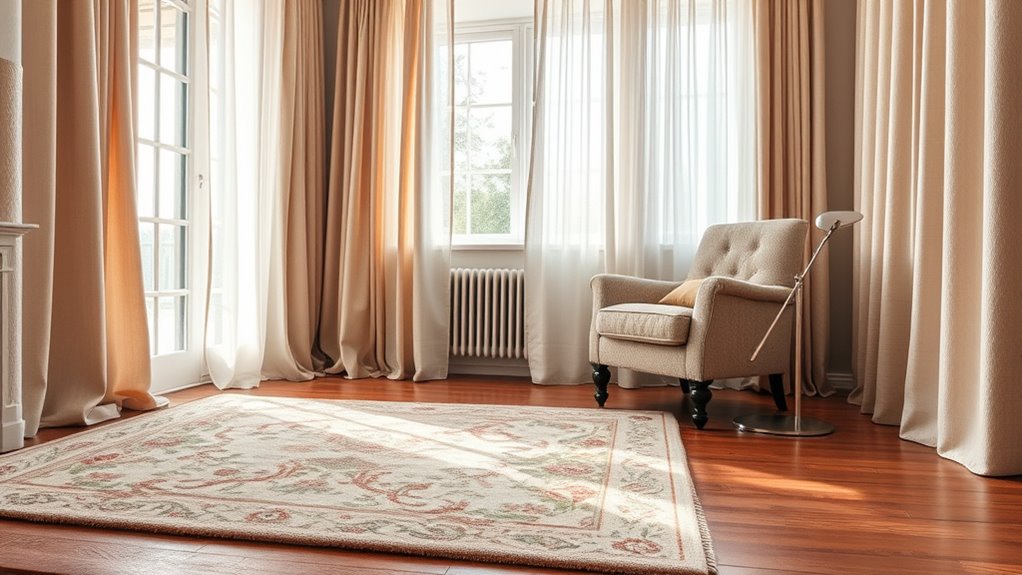
Curtains are an effective tool for dampening noise and enhancing speech clarity in a room. Thick, heavy curtains absorb sound waves, reducing echo and background noise. They prevent sound from bouncing off hard surfaces like windows or walls, making conversations clearer. To maximize their effect, hang curtains that extend beyond the window frame and reach close to the floor. Layering multiple curtains or using dense fabrics like velvet can further improve sound absorption. Keep in mind that open curtains allow more sound to escape, so closing them during meetings or recordings helps create a quieter environment. Additionally, understanding the principles of sound absorption can help you choose the most effective fabrics and curtain arrangements for your space. Choosing the right fabric density can significantly enhance their acoustic performance and tailor the environment to your needs. For optimal results, consider the material composition of your curtains, as some fabrics are better suited for sound dampening than others. Being mindful of room acoustics can further optimize the overall sound quality in your space. Exploring soundproofing techniques can also offer additional improvements for more demanding environments.
furniture placement for better room acoustics
As an affiliate, we earn on qualifying purchases.
As an affiliate, we earn on qualifying purchases.
Furniture Placement for Better Acoustics

Strategic furniture placement can substantially improve a room’s acoustics by minimizing sound reflections and dead spots. By arranging your furniture thoughtfully, you can create a more balanced sound environment. Here are some tips to optimize your setup:
Thoughtful furniture placement enhances room acoustics by reducing echoes and creating a balanced sound environment.
- Place sofas and chairs away from walls to reduce echoes and sound bouncing.
- Use bookshelves or large furniture pieces as sound diffusers to break up reflections.
- Avoid lining up all furniture against walls; stagger pieces to prevent parallel surfaces that cause flutter echoes.
- Position larger furniture items near corners to help absorb bass buildup and reduce muddiness.
- Understanding room acoustics principles can further enhance your ability to arrange furniture effectively for optimal sound quality. Additionally, incorporating AI-powered acoustic analysis tools can provide personalized recommendations for your space. Recognizing how sound absorption works can help you select the best furniture placement to improve clarity and reduce unwanted noise. Using furniture placement strategies that consider room dimensions and materials can lead to more effective acoustic treatments. Moreover, experimenting with different arrangements based on sound reflection patterns can fine-tune your room’s acoustics even further.
Combining Household Items for Enhanced Sound Control

By layering textiles like rugs and curtains, you can substantially improve your room’s sound absorption. Think about arranging furniture and decor items strategically to create a balanced acoustic environment. Combining these elements thoughtfully makes your space quieter and more comfortable. Incorporating interior design tips can help you optimize your layout for better sound control. Additionally, considering soundproofing techniques can further enhance your acoustic environment without the need for costly modifications. Using room acoustics principles can guide your choices in arranging household items for optimal sound quality. Exploring acoustic treatment options within your existing household items offers a cost-effective way to improve sound quality. Paying attention to space layout can also significantly influence how sound travels within a room.
Layering Textiles Effectively
Ever wondered how to make your home quieter and more comfortable? Layering textiles is a simple way to boost sound absorption. Start by combining different materials to maximize effectiveness. Here are four ways to do it:
- Place a thick rug on the floor before adding a plush curtain.
- Hang curtains over windows and use soft blankets or throws on furniture.
- Stack cushions and pillows on sofas and chairs.
- Add fabric wall hangings or tapestries in key areas.
- Incorporate Free Floating elements like hanging textiles or suspended fabric panels to further diffuse sound waves throughout the space.
Arranging Items Strategically
Arranging household items thoughtfully can considerably improve sound absorption without additional purchases. By placing furniture, rugs, or curtains in strategic spots, you can reduce echoes and control noise better. Focus on key areas like corners or near problem spots where sound tends to bounce or gather. For example, position bookshelves against walls or stack cushions in corners to break up sound waves.
| Item Placement Tips | Effectiveness |
|---|---|
| Near walls or corners | Absorbs bouncing sound and reduces echo |
| Spread out textiles | Prevents sound from traveling directly |
| Use mismatched items | Disrupts sound wave reflections |
| Place heavy furniture | Adds mass, dampening sound transmission |
Tips for Maximizing Acoustic Benefits at Home

To enhance the acoustic comfort of your home, strategic placement of rugs, curtains, and furniture can make a significant difference. Focus on creating a balanced environment where sound waves are absorbed and diffused efficiently. Position large rugs under seating areas and in front of windows to reduce echo and minimize sound reflection. Hang thick curtains over windows and doorways to dampen noise and control reverberation. Arrange furniture to break up sound paths, avoiding long, empty walls. Additionally, fill rooms with soft furnishings, like cushions and upholstered chairs, to further absorb sound.
- Place rugs in high-traffic areas
- Hang dense curtains at key points
- Use furniture to block sound paths
- Fill space with soft, absorbent decor
Common Mistakes to Avoid With DIY Soundproofing
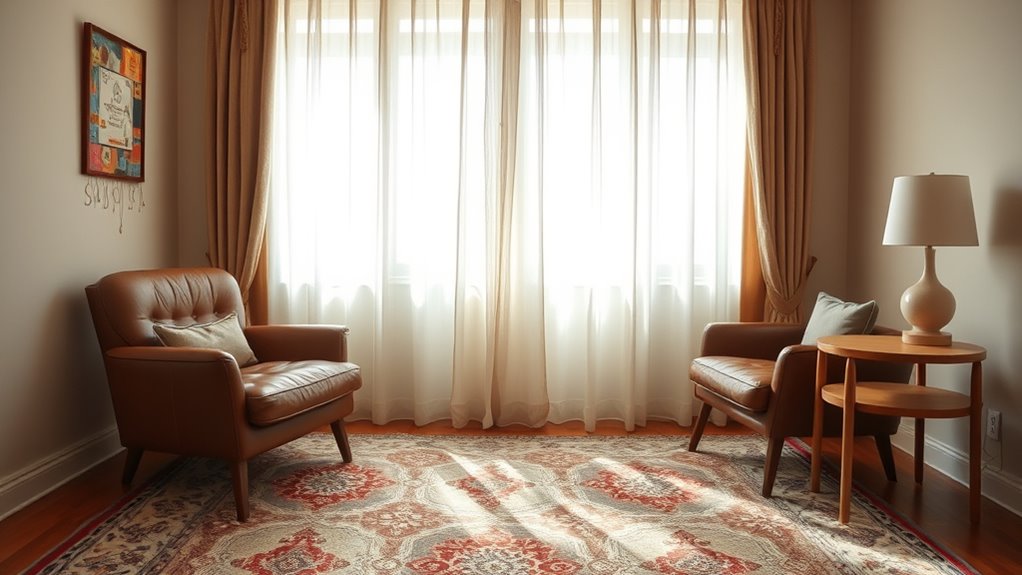
Many DIY soundproofing efforts fail because people overlook key factors like room shape and how materials interact within the space. Using the wrong materials or not considering their density can also lead to less effective results. Plus, poor placement of soundproofing elements often undermines your efforts, so understanding these pitfalls is essential.
Ignoring Room Shape
Ignoring the shape of your room can considerably undermine your DIY soundproofing efforts. The room’s layout affects how sound waves bounce and reflect, which impacts overall acoustics. If you don’t consider these factors, your attempts won’t be as effective. For example:
- Ignoring corners and edges can lead to sound buildup, creating echoes.
- Focusing only on walls misses how ceiling and floor shape influence sound.
- Failing to identify asymmetrical layouts can cause uneven sound distribution.
- Overlooking room dimensions might result in ineffective placement of treatments.
Understanding your room’s shape helps you strategically position rugs, curtains, and furniture to maximize their sound-absorbing qualities. Tailoring your approach based on shape ensures your DIY solutions work better and create a more balanced acoustic environment.
Overlooking Material Density
Material density plays a crucial role in how effectively your DIY soundproofing efforts work; overlooking this factor can render your solutions much less effective. Dense materials block sound waves better because they absorb and reflect less noise. For example, a thick curtain made from lightweight fabric won’t perform as well as a dense, heavy curtain. Similarly, a thin rug may do little to reduce sound transmission compared to a dense area rug or blanket. When choosing household items for soundproofing, focus on materials with high mass and density. Light, airy items allow sound to pass through easily, defeating their purpose. To maximize your efforts, prioritize dense, solid materials that can truly absorb or block sound, rather than relying solely on lighter, less substantial items.
Underestimating Placement Skills
Even the best soundproofing materials won’t be effective if you don’t pay attention to proper placement. You might have the right curtains or rugs, but if they’re not positioned correctly, their impact diminishes. To maximize their effectiveness, consider these key placement tips:
- Hang curtains close to the wall to trap sound waves effectively.
- Lay rugs in high-traffic or echo-prone areas for better absorption.
- Use furniture strategically to block direct sound paths.
- Avoid gaps or spaces that allow sound to bypass your treatments.
Proper placement requires understanding how sound travels and interacts with surfaces. Rushing or guessing can waste your efforts, so take time to position items thoughtfully. Small adjustments can make a big difference in how your space sounds.
Frequently Asked Questions
Can Decorative Cushions Improve Room Acoustics Effectively?
Decorative cushions can slightly improve room acoustics by absorbing some sound waves and reducing echo. When placed strategically, they help soften reflections, especially in small or minimally furnished spaces. However, they shouldn’t be relied on as primary acoustic treatments. To truly enhance sound quality, consider adding more substantial sound-absorbing materials like thicker curtains, rugs, or acoustic panels. Cushions are a helpful, inexpensive supplement, but not a complete solution.
Do Window Treatments Contribute Significantly to Sound Absorption?
Window treatments do contribute to sound absorption, but their impact varies. Thicker, heavier curtains absorb more sound, especially high frequencies, reducing echoes and noise. However, they won’t eliminate sound completely, especially low frequencies. If you want significant acoustic improvements, combine heavy curtains with other treatments like rugs or acoustic panels. You’ll notice a difference, but for ideal results, consider multiple solutions tailored to your space’s specific needs.
How Do Wall-Mounted Shelves Affect Sound Reflection?
Wall-mounted shelves can help reduce sound reflection by breaking up and dispersing sound waves, preventing them from bouncing directly back into the room. When filled with books or decorative items, they add surface irregularities that absorb or scatter sound energy. You should position shelves strategically, avoiding large, flat surfaces that might reflect sound more strongly. Properly used, shelves can improve your room’s acoustics without extra expense.
Are There Specific Furniture Fabrics Better for Sound Dampening?
Think of your furniture fabrics as the sound’s gentle whisperers. Thick, plush materials like velvet or heavy upholstery absorb more sound waves, muffling echoes like a cozy blanket smothers a chill. Conversely, sleek, lightweight fabrics like linen bounce sound, making your space feel livelier but less dampened. So, if you want quiet comfort, opt for dense fabrics; for a lively vibe, choose lighter ones.
Can Rearranging Furniture Reduce Noise Transmission Between Rooms?
Yes, rearranging furniture can help reduce noise transmission between rooms. By strategically placing large, soft items like sofas, bookcases, or upholstered chairs against shared walls, you create a barrier that absorbs sound. Keep heavier furniture close to the wall to dampen noise effectively. Experiment with different arrangements to find the setup that minimizes sound transfer, making your space quieter and more comfortable.
Conclusion
Think of your home as a symphony waiting to be heard clearly. By using rugs, curtains, and furniture—everyday treasures—you craft a sanctuary of sound, turning chaos into harmony. These items, like silent guardians, absorb and diffuse noise, letting your voice resonate with clarity. Embrace this simple artistry, and you’ll transform your space into a haven where every word and note finds its rightful place—an orchestra composed with what you already own.
Fall Picks
fall essentials
As an affiliate, we earn on qualifying purchases.