
For most multi-mic setups, I’d start with the Phenyx Pro PTU-6000-8H: its eight channels and auto-scan design suit events that need several handheld microphones. The Phenyx Pro PTU-7000-4H is a more manageable four-channel choice, while the Shure BLX24/PG58 is a focused option for buyers who need one vocal mic from an established audio brand. The main tradeoffs are channel capacity versus setup simplicity, and handheld-only flexibility versus headset or lavalier options. Range claims, frequency coordination, receiver connections, and battery arrangements can matter as much as the microphone itself. Read on for how all 15 wireless microphone systems compare and which setups fit different buyers.

Get audio and creator gear delivered free with Prime
- Fast, free delivery on millions of items
- Prime Video, Amazon Music and more included
- Member-only deals all year
Complete the kit


Key Takeaways
- The Phenyx Pro PTU-6000-8H leads for larger setups because it combines eight handheld channels with auto scan; it is more system than a solo speaker or small room needs.
- Four-channel systems offer a practical middle ground: the PTU-7000-4H adds auto scan, while the PTU-5000-4H uses fixed frequencies, trading adjustment flexibility for a simpler frequency setup.
- Mic format changes the use case: TONOR’s headset-and-lavalier systems suit hands-free speaking, unlike the handheld-focused Phenyx Pro and JBL options.
- More advertised range does not settle the choice. Room layout, obstacles, interference, and receiver placement affect real-world reliability, so a long-range claim should not replace checking your venue and frequency needs.
- The lineup spans very different system types: the JOYO MW-2 adds wireless connectivity to a compatible dynamic mic, while the Shure BLX24/PG58 is a single-vocal-mic setup rather than a multi-mic package.


| wireless microphone system | Signal-to-noise ratio | Channels |
|---|---|---|
| Phenyx Pro 8-Channel UHF Auto | 98 dB | — |
| Phenyx Pro PTU-4000-8H 8-Chann | 105 dB | — |
| Professional Wireless Micropho | — | — |
| Phenyx Pro Dual UHF Tunable Fr | 98 dB | — |
| TONOR Wireless Microphone Syst | 60 dB | — |
| Phenyx Pro 4 Channel UHF Auto | 98 dB | 4 |
| MELONARE 4-Channel UHF Wireles | — | — |
| TONOR Wireless Microphone Syst | — | 8 |
| Aveek Wireless Microphone Syst | 85 dB | 4 |
| JOYO 2.4GHz Wireless XLR Micro | — | 4 |
| TONOR Wireless Microphone Syst | 70 dB | 4 |
| Phenyx Pro Dual UHF Auto Scan | 98 dB | 2 |
| JBL Wireless Two Microphone Sy | 60 dB | 2 |
| Phenyx Pro 4-Ch UHF Fixed Freq | 105 dB | 4 |
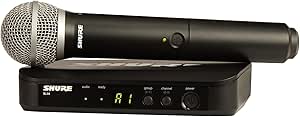
| Shure BLX24/PG58 Wireless Voca | 78 dB | 1 |
More Details on Our Top Picks
Phenyx Pro 8-Channel UHF Auto Scan Wireless Microphone System PTU-6000-8H
The PTU-6000-8H is the strongest fit here when eight handheld microphones need to work through one receiver. Its auto scan and IR sync simplify frequency setup, while the listed range of up to 328 feet gives performers more room than the PTU-4000-8H, rated for up to 260 feet. The metal construction and microphone mute functions suit repeated use at karaoke events, community performances, or speeches where several people take turns.
The tradeoff is the operating overhead: the system requires 16 AA batteries, and its listed 530–580 MHz range may not suit every region or crowded RF environment. Compared with the dual-mic PTU-52-2H, this is a much better match for groups, but it takes more space and supplies. Choose it for mic count and reach, not portability.
Pros:- Supports eight microphones through one receiver for group performances.
- Auto scan and IR sync make setup and pairing more straightforward.
- Listed wireless range reaches up to 328 feet.
- Metal construction and microphone mute functions suit regular event use.
Cons:- Requires 16 AA batteries, adding ongoing preparation and replacement needs.
- The listed 530–580 MHz frequency range may not fit every region or RF environment.
- Eight-mic receiver setup is bulkier than simpler two-microphone systems.
Best for: Event organizers, karaoke hosts, and performance groups that need up to eight handheld microphones and long coverage.
Not ideal for: Solo presenters or mobile users who need a compact system, fewer batteries, or a frequency range confirmed for their local area.
- Wireless technology:UHF
- Microphone count:8 channels
- Frequency range:530–580 MHz
- Listed wireless range:Up to 328 ft
- Receiver connections:6.35 mm jack and XLR
- Microphone form:Handheld, unidirectional
- Signal-to-noise ratio:98 dB
- Battery requirement:16 AA batteries
Our verdict“Choose the PTU-6000-8H when a group needs eight handheld mics and broad coverage, and skip it if portability or low battery use matters more.”
Phenyx Pro PTU-4000-8H 8-Channel UHF Wireless Microphone System
The PTU-4000-8H also serves groups that need eight handheld microphones, but its clearest advantage over the PTU-6000-8H is routing: eight XLR outputs let a mixer operator manage each microphone as a separate channel. Individual receiver volume controls and a memory switch add practical control for events with changing speakers. Its listed range of up to 260 feet is shorter than the PTU-6000-8H’s 328 feet, making this a better fit when soundboard flexibility matters more than maximum reach.
This receiver is substantial at 13.6 pounds, and it needs an amplifier or speaker to produce sound. Its fixed frequencies also offer less tuning flexibility than the PTU-52-2H, which has tunable frequency groups. The included 16 AA batteries help with initial setup, but battery-powered operation remains part of the routine.
Pros:- Eight handheld microphones and a receiver support large groups.
- Eight XLR outputs allow individual microphone channels at a mixer.
- Individual volume controls and a memory switch aid event management.
- Includes 16 AA batteries and lists up to eight hours of battery life.
Cons:- Requires an amplifier or speaker for sound output.
- Fixed frequencies provide less tuning flexibility than the PTU-52-2H.
- The 13.6-pound receiver and large dimensions make transport less convenient.
Best for: Church sound teams, venues, and event operators who need eight handheld mics routed separately to a mixer.
Not ideal for: Traveling presenters or venues needing frequency adjustment, a lightweight receiver, or an all-in-one sound system.
- Wireless technology:UHF
- Microphone count:8 channels
- Frequency range:530–930 MHz
- Listed wireless range:Up to 260 ft
- Receiver outputs:8 XLR outputs
- Microphone type:Handheld dynamic cardioid
- Signal-to-noise ratio:105 dB
- Battery details:16 AA batteries included; up to 8 hours listed
- Receiver weight:13.6 lb
Our verdict“Pick the PTU-4000-8H when separate XLR feeds for eight microphones matter more than a longer range or tunable frequencies.”
Professional Wireless Microphone System, 500ft Long Range, 2.4G Cordless Mic Set with 40H Playtime, Dynamic Microphones, Memory Function for Karaoke, DJ, Church, Party, Wedding
This two-channel 2.4G system is the range-focused alternative in this group: its advertised 500-foot reach is longer than the listed ranges of the UHF PTU-6000-8H and PTU-52-2H. That makes it appealing for outdoor events or larger spaces where two handheld microphones are enough. The auto memory function is intended to simplify repeat setup, and the description also lists noise reduction for speech and singing.
The product details need careful reading, though. They describe rechargeable microphones and 40-hour playtime, but the specs also list two included AAA batteries and do not clearly explain the power arrangement. I would confirm battery and charging details before choosing it. Unlike the Phenyx Pro eight-channel options, it supports only two channels and offers fewer documented receiver connection details, so it is not the pick for large groups or elaborate mixer setups.
Pros:- Two-channel setup suits a pair of speakers or performers.
- Advertised wireless range reaches up to 500 feet.
- Auto memory is intended to simplify repeated setup.
- Description lists noise reduction and compatibility with various audio systems.
Cons:- Power information is unclear: the description mentions rechargeable microphones while the specs list AAA batteries.
- Two channels cannot serve larger groups like either eight-channel Phenyx Pro system.
- Receiver output and frequency details are not provided in the supplied specifications.
Best for: Karaoke hosts, small event crews, and presenters who need two handheld microphones and prioritize the listed long range.
Not ideal for: Groups needing more than two microphones, buyers who require clearly documented charging details, or sound teams needing specified XLR outputs.
- Wireless technology:2.4G
- Microphone count:2 channels
- Listed wireless range:Up to 500 ft
- Microphone form:Handheld
- Power details listed:Battery powered; 2 AAA batteries required and included
- Listed special feature:Rechargeable
- Dimensions:8.66 × 1.97 × 7.09 in
- Additional listed features:Noise reduction and auto memory
Our verdict“Consider this system for two-mic events where extended reach is the priority, but verify its power details before buying.”
Phenyx Pro Dual UHF Tunable Frequency Wireless Microphone System PTU-52-2H
The PTU-52-2H is the more adjustable two-microphone choice: its 30 tunable frequency groups give buyers more room to respond to interference than the fixed-frequency PTU-4000-8H. Automatic pairing, frequency selection, and a memory switch make it useful for karaoke or small events where setup needs to stay manageable. Its listed range of up to 200 feet covers many rooms and modest venues, though it falls short of the 500-foot claim for the 2.4G two-channel system.
This is a focused setup, not a group system: two handheld microphones cannot replace the eight channels on the PTU-6000-8H or PTU-4000-8H. It also relies on four AA batteries, which are not listed as included, and UHF frequency selection may still take attention in crowded RF conditions. Choose it for tuning flexibility and two-person use rather than maximum range or microphone capacity.
Pros:- Thirty tunable frequency groups offer more adjustment than fixed-frequency systems.
- Automatic pairing and a memory switch can simplify repeat setup.
- Metal construction is suited to regular event use.
- Listed wireless range reaches up to 200 feet.
Cons:- Two microphones are not enough for larger groups served by the eight-channel Phenyx Pro systems.
- Requires four AA batteries, which are not listed as included.
- UHF operation may need frequency selection in crowded RF environments.
Best for: Karaoke users, small venues, and presenters who need two handheld microphones with frequency choices for managing interference.
Not ideal for: Large groups needing more than two mics, buyers seeking the longest listed range, or users who want included batteries.
- Wireless technology:UHF
- Microphone count:2 handheld microphones
- Frequency range:500–590 MHz
- Tuning options:30 tunable frequency groups
- Listed wireless range:Up to 200 ft
- Receiver connections:6.35 mm jack and XLR
- Signal-to-noise ratio:98 dB
- Battery requirement:4 AA batteries
Our verdict“Choose the PTU-52-2H for two-mic events where tunable UHF frequencies matter more than channel count or maximum reach.”
TONOR Wireless Microphone System with Handheld, Headset, and Lavalier Mics
TONOR’s main advantage is the choice of handheld, headset, and lavalier microphones, making it more adaptable to presenters who switch between singing and hands-free speaking. That flexibility gives it a different job from the handheld-only PTU-52-2H and the two eight-channel Phenyx Pro sets. Its automatic pairing and listed 200-foot range suit church gatherings, events, or karaoke setups where the speaker may move around.
The supplied details leave several buying questions open: they do not specify how many microphones can operate at once, the exact receiver outputs, or battery requirements for each transmitter. A listed 60 dB signal-to-noise ratio is also lower than the 98 dB figures provided for the Phenyx Pro options, though specifications alone do not establish how a system will sound in a particular room. I’d favor this for microphone-style flexibility, not a clearly documented multi-channel setup.
Pros:- Includes handheld, headset, and lavalier microphone styles.
- Listed range of up to 200 feet supports movement around many event spaces.
- Automatic pairing can reduce setup steps.
- Metal and plastic enclosure materials are listed.
Cons:- The supplied product details do not specify the simultaneous channel count.
- Battery requirements and inclusion are unclear, and the description notes batteries are not included.
- Listed 60 dB signal-to-noise ratio is below the figures provided for the Phenyx Pro systems.
Best for: Church presenters, instructors, and event hosts who want handheld, headset, and lavalier options for different speaking or performance needs.
Not ideal for: Sound teams that need a clearly specified simultaneous channel count, detailed receiver routing, or documented battery inclusion.
- Listed microphone styles:Handheld, headset, and lavalier
- Listed wireless range:Up to 200 ft
- Listed channel count:20 channels
- Listed connector types:XLR connectivity; aux connector
- Polar pattern:Unidirectional
- Signal-to-noise ratio:60 dB
- Audible noise:60 dB
- Enclosure materials:Metal and plastic
Our verdict“Choose this TONOR when switching among handheld, headset, and lavalier microphones matters more than documented channel capacity and receiver routing.”
Phenyx Pro 4 Channel UHF Auto Scan Wireless Microphone System PTU-7000-4H
The PTU-7000-4H suits events that need four handheld mics and a receiver with options for connecting to mixers or PA systems. Its auto scan and IR sync can simplify frequency setup, while the stated 328-foot range gives performers room to move around a larger space. Compared with the MELONARE 4-Channel UHF System, it offers a longer stated range and flexible outputs; MELONARE, by contrast, specifies digital 24-bit/48 kHz audio and frequency hopping. The tradeoff is a heavier, less travel-friendly setup that needs eight AA batteries. Its UHF frequencies also call for attention to local RF conditions and coordination with other wireless gear. I’d choose it for a fixed venue or event rig, not a minimal grab-and-go kit.
Pros:- Four independent channels support group performances and panel-style events.
- Auto scan and IR sync can make initial frequency setup faster.
- Stated range of up to 328 feet suits larger venues.
- XLR and 6.35 mm connectivity supports varied audio systems.
Cons:- Eight AA batteries add recurring replacement and event-prep work.
- The 4.08 kg system is less convenient to transport than compact receiver kits.
- UHF operation may require frequency planning around other wireless equipment.
Best for: Churches, event spaces, and karaoke hosts who need four handheld microphones, mixer-friendly connections, and coverage across a large room.
Not ideal for: Mobile presenters who prioritize light packing, rechargeable transmitters, or a system that needs little RF coordination.
- Channels:4
- Frequency range:530–580 MHz
- Wireless range:Up to 328 ft
- Microphone type:Handheld, unidirectional
- Outputs:XLR and 6.35 mm jack
- Signal-to-noise ratio:98 dB
- Power:8 AA batteries required
- Weight:4.08 kg
Our verdict“Choose the PTU-7000-4H for a venue needing four handhelds and long stated reach, but skip it if portability and rechargeable power matter more.”
MELONARE 4-Channel UHF Wireless Microphone System
The MELONARE’s strongest distinction is its combination of four handheld transmitters with digital UHF audio and frequency-hopping features. Its 40 frequency groups and support for up to eight sets give multi-system users more room to coordinate than the Phenyx Pro PTU-7000-4H, whose listed appeal centers on auto scan, IR sync, and a longer stated range. MELONARE’s range is up to 200 feet, so it is better suited to ordinary event rooms than expansive venues. The 24-bit/48 kHz audio specification is useful on paper, but it does not by itself guarantee better sound in a given room or PA setup. The compact half-rack receiver and included batteries, adapter, and cables make setup approachable; the eight-AA power requirement remains a practical downside.
Pros:- Four handheld transmitters provide a ready setup for group use.
- Frequency hopping and 40 frequency groups offer coordination flexibility.
- Compact half-rack receiver is easier to fit into a small audio setup.
- Batteries, power adapter, and audio cables are included.
Cons:- The stated 200-foot range is shorter than the PTU-7000-4H’s stated 328 feet.
- Eight AA batteries are needed to power the microphones.
- The supplied specifications do not list output connector details.
Best for: Karaoke hosts, small event venues, and sound operators who need four handheld microphones and may coordinate several compatible systems.
Not ideal for: Users covering very large venues or buyers who prefer rechargeable transmitters and a lower battery-maintenance burden.
- Transmission:Digital UHF
- Audio sampling:24-bit/48 kHz
- Wireless range:Up to 200 ft
- Frequency groups:40 groups across 4 groups of 10
- Simultaneous systems:Up to 8 sets
- Microphone pickup:Cardioid
- Included transmitters:4 handheld
- Included batteries:8 AA
Our verdict“Pick MELONARE when frequency flexibility and a compact four-mic receiver matter more than maximum stated range.”
TONOR Wireless Microphone System with Headset and Lavalier Mics, 295 ft UHF Range
Unlike the four-handheld systems in this roundup, the TONOR TW388 is aimed at speakers who need headset and lavalier microphone options. That hands-free format is a practical advantage for teaching, leading services, or presenting while moving; the Phenyx Pro PTU-7000-4H is the clearer fit when a group needs several handheld vocal mics instead. TONOR lists an eight-channel system, UHF operation, auto-pairing, and up to 295 feet of range, giving it room for larger presentation spaces. Its included microphone formats add flexibility, but they also make the system more involved than a simple handheld kit, and the description notes that operation may take some learning. Batteries are not included, so buyers should plan power before the event.
Pros:- Headset and lavalier formats let presenters keep their hands free.
- Up to 295 feet of stated UHF range supports movement across larger rooms.
- Auto-pairing can reduce setup steps.
- Cardioid capsules are suited to focused vocal pickup.
Cons:- Batteries are not included.
- The multiple microphone formats and controls may take time to learn.
- Less suited to group singing than four-handheld systems such as the MELONARE.
Best for: Church speakers, instructors, and event presenters who need hands-free headset or lavalier microphones and broad room coverage.
Not ideal for: Karaoke groups or performers who specifically need several handheld microphones, or buyers who want batteries included.
- Model:TW388 (24236)
- Wireless technology:UHF
- Channels:8
- Stated range:Up to 295 ft
- Microphone formats:Headset and lavalier
- Pickup pattern:Unidirectional
- Connectors:6.35 mm jack and XLR
- Enclosure material:ABS
Our verdict“Choose the TONOR TW388 for hands-free speech and movement, not for a straightforward multi-handheld karaoke setup.”
Aveek Wireless Microphone System 4 Pack, 262FT Long Range, Low Latency Microphones
For events where four people need handheld microphones over many hours, the Aveek’s standout is its claimed 40-hour battery life, paired with four microphones and a stated 262-foot range. That endurance gives it an advantage over the Phenyx Pro PTU-7000-4H for reducing battery changes during long schedules, although the Phenyx lists a longer range and a 98 dB signal-to-noise ratio. Aveek also provides individual volume controls, a battery indicator, and noise reduction, which help an operator manage a group without treating every microphone alike. The tradeoffs are its 85 dB signal-to-noise specification, AA battery dependence, and limited compatibility: it is not intended for laptops, tablets, or phones. Channel assignment may also need manual attention.
Pros:- Four handheld microphones support group performances.
- Claimed battery life of up to 40 hours reduces mid-event power changes.
- Stated 262-foot range suits many performance spaces.
- Individual volume controls and battery indicators aid live operation.
Cons:- Not compatible with laptops, iPads, or cellphones.
- The receiver may assign channels in a way that requires manual adjustment.
- Four AA batteries are required, and the listed 85 dB signal-to-noise ratio is below the PTU-7000-4H’s 98 dB.
Best for: Event organizers and karaoke hosts who need four handheld mics for long sessions with amplifiers, mixers, or PA systems.
Not ideal for: Creators connecting directly to laptops, tablets, or phones, and operators who need predictable channel assignments without manual adjustment.
- Channels:4
- Microphones:4 handheld
- Stated wireless range:Up to 262 ft
- Claimed battery life:Up to 40 hours
- Power:4 AA batteries required
- Signal-to-noise ratio:85 dB
- Pickup pattern:Unidirectional, cardioid
- Connections:6.35 mm jack and XLR
Our verdict“Choose Aveek for long-running four-mic events using traditional PA gear, but look elsewhere for direct mobile-device or computer connections.”
JOYO 2.4GHz Wireless XLR Microphone System, Plug-on Transmitter & Receiver for Dynamic Mics, 100ft Range, 24-bit/48kHz, 6-8Hr Battery, 4-Channel (MW-2)
The JOYO MW-2 takes a different route from the handheld kits: it makes a compatible microphone wireless through a plug-on XLR transmitter and receiver. That makes it appealing to performers who already own a dynamic XLR mic, while the Aveek four-pack is more ready-made for a group that needs multiple handhelds. JOYO’s 24-bit/48 kHz audio and rechargeable battery offer a tidy, cable-free option for shorter performances, but the stated range is only 100 feet—well below the range listed for the Aveek or Phenyx Pro systems. Its 2.4 GHz band can also encounter Wi-Fi or lighting-related interference, and some condenser microphones may introduce noise. Careful muting during power changes matters too, so this is not the simplest choice for casual plug-and-play use.
Pros:- Plug-on XLR design can make an existing dynamic microphone wireless.
- 24-bit/48 kHz audio specification supports high-resolution signal transmission.
- Rechargeable power avoids routine AA battery replacement.
- Four-channel specification provides channel options.
Cons:- Stated range of 100 feet is shorter than the other listed systems in this batch.
- 2.4 GHz operation may face interference from Wi-Fi or LED lighting.
- Some condenser microphones may produce noise, and power cycling requires careful muting.
Best for: Musicians and presenters with a compatible dynamic XLR microphone who want to remove a cable without replacing their mic.
Not ideal for: Groups needing several included handheld mics, users working beyond 100 feet, or setups relying on noise-sensitive condenser microphones.
- Wireless frequency:2.4 GHz
- Stated range:Up to 100 ft
- Audio quality:24-bit/48 kHz
- Channels:4
- Microphone connection:XLR plug-on transmitter and receiver
- Supported microphones:Dynamic; condenser support has stated considerations
- Battery life:6–8 hours
- Power:Rechargeable; 2 lithium-ion cells
Our verdict“Choose the JOYO MW-2 to give a compatible XLR microphone wireless freedom over short distances, rather than as an all-in-one group microphone kit.”
TONOR Wireless Microphone System with UHF Headset and Lavalier Mics, 4-Channel, 200ft Range for Church, Conference, Karaoke, and Performances
The TONOR stands out for groups that need headset and lavalier options alongside four-channel capacity. That flexibility suits a service or conference where speakers may want hands-free mics, while karaoke or announcements may call for a different setup. Its stated 200-foot range gives presenters room to move, though it falls short of the Phenyx Pro PTU-71-2H’s 328-foot claim and the Shure BLX24/PG58’s 300-foot range. Automatic pairing can make setup less involved, but the supplied information does not specify frequency scanning, so buyers managing crowded UHF environments may prefer an auto-scan model. The tradeoff is a useful mix of mic formats rather than a simple four-handheld package: bodypack batteries are not included, and the setup instructions may leave some users wanting clearer guidance.
Pros:- Supports up to four microphones at once
- Headset and lavalier formats suit hands-free speaking
- Automatic pairing simplifies initial setup
- Advertised operating range reaches 200 feet
Cons:- Bodypack batteries are not included
- No automatic frequency scan is specified
- Setup instructions may be insufficient for less experienced users
Best for: Churches, conference organizers, and event hosts who need four channels and hands-free headset or lavalier microphones for speakers.
Not ideal for: Buyers who need a long-range handheld-only setup or want automatic frequency scanning for busy UHF environments.
- Wireless technology:UHF
- Channels:4
- Advertised range:200 ft
- Connector:6.35 mm jack
- Polar pattern:Unidirectional
- Signal-to-noise ratio:70 dB
- Power:Battery powered
- Warranty:2 years
Our verdict“Choose the TONOR when four-channel capacity and hands-free mic choices matter more than extended range or automatic frequency scanning.”
Phenyx Pro Dual UHF Auto Scan Handheld Wireless Microphone System PTU-71-2H
For two-person presentations or performances where the receiver may sit far from the performers, the PTU-71-2H offers the strongest stated reach in this group: up to 328 feet. Its auto-scan function helps find a usable channel, a practical advantage over the fixed-frequency Phenyx Pro PTU-5000-4H when local UHF conditions are less predictable. The metal construction and replaceable microphone heads also make this a more serviceable handheld setup than a basic plug-and-play pair. Capacity is the main limit: it handles two microphones, while both the PTU-5000-4H and TONOR’s four-channel system can accommodate larger groups. The receiver package is also relatively heavy, and operation requires eight AA batteries, so this pick favors reach and channel selection over a lighter, lower-maintenance kit.
Pros:- Auto scan helps locate a usable UHF channel
- Advertised range reaches 328 feet
- Metal construction and replaceable microphone heads
- Includes accessories for setup
Cons:- Supports only two microphones
- Requires eight AA batteries
- Receiver package weighs 2.7 kg
Best for: DJs, event hosts, and presenters who need two handheld microphones, auto-scanning, and substantial room to move from the receiver.
Not ideal for: Choirs or event teams needing four or more simultaneous microphones, or buyers prioritizing a lightweight receiver and fewer batteries.
- Frequency range:530–580 MHz
- Channels:2
- Maximum range:328 ft
- Frequency response:18 kHz
- Signal-to-noise ratio:98 dB
- Impedance:200 ohms
- Power:8 AA batteries, included
- Weight:2.7 kg
Our verdict“Pick the PTU-71-2H for a two-handheld setup where long stated range and auto-scanning matter more than channel count or portability.”
JBL Wireless Two Microphone System with Dual-Channel Receiver, Black
The JBL system makes the most sense when it will feed a JBL PartyBox: its plug-and-play approach avoids the extra setup steps associated with larger receiver systems such as the Phenyx Pro PTU-71-2H. Two microphones can run together, making it handy for duets, party hosting, or shared announcements, and the receiver is rechargeable for up to six hours of operation. That runtime is a real constraint for long events, especially compared with the Shure BLX24/PG58’s stated 14-hour battery life. The JBL’s appeal is convenience within a compatible audio setup, not broad system flexibility. Its receiver connection and device compatibility may limit use with other equipment, and the microphones still need AA batteries. Buyers who need four channels or a receiver suited to varied PA gear should look at the TONOR or Phenyx Pro four-channel options instead.
Pros:- Simple plug-and-play setup
- Supports two microphones simultaneously
- Rechargeable receiver
- Battery indicator light provides a quick status check
Cons:- Receiver runtime is stated as up to six hours
- Microphones require separate AA batteries
- Compatibility is aimed at JBL PartyBox systems and may limit use with other equipment
Best for: JBL PartyBox owners who want two microphones for short-to-medium karaoke sessions, parties, and announcements.
Not ideal for: Users connecting to varied PA systems or running long events that exceed the receiver’s stated six-hour operating time.
- Channels:2
- Frequency range:65 Hz–15 kHz
- Frequency response:15 kHz
- Signal-to-noise ratio:60 dB
- Audio sensitivity:100 dB
- Receiver power:Rechargeable lithium-polymer battery
- Microphone batteries:AA batteries
- Compatible devices:JBL PartyBox series and others
Our verdict“Choose the JBL for easy two-mic use with a compatible PartyBox, but opt for the Shure if longer stated battery life is the priority.”
Phenyx Pro 4-Ch UHF Fixed Frequency Wireless Microphone System PTU-5000-4H
The PTU-5000-4H is the most direct fit here for events that need four handheld microphones and a receiver that can connect to common PA equipment through 6.35 mm or XLR outputs. Its cardioid pickup and individual volume controls give an operator room to manage each microphone, while the metal enclosure is suited to repeated event use. Compared with the TONOR system, this model focuses on handhelds rather than adding headset and lavalier choices. Its stated 260-foot range also exceeds the TONOR’s 200 feet, but the fixed frequencies are less adaptable than the auto-scan PTU-71-2H when interference becomes an issue. It needs an external amplifier or speaker for sound, and eight AA batteries add preparation. The listed frequency-response figure is presented as 18,000 kHz, an unusual specification; I would not use it as a meaningful comparison point.
Pros:- Four channels for multi-speaker events
- Cardioid microphones help reject off-axis sound
- Individual volume controls and LCD display
- Metal enclosure with 6.35 mm and XLR connectivity
Cons:- Fixed frequencies offer less adjustment flexibility than auto-scan systems
- Requires an external amplifier, speaker, or PA for sound output
- Requires eight AA batteries
Best for: Wedding and event operators who need four handheld mics, individual volume controls, and connections for a mixer or PA.
Not ideal for: Buyers who need headset or lavalier mics, want automatic frequency scanning, or expect the receiver to produce sound without a PA or speaker.
- Wireless technology:UHF
- Channels:4
- Advertised range:260 ft
- Frequency range:541.9–568.65 MHz
- Polar pattern:Unidirectional, cardioid
- Signal-to-noise ratio:105 dB
- Connectors:6.35 mm jack and XLR
- Power:8 AA batteries required
Our verdict“Choose the PTU-5000-4H for four handheld microphones and PA connectivity if fixed frequencies suit your venue and you already have amplification.”
Shure BLX24/PG58 Wireless Vocal Microphone System – H9 Band
The BLX24/PG58 is the focused choice for a single singer or presenter who values a familiar handheld vocal setup over multi-mic capacity. Its PG58 dynamic capsule, QuickScan frequency selection, and stated 14-hour battery life suit stage, church, and event use where a microphone needs to keep working through a long day. The claimed 300-foot range is shorter than the Phenyx Pro PTU-71-2H’s 328 feet, but the Shure’s advantage is its longer stated runtime and single-channel simplicity. That simplicity is also its limit: it cannot support a second mic, unlike the JBL dual-channel system, or scale to four speakers like the PTU-5000-4H. Two AA batteries are included, but they will need replacing over time, and the receiver package is less suited to buyers seeking a compact carry setup.
Pros:- PG58 dynamic microphone capsule
- Stated battery life of up to 14 hours
- QuickScan frequency selection
- Advertised range reaches 300 feet
Cons:- Single-channel system cannot support multiple microphones
- Requires AA battery replacement over time
- Receiver and microphone package may be bulky for compact travel
Best for: Solo vocalists, church speakers, and presenters who want a single handheld UHF system with long stated battery life.
Not ideal for: Duets, panels, or event teams that need multiple microphones operating at once.
- Frequency band:H9, 512–542 MHz
- Channels:1
- Advertised range:300 ft (100 m)
- Battery life:Up to 14 hours
- Microphone capsule:PG58 dynamic
- Power:2 AA batteries, included
- Signal-to-noise ratio:78 dB
- Weight:3 lb
Our verdict“Pick the Shure for a solo performer who wants a straightforward UHF handheld and long stated runtime, not a system for group mic use.”
How We Picked
I compared these wireless microphone systems by how well their channel count, microphone formats, frequency approach, and receiver design match common uses: live vocals, events, presentations, and hands-free speaking. I also weighed setup demands, stated range and battery details where provided, and whether a system appears suited to a small room or a multi-mic installation. A long specification list did not automatically earn a higher place; the relevant question was whether those features solve a buyer’s actual setup problem.
The ranking favors versatility and practical system fit first, then distinguishes focused alternatives by audience. Eight-channel auto-scan systems rank well for larger events, while simpler two-mic or single-mic kits make more sense for smaller setups. Headset and lavalier bundles gain value for presenters who need free hands, but they are not interchangeable with handheld vocal systems. Product descriptions provide uneven technical detail, so I treat stated range and runtime as claims rather than guarantees and avoid ranking products on unsupported assumptions.
Factors to Consider When Choosing Wireless Microphone Systems
Before choosing a system, I’d match it to the way microphones will be used, not just the number of transmitters in the box. The points below can help narrow the field and prevent common mismatches between a wireless kit, a venue, and the audio equipment already in place.
Choose Channel Count for Simultaneous Use
Count how many microphones need to operate at the same time, not how many people might speak during an event. A two-channel kit can handle a host and guest, while a four- or eight-channel receiver is more useful for panels, group singing, or rotating presenters who need their own mic ready. Extra channels add receiver complexity and require more attention to frequency coordination, so they can be wasted on a small room with one regular speaker. Leave some capacity for occasional guests if your events are likely to grow. Also check how the receiver outputs connect to your mixer or powered speaker; channel count alone does not tell you how easily each mic can be managed in the sound system.
Match the Microphone Format to the Job
Handheld microphones work well for singing, announcements, and shared use, but they occupy a hand and can move farther from the speaker’s mouth. Headsets keep the mic at a steadier distance, which helps presenters who gesture or move around; lavaliers are less visible but can pick up clothing noise and need careful placement. Bundles that include multiple mic styles offer flexibility, though they may add transmitters and accessories you will not use. For a choir or a speaker who needs both hands, format can matter more than extra range. Check which transmitter pairs with each mic and whether replacement or spare accessories are available before buying.
Treat Range as a Venue Question, Not a Promise
Published range figures are usually measured in favorable conditions and may not reflect a crowded room, walls, metal structures, or competing wireless equipment. A short, clear path between transmitter and receiver can outperform a larger advertised distance through obstructions. Place the receiver where its antennas have a clear line of sight and avoid hiding it inside a cabinet or behind a rack. For an event space, think through the longest likely distance and where people will stand, then allow headroom rather than buying to the exact stated limit. If you regularly use the system in different venues, frequency flexibility and scanning can be more useful than a headline range figure.
Understand Frequency Selection and Coordination
Auto-scan, tunable, and fixed-frequency systems handle channel selection differently. Auto scan can reduce setup work by finding a usable frequency, while tunable systems give an operator more control when coordinating several wireless devices. Fixed-frequency models may be straightforward for a stable, uncomplicated setup, but can be less adaptable if interference appears or more systems are added. A common mistake is assuming separate boxes will automatically work together because they share a brand or general frequency band. Check the exact frequency band, the number of compatible simultaneous channels, and local wireless rules before expanding a system. At venues with many wireless microphones, coordination across all transmitters matters more than choosing each kit in isolation.
Check Receiver Connections and System Compatibility
Confirm how the receiver connects to the equipment you already own: a mixer, powered speaker, camera, or amplifier may need a particular output or cable. A system with separate outputs can give a sound operator more control over individual microphones, while a combined output can be simpler for a basic setup. Plug-on transmitters such as the JOYO MW-2 serve a different purpose from a complete handheld kit: they add wireless transmission to a compatible dynamic microphone rather than supplying a conventional microphone package. Check connector type, input requirements, and whether the receiver needs its own power source. Compatibility questions are easier to resolve before an event than after the system is installed.
Plan for Batteries, Spares, and Growth
Runtime claims can help compare systems, but actual battery life varies with battery type, use, and operating conditions. Find out whether transmitters use replaceable batteries or rechargeable packs, how they charge, and whether you can keep spares ready for a long event. A large multi-mic kit needs a battery plan for every active transmitter, not just the receiver. Consider how easily you can identify which mic is running low and whether the system supports adding compatible transmitters later. Paying for expansion capacity makes sense for recurring events, but a simpler kit may be the better fit when the microphone count is unlikely to change.
Frequently Asked Questions
Should I choose a two-, four-, or eight-channel wireless system?
Choose based on the number of microphones that must work at once, with a little spare capacity for guests or future events. Two channels often suit a host-and-guest setup, while four channels can cover a small panel or group performance. Eight channels make more sense when several speakers or performers need separate microphones, but setup and frequency coordination become more involved. If you rarely use more than two mics, a larger receiver may add cost and complexity without improving the sound of your active microphones. Check that the receiver provides outputs suitable for managing the channels in your mixer or speaker system.
Are headset and lavalier systems better than handheld microphones for presentations?
They can be a better fit when a presenter needs free hands or moves while speaking, but neither format is universally better. A headset keeps the capsule near the mouth, which can make voice level more consistent as the speaker turns. A lavalier is less prominent, though placement and clothing movement can affect what it picks up. Handhelds are easier to pass between speakers and are often a natural choice for audience questions or vocal performance. Choose based on how the microphone will be worn, shared, and monitored during the event.
Is an auto-scan system worth choosing over a fixed-frequency system?
Auto scan can simplify finding a usable frequency, particularly when the system moves between venues. It does not remove the need to check other wireless microphones and devices operating nearby, especially when several channels are active. A fixed-frequency system can be a reasonable choice in a stable setup where its channels work reliably and no expansion is planned. Tunable systems may offer more control for an operator who coordinates multiple units. For a busy venue or a growing rig, frequency flexibility is usually more useful than a simple setup in one familiar room.
Can I use a wireless microphone system with my existing speaker or mixer?
Often, but compatibility depends on the receiver’s output and the input available on your speaker or mixer. Check connector types, whether the output is balanced or unbalanced, and whether individual microphone channels can be routed separately. A compact speaker with a microphone input may suit a basic combined output, while a mixer can offer better control over multiple channels. The JOYO plug-on style is a different case because it is designed to work with a compatible dynamic microphone rather than replace a complete mic kit. Confirm the exact connections and power needs before buying adapters or planning an installation.
Does a system advertised with a longer range always work better across a large room?
No. A stated range is not a guarantee for every venue, since walls, people, interference, and receiver placement can reduce reliable coverage. A clear path between transmitter and receiver may matter more than a larger number in the product description. Position the receiver away from obstructions and test the farthest speaking or performance point before an event. If the venue is challenging, look closely at frequency selection and antenna placement rather than choosing on range alone. Leave a margin between the expected working distance and the advertised maximum.
Conclusion
For a versatile multi-mic setup, I’d choose the Phenyx Pro PTU-6000-8H as the best overall, especially for events that need several handheld channels and auto scan. The best value fit for a smaller multi-mic setup is the MELONARE 4-Channel UHF system, while buyers who prioritize a recognized single-vocal-mic package should look at the Shure BLX24/PG58 as the best premium pick. For beginners who want fewer channels to manage, the JBL Wireless Two Microphone System offers a straightforward two-mic format; presenters who need hands-free use should instead focus on the TONOR headset-and-lavalier systems. If you already own a compatible dynamic microphone and want to make it wireless, the JOYO MW-2 is the specific-use choice. Match the final pick to your channel count, mic style, venue, and receiver connections rather than relying on range claims alone.
Halloween Picks
halloween
As an affiliate, we earn on qualifying purchases.