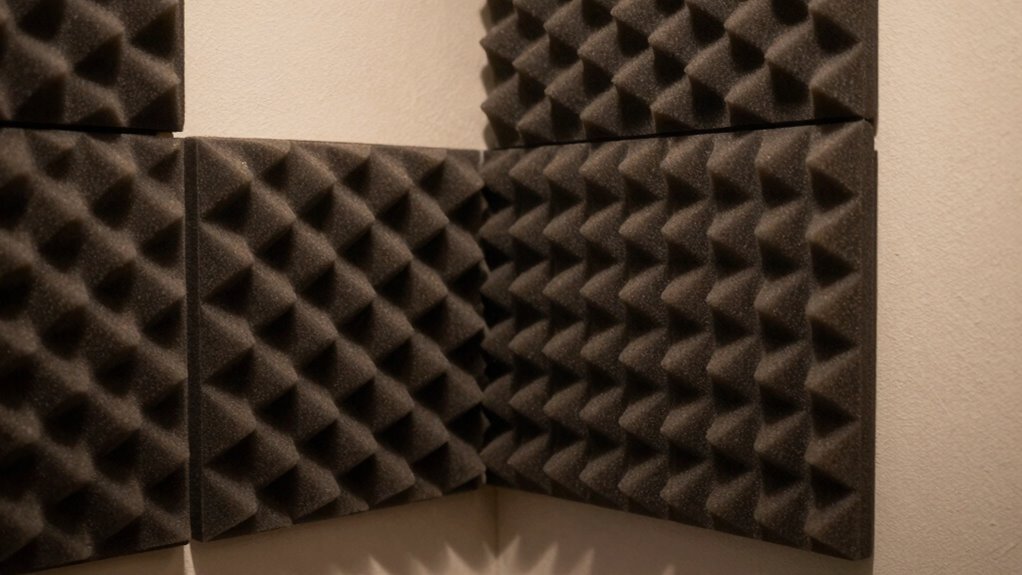

In small rooms, bass traps are essential because low frequencies tend to build up quickly, causing boomy, muddy sound. Without proper treatment, standing waves and bass distortion become more noticeable, ruining your audio quality. Bass traps absorb this problematic energy, bringing balance and clarity to your sound. When you understand how bass behaves in tight spaces, you’ll see why traps are more vital than you might think—there’s more to uncover that can transform your space.

Get audio and creator gear delivered free — and shop member deals
- Fast, free delivery on millions of items
- Access to Prime Big Deal Days deals on October 6–7
- Prime Video, Amazon Music and more included
Key Takeaways
- Small rooms amplify low frequencies, causing more pronounced bass issues without proper treatment.
- Corners in small rooms create bass buildup, making traps essential for controlling standing waves.
- Bass traps absorb low-end energy, preventing muddiness and ensuring clearer, more balanced sound.
- Limited space means even minor bass problems significantly affect overall audio quality.
- Effective bass trapping in small rooms dramatically improves sound accuracy and listening clarity.
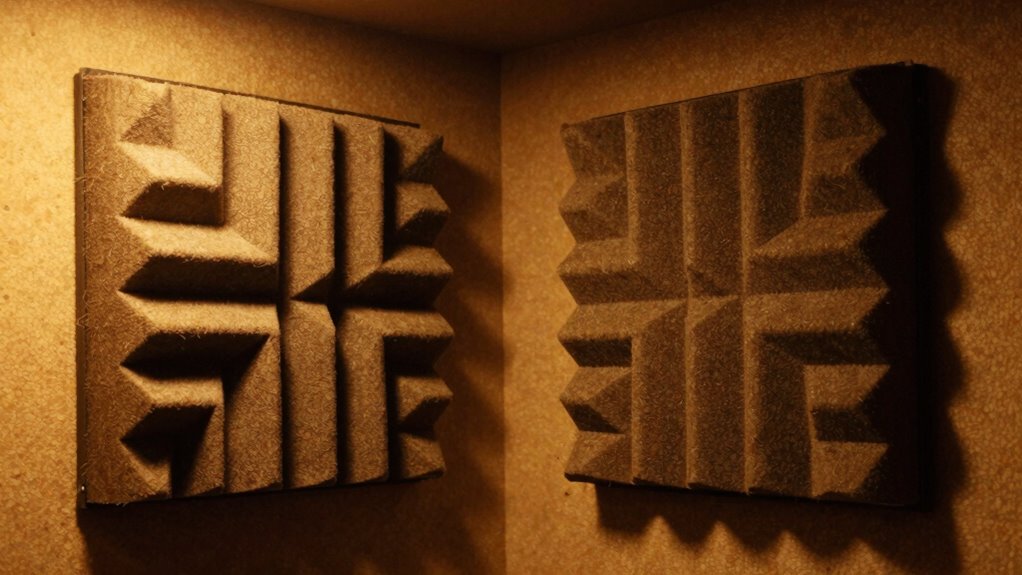
When it comes to achieving accurate sound in your listening space, many overlook the importance of bass traps, especially in small rooms. Small rooms tend to amplify low-frequency sounds, making bass response uneven and problematic. This is where understanding room corner acoustics becomes essential. The corners of your room are natural hotspots for bass buildup because low-frequency sound waves tend to converge there, creating standing waves that distort the sound quality. Without proper treatment, these areas will cause muddy, boomy bass that’s difficult to control.
Room corners naturally amplify bass, creating standing waves that distort sound quality and cause muddy, boomy bass.
Bass frequency absorption is your best defense against these issues. By installing bass traps in the corners, you target these problematic frequencies directly. Bass traps are designed to absorb low-end energy, reducing the amplitude of standing waves and smoothing out the bass response. This absorption prevents bass from bouncing back and forth, which often results in a boomy or hollow sound. When you incorporate bass traps into your room corner acoustics, you effectively tame the extremes of the bass spectrum, leading to a more balanced and accurate sound.
In small rooms, every decibel of bass matters because the limited space amplifies how sound waves interact. Without bass traps, low frequencies can dominate the room, creating an overwhelming and uneven listening experience. Proper placement of bass traps in the corners ensures that these trouble spots are addressed at their source. The goal isn’t just to deaden the sound but to achieve clarity and consistency across the entire frequency range. When bass frequencies are absorbed properly, your room becomes a more neutral environment, allowing your speakers and headphones to reveal the true quality of your audio.
You might think that simply adding thicker walls or more speakers could fix the problem, but that often only complicates the issue. Bass traps are a focused, efficient solution designed specifically for bass frequency absorption. They work passively, meaning they don’t require power, and can be integrated seamlessly into your room’s existing structure. By prioritizing the corner acoustics with bass traps, you create a foundation for better sound. You’ll notice tighter, more defined bass, and your overall soundstage will become clearer and more precise. Small room acoustics can be tricky, but with the right bass traps, you gain control over the low frequencies that often sabotage your listening experience. Proper understanding of room corner acoustics helps you target these issues effectively.
As an affiliate, we earn on qualifying purchases.
Frequently Asked Questions
How Do Bass Traps Differ From Regular Acoustic Panels?
Bass traps differ from regular acoustic panels because they’re specifically designed to target low-frequency sound waves, which are more prominent in small rooms with limited dimensions. Regular panels mainly absorb mid and high frequencies. You need bass traps as part of your acoustic treatment to control room modes and reduce muddiness, especially in small spaces where low frequencies tend to build up. Proper placement improves clarity and overall sound quality.
Can DIY Bass Traps Be as Effective as Professional Ones?
DIY bass traps can be quite effective if you understand acoustic principles and use quality materials, offering great DIY advantages like cost savings and customization. While they might not match the consistency of professional-quality traps, well-made DIY options can substantially improve bass response in your room. With proper placement and construction, you’ll notice a marked difference, making DIY bass traps a practical and rewarding solution for your space.
Where Is the Best Placement for Bass Traps in Small Rooms?
Think of bass traps as the quiet guardians of your room’s acoustics. Place them in corners where sound reflection is strongest, especially at the junctions of walls and ceiling. In small rooms, this is essential because bass frequencies tend to build up there. Positioning them strategically in these spots helps reduce muddiness, improving clarity and balance. Focus on corners and areas with high sound reflection for the best results.
Do Bass Traps Improve Sound Quality for Music and Recording?
Yes, bass traps greatly improve sound quality for music and recording. They reduce room resonance, preventing low-frequency muddiness that can distort your sound. By absorbing excess bass energy, bass traps enhance sound clarity, making your recordings cleaner and more accurate. This is especially important in small rooms, where bass buildup is common. With better control over low frequencies, your music sounds more balanced and professional, whether you’re mixing or listening.
How Much Do Bass Traps Typically Cost for Small Rooms?
Imagine your small room transformed, the bass traps blending seamlessly into the corners. Typically, bass traps cost between $50 and $200 each, depending on size and material. For budget options, DIY solutions or smaller panels work well, saving you money without sacrificing quality. A cost comparison shows investing in good bass traps enhances sound clarity, making your space sound professional. Expect to spend around $100 to $400 for effective coverage in a small room.
As an affiliate, we earn on qualifying purchases.
Conclusion
In small rooms, bass traps aren’t just optional—they’re essential. Imagine recording your favorite song, only to be disappointed by muddy, boomy sounds that drown out clarity. Without proper bass trapping, your space can turn into a sonic nightmare, no matter how good your equipment is. Don’t let poor acoustics hold you back. Invest in bass traps now, and transform your room into a true sanctuary of sound—where every note shines clearly and beautifully.
As an affiliate, we earn on qualifying purchases.
low frequency sound absorption panels
As an affiliate, we earn on qualifying purchases.
As an affiliate, we earn on qualifying purchases.
Halloween Picks
halloween
As an affiliate, we earn on qualifying purchases.