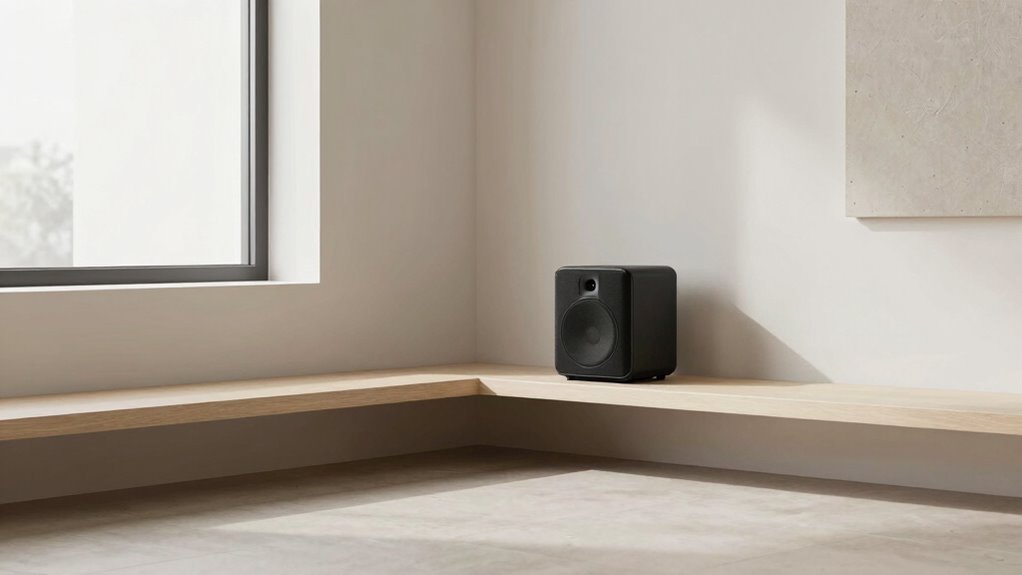

To avoid overbuilding a speaker system in a small space, focus on quality instead of quantity. Choose speakers suited to your room size and avoid cluttering the area with unnecessary gear. Proper placement matters—position speakers at ear level and keep them away from walls to prevent sound distortion. Adding simple acoustic treatments like rugs or curtains can improve sound without overdoing it. Want to learn how to optimize your setup for the best sound? Keep exploring.

Get audio and creator gear delivered free — and shop member deals
- Fast, free delivery on millions of items
- Access to Prime Big Deal Days deals on October 6–7
- Prime Video, Amazon Music and more included
Key Takeaways
- Prioritize high-quality, appropriately sized speakers over multiple or larger models for the room.
- Use minimal acoustic treatments to enhance natural sound without cluttering the space.
- Position speakers at ear level and away from walls to prevent bass distortion and echo.
- Focus on strategic placement and angles to optimize clarity without overloading the room.
- Avoid excessive gear and prioritize simplicity for a clean, balanced audio environment.

When setting up a speaker system in a small space, it’s easy to fall into the trap of overbuilding, which can lead to clutter and diminished sound quality. Instead of packing your area with multiple speakers or complex gear, focus on smart speaker placement. Proper positioning is essential; placing your speakers too close to walls or corners can cause bass distortion, making your sound muddy and overwhelming. Aim to keep speakers at ear level and a few inches away from surfaces to allow sound waves to disperse naturally. Experiment with angles and distances to find the ideal spot that delivers clarity without overwhelming the room.
Beyond placement, acoustic treatments play a significant role in preventing overbuilding. Instead of adding unnecessary speakers or subwoofers, consider simple acoustic solutions to improve sound quality. Use rugs, curtains, or wall panels to absorb excessive echo and reduce sound reflections, which can make your system sound cluttered or harsh. These treatments help create a balanced environment where sound is clear and well-defined, even with a modest setup. Avoid the temptation to overdo it with too many foam panels or bass traps, which can make the room feel smaller and more cluttered. Instead, strategically position a few key treatments to enhance natural acoustics.
A common mistake is assuming more gear equals better sound. In reality, overbuilding often results in a congested setup that’s hard to manage and maintain. Focus on quality over quantity. Choose speakers that suit your room size and listening habits, rather than opting for bigger or more powerful models that aren’t necessary. When your speakers are well-placed and supported by effective acoustic treatments, you’ll notice a significant improvement in sound clarity without crowding your space. Additionally, understanding the importance of room acoustics can help you make better choices for your specific environment.
As an affiliate, we earn on qualifying purchases.
Frequently Asked Questions
What Are Signs of an Overbuilt Speaker System?
Signs of an overbuilt speaker system include overly large speakers that dominate your space, which can hinder speaker placement and disrupt room balance. You might notice the system’s power handling exceeds your needs, leading to unnecessary complexity. If your speakers are too powerful or too big for your room, they can cause distortion or sound overwhelm. Keep the size and power handling in check to guarantee your system is appropriate, not overbuilt.
How Does Room Acoustics Affect Speaker Choice?
Did you know that 60% of audio issues stem from poor room acoustics? Your room’s dimensions and sound absorption greatly influence your speaker choice. Small, reflective spaces can cause sound distortion, so opt for speakers with controlled bass and softer materials that absorb excess sound. By matching your speakers to your room’s acoustics, you’ll enjoy clearer sound without overwhelming the space or causing unwanted echoes.
Can I Upgrade My Small Space Speaker System Easily?
Yes, you can upgrade your small space speaker system easily. Focus on proper speaker placement to maximize sound quality without overcrowding. Consider your power requirements to guarantee your amplifier can support new speakers efficiently. Choose compact, high-quality speakers suited for small areas, and avoid overloading the space. With careful planning and the right equipment, you’ll enhance your audio experience without overbuilding your setup.
What Budget Considerations Should I Keep in Mind?
You should prioritize budget planning to avoid overspending on an overbuilt speaker system. While it’s tempting to go for high-end gear, affordability tips like setting a clear price range and considering used or compact models can save you money. Balance quality with your space constraints, and remember that investing in the right-sized system often yields better sound without breaking the bank. Keep your budget realistic for long-term satisfaction.
Are There Specific Brands Suited for Small Spaces?
Yes, certain brands excel for small spaces with their compact designs and brand compatibility. Look into brands like KEF, ELAC, and Sonos, which offer smaller, sleek models that fit without overwhelming your room. These brands prioritize space-saving features while maintaining quality sound. Always check if they’re compatible with your existing setup, ensuring seamless integration. Choosing the right compact speaker can deliver great sound without cluttering your small space.
acoustic treatment panels for small rooms
As an affiliate, we earn on qualifying purchases.
As an affiliate, we earn on qualifying purchases.
Conclusion
In small spaces, less truly is more when it comes to speaker systems. Overbuilt setups can overwhelm your environment and diminish sound quality. Did you know that 78% of people find that simpler audio setups provide clearer sound and a more enjoyable experience? Keep your system modest, focus on quality over quantity, and you’ll enjoy richer, more balanced sound without cluttering your space. Remember, sometimes, less really is more.
As an affiliate, we earn on qualifying purchases.
As an affiliate, we earn on qualifying purchases.
Fall Picks
fall essentials
As an affiliate, we earn on qualifying purchases.