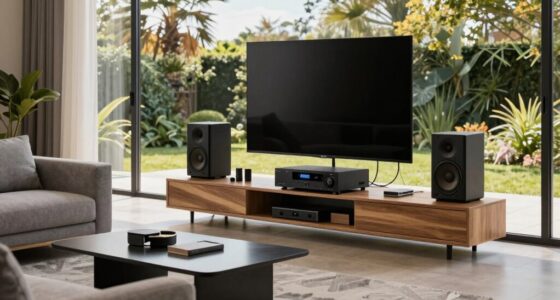
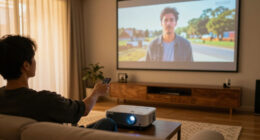
To reduce decision fatigue in your theater upgrade, start by setting clear priorities, focusing on key elements like lighting and seating. Break down tasks into smaller steps, and tackle one area at a time to stay organized. Consult professionals to guide decisions and avoid costly mistakes. Use templates or standard solutions for quick visualization, and be flexible with revisions. Sticking to a structured plan helps make choices easier—keep going, and you’ll discover even more ways to stay on track.

Get audio and creator gear delivered free with Prime
- Fast, free delivery on millions of items
- Prime Video, Amazon Music and more included
- Member-only deals all year
Key Takeaways
- Prioritize essential elements like lighting and acoustics to focus decision-making on critical aspects.
- Break the planning into smaller tasks, such as seating layout or sound system, to simplify choices.
- Set clear deadlines for each decision to maintain momentum and prevent overanalysis.
- Consult professionals early for expert guidance, reducing uncertainty and avoiding costly errors.
- Stay flexible by allowing revisions, and accept that initial choices can be refined later.

Planning a theater upgrade can be exciting, but it often leads to decision fatigue as you juggle numerous choices about equipment, layout, and design. The process involves making essential decisions about lighting design, seating arrangements, acoustics, and decor—all of which can quickly become overwhelming. To keep your focus clear and avoid burnout, it’s essential to streamline your decision-making process. Start by setting clear priorities. Determine which elements are must-haves and which can be flexible or deferred. For example, if ideal lighting design is vital for your theater’s ambiance and functionality, allocate more time and resources to it early on. This helps prevent endless back-and-forth and keeps your project on track.
When it comes to seating arrangements, think about your audience’s comfort and the overall experience you want to create. Consider factors like sightlines, accessibility, and space efficiency. Instead of trying to customize every detail at once, rely on established standards or consult professionals who can guide you toward practical solutions. This way, you avoid second-guessing every choice and reduce decision fatigue. Using templates or sample layouts can also help you visualize options quickly without overanalyzing each variation.
Another effective strategy involves breaking down the planning process into smaller, manageable tasks. Instead of tackling everything at once, focus on one area at a time—first decide on lighting design, then move on to seating arrangements, and so forth. This compartmentalization allows you to make more focused decisions and prevents feeling overwhelmed by the scope of the project. It also makes it easier to compare options and gather input from stakeholders without losing track of your overall vision. Recognizing decision fatigue as a common challenge can help you develop strategies to combat it effectively.
Leverage expert advice when necessary. Architects, interior designers, and AV specialists bring valuable experience that can simplify your choices. By consulting with these professionals, you can avoid costly mistakes and reduce the mental load of decision-making. Additionally, setting time limits for each decision can help maintain momentum. For instance, decide on your seating layout within a specific week, then move on to lighting design without dwelling too long on each detail. Incorporating professional guidance can significantly ease your decision-making process.
Finally, remember that flexibility is key. Not every decision has to be perfect on the first try. Be willing to revisit and adjust your choices as the project progresses. This mindset allows you to stay focused and confident, knowing that refining your theater’s design is part of the process. By prioritizing, breaking tasks down, seeking expert input, and maintaining flexibility, you’ll greatly reduce decision fatigue and make your theater upgrade both manageable and enjoyable. Understanding decision fatigue can help you develop more effective strategies for managing your project.
As an affiliate, we earn on qualifying purchases.
Frequently Asked Questions
How Do I Prioritize Upgrade Features Within a Limited Budget?
To prioritize upgrade features within a limited budget, focus on feature prioritization by identifying essentials that will considerably enhance the theater experience. Consider your budget constraints carefully, and allocate funds to high-impact upgrades first. Categorize features into must-haves and nice-to-haves, then tackle the most critical improvements first. This approach helps you make clear decisions, reduces stress, and ensures your budget delivers maximum value for your theater upgrade.
What Are Common Mistakes to Avoid During Theater Planning?
You should avoid overlooking budget constraints and aesthetic considerations during your theater planning. Don’t underestimate the importance of setting clear priorities to prevent overspending or sacrificing key features. Resist rushing decisions without thorough research, as it can lead to costly mistakes. Also, avoid neglecting the user experience or ignoring how design choices impact functionality. Careful planning guarantees a cohesive, budget-friendly upgrade that balances aesthetics with practical needs.
How Can I Involve Stakeholders Without Increasing Decision Fatigue?
To involve stakeholders without increasing decision fatigue, focus on focused facilitation and clear communication. Prioritize stakeholder engagement by encouraging concise, targeted input, which fosters consensus building. Use collaborative tools like surveys or brief meetings to gather valuable insights efficiently. Keep discussions purposeful, avoiding overloading with options, and make certain everyone’s voice is heard. This strategic approach streamlines participation, minimizes fatigue, and promotes a cohesive, confident decision-making process.
What Tools Can Help Streamline the Planning Process?
You can use visualization tools and collaboration platforms to streamline your planning process. Visualization tools help you easily see design options and make quick comparisons, reducing indecision. Collaboration platforms enable real-time communication and document sharing, keeping everyone aligned without overwhelming meetings. These tools simplify decision-making, save time, and lessen decision fatigue, making your theater upgrade project more efficient and focused.
How Long Should Each Phase of the Upgrade Process Take?
Think of your upgrade as a symphony, each phase a movement. Allocate about 20% of your total budget to planning, 40% to procurement, and 40% to installation. For timeline management, dedicate 2-4 weeks for planning, 4-8 weeks for procurement, and 8-12 weeks for installation. This rhythm guarantees balanced progress, reducing decision fatigue, and keeping your project harmoniously on track.
As an affiliate, we earn on qualifying purchases.
Conclusion
So, after all that planning, you might think you’re immune to decision fatigue. Surprise! Even the most seasoned planners can get drained. But hey, at least you now know how to minimize it—so maybe next time, you’ll enjoy the chaos a little more. After all, who knew that upgrading a theater would turn out to be the ultimate test of your decision-making stamina? Embrace the irony—your future self will thank you for it!
acoustic panels for home theater
As an affiliate, we earn on qualifying purchases.
As an affiliate, we earn on qualifying purchases.
As an affiliate, we earn on qualifying purchases.
Halloween Picks
halloween
As an affiliate, we earn on qualifying purchases.